Key Takeaways
- What is actually given
- When it is given
- The other daan given with it
In This Article
Shayana daan — also sajja daan — is the gift of a bed. In the Garuda Purana’s account it is not furniture but rest itself: the comfort a departed soul is held to need, given through a brahmin as proxy. It belongs to the month of Magh at Prayagraj above all, and it is one of the daan the texts name specifically among the rites for the dead.
What is actually given
The texts are specific, and the specificity is the point — a token gesture is not what is described. A complete shayana daan is a bed of good quality fully furnished: the bedding, the cotton, pillows, sheets and covering. The Garuda Purana lists the accoutrements rather than leaving it to the giver, because the rite is about providing real rest rather than symbolising it.
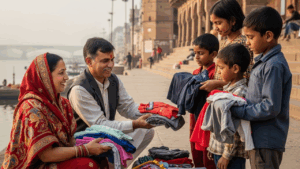
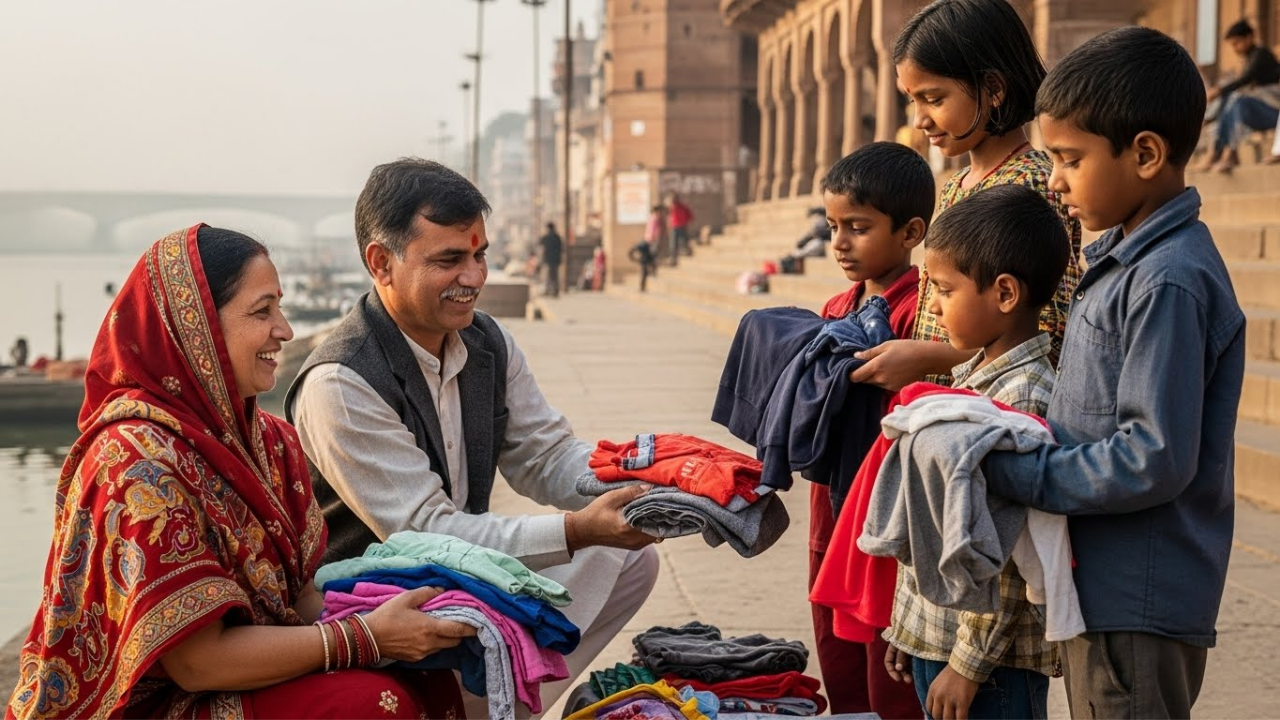
In practice at the mela the daan is made to a brahmin or to an institution that will use it, and the common modern form is to give its value so that bedding reaches people who need it. Both are accepted; the thing to avoid is the version that gives neither a bed nor its worth.
When it is given
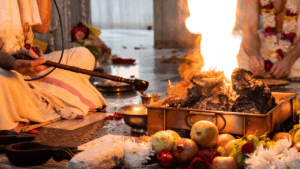
Magh, the month running through January and February, at the Triveni Sangam — the Magh Mela season, when the texts hold that daan at Prayagraj carries the most. It is also given in the thirteen days after a death, at the barsi, and during Pitru Paksha, where it sits among the daan the Garuda Purana names for ancestral rites alongside clothing, vessels and an umbrella.
The Magh Mela’s bathing days are the strongest within the month. The full set of daan given at the mela, and what each is for, is in the Magh Mela daan guide; the wider framework of giving is in daan in Hinduism.
The other daan given with it
Shayana daan rarely goes alone. The Garuda Purana names a set that belongs together at the ancestral rites, each answering a described need, and a family arranging one usually arranges several.
- Vastra daan — clothing, given to the brahmin who receives on the ancestor’s behalf.
- Patra daan — brass or copper vessels. Iron is not used in pitru rites.
- Chhatra daan — an umbrella, for shade on the journey the texts describe.
- Anna daan — food, which the texts rank first of all the forms and which costs the least to give.
- Til daan — black sesame, specifically ancestral, and given with the rites themselves.
🪔 Shayana Daan at the Triveni Sangam
- Given in your name, with your gotra in the sankalpa
- A complete furnished gift, not a token
- Photographs and a written record afterwards
- Arranged alongside the shradh where that is what is actually owed
If you are not sure whether a daan or a rite is what your family owes, tell us the circumstances — frequently the answer is the shradh that was missed rather than anything given at the mela.
Book Your Sacred Ritual
Authentic ceremonies performed by Veda-trained pandits at sacred sites across India.