Save 26%
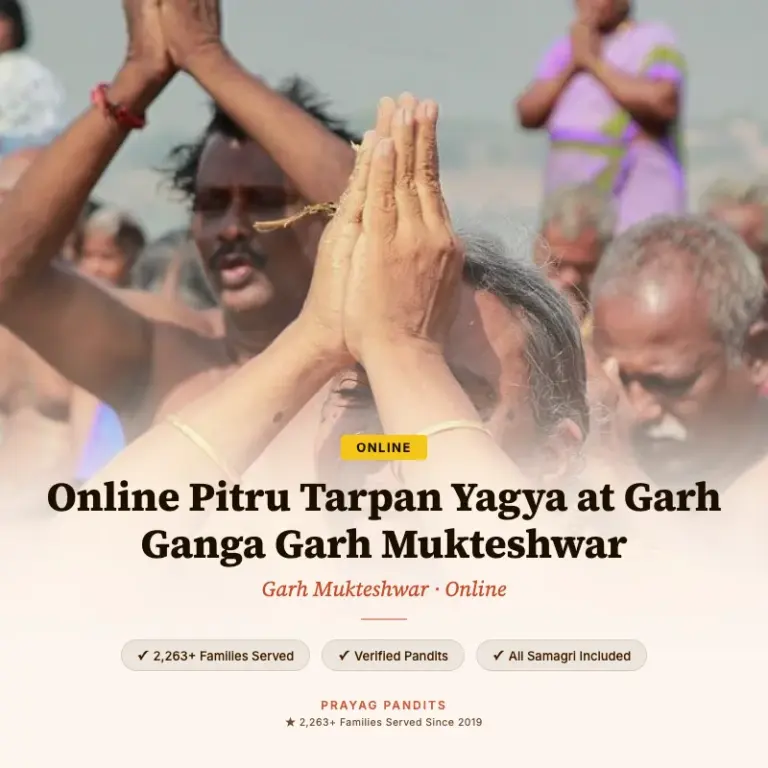
Online Pitru Tarpan Yagya at Garh Ganga Garh Mukteshwar
Tarpan over the bank of river Ganga at Garh-Mukteshwar, Garh Ganga. Incllusions:-...

Select your package and complete booking. Our team calls within 2 hours to confirm details.
Provide your gotra, departed soul's name, and any special requirements.
Experienced pandit performs the complete ceremony at the sacred site.
Full ceremony video on WhatsApp within 24 hours. Digital certificate shared via email.
Save 26%
Tarpan over the bank of river Ganga at Garh-Mukteshwar, Garh Ganga. Incllusions:-...
Save 27%
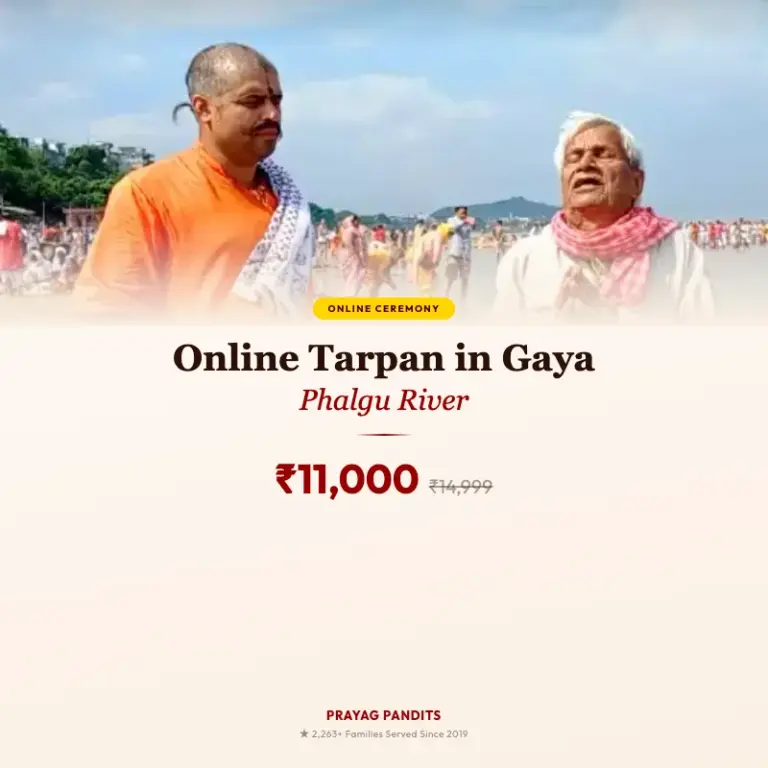
Tarpan in gaya is performed for bringing happiness and relive the performer...
Save 27%
Online tarpan in gaya is performed for bringing happiness and relive the...
Save 27%
Tarpan in gaya Pitrupaksha 2024 is performed for bringing happiness and relive the...
Save 39%
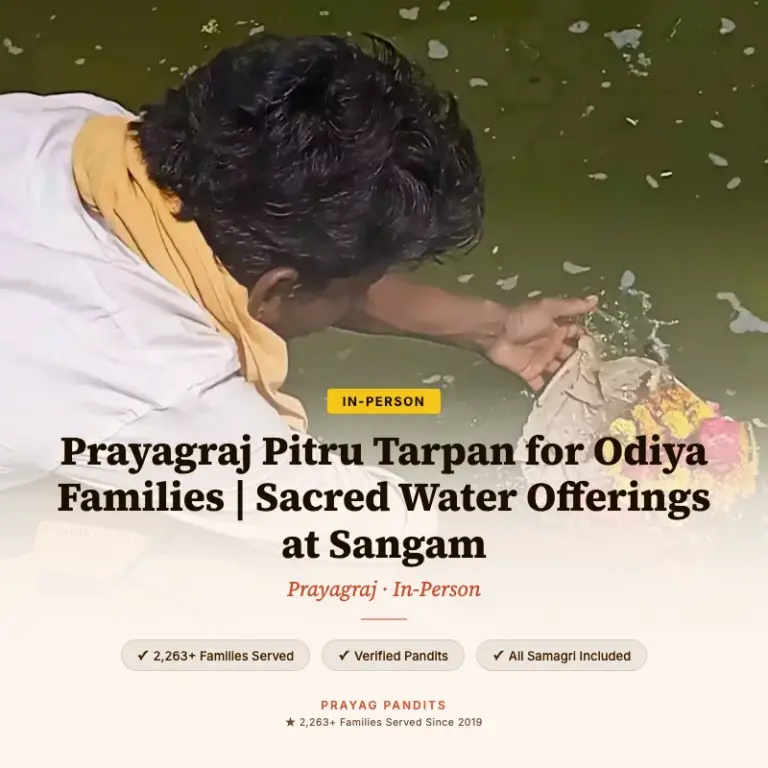
Odia Vidhi Ceremony Pitru Tarpan at Triveni Sangam (Tila-tarpan with Gangajal) Complete...
Save 43%
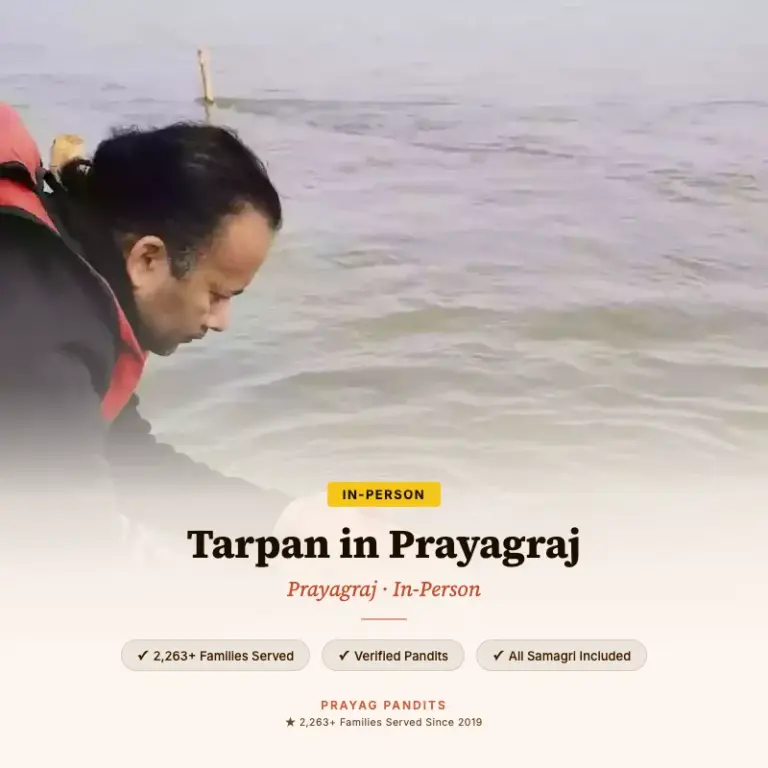
Tarpan in Prayagraj is performed for bringing happiness and relieving the performer...
Save 36%
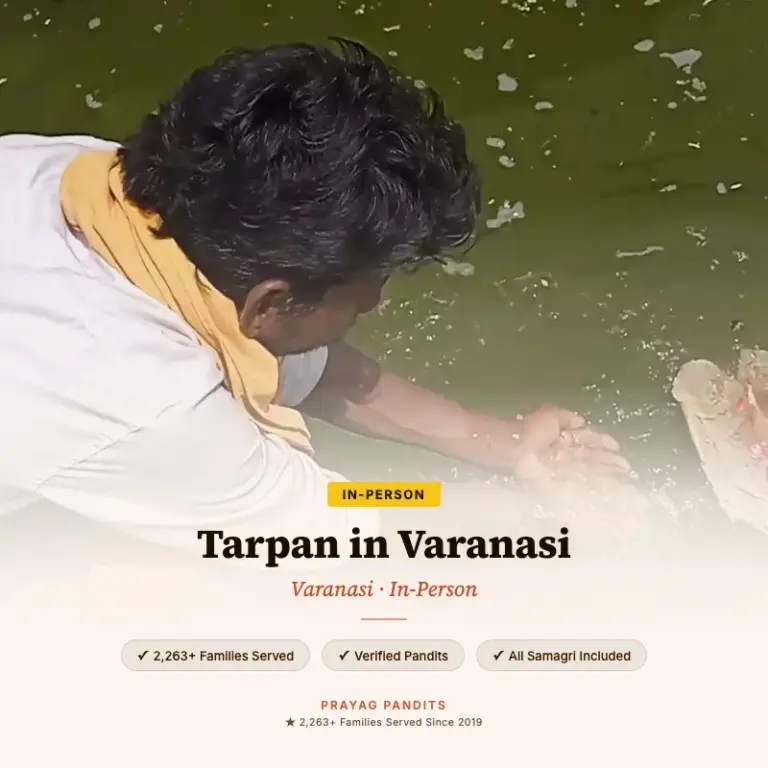
Tarpan in Varanasi is performed for bringing happiness and relieving the performer and...
Save 36%
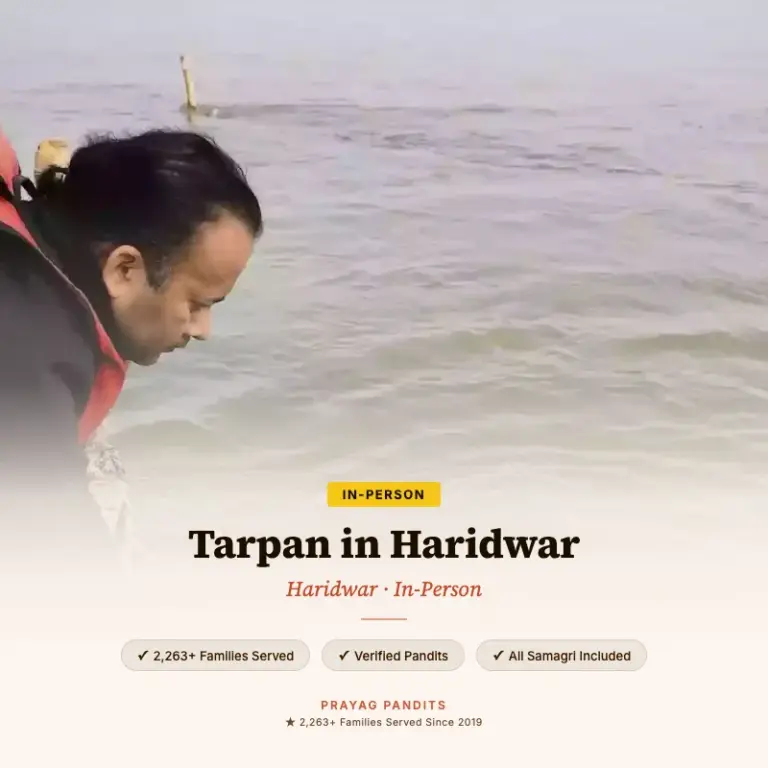
Tarpan in Haridwar is performed for bringing happiness and relieving the performer and...
Tarpan is the water offering alone — the most basic form of ancestral rite. Shradh is the complete ritual complex that includes tarpan, brahmin feeding, and pinda offerings. Tarpan can be performed daily; shradh is performed on the death anniversary tithi and during Pitrupaksha.
The Hindu tradition prescribes three specific hand positions called Tirthas for offering water during Tarpan, each used for a different category of beings:
1. Deva Tirtha (Fingertips): Used for offering water to Devas (gods). The performer faces East with the sacred thread in normal position (Savya), holding water in the right hand with the tirtha at the fingertips. Water is offered with one anjali per deity.
2. Kaya Tirtha (Base of the little finger): Used for Rishis and Divya Manushya (divine beings). Facing North, the sacred thread is worn like a necklace (Kanthi). Water mixed with barley is offered from the base of the little finger. Rishi mantras include: Om Marichistripyatam, Om Atristripyatam, Om Angirastripyatam, Om Pulastyastripyatam, Om Pulahastripyatam, Om Kratustripyatam, Om Vashisthastripyatam, Om Prachetastripyatam, Om Bhrigustripyatam, Om Naradastripyatam.
3. Pitru Tirtha (Space between thumb and index finger): Used for ancestors (Pitrus) and Yama. Facing South, with the left knee touching the ground and sacred thread on the right shoulder (Apasavya), water mixed with black sesame seeds is offered through the space between the thumb and index finger. Three anjalis each are offered for the father, grandfather, and great-grandfather forms. This is the most important position during Pitrupaksha Tarpan.
The sankalpa (formal vow of intention) is recited at the beginning of Pitru Tarpan to formally commit to the ritual and to specify which ancestors are being honoured. The standard format includes your name, gotra, and the intention to satisfy the father, grandfather, and great-grandfather along with their wives:
Om Adya [Tithi] [Nakshatra] [Date] Asmat Pitri Pitamaha Prapitamaha Sapatnikanam Akshayatripti-sampadanartham Pitri Tarpanam Karishye
Translation: Today, on this [tithi] in the [nakshatra], I, [Name] of [Gotra], perform this Pitru Tarpan rite for my father, grandfather, and great-grandfather along with their wives, to grant them imperishable satisfaction.
Before reciting the sankalpa, the performer (Karta) takes a ritual purification bath (Snan), wears clean white clothes, holds the sacred thread (Yajnopavita) in the Apasavya position (right shoulder, left hip) for ancestral rituals, faces South, and holds water, sesame seeds, and darbha grass in his right hand while the sankalpa is recited by the officiating pandit.
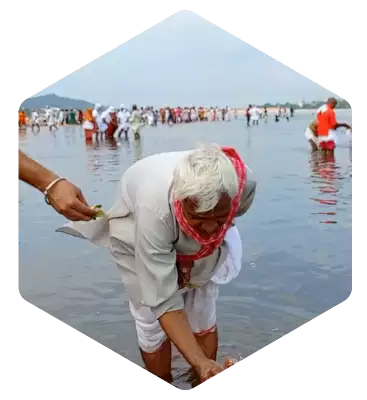
According to the Manual of Hindu Funeral and Ancestral Rites, Pitru Tarpan for direct ancestors is performed using Pitru Tirtha (water offered through the space between thumb and index finger), facing South, with the sacred thread on the right shoulder (Apasavya). Three anjalis (handfuls) of water mixed with black sesame seeds are offered for each ancestor:
For the Father (Vasu form): Om Adya Asmatpita [Gotra] [Name] Sharma/Varma/Gupta Vasuswarupah Idam Satilam Gopuchchodakam Tasmai Svadha Namah
For the Grandfather (Rudra form): Om Adya Asmatpitamaha [Gotra] [Name] Sharma/Varma/Gupta Rudraswarupah Idam Satilam Gopuchchodakam Tasmai Svadha Namah
For the Great-grandfather (Aditya form): Om Adya Asmatprapitamaha [Gotra] [Name] Sharma/Varma/Gupta Adityaswarupah Idam Satilam Gopuchchodakam Tasmai Svadha Namah
For the Mother (Vasu form): Om Adya Asmanmata [Gotra] [Name] Devi Vasuswarupa Idam Satilam Gopuchchodakam Tasyai Svadha Namah
Replace [Gotra] with your family gotra and [Name] with the ancestor"s name. For Sharma/Varma/Gupta, use the appropriate varna suffix. Each ancestor form (Vasu for parents, Rudra for grandparents, Aditya for great-grandparents) reflects the scriptural understanding of their progression toward liberation.
Pitra Tarpan Vidhi is another name for the Pitru Tarpan section — the water offering directed specifically to departed ancestors, as opposed to sages or gods. It is performed facing south, with the sacred thread in the apasavya position, with sesame-mixed water released through the Pitru Tirtha between thumb and index finger.
Ideally, tarpan is performed on all fifteen days of Pitrupaksha. The most critical days are the opening Purnima Shradh, the tithi matching the ancestor death anniversary, and the closing Sarva Pitru Amavasya. If you can only observe one day, Sarva Pitru Amavasya is the most inclusive.
Traditional texts vary, but the majority view in the Smriti tradition is that sons are primary performers of Pitru Tarpan. However, daughters, granddaughters, wives, and daughters-in-law are permitted and encouraged to perform tarpan in the absence of a male heir. Many families today have daughters perform tarpan, and several regional traditions have always included women in the rite.
Yes. Prayag Pandits offers live-streamed tarpan at Prayagraj, Gaya, Varanasi, and Haridwar. A family member abroad provides the ancestor name and gotra; the pandit performs the complete tarpan vidhi at the sacred site and transmits live video. This has the same scriptural standing as in-person participation by a proxy.