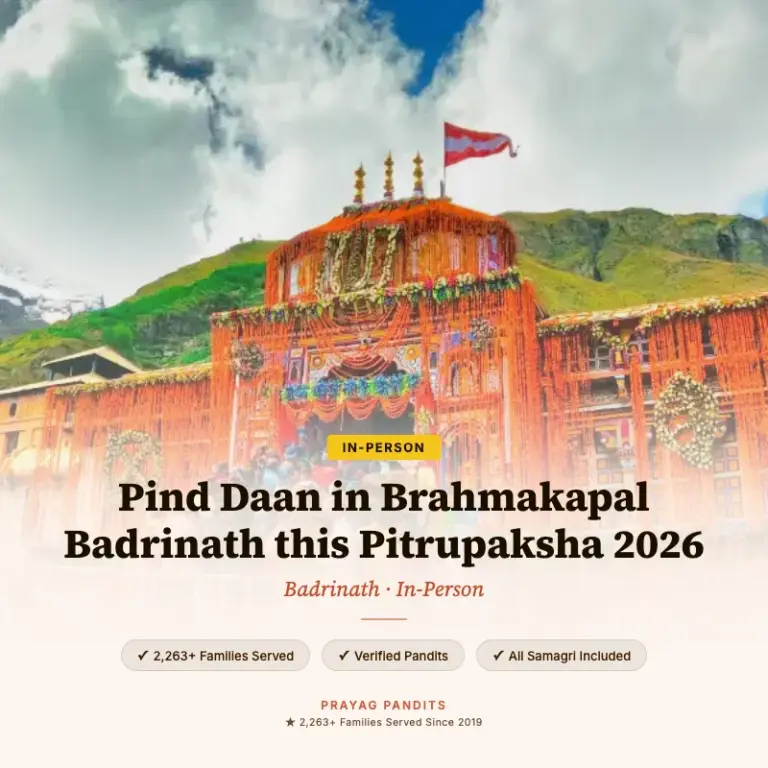
Pind Daan at Brahmakapal Badrinath, where Brahma was freed from his kapala curse.
The Skanda Purana Badari Mahatmya names Brahmakapal as the vedi where Brahma's kapala fell from his hand — the pretashila-state release doctrine extended to ancestors. The Alaknanda receives the offering. Vayu Purana names Gaya as the supreme pind-daan tirtha; Brahmakapal carries a distinct Himalayan Mahatmya register, anchored on the Skanda Badari tradition.
✓ Verified Pandits✓ Clear Package Details🕉 Vedic Vidhi📦 All Samagri Included
Tell us your situation — we will suggest the package that fits the family. No booking pressure; we will explain the choice on WhatsApp first if needed.
1
Will the family travel?
Coming to Badrinath
2
Package tier — only standard tier in this catalogue
Standard ceremony — no special tiers in this catalogue
3
Need stay & transport?
No, just the ceremony
Recommended for you
Pind Daan at Badrinath
from ₹11,000
· Pind Daan at Brahmakapal, Badrinath · Hereditary Teerth Purohit of Badrinath
Open the recommended product to confirm its current inclusions before booking.
Every package is complete no pressure for "extra dakshina" on the day
We've seen too many families face hidden boat fees, samagri costs, and "dakshina" pressure on the day. Here's exactly what's covered, and what isn't.
Included
Hereditary Teerth Purohit of Badrinath
Teerth Purohit from the registered Badrinath ghat lineage, with gotra-pravara verified. The hereditary purohits of Brahmakapal carry the Vedic instruction required for the pind-daan Sankalpa, pinda consecration with the gotra-pravara recitation, and pitru-tarpan at the Alaknanda riverside per the Garuda Purana Pretakalpa.
Included
Pinda preparation
Pinda dough prepared from sesame, barley flour, and kusha grass — consecrated in advance with the gotra-pravara of the departed and ready before the family arrives at the Brahmakapal vedi. The pinda is the central offering; the Garuda Purana Pretakalpa names pind as the preta's vehicle of transit.
Included
All Puja Samagri
Til, kusha, Alaknanda jal, kalash, white cloth, dhoop, sindoor, sandalwood, ghee, flowers, diya — all the materials prescribed for the Brahmakapal pind-daan vidhi, prepared in advance at the riverside vedi and ready before the family arrives. Online variant uses gangajal couriered to the family after the rite.
Included
Package add-ons available
Optional upgrades for the Badrinath pilgrimage: combined pind-daan + tarpan rite at the Brahmakapal vedi (separate ceremony, additional samagri), Badri-Vishnu darshan as the closing devotional act, Tapt Kund hot-spring bath before the rite, and multi-day Char Dham circuit packages connecting Badrinath with Kedarnath / Gangotri / Yamunotri.
Included
Family Coordinator
One person on WhatsApp through your entire booking — fluent in Hindi, English, and major regional languages — before and after the ceremony. Available for last-minute coordination given Badrinath's seasonal-access and pilgrimage-logistics specifics.
Included*
Same-day Confirmation
WhatsApp message from the Teerth Purohit the same evening of the ceremony, with details of all pind-daan offerings made on your behalf and the pitru-tarpan completed at the Brahmakapal vedi. For the Online variant, a Google Meet / Zoom recording of the ceremony is delivered within 72 hours.
Not included
Travel to Badrinath
Badrinath sits at 3,300m altitude in the Chamoli district of Uttarakhand. Nearest railhead is Rishikesh / Haridwar (~280-300km); nearest airport is Dehradun Jolly Grant. The road journey is typically 2 days each way through the Garhwal Himalayas. We can recommend trusted operators for the pilgrimage itinerary; ceremony bookings exclude travel arrangement.
Not included*
Hotel / Accommodation
Most families perform Badrinath pind-daan as part of a multi-day pilgrimage and arrange accommodation separately at Badrinath, Joshimath, or Pandukeshwar. Stay-inclusive Char Dham circuit packages available on request — coordinate via WhatsApp before booking.
Not included
Tarpan and other ceremonies
We coordinate the pind-daan vidhi on this page. Tarpan, Narayan Bali, Tripindi Shradh, and other ancestral rites are scheduled as separate bookings with the same Brahmakapal Teerth Purohit lineage. Combined-rite day packages available on request for families completing multiple rites during the same pilgrimage.
Step 03 · How it works
Four steps. We carry the rest.
From your first call to same-day confirmation — we handle every coordination, so the family can focus on what matters.
01
Book & confirm
Choose the in-person or online package and complete payment online. Our team calls within 2 hours to confirm details and coordinate the seasonal-access window — Badrinath dham is open ~May-Oct; off-season bookings are scheduled into the next open season or routed to the winter-seat purohit for online ceremonies.
~ 5 minutes
02
Share ancestral details
Provide gotra, names of departed ancestors (up to three generations of paternal lineage; one maternal generation in some traditions), preferred date — Pitrupaksha, a monthly Amavasya, the annual death-anniversary Tithi, or a Sankranti — and any special vidhi requirements. For first-pind-daan families, our coordinator helps clarify the Brahmakapal vs Gaya choice.
~ 10 minutes
03
Pind-daan at the Brahmakapal vedi
Teerth Purohit performs the complete pind-daan vidhi at the Brahmakapal vedi on the Alaknanda riverside — Sankalpa, pinda consecration with gotra-pravara recitation, pind offering with the Brahmakapal-specific mantras invoking the Skanda Purana Badari Mahatmya pretashila-state release doctrine, and pitru-tarpan in three directions per Baudhayana. For the Online variant, the ceremony is conducted live on Zoom / WhatsApp / Google Meet with the karta participating remotely.
60–180 min
04
Confirmation & report
Teerth Purohit sends a same-evening WhatsApp confirmation with offerings detail. For the Online variant, a recorded Google Meet / Zoom session is delivered within 72 hours and gangajal from the Alaknanda is couriered to the family within 5-7 days. Photos and additional videography available as opt-in add-ons.
When to perform pind-daan at Brahmakapal Badrinath — Pitrupaksha, monthly Amavasya, annual Tithi; seasonal access May-Oct
The Garuda Purana Pretakalpa prescribes pind-daan during Pitrupaksha (the 15-16 day fortnight in Ashwina Krishna Paksha — Sep 26 → Oct 10, 2026), every Amavasya, on the death-anniversary tithi, and on Sankranti days. At Brahmakapal — named in the Skanda Purana Badari Mahatmya as the vedi where Brahma was released from his kapala curse — the rite carries the pretashila-state release doctrine specific to this Himalayan kshetra, combined with the universal Ganga-water purification merit of the Alaknanda source-stream (Padma / Agni Purana doctrine). Badrinath dham is seasonally open ~May to mid-October; in-person pind-daan is scheduled within this window. Online Pind Daan is performed at the kshetra during the open season and at the winter-seat (Pandukeshwar / Joshimath where Badri-Vishnu is worshipped Nov-Apr) during the closed months. The Vayu Purana Gaya Mahatmya remains the supreme pind-daan textual authority — Brahmakapal carries a distinct Mahatmya register, not a competing one.
PitrupakshaMost ideal
AmavasyaMonthly
TithiAnniversary
SankrantiAuspicious
Year-roundAlways valid
Performed by Tirth Purohits at Triveni Sangam since 2019
Two ways to perform
Pilgrimage to Badrinath, or online from anywhere
Travel to Badrinath
Performed by your own hands at the Brahmakapal vedi on the Alaknanda riverside under a hereditary Badrinath Teerth Purohit — pandit recites the pind-daan vidhi mantras and the gotra-pravara; the karta offers the pinda and performs the pitru-tarpan personally. Two visit tiers in the catalogue: the year-round in-person package (₹11,000 sale) and the Pitrupaksha-themed 2026 variant (₹10,999 sale). Pilgrimage value is built in — Badri-Vishnu darshan, Tapt Kund bath, and the broader Char Dham circuit are typically combined with the rite.
Karta performs Sankalpa & pinda offering personally
Multi-day Himalayan pilgrimage (May-Oct open season)
Year-round or Pitrupaksha-themed package tiers
Starts at ₹10,999
Online for NRI families
For families abroad or unable to travel. Sankalpa + gotra-pravara recited remotely on Zoom / WhatsApp / Google Meet; the Teerth Purohit, acting as Pratinidhi (authorised proxy per Angirasa Smriti + Nirnaya Sindhu Pratinidhi-nirnayah), performs the pind-daan at the Brahmakapal vedi during the open season (or at the winter-seat at Pandukeshwar / Joshimath Nov-Apr) with live video proof. A recorded ceremony is delivered within 72 hours.
Live Zoom / WhatsApp / Google Meet ceremony
Names & gotra confirmed remotely before sankalpa
Recording delivered within 72 hours
Gangajal from the Alaknanda couriered to the family
Starts at ₹10,999
Complete guide
Pind daan in Brahma kapal Badrinath everything families ask before booking
An editorial reference covering the ritual, the place, eligibility, timing, and what to keep ready — written for families weighing the decision.
About Pind daan
🔥
Brahma Kapal, Badrinath — the only teerth in India where Pind Daan permanently liberates your ancestors. The Skanda Purana declares its potency 8x greater than Gaya. Once performed here, no further annual Shradh is required.
Location: Alaknanda River, 200–300 m north of Badrinath Temple
Open: May to November (temple season only)
Best for: Final Shradh, ancestors with unnatural death, post-Char Dham Pind Daan
Service starting at: ₹10,999
There is a moment in every family’s life when someone says: “We have done Pind Daan in Gaya. We have performed Tarpan at Prayagraj. And still we feel unsettled — as though the work is not finished.” For those families, the ancient shastra has a clear answer: Brahma Kapal in Badrinath Dham.
This flat stone platform on the banks of the Alaknanda River, set against the snow-covered peaks of the Garhwal Himalayas, holds a distinction that no other teerth in India can claim. The Skanda Purana states that Shraddha karma performed at Badrinath Kshetra is eight times more potent than the same rites performed at Gaya Kshetra. And most crucially — once Pind Daan is performed at Brahma Kapal, the shastras declare that no further Pind Daan or Shradh karma is ever required for those ancestors. It is the antim Shradh — the final ancestral rite.
In this guide, I want to share everything our team at Prayag Pandits has learned from accompanying families to Brahma Kapal over many seasons — the scriptural basis, the complete ritual, the practical logistics, and the reasons this teerth occupies a place unlike any other in our ancestral tradition.
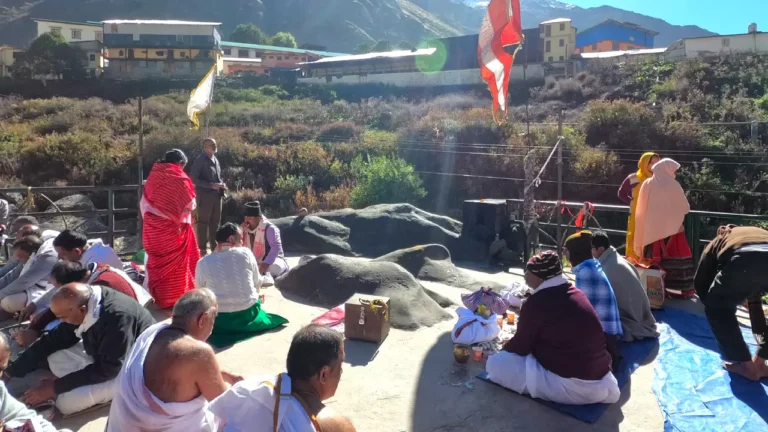
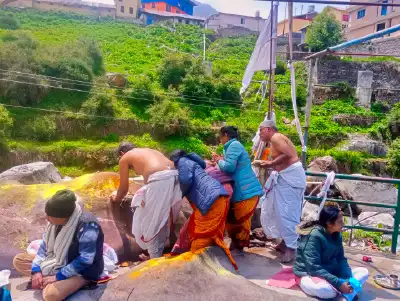
Brahma Kapal ghat — a flat stone platform on the Alaknanda, a few hundred metres from Badrinath Temple
The Story of Brahma Kapal: How Lord Shiva Was Freed from Brahmahatya Dosha
The Puranas preserve this story in several recensions. What follows is drawn from the Brahma Purana and the Skanda Purana accounts.
Lord Brahma, the creator, originally had four heads — each facing one of the four cardinal directions, representing the four Vedas. In a moment of desire directed at Satarupa (his own creation), a fifth head spontaneously grew, turning to gaze upon her wherever she moved. This act was considered a profound transgression — a creator turning desire toward his own creation.
Lord Shiva, witnessing this, was moved to correct the transgression. In a moment of cosmic correction, he took his trident and severed Brahma’s fifth head. But the moment the head fell, a terrible consequence unfolded: the skull of Brahma adhered to Shiva’s left hand and could not be removed. This is the Brahmahatya Dosha — the sin of severing a Brahmin’s head — and even the Lord of Destruction was not exempt from its binding power.
Shiva wandered across the three worlds, unable to free himself from the skull. Everywhere he went, the skull followed, attached to his hand, a constant reminder of the act. He performed every purificatory rite known to the cosmos. Nothing released him.
Finally, on the counsel of Lord Vishnu, Shiva came to Badrikashrama — the sacred valley in the high Himalayas presided over by Lord Badrivishal. The moment Shiva bathed in the Alaknanda at this spot and touched the stone platform here, the skull detached from his hand and fell to the earth. The Brahmahatya Dosha was extinguished.
That skull — the severed head of Lord Brahma — still rests on the banks of the Alaknanda in the form of the boulder we see today. The platform where it fell became Brahma Kapal. And in celebration of his release, Lord Brahma himself performed the very first Pind Daan at this spot — establishing it as the supreme location for ancestral rites for all time.
This is not a coincidence of geography. This is the reason the ground at Brahma Kapal is considered permanently charged by Brahma’s own offering.
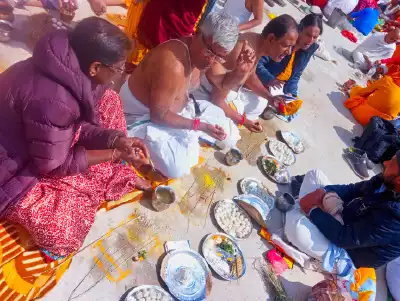
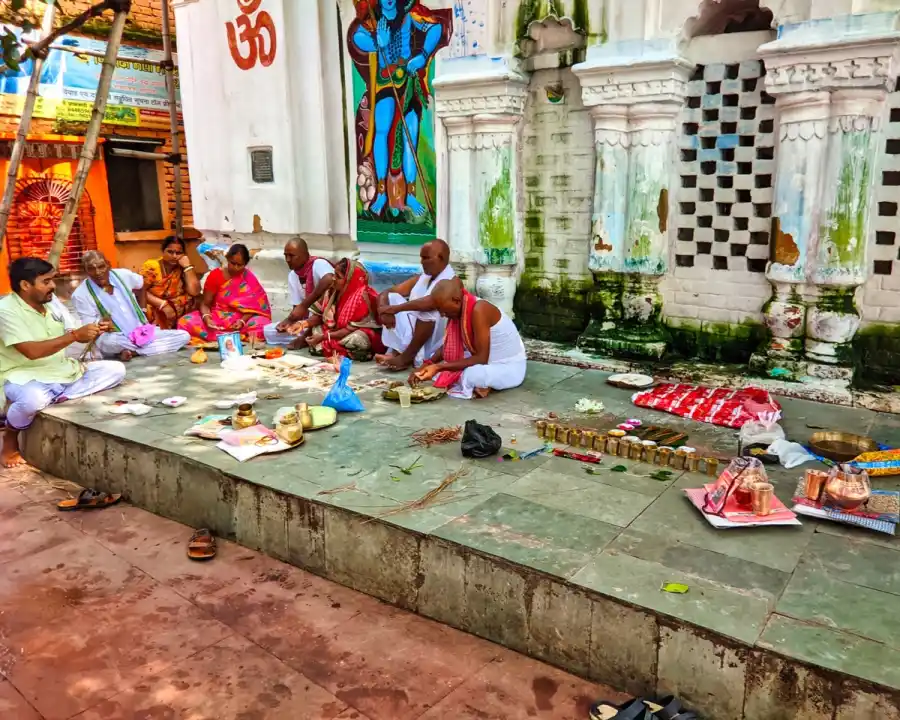
A pandit performing the Shradh vidhi at Brahma Kapal during the Pitrupaksha season
Why Pind Daan at Brahma Kapal Is 8x More Potent Than Gaya
Gaya, in Bihar, is the most famous site for Pind Daan in all of India. The Gaya Mahatmya section of multiple Puranas praises it as the greatest teerth for ancestral liberation. Families travel from across the country and from abroad to perform Shraddha at the Vishnupad Ghat and the Falgu River. Pind Daan performed at Gaya is considered supremely meritorious.
And yet the Skanda Purana makes an unambiguous declaration:
“Yani kani cha tirthani Gaya-kshetraat cha uttamam — Badrikshetra Shraddham tu ashtagunam phalam dakshinam.”
Translation: “Whatever sacred teerths exist, and however great the merit of Gaya Kshetra, the Shraddha performed in Badri Kshetra gives eight times that fruit.”
This eightfold multiplier is specific to Badrikshetra, and Brahma Kapal is the designated Shraddha ghat within Badrikshetra. When you or I perform Shradh karma at Brahma Kapal, we are doing it at the location where the creator himself first made this offering — and the Alaknanda river carries the merit directly to the pitrs in whatever loka they presently inhabit.
Four scriptural reasons explain this potency:
Brahma’s own first offering (Brahma Purana): No other teerth in India was inaugurated by Lord Brahma performing Pind Daan. The creator’s own act permanently sanctified the soil here. Every offering made subsequently draws on that original divine act.
Vishnu’s direct presence (Brahma Purana): Badrikashrama is the tapobhumi of Lord Vishnu in his Badri form. The Brahma Purana states that Lord Vishnu himself resides here and accepts the offerings made to the pitrs, ensuring their direct receipt. When we do Pind Daan at Brahma Kapal, Lord Badrivishal himself functions as the witness and the transmitter.
The Alaknanda’s origin: This river originates from the Satopanth glacier and carries water from the Himalayan snowfields — considered among the most sanctified waters in the tradition. The Puranas hold that offering made into waters of this kind reaches the pitr-loka without any obstruction.
Shiva’s liberation here: The fact that even the Mahadeva was freed from Brahmahatya Dosha at this exact spot demonstrates that the teerth has the power to dissolve even the most binding of karmic debts — which is precisely what we ask of Pind Daan: to dissolve the karmic bonds holding our ancestors in difficult lokas.
Families who have already performed Pind Daan at Prayagraj or at Gaya ask me why they should also come to Brahma Kapal. The answer is not that the earlier rites were wasted — they were not. Each location liberates a different tier of pitr obligation. Brahma Kapal is specifically described as the site that provides complete and final liberation.
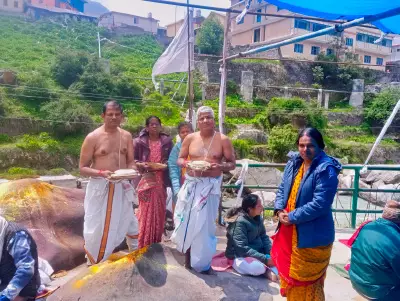
Families gather at Brahma Kapal throughout the Badrinath temple season to perform the final Shradh
The “Final Shradh” Concept: Why No Further Pind Daan Is Required After Brahma Kapal
This is the aspect of Brahma Kapal that sets it apart from every other Pind Daan teerth — and it is one that most families have never heard explained clearly. The shastras are direct on this point.
When Pind Daan is performed at Gaya, at Prayagraj, or at Varanasi, the benefit is enormous — but annual Shradh (the Pitrupaksha rites performed every year during Bhadrapada-Ashwin) continues to be a duty. The ancestors continue to need and receive these annual offerings.
Brahma Kapal operates differently. The Puranas state: “Brahmakapal Pind Daanat param na vidyate.” — “Beyond Pind Daan at Brahma Kapal, there is nothing further.”
Once the Pind Daan vidhi is completed at Brahma Kapal:
The ancestors for whom the rite was performed are considered to have received permanent liberation (mukti) from the cycle of rebirth and ancestral hunger (pitr-trishna).
No further annual Shradh, Tarpan, or Pind Daan is required for those specific ancestors.
The family is released from the ancestral debt (pitr-rin) associated with those pitrs.
Pitra Dosh associated with those ancestors is permanently neutralised.
This is why Brahma Kapal is described in the tradition as the Mahateertha — the supreme pilgrimage for ancestral rites. It is not merely very good. It is final.
For families where a Pitra Dosh has persisted for generations despite regular Shradh performances, or where the death rites of an ancestor were incomplete or delayed, Brahma Kapal is the prescribed resolution. The tradition even holds that ancestors who could not find liberation at Gaya or other sacred teerths receive salvation here.
Special Significance for Ancestors Who Died Suddenly or Unnaturally
The Puranic texts make a particular recommendation for families where ancestors died through sudden, violent, or untimely means — accidents, drowning, falls, fires, or premature illness. Such souls are termed akal mrityu pitrs in the shastra — those who died before their natural lifespan was complete.
The tradition holds that souls who die unnaturally are more likely to remain in a transitional state between lokas, unable to fully pass to the pitr realm, because the circumstances of their death severed the normal process of transition. For such ancestors, Narayan Bali and Sapindikarana are important complementary rites. But Brahma Kapal is specifically described in the texts as having extraordinary efficacy for the liberation of such akal mrityu pitrs.
The Pandavas understood this. According to the Shrimad Bhagavata Mahapurana, after the Kurukshetra war the Pandavas carried the weight of having killed thousands of their own kin — cousins, teachers, grandfathers — many of whom died violent, sudden deaths in battle. When the Pandavas undertook their final Swargarohini Yatra through the Himalayas, they stopped at Brahma Kapal and performed Pind Daan for all those relatives who had died in battle. Only at Brahma Kapal could the debt of gotra-hatya (killing of one’s own clan) be settled.
If your family carries such a weight — an ancestor who died young, or in difficult circumstances — Brahma Kapal is where that weight can be set down permanently.
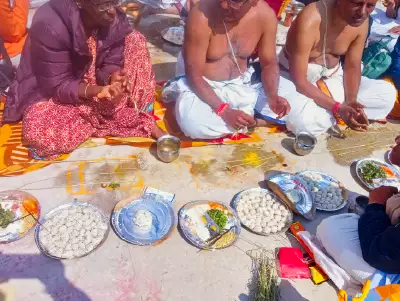
The ritual samagri — sesame seeds, barley pinda, kusha grass — prepared for a Shradh ceremony at Brahma Kapal
How to Reach Brahma Kapal from Badrinath Temple
Brahma Kapal is extremely accessible for any pilgrim who has reached Badrinath Dham. Here is the complete route:
From Badrinath Temple to Brahma Kapal (on foot): Exit the main Badrinath Temple gate and turn left (north). Follow the path along the Alaknanda riverbank. Brahma Kapal is approximately 200 to 300 metres from the temple entrance — a 5-minute walk on a flat, well-maintained path. It is clearly signed and pandits are visible at the ghat during all hours that rites are being performed.
Getting to Badrinath (the larger journey):
By road from Rishikesh: Badrinath is approximately 295 km from Rishikesh via Devprayag, Rudraprayag, Chamoli, and Joshimath. The road journey takes 10–12 hours in normal conditions. The last major town before Badrinath is Joshimath (50 km away), which has good accommodation options.
By road from Haridwar: Haridwar to Badrinath is approximately 315 km, 11–13 hours by road.
By helicopter: Helicopter services operate from Phata (near Rudraprayag) and Sersi (near Joshimath) to the Badrinath helipad, especially during peak season. Flight time is approximately 25–35 minutes. This is particularly useful for elderly pilgrims or those short on time.
By rail + road: The nearest railhead is Haridwar or Rishikesh. Overnight trains from Delhi reach Haridwar early morning, then road transport follows.
Road condition note: The Badrinath highway (NH-7) passes through high-altitude terrain prone to landslides during heavy monsoon (mid-July to August). Travel in September–October is generally smoother.
As part of the Char Dham Yatra, many families visit Yamunotri, Gangotri, and Kedarnath before reaching Badrinath. Brahma Kapal is typically the final spiritual act of the Char Dham journey — the ancestral offering that completes the pilgrimage.
Importance of Pind Daan at Badrinath: Who Should Specifically Make This Journey
Brahma Kapal is open to all Hindus wishing to perform ancestral rites. But the shastras describe certain situations where this journey is especially indicated:
Families with persistent Pitra Dosh despite regular annual Shradh — when the astrological signature of pitr affliction (Rahu–Moon or Sun–Rahu combinations, or a Saturn-afflicted 9th house) does not resolve over years of ritual, the tradition prescribes Brahma Kapal as the definitive resolution.
Families with an ancestor who died young (under 40) or died in an accident, by drowning, in fire, or under violent circumstances.
Families performing the final Shradh after having completed Pind Daan at Gaya — Brahma Kapal is considered the completion of the circuit started at Gaya.
Pilgrims undertaking the Char Dham Yatra — the tradition holds that Char Dham Yatra without ancestral rites at Brahma Kapal is incomplete.
NRI and overseas families who cannot perform regular annual Shradh due to their location — Brahma Kapal’s finality makes it especially practical for families who cannot reliably perform yearly Pitrupaksha rites.
For NRI families, we offer both in-person services (you come to Badrinath and we arrange everything) and our NRI puja services for remote arrangements. Please see our booking page for options.
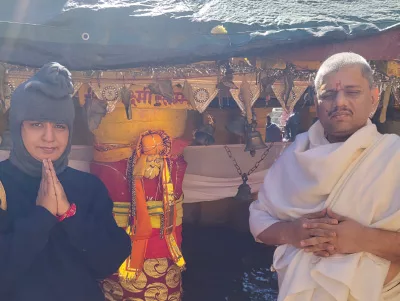
Our team at Brahma Kapal — conducting Pind Daan rites for families from across India and abroad
The Pind Daan Vidhi at Brahma Kapal: What the Ritual Involves
The Shradh vidhi at Brahma Kapal follows the Apastamba Sutra tradition for ancestral rites, with specific mantras from the Rigveda and Yajurveda that are particular to this kshetra. Here is what the ceremony involves:
Sankalp: The ritual begins with a formal declaration (Sankalp) in which the yajman (the one performing the rite) states his name, gotra, and the names of the ancestors for whom the rite is being performed. The pandit recites the Sankalp mantra that specifically identifies Brahma Kapal as the place of offering, invoking Lord Badrivishal as the witness.
Tarpan: Water offerings (Tarpan) are made into the Alaknanda using cupped palms, with sesame seeds (til) added. The Tarpan vidhi at Brahma Kapal includes offering to three generations of paternal and maternal pitrs, as well as to all unknown ancestors. This is the liquid offering that quenches pitr-trishna (ancestral thirst).
Pinda formation: Pindas (spherical balls) are formed from a mixture of barley flour (jau atta), sesame seeds, honey, and water. These represent the physical body of the ancestor — the food offering that sustains them in the ancestral realm during the transition to liberation.
Pinda Daan: The formed pindas are offered into the Alaknanda with the appropriate mantras, beginning with the most recently deceased and proceeding backward through the generations. Typically, offerings are made to the last three or four generations explicitly named, and then to all unnamed ancestors collectively.
Visarjan: The remaining materials are dissolved into the Alaknanda as a final offering. The ceremony closes with a Brahman bhoj (feeding of pandits) and daan — the giving of specific items including white cloth, rice, sesame, and silver.
The full vidhi typically takes 2 to 4 hours. Our pandits conduct this according to your gotra and family tradition (Shaiv or Vaishnav, north Indian or south Indian rite variations are accommodated).
Best Time to Visit Brahma Kapal for Pind Daan
Brahma Kapal can be visited for Pind Daan at any point during the Badrinath Temple season (typically late April to early November). However, certain periods carry additional merit or are more practically suitable:
Pitrupaksha (September–October): The 16-day period of Pitrupaksha — from Bhadrapada Purnima to Ashwin Amavasya — is the most auspicious period for Shradh karma everywhere in India. At Brahma Kapal during Pitrupaksha, the spiritual charge is considered at its highest. Pind Daan performed during this period at Brahma Kapal carries the combined merit of Pitrupaksha timing and the eightfold potency of Badrikshetra.
Shradh tithi of your ancestor: If you know the lunar tithi (date) on which your ancestor died, performing Pind Daan on that same tithi at Brahma Kapal is especially recommended. The pandit can confirm the current month’s corresponding tithi.
May and June (early season): The roads are clear, weather is stable, and fewer pilgrims arrive in the first month after the temple opening. Good for those who want quieter, more personal ceremonies.
September and October (shoulder season): Post-monsoon, the weather stabilises and the landscape is green and clear. Pitrupaksha falls within this window. This is the most popular period for both Char Dham pilgrims and ancestral rite seekers.
Avoid mid-July to mid-August: Monsoon rains create landslide risk on the Badrinath highway and visibility at the ghat is reduced.
Cost of Pind Daan at Brahma Kapal Badrinath
The cost of Pind Daan at Brahma Kapal depends on the number of ancestors named, the complexity of the ritual, and whether additional rites (Narayan Bali, Tripindi Shradh, Tarpan for unknown ancestors) are included.
When you approach local pandits at the ghat without prior arrangements, rates vary widely and haggling is common — which is not the ideal atmosphere for a sacred ancestral ceremony. Our service provides fixed, transparent pricing with a qualified tirth purohit who performs the complete vidhi without abbreviation.
Most Requested
Pind Daan at Brahmakapal, Badrinath
Starting at ₹10,999
Complete Shradh vidhi at Brahma Kapal ghat on the Alaknanda — Sankalp, Tarpan, Pinda formation and offering, Visarjan — with an experienced tirth purohit. Fixed pricing, no hidden charges. In-person and online arrangements available.
Full Shradh vidhi per Apastamba Sutra tradition
Sankalp with your gotra and ancestor names
All samagri included (til, jau atta, kusha, Alaknanda jal)
Photo documentation for in-person bookings; video recording for online bookings
Brahma Kapal vs Gaya: Which Should You Choose First?
Families often ask whether they should perform Pind Daan at Gaya or at Brahma Kapal, and which should come first. Here is the traditional guidance:
The shastras describe Gaya as the primary Shradh teerth for most families — the first and most widely prescribed location. The Gaya Mahatmya in the Vayu Purana and Brahma Purana both instruct that Pind Daan at Gaya liberates 21 generations of ancestors. The Pind Daan vidhi at Gaya is extensive, covering multiple ghats over multiple days.
Brahma Kapal is described as the completion — the rite that finalises what Gaya began. The traditional sequence, as prescribed by our shastras, is:
Prayagraj (Triveni Sangam) — Tarpan for immediate and unknown ancestors
Gaya (Vishnupad Ghat, Falgu River) — the primary Pind Daan
Brahma Kapal, Badrinath — the final Shradh that completes and permanently settles the ancestral debt
If a family can do only one Pind Daan at this stage of their life, Brahma Kapal carries the greater scriptural weight for finality. The Skanda Purana’s eightfold comparison specifically uses Gaya as the benchmark — meaning Brahma Kapal outperforms even the primary Shradh teerth.
For families already troubled by a persistent Pitra Dosh — where the astrological signature and its life effects have not resolved despite annual Shradh — we generally recommend a combined Gaya + Brahma Kapal programme, with Narayan Bali if an ancestor died unnaturally.
Pind Daan at Falgu River, Gaya — traditionally the first destination in the ancestral rite circuit, completed at Brahma Kapal
What to Carry for Pind Daan at Brahma Kapal
If you are making the journey yourself and coordinating with a local pandit, or if you want to supplement what our team provides, here is what you should carry:
Gotra information: The gotra (Vedic lineage) of the paternal side, and ideally of the maternal side as well. This is essential for the Sankalp.
Ancestor details: Full names of deceased ancestors (especially parents and grandparents), their lunar death tithi if known, and how they died if relevant.
Puja samagri (if sourcing yourself): Til (black sesame), jau atta (barley flour), kusha grass, honey, milk, tulsi leaves, white cloth for daan, rice grains. All of these are available from shops near Brahma Kapal ghat if you prefer to purchase on-site.
Clean, freshly washed clothes: Preferably white or cream. The yajman (the person performing the rite) should change into fresh clothes before beginning.
Dakshina for the pandit: Plan for dakshina in addition to the service fee — this is an essential component of the ritual, not optional.
Practical Tips for Visiting Brahma Kapal
Accommodation: Badrinath has hotels, dharamshalas, and GMVN guesthouses. The GMVN Badrinath Tourist Rest House is reliable and reasonably priced. Book well ahead for September–October, which is the busiest period.
Altitude: Badrinath sits at 3,100 metres. If you are coming from the plains, take one day at Joshimath (1,890 m) to acclimatise. Symptoms of altitude sickness (headache, nausea, breathlessness) typically resolve with rest and hydration.
Mobile connectivity: BSNL has the most reliable coverage in Badrinath. Other operators have patchy signal.
Temple timings at Badrinath: The Badrinath Temple opens at 4:30 AM for Mangala Aarti and closes at 9 PM. Brahma Kapal ghat can be visited during daylight hours when pandits are present, typically 6 AM to 6 PM.
Winter closure: The temple closes every year after Diwali (typically in October or November). Check the current year’s official opening and closing dates, as these vary with the Panchangam calendar.
Dress code: Modest clothing covering shoulders and knees is expected at all ghats in Badrinath. Remove footwear before approaching the Pind Daan area.
📌
Planning your Char Dham Yatra? Many families perform Pind Daan at Brahma Kapal as the final act of their Char Dham circuit. We can arrange the Shradh vidhi as a standalone service or as part of a full Char Dham accompaniment. Contact us at least 15 days before your planned visit date to confirm pandit availability.
What's Included
Included
Experienced Vedic Pandit
All Puja Samagri & Materials
Ceremony update on WhatsApp
Coordination support before the ritual
Not included
Travel to Brahma kapal Badrinath
Hotel / Accommodation
How It Works
01
Book & Confirm
Select your package and complete booking. Our team calls within 2 hours to confirm details.
02
Share Family Details
Provide your gotra, departed soul's name, and any special requirements.
03
Ceremony Performed
Experienced pandit performs the complete ceremony at the sacred site.
04
Updates Shared
The family receives ceremony updates on WhatsApp after completion.
Common questions about the procedure
Why perform Pind Daan at Brahmakapal Badrinath?
Brahmakapal is canonically named in the Skanda Purana Badari Mahatmya as the vedi where Brahma was released from his kapala curse — a Mahatmya register specific to the Badari kshetra and centred on the pretashila-state release doctrine. The story: Brahma severed Shiva's fifth head in a cosmic dispute, the kapala adhered to his hand as an unresolved-death curse-state, and only at this spot at the Alaknanda source did the kapala fall away. The doctrinal extension that gives the page its purpose: ancestors of devotees performing pind-daan at this vedi are released from any lingering pretashila state. Honest framing: the Vayu Purana Gaya Mahatmya remains the supreme pind-daan textual authority for the once-in-a-lifetime Gaya-Shradh tradition; Brahmakapal carries a distinct Himalayan Mahatmya register, not a competing one. Each register is canonically valid; each serves a different family scenario.
Who can perform Pind Daan at Brahmakapal Badrinath?
The eldest son holds the first authority to perform pind-daan with Sankalpa and pinda offering per the Manusmriti Pitri-yajna section. After marriage, the son performs the rite with his wife. If the eldest son is deceased, the younger son carries out the pind-daan. In the absence of a son, the grandson (son's son); in the absence of male issue, the brother; if the departed had only daughters, the daughter's son holds the right. In modern practice, when no male issue is available, daughters and daughters-in-law perform the full rite under the Badrinath Teerth Purohit's guidance and the rite is fully valid per the Parashar and Yajnavalkya Smritis on Pratinidhi Karma. Karta age-restrictions apply for the in-person pilgrimage given the 3,300m altitude — coordinate via WhatsApp if family-elder health is a consideration.
Where exactly is the Brahmakapal vedi located?
The Brahmakapal vedi sits on the Alaknanda riverside immediately near the Badri-Vishnu temple at Badrinath dham — a short walk from the main temple complex, on the rocky outcrop along the Alaknanda current. Pind-daan is performed at this vedi by the hereditary Badrinath Teerth Purohit lineage. The pinda is consecrated with the gotra-pravara recitation, offered with the Brahmakapal-specific mantras invoking the Skanda Badari Mahatmya pretashila-release doctrine, and carried to the Alaknanda current at the vedi. The pitru-tarpan follows in three directions per Baudhayana. Families typically combine the rite with Badri-Vishnu darshan and a Tapt Kund hot-spring bath before or after the ceremony.
When should Pind Daan at Brahmakapal Badrinath be performed?
The Garuda Purana Pretakalpa prescribes pind-daan during four primary windows: (1) Pitrupaksha — the 15-16 day fortnight in Ashwina Krishna Paksha (Sep 26 → Oct 10, 2026), with Sarva Pitru Amavasya (Mahalaya, Oct 10) as the closing universal-ancestors day. (2) Monthly Amavasya. (3) The annual death-anniversary Tithi. (4) Sankranti days. The seasonal-access constraint distinctive to Badrinath: the dham is open ~May to mid-October (Akshaya Tritiya door-opening in early May → Vijayadashami door-closing in mid-October), governed by the Rawal at the kshetra. In-person pind-daan at the Brahmakapal vedi is scheduled within this open window. Off-season bookings are routed to the next open season; for time-bound ancestor rites (Pitrupaksha Sep-Oct falls within the open window), book 3-4 weeks in advance as ghat coordination is dense. Online Pind Daan is available year-round — see the dedicated online Q below.
What is the difference between Brahmakapal pind-daan and Gaya pind-daan?
Both are canonically valid pind-daan tirthas with distinct Mahatmya registers. Gaya carries the supreme pind-daan Mahatmya per the Vayu Purana Gaya Mahatmya — Phalgu river is named as Vishnu himself, Vishnupad Temple holds the principal vedi where Vishnu's footprint receives the pinda offering, and the Akshayavata / Pretashila / Rudrapada vedis carry the Lord Rama Dasharatha-shradh tradition. Gaya is the traditionally first-rank choice for the once-in-a-lifetime Gaya-Shradh pilgrimage that Hindu families undertake. Brahmakapal Badrinath carries the Skanda Purana Badari Mahatmya register — the pretashila-state release doctrine specific to this Himalayan kshetra, rooted in the Brahma kapala-curse foundational story. The choice is contextual: Gaya for the canonical once-in-a-lifetime Mahatmya pilgrimage; Brahmakapal for families undertaking the Char Dham circuit who wish to include a Mahatmya-class pind-daan within the same pilgrimage. We do not recommend one over the other; we recommend coordinating both across a lifetime of pitru-rites where logistics permit.
How do families reach Badrinath, and how long does the pilgrimage take?
Badrinath is at 3,300m altitude in the Chamoli district of Uttarakhand, in the Garhwal Himalayas. Nearest railhead: Rishikesh (~295 km) or Haridwar (~320 km). Nearest airport: Dehradun Jolly Grant (~310 km). The road journey is typically 2 days each way through the Garhwal Himalayas — Rishikesh → Devprayag → Rudraprayag → Karnaprayag → Joshimath → Badrinath. Most families complete the pilgrimage in 4-6 days including pind-daan day. Multi-day Char Dham circuit packages (Yamunotri + Gangotri + Kedarnath + Badrinath) extend to 10-12 days. Altitude considerations: the air thins above Joshimath; families with heart, respiratory, or pregnancy considerations should consult a physician and consider the online package instead. Our family coordinator helps assess logistics — share family-elder health context during the booking call.
Can Pind Daan at Brahmakapal Badrinath be performed online for NRI families?
Yes, and the online package is the appropriate choice when in-person pilgrimage is not feasible. Online Pind Daan is performed by a hereditary Badrinath Teerth Purohit at the Brahmakapal vedi during the open season (~May to mid-October) and at the winter-seat at Pandukeshwar / Joshimath where Badri-Vishnu is worshipped (Nov-Apr) during the closed months — the kshetra-purohit tradition maintains an unbroken Vedic ritual presence year-round. The karta recites Sankalpa remotely on Zoom / WhatsApp / Google Meet, the purohit recites the gotra-pravara on the karta's behalf, and the purohit — acting as Pratinidhi (authorised proxy per the Parashar and Yajnavalkya Smritis) — offers the consecrated pinda and performs the pitru-tarpan in three directions per Baudhayana. A recorded ceremony is delivered within 72 hours via Google Meet / Zoom. Gangajal from the Alaknanda is couriered to the family within 5-7 days after the rite. The online Pind Daan at Brahmakapal Badrinath is currently priced at ₹10,999 (regular ₹15,999).
What does the pinda consist of, and what happens to it after the offering?
The pinda is a small consecrated dough ball prepared at the Brahmakapal vedi by the Teerth Purohit team from three Vedic ingredients: sesame seeds (til) — for purification and pitri-tradition; barley flour (jau) — the grain offered to ancestors since Vedic times per the Pitri Sukta; and kusha grass (darbha) — the sacred grass used in all Vedic rites for its purifying property. Alaknanda jal binds the mixture for the in-person rite (gangajal couriered from the Alaknanda for the online variant). The Sankalpa names the karta, the gotra, and three generations of paternal ancestors (plus one maternal generation in some traditions); the pinda is consecrated with the gotra-pravara recitation and the Brahmakapal-specific mantras invoking the Skanda Badari pretashila-release doctrine. After the offering, the pinda is released into the Alaknanda current with the prescribed mantras — the Ganga's source-stream carries the pinda's merit to the pitri-loka per the Garuda Purana Pretakalpa. The physical release is by the karta's own hand (in-person variant) or by the purohit's hand acting as Pratinidhi (online variant).
Should I perform my first pind-daan at Gaya, or can I do it at Brahmakapal Badrinath?
Both choices are valid; the answer depends on the family's circumstances. If you can undertake the once-in-a-lifetime Gaya-Shradh visit — typically a 3-4 day pilgrimage with Phalgu darshan and the broader Gaya vedi circuit — Gaya is the traditionally first-rank choice for a first pind-daan because of the supreme Vayu Purana Mahatmya register. If you are undertaking the Char Dham pilgrimage — Yamunotri + Gangotri + Kedarnath + Badrinath — performing pind-daan at the Brahmakapal vedi within the same yatra is a Mahatmya-class first pind-daan choice; many families plan their first pind-daan around the Char Dham yatra precisely for this combined-merit reason. If logistics prevent both pilgrimages — recent bereavement, health considerations, NRI distance, extended-family scheduling complexity — the dharmashastra tradition (Manusmriti + Garuda Pretakalpa) is clear that pind-daan at any valid tirtha with correct Sankalpa and qualified pandit is fully scripturally efficacious. We do not advise families to defer their first pind-daan in pursuit of an idealised pilgrimage they may not be able to complete; performing the rite promptly honours the ancestors more than postponing it. Families often complete their first pind-daan online and then undertake the in-person Gaya or Char Dham pilgrimage in a subsequent year as an act of devotion.
How does the in-person Brahmakapal package differ from the online package in price and inclusions?
The Brahmakapal catalogue currently carries three published packages, all on active sale. Year-round in-person: ₹11,000 sale (regular ₹19,999) — the standard in-person package available throughout the Badrinath open season (May-Oct), with the karta performing pind-daan at the Brahmakapal vedi by their own hand. Pitrupaksha-themed in-person: ₹10,999 sale (regular ₹12,999) — a Pitrupaksha-2026 variant for families scheduling the rite during the Sep 26 → Oct 10 fortnight which falls within the open-season window. Online: ₹10,999 sale (regular ₹15,999) — performed by the hereditary Teerth Purohit at the Brahmakapal vedi (open season) or at the winter-seat at Pandukeshwar / Joshimath (Nov-Apr) on the family's behalf via Pratinidhi Karma. In-person includes: hereditary Teerth Purohit performing the rite at the Brahmakapal vedi with the karta's own hand, complete samagri (Pind, til, kusha, Alaknanda jal, flowers, dhoop, diya), Sankalpa with the karta present, Vedic mantra recitation, pre-ceremony guidance, and optional Badri-Vishnu darshan + Tapt Kund bath + multi-day Char Dham circuit coordination. In-person excludes: travel to Badrinath, accommodation, tarpan (separate rite), photography, and extra dakshina. Online includes: pre-ritual consultation call, all ritual materials, Sankalpa via live video, gotra-pravara recitation by the purohit acting as Pratinidhi, live video call (Zoom / WhatsApp / Google Meet), recorded meeting delivered within 72 hours, post-ritual blessings call, and Alaknanda-source gangajal couriered to the family. Online excludes: physical presence at Badrinath, tarpan (separate rite), additional ceremonies (Narayan Bali / Tripindi Shradh — separate bookings), and extra dakshina.
Spiritual depth & scriptural detail
Drawn from puranic references and pandit consultations — for families who want to understand the ritual's meaning before booking.
What is the scriptural basis for pind-daan at Brahmakapal Badrinath?
Brahmakapal's pind-daan tradition rests on five doctrinal anchors. (1) The Skanda Purana Badari Mahatmya — the primary scripture anchor for this page — names Brahmakapal as the vedi where Brahma was released from his kapala curse, establishing the pretashila-state release doctrine that the family invokes for their ancestors. This is a canonical Mahatmya register, distinct from but parallel to the Gaya Mahatmya register. (2) The Mahabharata Vana Parva Tirthayatra Parva names Badari among the highest tirthas; the Pandavas' Badari pilgrimage is described in the same parva (verified primary source). (3) Universal pind-doctrine: the Manusmriti Pitri-yajna section names pind-daan a foundational pitri-yajna obligation; the Garuda Purana Pretakalpa describes pind as the vehicle for the preta's transit to pitri-loka. This universal doctrine applies at any pind-daan tirtha including Brahmakapal. (4) Universal Ganga-water doctrine: the Padma Purana and Agni Purana all establish that pinda offerings released into any Ganga current carry the Ganga-water purification merit; the Alaknanda is one of the two source-streams of the Ganga (Alaknanda + Bhagirathi meeting at Devprayag) and the universal water-doctrine applies at Brahmakapal-Alaknanda specifically. (5) Honest framing: the Vayu Purana Gaya Mahatmya names Gaya as the supreme pind-daan tirtha with the most extensive single-verse vedi-register (Vishnupad, Akshayavata, Pretashila, Rudrapada). Brahmakapal's Skanda Badari Mahatmya is a DIFFERENT but equally canonical Mahatmya register, NOT a competing one. Each register is canonically valid; each serves a different family scenario.
What is the story of Brahma's kapala curse, and how does it ground the pind-daan doctrine at Brahmakapal?
The story is recounted in the Skanda Purana Badari Mahatmya. In a cosmic dispute over precedence and creation-authority, Brahma severed Shiva's fifth head — an act of cosmic transgression that bound Brahma to the kapala (the severed skull) as an unresolved-death curse-state. The kapala adhered to Brahma's hand and could not be removed by any tirtha he visited across India. Brahma travelled the length of the subcontinent seeking release; at every sacred site the kapala remained stuck. Only at this spot at the Alaknanda source — at the foot of the Himalayas where Vishnu sits as Badri-Narayana — did the kapala fall away from Brahma's hand. The spot took its name from this release: Brahma-kapala, the place where Brahma's kapala fell. The doctrinal extension that gives the page its purpose: the same release that freed Brahma from his pretashila curse-state is available, by Mahatmya-extension, to the ancestors of devotees performing pind-daan at this vedi. The pind-daan rite at Brahmakapal invokes the Skanda Badari Mahatmya doctrine through Brahmakapal-specific mantras that name the foundational story — the family symbolically asks for the same release for their departed that Brahma received here. Important doctrinal precision: "pretashila state" here is a concept-noun (unresolved-death curse-state); the NAMED Pretashila vedi is at Gaya (one of the Vayu Purana's named secondary vedis where Lord Rama performed pind-daan for Dasharatha). These are two distinct doctrinal registers that share a Sanskrit concept-word — both canonically valid, both pind-daan-relevant, but not interchangeable as named sites.
How does Brahmakapal pind-daan compare to the four moksha-trinity pind-daan cities?
The five major pind-daan cities serve different segments of the Hindu ancestral-rite calendar. Gaya (Vayu Purana Gaya Mahatmya) is the supreme pind-daan tirtha — the canonical pitru-tirtha for the once-in-a-lifetime Gaya-Shradh visit; the most extensive single-verse vedi-register in the Mahatmya corpus. Prayagraj (Tirtharaj per Padma / Skanda / Matsya Mahatmyas) carries the King-of-Tirthas Mahatmya at the Triveni Sangam. Varanasi (Avimukta per the Mahabharata Vana Parva + Linga Purana; Manikarnika ghat) carries the never-forsaken-kshetra Mahatmya. Haridwar (Gangadvara per Skanda / Agni / Garuda / Vayu fourfold + Sapta Puri Mayapuri) carries the doorway-of-the-Ganga Mahatmya. Brahmakapal Badrinath is the FIFTH Mahatmya-class pind-daan vedi — carrying the Skanda Purana Badari Mahatmya register and the pretashila-state release doctrine specific to this Himalayan kshetra. The doctrinal honesty: each rite is canonically valid; the Mahatmya registers differ; each city serves a different family scenario. Brahmakapal's distinctive offering is the combined Char Dham pilgrimage value — a Mahatmya-class pind-daan that integrates into the Vaishnava liberation-circuit yatra rather than the Gangetic-trinity yatra.
What does the broader Badrinath pilgrimage add to the pind-daan ceremony?
Badrinath is one of the Char Dham (Badri / Dvarka / Puri / Rameshwaram — the four Vaishnava liberation seats established in the Adi Shankara tradition) and one of the Sapta Badari (the seven Badari shrines along the Alaknanda corridor: Vishal Badari at Badrinath, Yogadhyan Badari at Pandukeshwar, Bhavishya Badari near Subhain, Vridha Badari near Joshimath, Adi Badari at Karnaprayag, Dhyan Badari at Urgam Valley, Aardha Badari near Pandukeshwar). Pind-daan at Brahmakapal is most often performed as part of the broader Badrinath pilgrimage which centres on Badri-Vishnu darshan, a Tapt Kund hot-spring bath (the natural hot-spring at the kshetra), and devotional observances at the main temple complex. Families undertaking the full Char Dham yatra (Yamunotri + Gangotri + Kedarnath + Badrinath) typically schedule the Brahmakapal pind-daan on the Badrinath leg, integrating the ancestral rite into a 10-12 day Himalayan pilgrimage. Important doctrinal precision: Char Dham is a Vaishnava liberation-circuit doctrine and is doctrinally distinct from the pind-daan Three Gates moksha-trinity (Prayagraj / Kashi / Gaya). The two frameworks are NOT interchangeable; the pilgrimage-merit of Char Dham is valid in its own register and does NOT substitute for the canonical Vayu Purana Gaya Mahatmya pind-doctrine.
What is the seasonal access constraint at Badrinath, and how is off-season pind-daan handled?
Badrinath dham is open ~May to mid-October each year — the doors open on Akshaya Tritiya (~late April / early May depending on the lunar calendar) and close on Vijayadashami (~mid-October). The opening and closing are governed by the Rawal at the kshetra, and the ritual presence of Badri-Vishnu is maintained at the main temple during these months. From November through April, snow renders the dham inaccessible and the deity is symbolically moved to the winter-seat — in two traditional locations: Pandukeshwar (a small village ~24km below Badrinath, where the Yogadhyan Badari shrine maintains the winter ritual) and Joshimath (~45km below Badrinath, the seat of the Adi Shankara Jyotirmath Pitha where the Badri-Vishnu darshan is offered Nov-Apr). How this affects the booking: in-person Pind Daan at the Brahmakapal vedi is scheduled within the May-Oct open window; off-season bookings are scheduled into the next open season or, by mutual coordination, performed on Akshaya Tritiya / Vijayadashami door-days when the kshetra is being opened or closed. Online Pind Daan is available year-round — the hereditary Teerth Purohit performs the rite at the Brahmakapal vedi during the open season and at the winter-seat at Pandukeshwar / Joshimath during the closed months. The ancestor-rite carries full Mahatmya merit in either location because the deity-presence and the Teerth Purohit lineage are continuous across the seasonal cycle.
Can the pind-daan at Brahmakapal be performed when the family is restricted by sutaka or tithi-restrictions?
Pind-daan carries calendar sensitivity distinct from asthi-visarjan. Sutaka (impurity period): if a family member has died recently (within 13 days) or a birth has occurred (within 11 days), pind-daan is paused until the sutaka closes. The annual Tithi-pind and monthly Amavasya pind can be rescheduled to the next valid window. Adhika-Maas (the extra lunar month that appears in some years): pind-daan is generally avoided during Adhika-Maas except for Pitrupaksha which always supersedes — but Pitrupaksha typically falls just outside the Badrinath open-season window, so coordination with seasonal access matters. Panchaka and other specific tithi-restrictions: handled case-by-case by the Teerth Purohit based on the family's sankalpa-need (some restrictions apply to first-time rites only, not annual recurrence). For online Pind Daan, the karta's sankalpa from home governs the sutaka calculation — physical distance does not exempt the family from the calendar but offers more flexibility on scheduling. Coordinate via WhatsApp before booking if your family is in or near a sutaka window. Combined Badrinath-specific calendar consideration: the May-Oct open window plus the standard pind-daan tithi calendar means the genuinely-available booking dates in any given year are narrower than at year-round Gangetic-plain sites — our coordinator helps map your family's sankalpa-need against the available dates during the booking call.
Voices from families
“They were rescuers in our most difficult time”
★★★★4.4/5 · 52 verified reviews
★★★★
We are NRI family based in USA. We booked online poojan and it was conducted very sincerely. The video quality was good and we could see everything clearly. The team sent us photos and videos after the ceremony too. Dhanyavaad.
RM
Richa Malhotra
Pind Daan at Badrinath
Verified
★★★★★
Performed Pind Daan here during Pitrapaksha. The entire process was smooth. Pandit ji was very cooperative and explained the mantra meanings. The prasad distribution was also well organized. A truly fulfilling experience.
VJ
Vivek Joshi
Pind Daan in Brahmakapal Badrinath this Pitrupaksha 2026
Verified
★★★★★
The coordination was excellent. We received all details well in advance. The puja was performed exactly as described.
NA
Nitin Awasthi
Online Pind Daan at Brahmakapal Badrinath
Verified
★★★★★
Very authentic Vedic ceremony. All materials were included as promised. Will definitely use their services again.
NA
Nitin Awasthi
Pind Daan at Badrinath
Verified
★★★★★
The pandit ji recited the mantras perfectly and explained the significance of each ritual. Deeply moving experience.
MJ
Meena Joshi
Pind Daan in Brahmakapal Badrinath this Pitrupaksha 2026
Verified
★★★★
First time performing Pind Daan and was nervous about the process. But the team guided us well. They explained what to wear, what to bring, and what mantras to recite. Everything went smoothly. Dhanyavaad.
SU
Satish Upadhyay
Online Pind Daan at Brahmakapal Badrinath
Verified
Frequently asked
Questions families ask us
Compiled from 2,263+ family conversations on WhatsApp and over the phone.
What is Brahma Kapal at Badrinath and why is it significant?
Brahma Kapal is a sacred flat rock platform on the banks of the Alaknanda river at Badrinath, approximately 500 meters from the main Badrinath Temple. According to the Skanda Purana and Vishnu Purana, Brahma Kapal is where Lord Shiva gained release from the sin of Brahmahatya (killing a Brahmin — specifically Brahma's fifth head) by performing ancestral rites. This makes Brahma Kapal uniquely powerful for: liberating ancestors from Brahmahatya dosha, liberating souls who committed suicide or died violently, resolving generational Pitra Dosh, and granting moksha to souls trapped in Preta state. The scriptures state that Pind Daan at Brahma Kapal grants eight times the merit of Pind Daan at Gaya for specific types of ancestral afflictions.
Why is performing Pind Daan at Brahmakapal Badrinath considered extremely significant?
Pind Daan at Brahmakapal is believed to grant ultimate and final liberation (Moksha) to ancestors. Scriptures like the Skanda Purana state that rituals performed here are eight times more potent than those at Gaya. It's believed Lord Brahma resides here, and Lord Shiva was absolved of his sin (Brahma Hatya) at this spot. Performing Pind Daan here ensures ancestors, even those restless or trapped elsewhere, attain permanent peace and a place in the highest celestial abodes, potentially eliminating the need for future annual Shraddha rituals
How do I perform Pind Daan at Brahma Kapal, Badrinath?
The procedure for Pind Daan at Brahma Kapal follows the standard Vedic vidhi with a few unique elements: (1) Bathe in the icy Alaknanda at Tapt Kund (the hot spring near the temple) before proceeding, (2) Dress in clean white or saffron attire, (3) Collect puja samagri: rice, sesame (til), kusha grass, Ganga Jal, a small pot of ghee, and 3-7 pindas based on the number of ancestors, (4) Proceed to Brahma Kapal and face the river (east), (5) Perform the Sankalpa with your gotra and the names of ancestors, (6) Offer pindas one at a time while reciting the Pitri Sukta, (7) Release the pindas into the Alaknanda, (8) Offer Tarpan (water with sesame) to all ancestors, (9) Conclude with Namaskar to the Alaknanda and the Badrinath Temple. Our Badrinath Pind Daan package includes pandit coordination, samagri, and ritual documentation for ₹8,000-₹15,000.
When is the best time to visit Badrinath for Pind Daan?
Badrinath is accessible only from May to early November each year — the temple and town close for winter due to heavy snow (typically from mid-November to late April). Within this window, the best times for Pind Daan are: (1) May-June — post-opening, pleasant weather, moderate crowds, (2) August-September — best balance of weather and lower crowds (monsoon is technically on but Badrinath receives less rain than Rishikesh), (3) October — pre-closing, crisp mountain air, crowds lower, (4) Pitrupaksha (September) — most spiritually powerful but most crowded. Avoid: peak monsoon (July) when landslides can close the road, and November when temperature drops dramatically. Our Badrinath pilgrimage packages include weather-safe dates with pre-arranged accommodation at the nearest Badrinath hotels.
How much does Pind Daan cost at Brahma Kapal, Badrinath?
Pind Daan at Brahma Kapal is slightly more expensive than plain Pind Daan at other tirthas due to the remote Himalayan location and specific scriptural procedures. Our basic 1-day Badrinath Pind Daan package starts from ₹8,000 and includes: pandit dakshina, all samagri, the full scriptural vidhi at Brahma Kapal, a bath at Tapt Kund, Alaknanda Tarpan. Standard packages with Brahmin Bhoj for 5 Brahmins range from ₹11,000 to ₹15,000. Premium packages with extended rites at Brahma Kapal + Vasudhara + Mana village visit range from ₹18,000 to ₹25,000. These prices do NOT include travel and accommodation to Badrinath (approximately ₹12,000-₹20,000 additional for a 3-day Haridwar-Badrinath-Haridwar trip). Visit our Badrinath service page for complete pilgrimage packages.
Is Pind Daan at Brahmakapal effective for ancestors who died unnatural or untimely deaths?
Yes, Brahmakapal is considered exceptionally potent for performing Pind Daan and Shraddha for ancestors who suffered Akal Mrityu (untimely/unnatural death) or whose souls may be trapped or restless (in Pretayoni). The profound sanctity of Brahmakapal, blessed by Brahma and Shiva, is believed to grant immediate peace, liberation from suffering, and ultimate salvation (moksha) even to such souls, ensuring their peaceful transition.
Who should perform Pind Daan specifically at Badrinath Brahma Kapal?
Brahma Kapal Pind Daan is recommended in these specific cases: (1) Families with ancestors who committed suicide or died by violence (Brahmahatya or similar "grave" causes), (2) Families experiencing persistent Pitra Dosh that has not been resolved by Gaya Pind Daan, (3) Individuals who feel a spiritual call to perform Pind Daan in the Himalayas rather than the plains, (4) Pilgrims combining Char Dham Yatra with ancestral rites, (5) Those seeking the additional blessing of Lord Badri Narayan alongside ancestral liberation. For most general Pind Daan purposes, Gaya remains the scripturally-preferred site. Brahma Kapal is specifically for "difficult cases" or for those desiring the spiritual depth of a Himalayan ceremony.
Can Badrinath Pind Daan be performed remotely for NRI families?
Badrinath's remote Himalayan location makes in-person attendance difficult for many families. Our Vedic pandits based at Badrinath (during the open season May-November) perform Pind Daan at Brahma Kapal on behalf of NRI families. The procedure is the same as in-person: you share the deceased's name, gotra, date of passing, and any specific causes of death (unnatural, suicide, etc.) via WhatsApp or email. We conduct the ceremony at Brahma Kapal with full scriptural authenticity and provide within 3-5 days (slightly longer than plains ceremonies due to Badrinath's limited internet connectivity). Remote Badrinath Pind Daan is priced at ₹8,000-₹12,000, including all pandit fees and samagri. Available only during temple opening months.
Free consultation
Talk to a family advisor today
We’ll listen, understand your family’s situation, and recommend the right package — never push. Reply within 10 minutes on WhatsApp, every day.

 Save 45%