Kaal Sarp Dosh Puja in Prayagraj

Kaal Sarp Dosh Puja in Prayagraj

4.8 (2,263+ families) · Prayagraj ·Since 2019
✓ Verified Pandits 📹 Video Proof 🕉 Vedic Vidhi 📦 All Samagri Included

About Kaal Sarp Dosh Puja

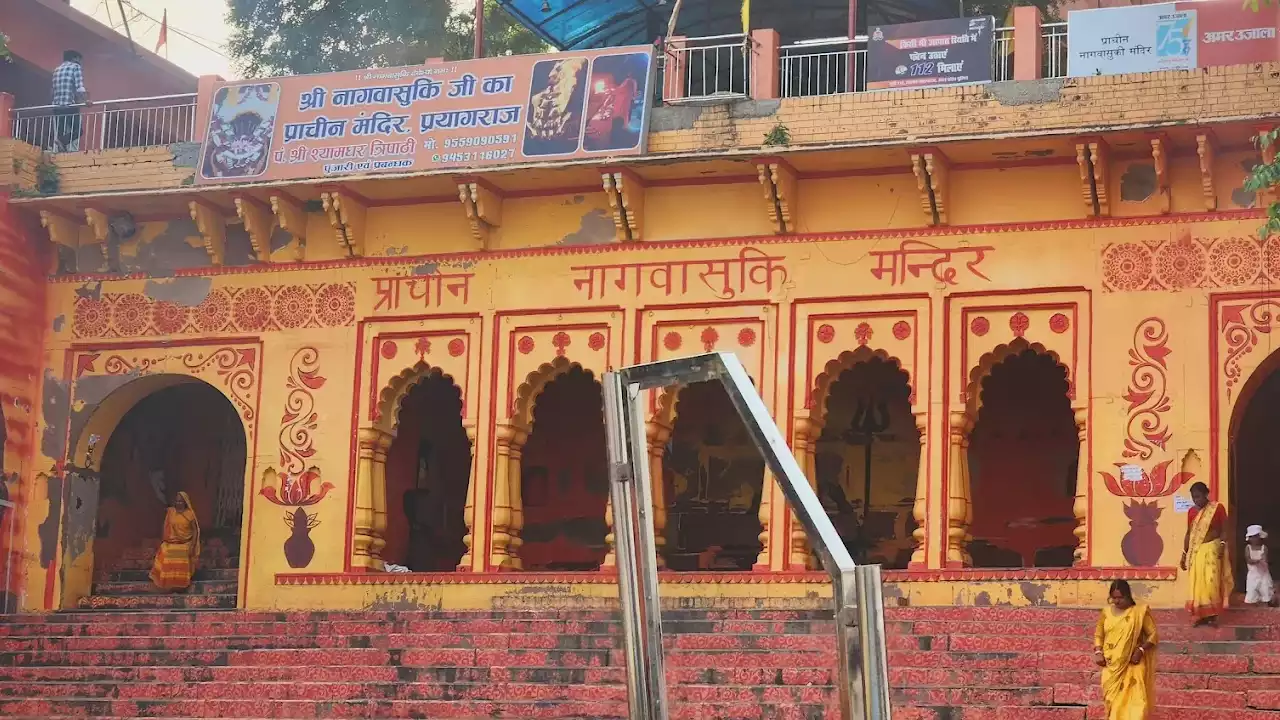
Kaal Sarp Dosh forms when all seven planets — Sun, Moon, Mars, Mercury, Jupiter, Venus, and Saturn — are hemmed between the shadow planets Rahu and Ketu in your birth chart. The resulting imbalance creates persistent obstacles across career, marriage, finances, and health that ordinary remedies cannot fully address. Naag Vasuki Mandir in Daraganj, Prayagraj is one of only five sites recognized across India for performing authentic Kaal Sarp Dosh Puja — and uniquely, it is the only temple dedicated specifically to the serpent deity himself. The energy here is unmatched for this specific nivaran. Book Kaal Sarp Dosh Nivaran Puja — Rs 11,000, all-inclusive.

The 12 Types of Kaal Sarp Dosh

The type is determined by the houses Rahu and Ketu occupy. Each type affects a specific area of life. Here is the complete reference:

#NameRahu HouseKetu HouseArea AffectedKey Effects
1Anant1st7thSelf & marriageIdentity confusion, late marriage, partner disputes
2Kulik2nd8thWealth & familyFinancial instability, family conflicts, speech problems
3Vasuki3rd9thCourage & fortuneSibling issues, fortune delays, blocked higher learning
4Shankhpal4th10thHome & careerProperty disputes, career stagnation, maternal health concerns
5Padma5th11thChildren & gainsDifficulty conceiving, gains withheld, speculative losses
6Mahapadma6th12thEnemies & liberationHidden enemies, legal disputes, foreign settlement challenges
7Takshak7th1stMarriage & partnershipsBroken relationships, business partnership failures, marital discord
8Karkotak8th2ndInheritance & secretsSudden losses, inheritance disputes, hidden debt accumulation
9Shankhchur9th3rdDharma & communicationBlocked luck, father's health, communication difficulties
10Ghatak10th4thKarma & professionCareer reversals, reputation damage, delayed professional recognition
11Vishdhar11th5thGains & intelligenceDeferred income, blocked networks, difficulty in education
12Sheshnag12th6thLiberation & enemiesMoksha delays, health complications, hidden adversaries

An experienced pandit will identify your specific type from your kundli and customize the sankalpa accordingly. All 12 types are addressed through the same core puja procedure at Naag Vasuki Mandir, with specific mantras emphasized for the relevant Rahu-Ketu placement.

Signs and Symptoms of Kaal Sarp Dosh

Recognizing the dosh is the first step. The effects tend to be systemic — they cut across multiple areas of life simultaneously rather than manifesting as a single isolated problem.

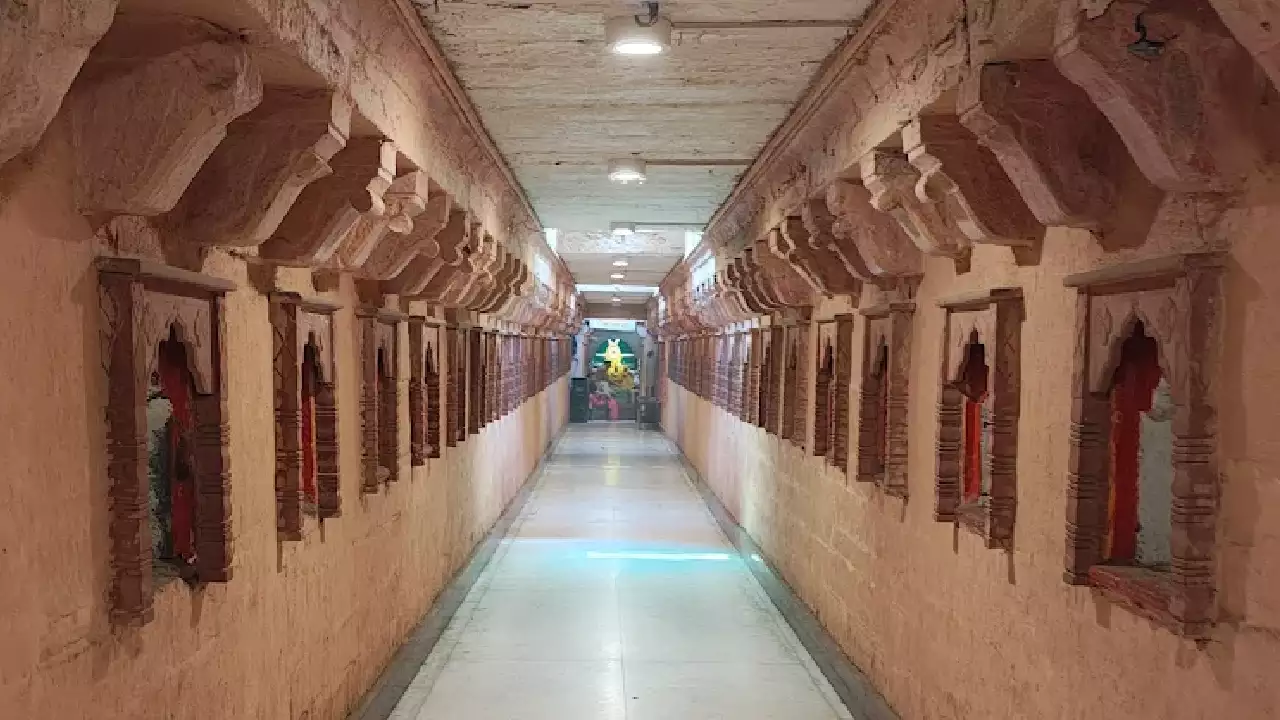
Patalpuri Temple in Prayagraj, an ancient underground temple at the Triveni Sangam site

Career: Repeated delays despite hard work, projects that almost succeed and then collapse, sudden job loss after promising starts, opportunities that appear solid and then evaporate without explanation. People often describe it as an invisible ceiling they cannot break through.

Marriage and relationships: Significant delay in finding a compatible partner, multiple broken engagements, recurring conflict in otherwise stable marriages, feeling emotionally isolated even within relationships.

Health: The most cited indicator across traditional texts and lived experience is recurring dreams of snakes — being chased, bitten, or surrounded by serpents. Chronic anxiety without clear cause, unexplained fatigue, and recurring illnesses that clear up and return are also commonly reported.

Financial: A feast-or-famine pattern where money arrives but never accumulates. Inability to save despite reasonable income. Losses that seem to arrive precisely when financial stability was within reach.

If three or more of these patterns are consistently present in your life, a kundli reading to check for Kaal Sarp Dosh is strongly recommended before pursuing other remedies.

Why Prayagraj for Kaal Sarp Dosh Puja?

Naag Vasuki Mandir — A Temple Dedicated to the Serpent Deity

Of the five recognized sites in India for Kaal Sarp Dosh Puja, Naag Vasuki Mandir at Daraganj, Prayagraj holds a unique position. While other sites — Trimbakeshwar, Ujjain, Nashik, and Nagpur — are associated with Shiva temples or Navagraha shrines, Naag Vasuki is the only temple in India where the primary presiding deity is the serpent lord himself. Nagvasuki, known also as Sheshraj, Sarpanath, and Anant, is worshipped here directly — not as a secondary deity or vehicle, but as the main murti.

The temple's origins date to the 10th century, with the present structure rebuilt by the Maratha kings in the 18th century. It sits on the banks of the Ganga at Daraganj — a location of enormous spiritual power in its own right. According to temple tradition and the Matsya Purana, worshipping Lord Nagvasuki at this site with proper puja and sankalpa can permanently end the effects of Kaal Sarp Dosh.

During Kumbh Mela and Nag Panchami, lakhs of devotees travel specifically to this mandir — many of them from outside India — precisely because of its reputation for Kaal Sarp Dosh nivaran. The concentration of faith and accumulated punya at this site amplifies the ritual's effect.

The Triveni Sangam Advantage

Prayagraj is Tirtha-Raja — the king of all pilgrimages. The Triveni Sangam, where the Ganga, Yamuna, and the subterranean Saraswati meet, is considered the most potent tirtha on Earth for performing any karma-clearing ritual. Learn more about the significance of the Triveni Sangam.

Any ritual performed at Prayagraj or with its sacred waters is traditionally believed to yield results many times greater than the same ritual performed elsewhere. Post-puja materials from the Kaal Sarp Dosh ceremony — the snake idols, flowers, and offerings — are immersed directly in the Ganga at Sangam, completing the ritual cycle in the most sacred waters available.

Practically, this also means a single trip to Prayagraj can accomplish multiple spiritual objectives. Many families combine Kaal Sarp Dosh Puja with Pind Daan for ancestral peace or Asthi Visarjan for a departed family member — addressing multiple karmic layers in one sacred journey.
The Puja Procedure — Step by Step

The Kaal Sarp Dosh Puja at Naag Vasuki Mandir follows a Vedic sequence that has been refined by generations of practicing pandits. The full ceremony runs 2 to 3 hours. Here is what happens:

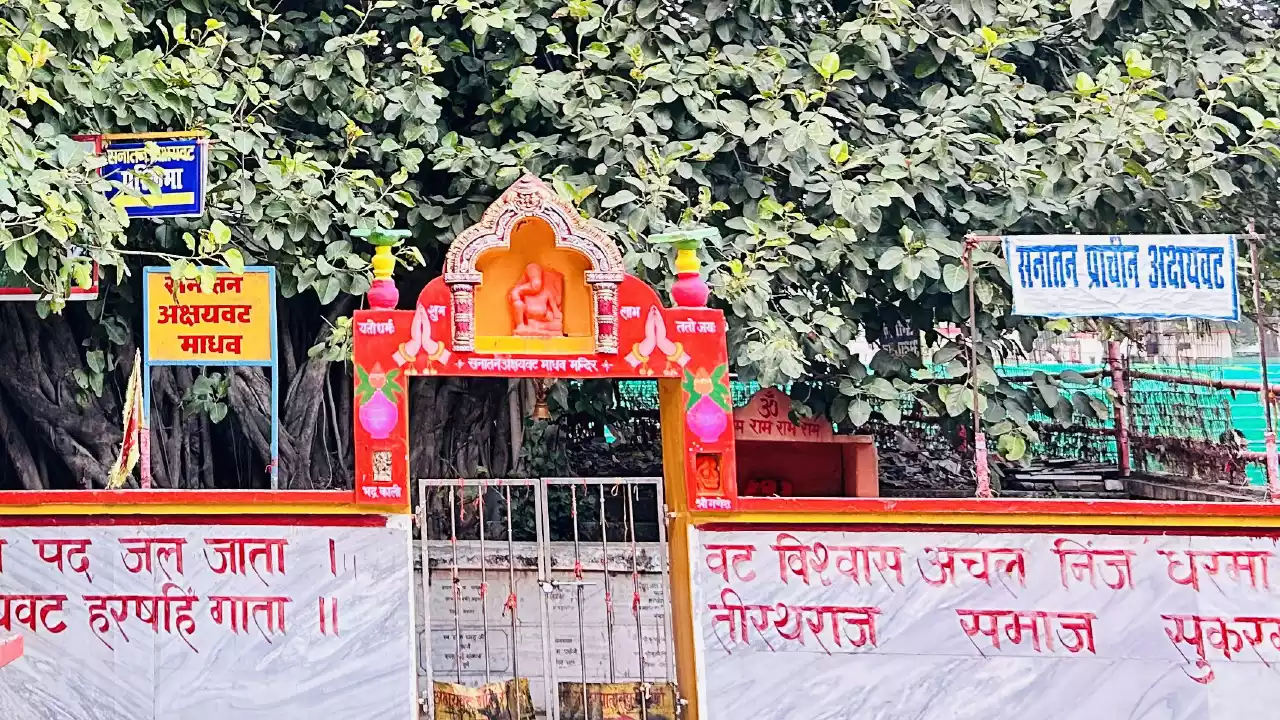
Akshaywat Temple Prayagraj, the immortal Banyan tree at the Sangam
  1. Sankalpa — The puja begins with a sacred vow (sankalpa) in which the pandit recites your full name, gotra (lineage), nakshatra (birth star), and the specific dosh being addressed. Five to seven sankalpas are taken in sequence, each directed to a different divine witness — from Brahma down to the presiding deity of the temple.
  2. Ganpati Puja — Lord Ganesha is invoked first, as is mandatory at the beginning of all Vedic rituals. His blessings remove obstacles that might interrupt the ceremony and ensure the puja reaches its intended outcome without interference.
  3. Punyahavachan — A purification ceremony in which the pandit consecrates water with Vedic mantras and uses it to purify the ritual space, the participants, and all samagri (ritual materials). This prepares the environment for higher-frequency energies to enter.
  4. Matruka Puja — Worship of the divine mothers, the protective shakti energies associated with the eight directions. Their invocation creates a sacred perimeter around the ritual.
  5. Naandi Shradha — A brief ancestral offering made to satisfy the pitrs (ancestors) and request their blessing for the ritual. Since Kaal Sarp Dosh is considered karmic in origin, ancestral appeasement is a necessary preliminary step.
  6. Navagraha Puja — All nine grahas (planetary deities) receive worship. This includes 108 chants directed to each graha and extended recitations of 2,100 mantras each for Rahu and Ketu specifically — the two shadow planets at the heart of the dosh.
  7. Serpent Idol Placement — Idols of snakes made from lead, copper, and silver are placed on the altar. Lead and copper represent the earthly serpent energy (tamas), silver represents the sattvic, elevated serpent energy. These idols absorb the doshas during the puja and are later immersed in the river.
  8. Rudrabhishek — Lord Shiva, as Nageshwar (lord of serpents), is worshipped with an abhishek using milk, honey, ghee, gangajal, and panchamrit. Since Shiva controls Rahu and Ketu, his specific propitiation strengthens the effect of the puja.
  9. Naag-Nagin Puja — The male (Naag) and female (Nagin) serpent deities are worshipped together with offerings of milk and flowers. The Naag Suktam from the Atharva Veda is chanted in full during this step.
  10. Havan — The fire ritual is the most powerful component of the ceremony. The sacred fire receives 1,100 to 11,000 recitations of the Mahamrityunjaya mantra and 18,000 Kaal Sarp Nivaran mantras. The number is calibrated to the severity of the dosh identified in the kundli.
  11. Purnahuti — The final, complete offering into the fire. This marks the formal completion of the havan and the transfer of accumulated punya to the yajman (the one for whom the puja is performed).
  12. River Immersion — All puja materials — the snake idols, flowers, ash from the havan, and remaining offerings — are taken to the Triveni Sangam and immersed in the Ganga. This completes the karmic cycle, as the serpent energies are returned to the water element from which they arose.

The entire ceremony takes 2 to 3 hours depending on the number of participants and the specific havan count chosen. Participants are requested to arrive on an empty stomach for the sankalpa. All samagri is arranged by the pandit team — you need not bring anything separately.

Ready to book? Kaal Sarp Dosh Nivaran Puja at Naag Vasuki Mandir, Prayagraj — Rs 11,000 all-inclusive. All samagri, pandit fees, and river immersion included.

Book Kaal Sarp Dosh Puja — Rs 11,000

Best Days for Kaal Sarp Dosh Puja in 2026

While the puja can be performed any day of the year at Naag Vasuki Mandir, certain days carry significantly amplified energy for this specific ritual:

  • Nag Panchami (August 2026) — The single most powerful day of the year for any serpent-related puja. The entire country is in a state of heightened Naga consciousness on this day, and the energy at Naag Vasuki Mandir is extraordinary. Highest recommended timing.
  • Every Amavasya (no-moon day) — Monthly occurrence. Rahu and Ketu are shadow planets most active on Amavasya. Performing the puja on the new moon day targets these energies at their peak.
  • Maha Shivratri (February 18, 2026) — Lord Shiva, who wears serpents, receives maximum devotion on this night. Rudrabhishek during Shivratri for Kaal Sarp nivaran is particularly potent.
  • Shravan Mondays (July–August 2026) — The entire month of Shravan is sacred to Shiva. Monday pujas during Shravan carry the combined blessing of Shiva and the serpent energies.
  • Eclipse days (Surya Grahan / Chandra Grahan) — Solar and lunar eclipses are astronomically and astrologically Rahu-Ketu events. Puja performed during eclipse energy directly addresses the source of the dosh.
  • Sundays and Tuesdays, year-round — These days are associated with Surya (Sunday) and Mangal (Tuesday), planetary forces that can counterbalance Rahu-Ketu influence in many chart configurations.

Contact us in advance if you wish to schedule the puja on Nag Panchami or Amavasya — these dates fill up quickly, especially for NRI families coordinating travel plans.

Remedies That Support the Puja

The puja itself is the primary and most effective intervention. These supporting practices, maintained consistently after the puja, reinforce its effects and prevent the dosh from reasserting itself through daily karma:

RemedyFrequencyNotes
Nag Panchami fast + serpent worshipAnnualOffer milk to live or clay serpents; avoid harming any snake throughout the day
Om Namah Shivaya chantingDaily, 108 timesMorning practice; use a rudraksha mala
Mahamrityunjaya mantraDaily, 11 times minimumProtects health, counters Ketu-related illness
8 + 9 Mukhi RudrakshaContinuous (wear daily)8 Mukhi for Rahu, 9 Mukhi for Ketu; wear together
Gomed (Hessonite) + Cat's EyeContinuousOnly after proper astrologer consultation — wrong stones can worsen effects
11 coconuts immersed in riverMonthly, on SaturdaysFlowing river preferred; represents releasing Rahu-Ketu energy
Black sesame, black cloth, iron donationEvery SaturdayDonate to temple or those in need; strengthens Saturn to balance the dosh

What to Expect After the Puja

Changes following Kaal Sarp Dosh Puja do not arrive in a single dramatic moment. They unfold progressively as the karmic weight lifts. Based on feedback from the 2,263+ families served by Prayag Pandits, here is a realistic timeline:

1 to 3 months: The most commonly reported early change is improved sleep — specifically, the recurring snake dreams that many people had experienced for years stop or significantly reduce. Mental clarity improves. Anxiety levels drop without any change in external circumstances. A sense of lightness is frequently described.

3 to 12 months: Career obstacles that had been stagnant for years begin to dissolve. Job opportunities arrive and, crucially, they convert — the pattern of near-miss success breaks. Financial stability improves. Savings begin to accumulate. Family relationships that had been strained by years of stress start to ease. For those with marriage delays, this is the period when compatible proposals tend to arrive.

Long-term: Professional recognition catches up with actual capability. For those with Ardh Kaal Sarp Dosh and marriage-related placements, the removal of the block creates space for partnership that was not available before. Legal disputes that had been dragging resolve. A general sense of protection and forward movement replaces the feeling of being held back.

These changes are supported — not guaranteed in isolation — by the puja. The daily remedies and the sincerity with which one practices after the ceremony significantly affect the depth of the result.

Why Choose Prayag Pandits?

Prayag Pandits has been serving families at Prayagraj's sacred sites since 2019. Here is what distinguishes our service:

  • 2,263+ families served across 11+ sacred cities — our pandits have performed Kaal Sarp Dosh Puja for families from across India and abroad
  • Puja at Naag Vasuki Mandir — we do not conduct this puja at substitute locations; the ritual is performed at the recognized site with temple-affiliated pandits
  • All samagri included — snake idols, flowers, gangajal, havan materials, puja thali — no separate shopping or sourcing required on your end
  • Live video option for NRI families — participate in real time from anywhere in the world while the pandit performs the puja on your behalf in Prayagraj
  • GST-registered, transparent pricing — Rs 11,000 all-inclusive. No hidden charges, no last-minute additions
  • Direct contact: +91 7754097777 | +91 9115234555
Book Kaal Sarp Dosh Nivaran Puja
Naag Vasuki Mandir, Daraganj, Prayagraj
Rs 11,000 — All-inclusive (samagri, pandit, river immersion)
Live video participation available for NRI families

Book Now — Rs 11,000   Call: +91 7754097777

What is Kaal Sarp Dosh?

Kaal Sarp Dosh is an astrological condition in a Vedic birth chart where all seven visible planets — Sun, Moon, Mars, Mercury, Jupiter, Venus, and Saturn — are positioned between the shadow planets Rahu and Ketu. This configuration is believed to create persistent obstacles in one or more areas of life, including career, marriage, finances, and health. The severity depends on which houses Rahu and Ketu occupy and the overall chart strength.

How do I check if I have Kaal Sarp Dosh?

The definitive check is a Vedic kundli (birth chart) reading by an experienced astrologer — you need your date of birth, time of birth, and place of birth. If all seven planets fall between Rahu and Ketu in the chart, the dosh is present. A commonly reported early indicator, before a formal kundli reading, is recurring dreams of snakes — being chased, surrounded, or bitten by serpents. If this is combined with persistent life obstacles in career or marriage despite genuine effort, a kundli check is recommended.

How many types of Kaal Sarp Dosh are there?

There are 12 types, each named after a different serpent deity: Anant, Kulik, Vasuki, Shankhpal, Padma, Mahapadma, Takshak, Karkotak, Shankhchur, Ghatak, Vishdhar, and Sheshnag. The type is determined by which house Rahu occupies in the birth chart. Each type creates specific challenges in different areas of life. All 12 types are addressed through the puja at Naag Vasuki Mandir, with the pandit customizing the sankalpa and mantra emphasis based on your specific placement.

Is Kaal Sarp Dosh always harmful?

Not always. Several well-documented individuals with Kaal Sarp Dosh in their birth charts have achieved extraordinary success — Sachin Tendulkar and Dhirubhai Ambani are frequently cited examples. The dosh creates challenges but also, in certain chart configurations, a singular focus and drive that can produce exceptional results in a specific field. The effect depends on which houses are involved, the strength of the ascendant, and other chart factors. An astrologer can tell you specifically how the dosh operates in your unique chart rather than giving a generic verdict.

Can Kaal Sarp Dosh be removed permanently?

Performing the puja at a recognized site like Naag Vasuki Mandir in Prayagraj significantly reduces the dosh's effects and, per temple tradition, addresses the karmic root. Many families report a marked and lasting change after the puja, particularly when combined with consistent daily practice — mantra chanting, the Nag Panchami fast, and the Saturday remedies. The dosh is karmic in origin, so the puja works as an accelerated karmic clearing rather than a mechanical switch. The depth of the result is directly linked to the sincerity of the ongoing practice.

How much does Kaal Sarp Dosh Puja cost at Prayag Pandits?

The Kaal Sarp Dosh Nivaran Puja at Naag Vasuki Mandir, conducted by Prayag Pandits, is priced at Rs 11,000 — all-inclusive. This covers all samagri (puja materials including snake idols, flowers, havan items), pandit fees, the ceremony at the temple, and the final river immersion at Triveni Sangam. There are no hidden charges or separate expenses. GST-registered, transparent pricing. You can book directly at +91 7754097777 or through the website.

Can the puja be done online or from abroad?

Yes. Prayag Pandits offers live video participation for NRI families and others who cannot travel to Prayagraj. The puja is performed at Naag Vasuki Mandir as normal, with the pandit performing your sankalpa with your name, gotra, and details. You participate via a live video call and witness the entire ceremony in real time. The puja materials are immersed in the Ganga at Sangam on your behalf. Results are equivalent to physical presence when the sankalpa is properly completed.

How long does the Kaal Sarp Dosh Puja take?

The standard ceremony runs 2 to 3 hours. The duration includes all 12 steps from sankalpa through to the havan and purnahuti. The final river immersion at Triveni Sangam takes an additional 30 to 45 minutes depending on ghat access and the number of participants. Plan for a half-day commitment if you are travelling to Prayagraj specifically for the puja.

What is the best day in 2026 for Kaal Sarp Dosh Puja?

Nag Panchami in August 2026 is the most powerful day of the year for this puja. The concentrated Naga energy across the entire country on this day, combined with the specific power of Naag Vasuki Mandir, makes it the strongest timing available. Other high-impact options are Maha Shivratri (February 18, 2026), each Amavasya (monthly new moon), Shravan Mondays (July to August), and solar or lunar eclipse days. Book early for Nag Panchami — spots are limited.

What details do I need to provide to book the puja?

To complete the sankalpa accurately, the pandit requires: your full name (as per tradition, not a short form), date of birth, time of birth, place of birth, and gotra (your ancestral lineage name — ask an elder family member if unsure). If you do not know your gotra, the pandit can use the default Kashyap gotra for the sankalpa. These details should be shared at the time of booking. For NRI families, also confirm your time zone for the live video coordination.

Kaal Sarp Dosh Puja Cost — Prayagraj vs Haridwar

Prayag Pandits offers Kaal Sarp Dosh Puja at two sacred locations. Here is a transparent comparison:

PrayagrajHaridwar
Cost₹11,000 (regular ₹15,000)₹7,100 (regular ₹9,100)
LocationTriveni Sangam — TirtharajaHar Ki Pauri — Gateway of Hari
Includes RudrabhishekSeparate bookingCan be combined (₹5,100 additional)
Experienced PanditIncludedIncluded
Complete SamagriIncludedIncluded
Photo & Video ProofIncludedIncluded
HavanIncludedIncluded

Which location to choose? Both are equally effective. Haridwar is more accessible (well-connected by rail from Delhi, Mumbai, Kolkata) and more affordable at ₹7,100. Prayagraj offers the added merit of Triveni Sangam — the Agni Purana states that rites performed here yield undecaying merits.

No hidden charges. The price covers the complete ceremony including pandit fees, all puja samagri, havan, and documentation. Over 2,263 families have trusted Prayag Pandits since 2019.

Need guidance? Call +917754097777 or message on WhatsApp. Our team will help you determine if Kaal Sarp Dosh Puja is the right remedy for your situation.

What's Included

Experienced Vedic Pandit
All Puja Samagri & Materials
Complete Ceremony Video
Digital Puja Certificate
Travel to Prayagraj
Hotel / Accommodation

How It Works

1

Book & Confirm

Select your package and complete booking. Our team calls within 2 hours to confirm details.

2

Share Family Details

Provide your gotra, departed soul's name, and any special requirements.

3

Ceremony Performed

Experienced pandit performs the complete ceremony at the sacred site.

4

Video & Certificate

Full ceremony video on WhatsApp within 24 hours. Digital certificate shared via email.

Frequently Asked Questions

What is Kaal Sarp Dosh and how do I know if I have it?

Kaal Sarp Dosh occurs when all seven major planets are positioned between Rahu (North Node) and Ketu (South Node) in your birth chart. To confirm it, you need a kundali prepared from your exact date, time, and place of birth. Common indicators include persistent career stagnation, unexplained delays in marriage, recurring nightmares about serpents, and financial cycles with no upward trajectory. A proper kundali reading is the only definitive method of confirmation.

Can Kaal Sarp Dosh be completely cured?

The Kaal Sarp Dosh Nivaran Puja, performed correctly at a powerful tirtha, significantly reduces the doshas obstructive effects. Most families who perform the puja at Prayagraj, Ujjain, or Trimbakeshwar report improvements in the specific areas most affected by their dosha type within months of the ceremony. The doshas intensity also naturally decreases after the age of 45-48 in most charts.

What is the cost of Kaal Sarp Dosh Puja?

Prayag Pandits offers the Kaal Sarp Dosh Nivaran Puja at Prayagraj from Rs. 7,100 (sale) and at Haridwar from Rs. 7,100. Regular prices are Rs. 11,000 at Prayagraj and Rs. 9,100 at Haridwar. All packages include samagri, Navagraha Shanti, Havan, Pandit Dakshina and video documentation. For Ujjain, pricing is approximately Rs. 11,000. Contact us via WhatsApp at +917754097777 for details.

Can the Kaal Sarp Dosh Puja be done online?

Yes. The online ceremony is conducted via live WhatsApp or video call from Prayagraj or Haridwar. Your pandit performs the complete ritual sequence including Sankalp in your name and gotra, Navagraha Puja, Nag Devta worship, Havan with Rahu and Ketu Beej Mantras, and Rudrabhishek while you observe in real time. Families across the USA, UK, Canada, UAE, Singapore, and Malaysia have used this service.

What documents or details are needed for the puja?

For the Sankalp you need: your full name (as per horoscope), your father full name, your gotra (use Kashyap Gotra if unknown), current city and country of residence, and the specific dosha you are addressing. No government ID is required. If performing the puja for a deceased family member, bring their name, gotra, and approximate death tithi. The pandit will ask for these details verbally during Sankalp — no written documents are needed.

What mantras should I recite for Kaal Sarp Dosh?

Three mantras are classically recommended. The Rahu Beej Mantra (Om Bhraam Bhreem Bhraum Sah Rahave Namah) should be recited 108 times on Saturdays. The Ketu Beej Mantra (Om Sraam Sreem Sraum Sah Ketave Namah) should be recited 108 times on Tuesdays. The Mahamrityunjaya Mantra is recommended for daily recitation as a Shiva-addressed appeal for protection. These mantras support the effects of the formal Nivaran Puja.

Is Kaal Sarp Dosh real or superstition?

Kaal Sarp Dosh is a recognised configuration in classical Vedic astrology texts including the Brihat Parasara Hora Shastra. In practice, the correlation between the described kundali configuration and the described life patterns is high enough to be worth taking seriously. The puja has a basis in ancient tradition and the lived experience of hundreds of families we have served since 2019.

What is the muhurat for Kaal Sarp Puja in 2026?

The most powerful date is Nag Panchami on August 17, 2026. Other strong dates include Maha Shivratri (February 26), Shravan month Mondays (July 6, 13, 20, 27 and August 3, 10, 17), and every Amavasya. The puja can be performed any day of the year. The optimal daily window is 4:30 AM to 8:30 AM (Brahma Muhurta).

Book Now

Need Help Planning?

Share your details and our team will guide you within 10 minutes on WhatsApp.

We reply within 10 minutes on WhatsApp • 2,263+ families served • No spam

Your Booking

🙏 Add ₹0 more for priority scheduling

No rituals selected yet.

Browse Pooja Packages →
Need help booking? Chat with us on WhatsApp