
No rituals selected yet.
Browse Pooja Packages →Key Takeaways
In This Article
What is Pind Daan?

The Deep Spiritual Significance of Pind Daan in Gaya
Among all the places in India and the world where Pind Daan may be performed, Gaya holds an incomparable position. The ancient scriptures — including the Valmiki Ramayana, the Mahabharata, and multiple Puranas — unanimously declare Gaya to be the supreme site for ancestral rites. But why is Gaya so uniquely powerful?The answer lies in the Gaya Mahatmya section of the Vayu Purana and the Agni Purana, which explain that Lord Vishnu himself is present at Gaya in the form of Gadhadhar. The ground of Gaya is believed to be the body of the demon Gayasura, who attained liberation through the grace of Vishnu. The sacred Falgu River flows through Gaya, and its very soil is considered capable of liberating the souls of those whose Pind Daan is performed on its banks.The Valmiki Ramayana contains the moving account of Lord Rama himself performing Pind Daan at Gaya for his father King Dasharatha. After the great emperor’s death, Rama, Lakshmana, and Sita travelled to Gaya specifically to perform the ancestral rites. According to this sacred narrative, King Dasharatha’s soul appeared and accepted the offering — confirming Gaya’s unique spiritual power to connect the living with the departed.The Mahabharata records that Yudhishthira performed Pind Daan at Gaya for departed kin, and that the great sage Markandeya praised Gaya above all other tirthas for the purpose of ancestral rites. The text declares: “Gayam gatva pitroon kritvaa moksha-labho bhavet” — “Having gone to Gaya and performed the rites for one’s ancestors, one attains liberation.” This is not a minor claim; it places Gaya at the pinnacle of all pilgrimage destinations for this sacred purpose.
Why Gaya Pind Daan is Considered the Most Powerful
The combination of three factors makes Gaya uniquely powerful for Pind Daan: (1) the presence of Lord Vishnu as Gadhadhar, (2) the sacred Falgu River whose sand itself is considered spiritually potent, and (3) the 45 dedicated Vedis (ritual platforms) where offerings are made according to precise Vedic procedures handed down through generations of Gaya Pandas.
Who Can Perform the Pind Daan?
Where Can Pind Daan Be Performed?
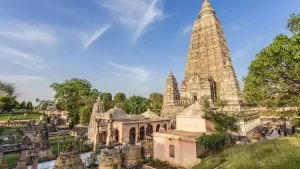
While Gaya holds the supreme position, Hindu tradition recognises several other sacred sites for Pind Daan and Shraddha rituals:- Gaya, Bihar — The foremost sacred site for Pind Daan, with 45 dedicated ritual platforms (Vedis) and the sacred Falgu River. The Vishnu Pada Temple stands here, enshrining the footprint of Lord Vishnu. Both the Ramayana and Mahabharata mention Gaya by the ancient name Gayapuri.
- Varanasi (Kashi) — Another supremely important site for ancestral rites. The banks of the Holy Ganga at Kashi are revered for Asthi Visarjan (immersion of ashes) and Shraddha ceremonies. Pind Daan performed at the Manikarnika Ghat in Varanasi is considered especially powerful.
- Prayagraj (Allahabad) — The Triveni Sangam, where the sacred Ganga and Yamuna rivers (and the invisible Saraswati) meet, is a supremely auspicious site. Pitru Paksha Mela at Prayagraj draws millions of pilgrims. Many families choose Prayagraj because it combines Pind Daan, Asthi Visarjan, and Tarpan all in one pilgrimage.
- Haridwar — The Har ki Pauri ghat on the Ganga is another recognised site for Asthi Visarjan and Shraddha. Many north Indian families travel to Haridwar for these rites.
- Nashik and Trimbakeshwar — For many Maharashtrian families, these are the preferred sites for ancestral rites.
The 45 Vedis (Ritual Platforms) of Gaya
One of the most distinctive features of Pind Daan in Gaya is the system of 45 sacred Vedis — dedicated platforms or sites spread across the town and its surroundings where specific offerings are made. The full Gaya Shraddha, as prescribed in the scriptures, involves performing rites at all 45 Vedis over a period of three to five days. This is known as Sapinda Gaya Shraddha or the complete Gaya pilgrimage.The most important Vedis include:- Vishnu Pada Temple Vedi — The most sacred of all, situated within the temple enshrining Lord Vishnu’s footprint. Offering Pind here is considered the most powerful act in the entire Gaya Shraddha.
- Akshayavat Vedi — The immortal banyan tree within the Vishnupada Temple complex. A Pind offered under the Akshayavat is said to generate inexhaustible (akshaya) merit for the ancestors.
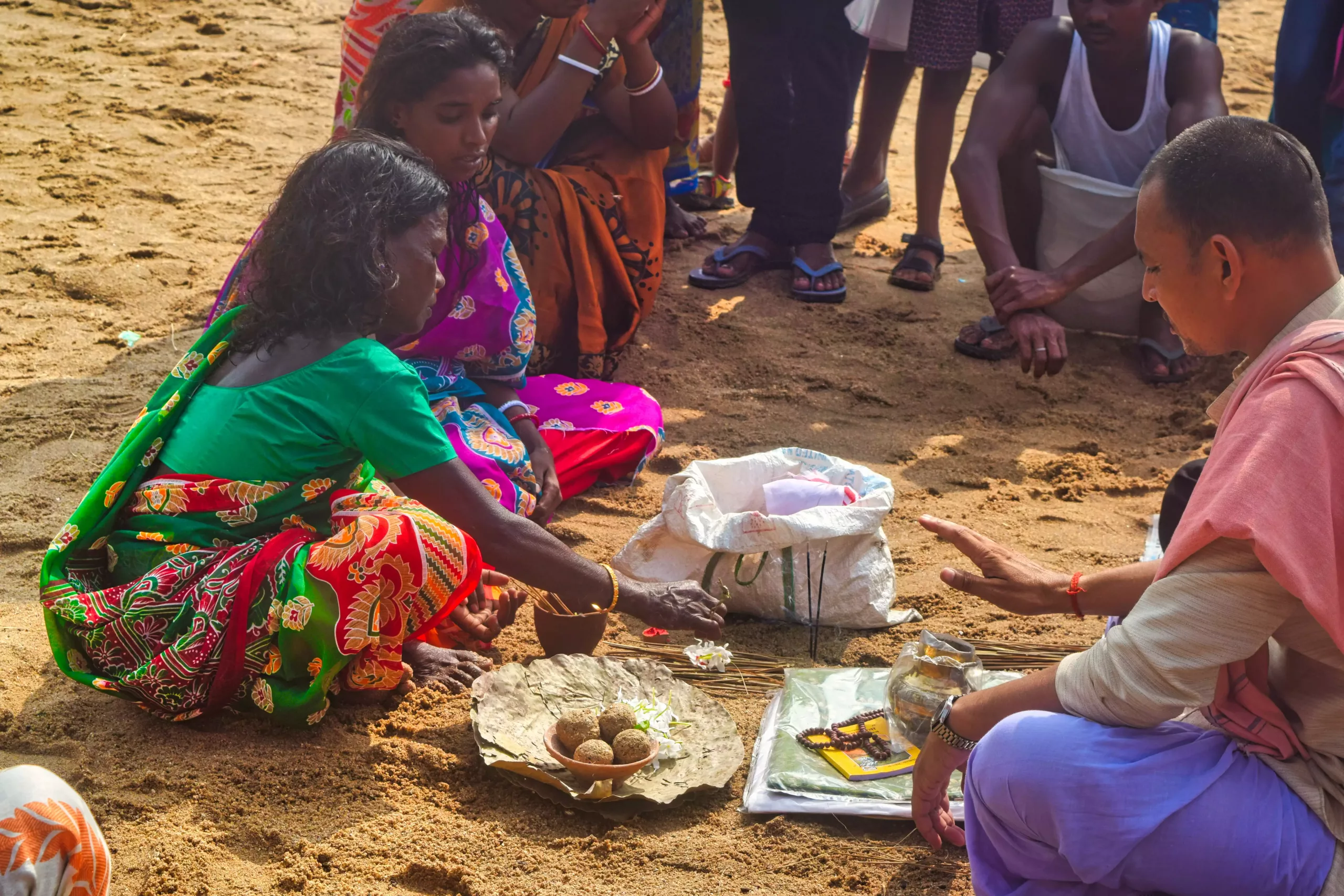
- Falgu River (Phalgu Teer) — The sacred riverbed of the Falgu is perhaps the most well-known Vedi. Here, pilgrims descend to the sandy river and make offerings directly in the sand.
- Pretashila — A rocky hill on the outskirts of Gaya, believed to be the place where souls wait before liberation. Offering Pind at Pretashila is said to free even the most restless souls.
- Ramshila — The hillock where Lord Rama himself performed Pind Daan for his father Dasharatha, according to the Ramayana.
- Brahma Kund and Mangla Gouri Temple — Additional sacred sites that form part of the complete circuit.
Step-by-Step Procedure of Pind Daan
Understanding the procedure helps devotees participate meaningfully in the ritual. Here is a brief overview of how Pind Daan is performed at Gaya:- Sankalpa (Sacred Resolve) — The ritual begins with the Sankalpa, a formal declaration of intent in which the devotee states their name, lineage (gotra), the names of departed ancestors, and the purpose of the offering. This is performed in Sanskrit with the guidance of the Pandit. The Sankalpa binds the devotee to the ritual and invokes divine witness.
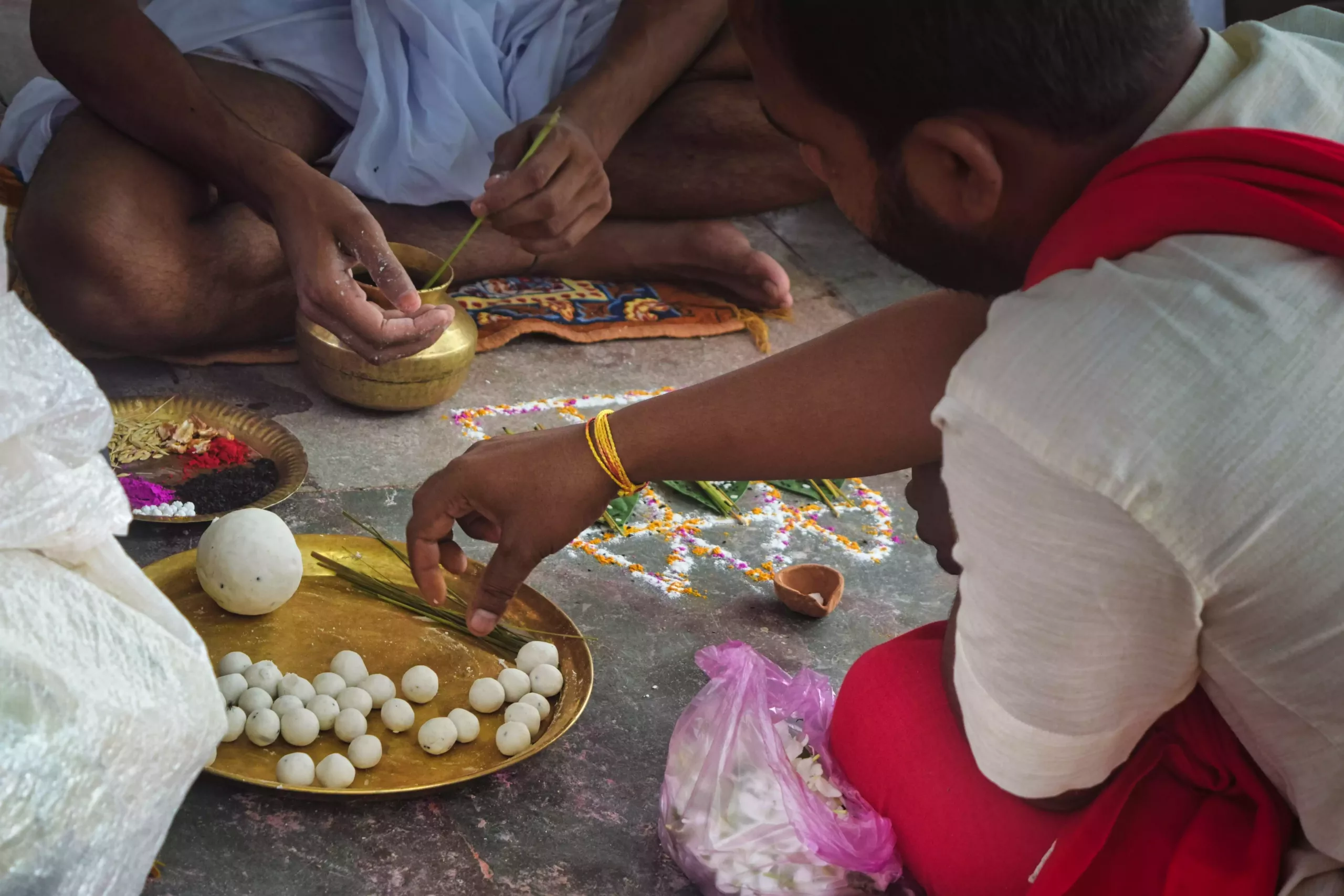
- Preparation of Pindas — The Pindas (offering balls) are prepared using a mixture of cooked rice, barley flour, sesame seeds, ghee, and honey. These are made under Vedic guidance and imbued with mantras. The number and composition of Pindas varies based on the specific Vedi and the scope of the Shraddha.
- Tarpan (Water Offering) — Before or alongside the Pind Daan, Tarpan is performed — the offering of water mixed with sesame and Kusha grass in the name of each departed ancestor. Three generations of paternal and maternal ancestors are typically addressed.
- Pinda Sthapana (Placing the Offering) — The Pindas are placed at the sacred Vedi with specific hand gestures (mudras) while the Pandit chants the relevant Vedic mantras. The soul of the ancestor is invoked to receive the offering.
- Brahmin Bhoj and Daan — After the Pind offering, Brahmin Bhoj — feeding learned Brahmins — is performed. The Brahmins represent the ancestors in receiving the food offering. Charitable giving (Daan) of cloth, food, and money is also part of the complete ritual.
- Completion and Blessing — The Pandit guides the devotee through closing prayers and the Pandit receives Dakshina (ritual fee). The entire ceremony typically takes two to four hours for a single-day rite.

How Much Does Pind Daan Cost in Gaya?
The cost of Pind Daan in Gaya varies depending on the scope of the ritual, the number of Vedis covered, and any additional services such as accommodation, transportation, and Brahmin Bhoj. Here is a clear, honest breakdown:Prayag Pandits’ Gaya Pind Daan Package Pricing
- Standard Package (Pind Daan at key Vedis): ₹7,100 (sale price) | Regular price: ₹11,000
- Extended Package (full 45-Vedi circuit over 3 days): Price varies — contact us for a custom quote
- Brahmin Bhoj: Included in the above packages — no separate charge
Protect Yourself from Price Gouging at Gaya
Always agree on the complete price BEFORE the Sankalpa begins. Once a Sankalpa (sacred vow) is taken and quoted before Lord Vishnu, backing out becomes spiritually and socially difficult. Our packages have fixed, transparent pricing — no surprise demands during the ritual. Carry sufficient smaller currency notes (₹100/₹50/₹10) for distribution to beggars, helpers, and cleaning staff who will approach you for alms.
Cost of Brahmin Bhoj (Brahman Bhojan)
A Brahmin Bhoj is an ancient tradition of feeding learned Brahmins, who are considered to represent the divine in receiving this offering. The food given to Brahmins is said to reach the departed ancestors directly. Brahman Bhojan is a vital element in the following occasions:- During Pitrupaksha (the 16-day period of ancestral rites)
- During the annual Shraddha ceremony on the death anniversary of the departed
- During the Barsi (first-year death anniversary) ceremony
- During any occasion of Pitru Puja or ancestral offering
Time Required to Perform Pind Daan
The duration of Pind Daan depends entirely on the scope of the ritual:- Single-Vedi Pind Daan (e.g., at Vishnu Pada or Falgu River only): approximately 2–3 hours
- One-Day Pind Daan (5–7 key Vedis): approximately 6–8 hours including travel between sites
- Complete Gaya Shraddha (45 Vedis): 3–5 days with early morning rituals each day
Best Time to Visit Gaya for Pind Daan
Pind Daan can be performed at Gaya at any time of year. Unlike many Hindu rituals that are restricted to specific auspicious periods, the scriptures declare that Gaya Shraddha may be performed on any day — the merit is considered equal regardless of the date. This is because the sanctity of the place itself is absolute.However, there are certain peak periods when pilgrims gather in the largest numbers:- Pitrupaksha (Shradh Paksha): The 16-day fortnight in the Hindu month of Bhadrapada (typically September–October) is the most auspicious period. Lakhs of pilgrims descend on Gaya during this time. Gaya hosts a major Pitrupaksha Mela with enhanced ritual facilities. Read our Pitrupaksha guide here.
- Amavasya (New Moon days): Each new moon day throughout the year is considered particularly powerful for ancestral rites. Performing Pind Daan on an Amavasya at Gaya is especially meritorious.
- Gaya Utsav: The annual cultural and spiritual festival at Gaya draws thousands of devotees.
Most Popular
🙏 Book Pind Daan in Gaya
Starting from
₹7,100
per person
How to Reach Gaya for Pind Daan
Gaya is well connected to major Indian cities by all modes of transport:- By Air: Gaya International Airport (GAY) has flights from Delhi, Kolkata, and several international cities during the Bodh Gaya tourist season. The airport is approximately 10 km from the Vishnupada Temple.
- By Train: Gaya Junction is a major railway station on the Howrah–Delhi main line, with direct trains from Delhi, Kolkata, Mumbai, Varanasi, and Patna. The journey from Delhi takes approximately 12–14 hours.
- By Road: Gaya is approximately 100 km from Patna and 250 km from Varanasi. National Highway 83 connects Gaya to Patna and the broader highway network. Bus services operate from Patna, Ranchi, and Varanasi.
Pind Daan at Prayagraj: An Alternative of Equal Sanctity
Many families who find it difficult to travel to Gaya choose to perform Pind Daan at Prayagraj — specifically at the Triveni Sangam, the sacred confluence of the Ganga, Yamuna, and Saraswati rivers. The scriptures regard the Sangam as a site of exceptional power for ancestral rites, particularly during Pitrupaksha when the annual Mela draws pilgrims from across India.Prayagraj offers the unique advantage of combining Asthi Visarjan (immersion of ashes), Pind Daan, and Tarpan in a single pilgrimage. Our pandits at Prayag Pandits are based in Prayagraj and can assist with all three rites on the same day. See our detailed guide on the significance of Pind Daan for a full scriptural comparison of Gaya and Prayagraj.
Book Your Sacred Ritual
Authentic ceremonies performed by Veda-trained pandits with video proof at sacred sites across India.
2,263+ families served
Video proof included
Since 2019
