Pitrupaksha in Mauritius — How to Perform Shradh & Pind Daan

Written by: Prakhar P
Updated on: February 28, 2026

Quick Summary

Mauritius is home to one of the most devout Hindu communities outside India, and Pitrupaksha is observed with deep sincerity at the sacred Ganga Talao (Grand Bassin). For families seeking the additional merit of Pind Daan at Gaya, Prayagraj, or Varanasi, Prayag Pandits provides remote poojan services with live video for Pitrupaksha 2026 (September 26 to October 10).

Mauritius is home to one of the most devout Hindu communities outside India, and Pitrupaksha is observed with deep sincerity at the sacred Ganga Talao (Grand Bassin). For families seeking the additional merit of Pind Daan at Gaya, Prayagraj, or Varanasi, Prayag Pandits provides remote poojan services with live video for Pitrupaksha 2026 (September 26 to October 10).

📅

Mauritius is home to one of the world’s most vibrant and devout Hindu diaspora communities. For Mauritian Hindus, Pitrupaksha — the 16-day ancestral fortnight — is observed with great sincerity, both at the sacred Ganga Talao and through remote Pind Daan and Shradh services conducted at holy sites in India. This guide covers everything Mauritian Hindus need to know about performing their ancestral duties in 2026.

Pitrupaksha — The Sacred Ancestral Fortnight

Pitrupaksha (also written as Pitru Paksha, Pitr Paksha, or Shraddha Paksha) is the most solemn and sacred 16-day period in the Hindu lunar calendar, dedicated entirely to honoring the souls of deceased ancestors. Observed in the dark fortnight of the month of Bhadrapada (typically falling between September and October), Pitrupaksha is when the celestial veil between the living and the dead is believed to thin — making ancestral rites performed during this window especially potent.

The word Shraddha — the central rite of Pitrupaksha — derives from the Sanskrit root shrad, meaning truth or faith, and dhaa, meaning to hold or perform. Shraddha therefore literally means “an act performed with complete sincerity and faith.” It is not merely a memorial ceremony; it is a sacred act of nourishment — of offering food, water, and prayer to the ancestral souls so they may continue their journey through the post-death realms toward eventual liberation (moksha).

According to Hindu cosmology, the souls of one’s three most recent generations of ancestors reside in Pitru Loka — a realm between the earthly and heavenly planes. These ancestral souls have the power to bless their living descendants with health, prosperity, wisdom, and spiritual progress. But for this blessing to flow freely, the descendants must fulfill the Pitru Rina — the ancestral debt — through regular acts of Shradh, Tarpan, and Pind Daan.

The great legend that explains the origin of Pitrupaksha comes from the Mahabharata. When the warrior Karna died and ascended to heaven, he found that though he had been generous with gold and jewels in his earthly life, he had never offered food and water to his ancestors through Shradh. In heaven, he was given only gold and gems to eat — no actual food. When Karna appealed to Indra, he was granted 15 days to return to earth and perform the Shradh he had neglected. These 15 days became Pitrupaksha. In some versions of the story, Yamraj (the lord of death) grants the return — acknowledging that ancestral rites are so fundamental that even souls in the afterlife must be permitted to fulfill them.

Pitrupaksha 2026 Dates — The Complete Tithi Calendar

In 2026, Pitrupaksha begins on September 26 (Purnima Shradh) and concludes on October 10 (Sarva Pitru Amavasya). The full tithi-by-tithi calendar is as follows:

  • September 26 — Purnima Shradh (Full Moon — for those who died on a full moon tithi)
  • September 27 — Pratipada Shradh
  • September 28 — Dwitiya Shradh
  • September 29 — Tritiya Shradh + Maha Bharani Shradh (especially powerful for Pitru rites)
  • September 30 — Chaturthi Shradh + Panchami Shradh
  • October 1 — Shashthi Shradh
  • October 2 — Saptami Shradh
  • October 3 — Ashtami Shradh
  • October 4 — Navami Shradh (Matru Navami — specifically for mothers who have passed)
  • October 5 — Dashami Shradh
  • October 6 — Ekadashi Shradh
  • October 7 — Magha Shradh + Dwadashi Shradh
  • October 8 — Trayodashi Shradh
  • October 9 — Chaturdashi Shradh (for those who died by accident, violence, or unnatural means)
  • October 10 — Sarva Pitru Amavasya (the most important day — all ancestors can be honored regardless of the tithi of their passing)

The correct day to perform Shradh for a specific ancestor is determined by the lunar tithi (date) on which that ancestor passed away. If you are unsure of the tithi, or if your ancestor’s tithi has already passed within the fortnight, Sarva Pitru Amavasya on October 10 is the universal day for all ancestors — no soul is excluded from this day’s merit.

The Hindu Diaspora in Mauritius — A Community Rooted in Devotion

Mauritius holds a unique and extraordinary place in the global Hindu world. Approximately 48 to 50 percent of the Mauritian population is Hindu — making it one of only a handful of nations outside India where Hinduism is the majority religion. This deep Hindu identity is not a recent phenomenon; it is rooted in over 175 years of continuous religious and cultural practice.

The first Hindu indentured laborers arrived in Mauritius from India in 1834, brought to work the sugar plantations after the abolition of slavery. They came primarily from Bihar, Uttar Pradesh, Tamil Nadu, Andhra Pradesh, and Maharashtra — bringing with them their devotion to their deities, their sacred rituals, their temples, and their deep-rooted practice of ancestral worship. Despite the brutal circumstances of indenture, these communities held onto their spiritual traditions with remarkable tenacity.

Over generations, Mauritian Hindu practice evolved into something beautifully distinctive — maintaining its Indian roots while developing its own local character. Temples were built, Sanskrit schools were established, and great festivals like Cavadee (for Murugan), Maha Shivaratri, and Pitrupaksha became central to the island’s cultural identity. Today, Mauritian Hindus observe many of the same rituals and festivals practiced in India, often with the same or greater devotional intensity — a testament to the spiritual resilience of a diaspora community that kept the flame of dharma burning far from its origins.

Pitrupaksha is one of the most universally observed of these traditions. Whether from the Bihari or Bhojpuri-speaking communities of the north, the Tamil communities of the south, or the Telugu communities of the east, Mauritian Hindus of all regional backgrounds observe ancestral rites during this fortnight. The convergence at Ganga Talao during this period is one of the most moving spiritual gatherings on the island.

Ganga Talao — The Sacred Heart of Hindu Mauritius

At the center of Hindu religious life in Mauritius stands Grand Bassin — known devotionally as Ganga Talao, the “Ganges Lake.” This volcanic crater lake in the Savanne district is considered the most sacred Hindu site in Mauritius and one of the most significant Shiva temples in the Indian Ocean world.

The origin story of Ganga Talao’s sanctity is deeply connected to the legend of Ganga herself. It is believed that the waters of the lake are connected, through spiritual channels, to the holy Ganga in India. For Mauritian Hindus who cannot travel to India for Pitrupaksha rites, Ganga Talao provides a spiritually valid alternative — a piece of the divine Ganga transplanted to this island through the power of collective devotion and divine blessing.

The presiding deity at Grand Bassin is Lord Shiva, who is associated with both death and liberation — making this an especially appropriate site for ancestral rites. The waters of the lake are considered so sacred that devotees carry them in ornate pots (Kanvar) on their shoulders during the Maha Shivaratri pilgrimage — walking up to 80 kilometers on foot to offer the sacred lake water to Lord Shiva at the temple. This act of devotion has no parallel anywhere else in the Hindu world outside India, and it speaks to the depth of Mauritian Hindu spirituality.

During Pitrupaksha, Mauritian Hindus gather at Ganga Talao to perform Tarpan — the act of offering water mixed with sesame seeds (til) and black sesame to the ancestors while reciting their names and requesting their blessings. Pundits (the Mauritian term for pandits) conduct Shradh ceremonies at the lake’s edge. The atmosphere during these 16 days is serene, deeply moving, and profoundly communal — the living coming together to collectively honor the dead.

How Mauritian Hindus Observe Pitrupaksha — Traditional Practices

Pitrupaksha observances in Mauritius reflect both the pan-Hindu tradition and the specific regional customs of the communities that settled the island. Here are the main practices observed by Mauritian Hindus during this fortnight:

Tarpan at Ganga Talao

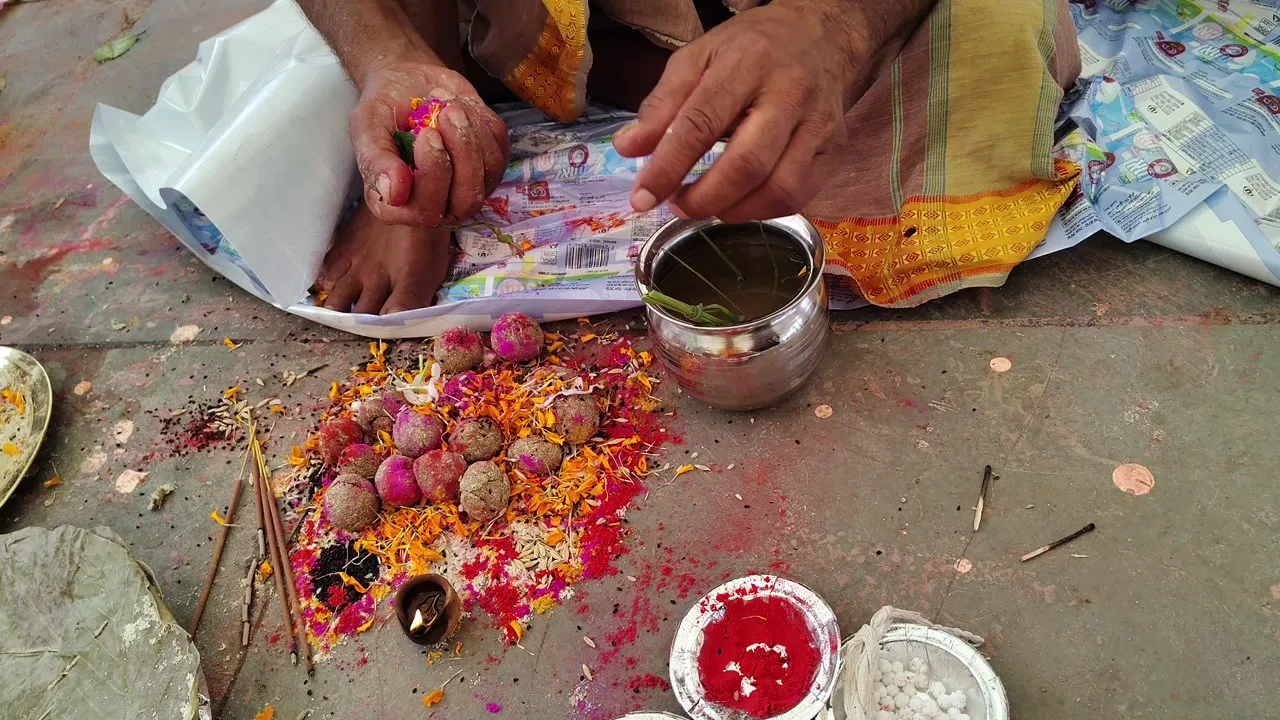
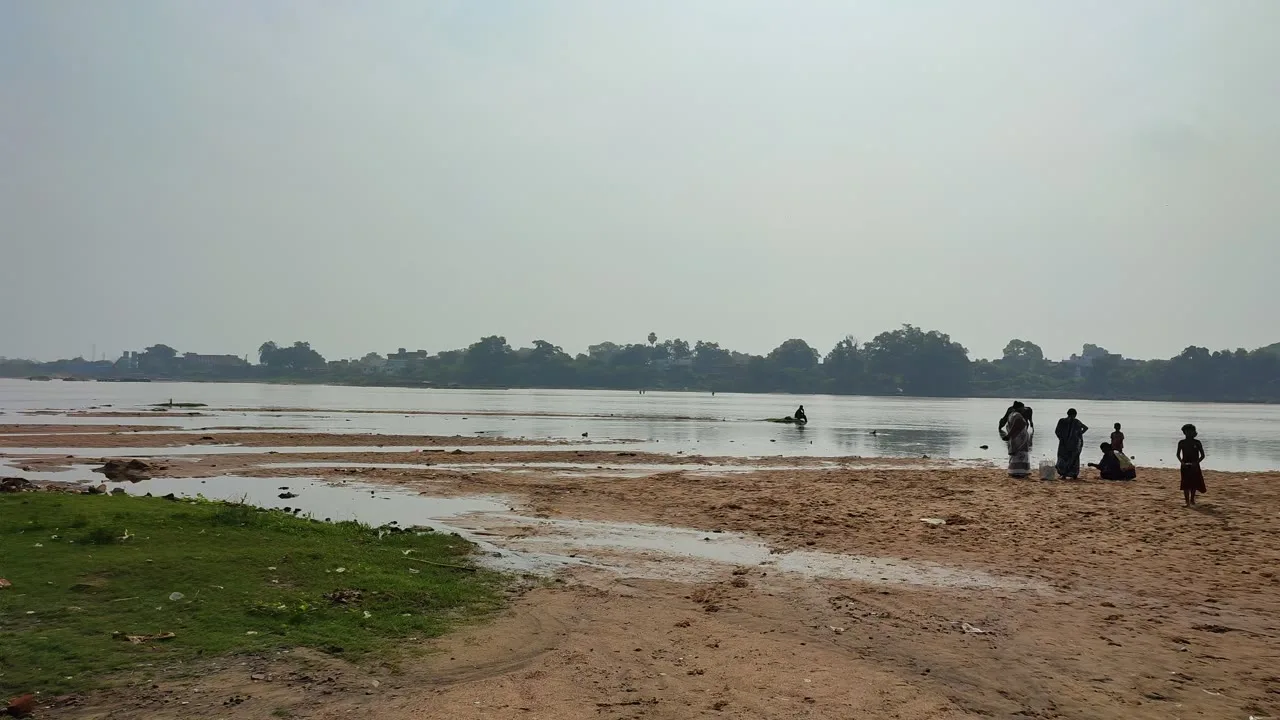
Tarpan is the act of offering water — infused with sesame seeds, barley, Kusha grass, and flowers — to the ancestral souls while reciting their names, gotra, and the specific Tarpan mantras. At Ganga Talao, families gather at the water’s edge for this purpose. The water offering symbolizes the nourishment of the ancestral soul across the subtle planes and is considered the minimum duty every Hindu owes their departed ancestors during Pitrupaksha.

Shradh Bhoj — The Ancestral Feast

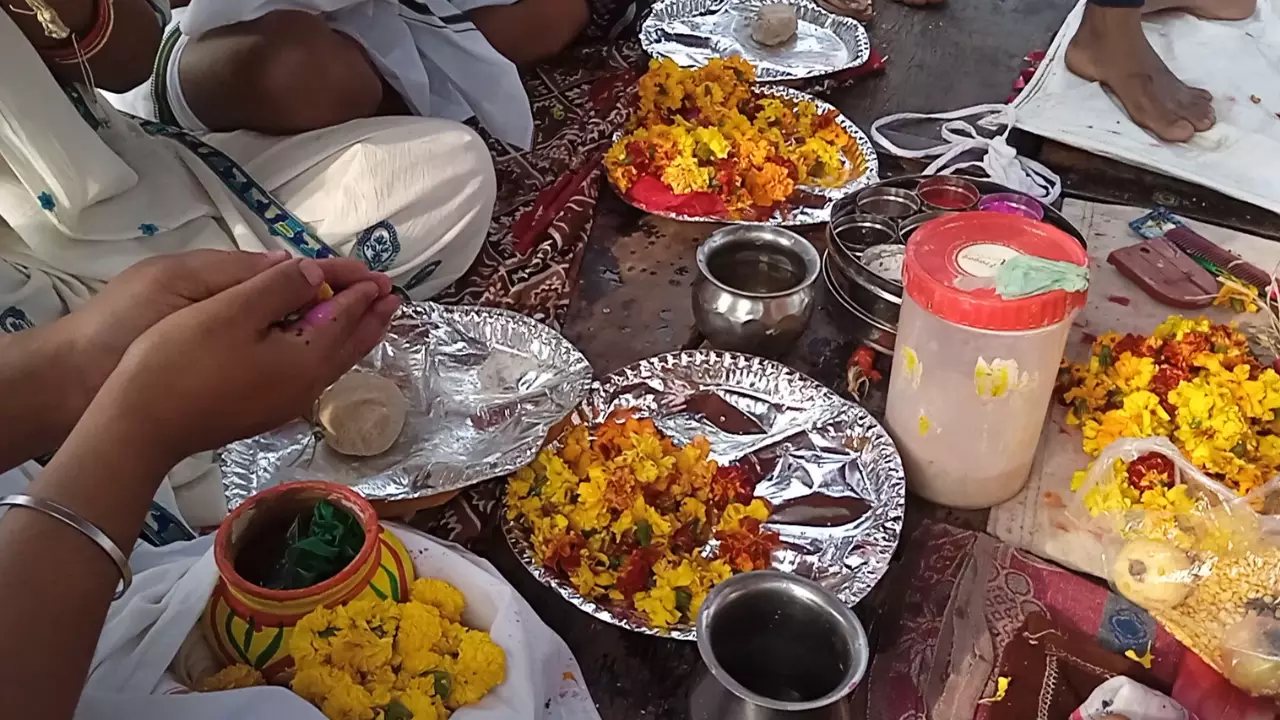
The Shradh Bhoj is the ritual preparation and offering of food to the ancestors, followed by feeding Brahmins (or learned pandits) who receive the food on behalf of the ancestral souls. In Mauritius, Shradh Bhoj is prepared according to traditional dietary restrictions — no meat, no alcohol, no onion or garlic. The sattvic meal typically includes rice, dal, vegetables, kheer (rice pudding made with cow’s milk), puri, and seasonal fruits. The act of feeding others in the name of the departed is believed to directly nourish the ancestral soul in Pitru Loka.

Pind Daan in Mauritius and Online

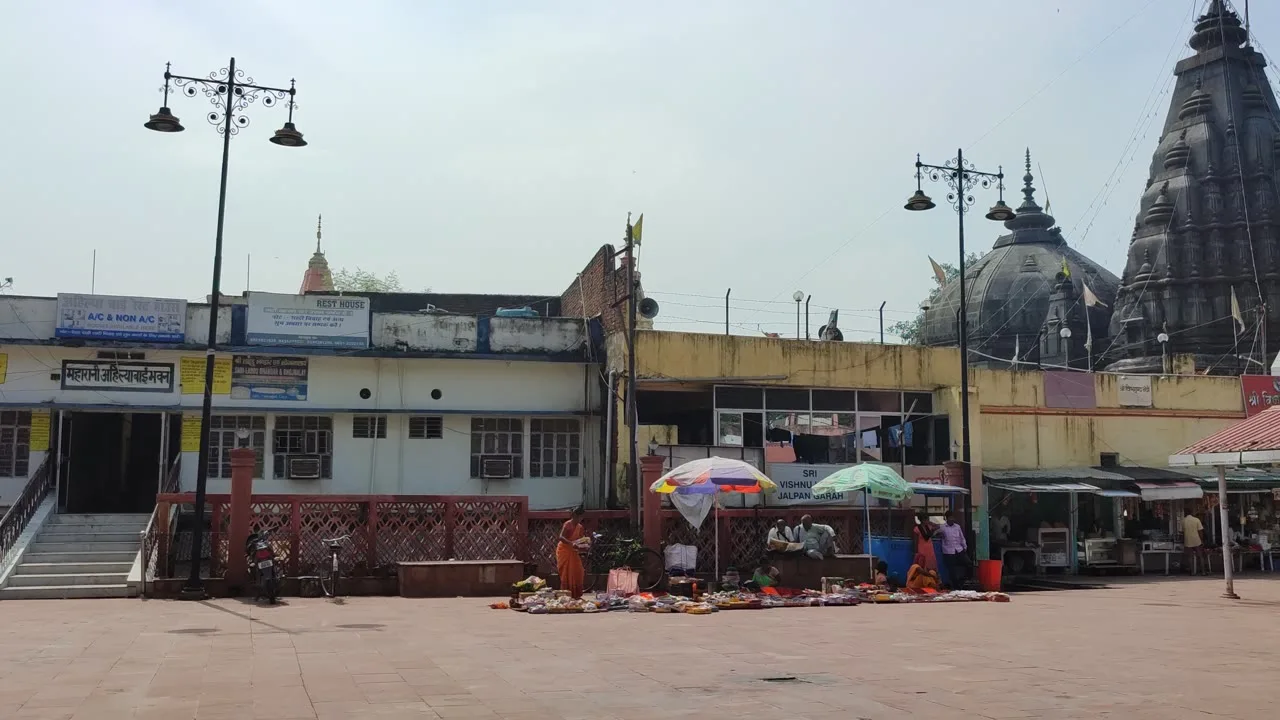
Pind Daan — the offering of rice flour balls (pindas) combined with til, honey, and ghee — is a more formal ancestral rite that Mauritian families either perform at Ganga Talao with the assistance of a local pundit, or arrange to be conducted in India at one of the great teertha sthals such as Gaya, Prayagraj, or Varanasi. Many Mauritian families who can trace their ancestry to Bihar or UP feel a strong pull toward Gaya in particular — the site traditionally described in the scriptures as the preeminent location for Pind Daan.

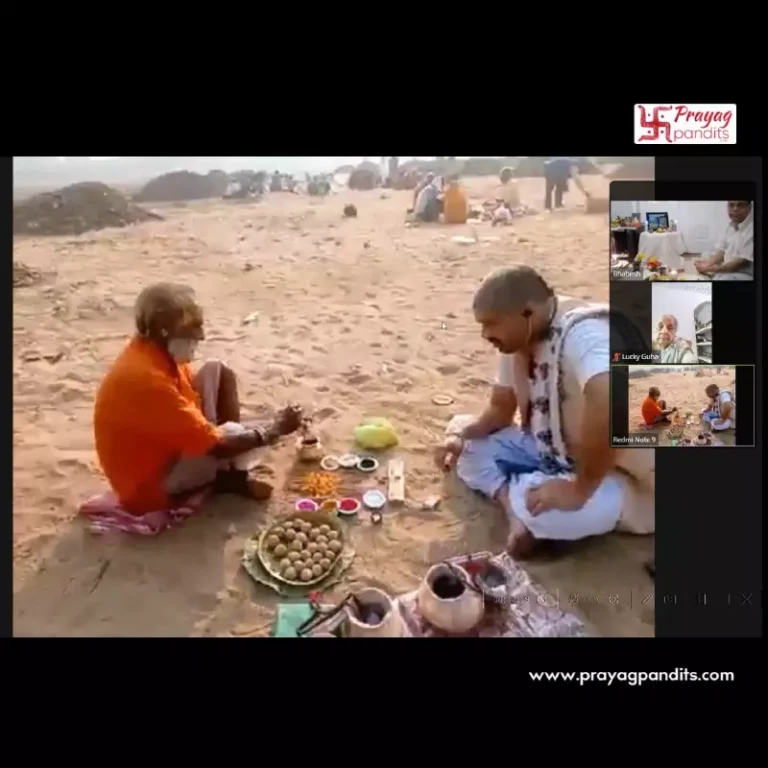
For families who cannot travel to India, Prayag Pandits offers a complete remote Pind Daan service — conducted by experienced Vedic pandits at the actual teertha sthal, with the family participating via live video. The Sankalpa (sacred intention) is taken in the name of the Mauritian family and their departed ancestors, making the rite fully valid according to Vedic Dharmashastra. Learn more about our professional Pind Daan services.

Dietary Observances During Pitrupaksha

Mauritian Hindus observing Pitrupaksha follow the traditional dietary restrictions that apply across all Hindu communities during this fortnight. Non-vegetarian food, alcohol, onion, garlic, and other tamasic (spiritually dulling) foods are avoided. The emphasis is on sattvic (pure, light, spiritually elevating) foods that keep the mind clear and the emotions calm — appropriate for a period of remembrance, ritual, and connection with the ancestral world. For a detailed guide to what to eat and avoid during Pitrupaksha, read our comprehensive Pitrupaksha food guide.

Recitation of Pitru Stuti and Mantra

Many Mauritian families recite the Pitru Tarpan mantras daily during Pitrupaksha, facing south (the direction of Yamraj and Pitru Loka) while offering water. The Mahalaya stotras — hymns in praise of the ancestors — are also recited in many homes and temples. Some families observe the entire 16 days with special evening prayers, lamp lighting (Deep Daan) in the name of the ancestors, and reading from the Garuda Purana.

Why Indian Teertha Sthals Are Preferred for Pind Daan by NRIs

While Ganga Talao provides a sincere and spiritually significant site for Pitrupaksha rites in Mauritius, many Mauritian Hindu families still feel that performing Pind Daan at the actual teertha sthals in India carries a dimension of merit that local rites, however devout, cannot fully replicate. This feeling is grounded in scripture — the Puranas and Dharmashastra texts specifically identify Gaya, Prayagraj, Varanasi, and other sacred tirthas as sites where Pind Daan yields liberation for the soul across multiple generations.

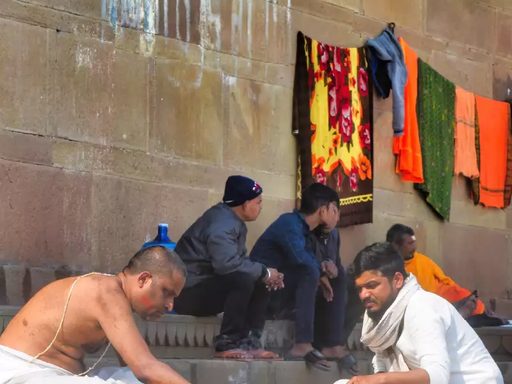
The Vishnu Purana states that Pind Daan performed at Gaya Kshetra liberates twenty-one generations of ancestors — going far beyond the three generations typically honored in Pitrupaksha. Prayagraj’s Triveni Sangam is described in the Matsya Purana as Tirthraj — the king of all tirthas — where rites carry exceptional merit. Varanasi is Shiva’s own city, where liberation is granted to all who die within its boundaries and where ancestral rites performed on its ghats carry the city’s accumulated spiritual power of thousands of years.

For Mauritian families who have not been able to travel to India for Pind Daan — whether due to cost, visa logistics, work commitments, or health — Prayag Pandits provides a complete remote solution. Our pandits perform the Pind Daan at the actual sacred location, take the Sankalpa specifically naming each Mauritian family and their departed ancestors, and conduct the full ritual with proper Vedic procedure while the family watches live. Post-ceremony, the family receives a complete video recording of the rite. Our NRI poojan services have been used by families from Mauritius, Malaysia, the UK, USA, Canada, and across the Gulf.

Sarva Pitru Amavasya — The Universal Day for All Ancestors
If you are unsure of the specific tithi (lunar date) on which your ancestor passed, or if their tithi has already passed during Pitrupaksha, do not worry. Sarva Pitru Amavasya — falling on October 10, 2026 — is the universal day on which ALL ancestors can be honored, regardless of the tithi of their passing. This day is considered the most meritorious day of all Pitrupaksha for performing Shradh, Tarpan, and Pind Daan. Contact Prayag Pandits early to book your poojan on this date.

Pitru Dosha — The Ancestral Debt That Demands Attention

One of the most important reasons why Mauritian Hindu families seek guidance on Pitrupaksha rites is the concept of Pitru Dosha — the ancestral debt or curse that can afflict a family when the departed souls of previous generations have not received proper rites, or when they passed under difficult circumstances (untimely death, violent death, or unfulfilled wishes).

Pitru Dosha can manifest in a family as recurring misfortunes, difficulty in conceiving children, financial instability, relationship problems, mysterious illnesses, or a general sense that the family’s progress is blocked despite sincere effort. In Vedic astrology, Pitru Dosha is visible in the birth chart through specific planetary combinations — particularly involving Saturn, Rahu, and the 9th house (the house of ancestors and dharma).

The remedy for Pitru Dosha is the regular performance of Shradh, Tarpan, and Pind Daan — especially during Pitrupaksha, and specifically at the great teertha sthals. In severe cases, additional rites such as Narayan Bali, Tripindi Shradh, or Nagbali may be prescribed. Families who suspect Pitru Dosha are encouraged to consult a learned pandit who can assess the situation from both a ritual and astrological perspective. Explore our guide to Pitrupaksha Shradh and Pind Daan for a comprehensive understanding of these rites and their benefits.

The Spiritual Science of Why Ancestors Can Bless the Living

Many people in the modern world — including some Mauritian Hindus of younger generations — approach Pitrupaksha with sincere respect but some intellectual uncertainty. Why should the souls of the dead be able to bless the living? How does offering water and food to a soul in another realm actually accomplish anything?

The Hindu tradition offers a profound and internally consistent answer rooted in its understanding of consciousness and the subtle realms. When the physical body dies, the soul does not cease to exist — it passes into the subtle body, which continues to carry the impressions, emotions, and desires of the personality that has just left the physical form. In this state, the subtle consciousness of the ancestor has access to far greater awareness than was possible in the physical body — free from the limitations of time and space.

Because of this expanded awareness, the ancestral soul can perceive the sincere prayers and offerings of its living descendants, can receive the nourishment of those offerings on the subtle plane (water becomes sustenance for the subtle body, just as physical food sustains the gross body), and can direct blessings back toward the living family. This is not superstition — it is a sophisticated metaphysical model that has been elaborated in texts like the Garuda Purana, the Vishnu Purana, and the Dharmashastra literature of Manu, Yajnavalkya, and Parashara for thousands of years.

The relationship between the living and the ancestors is described in Hinduism as one of mutual interdependence. The living depend on the ancestors for their genetic inheritance, their karmic starting point, and the spiritual merit accumulated by the lineage. The ancestors, in their post-death state, depend on the living to keep the channel of offering open — providing the subtle nourishment they need to complete their journey through the post-death planes and eventually achieve liberation.

Planning Your Pitrupaksha 2026 Observance — A Practical Guide for Mauritian Hindus

Whether you are observing Pitrupaksha at Ganga Talao in Mauritius or arranging for Pind Daan to be performed in India on your behalf, here is a practical planning guide:

  1. Determine the correct tithi: Consult a local pundit or our team at Prayag Pandits to identify the lunar tithi on which your ancestor(s) passed. This determines the correct day within Pitrupaksha for their Shradh.
  2. Gather the necessary information: You will need the full name, gotra, and — if known — the cause and circumstances of death for each ancestor you wish to honor. This information is used in the Sankalpa that begins every Shradh ceremony.
  3. Decide on the location: Will you observe at Ganga Talao with a local pundit, or arrange remote Pind Daan at Gaya, Prayagraj, or Varanasi? Both are valid — but for families wishing to obtain the specific merit of the great teertha sthals, our remote service is the most practical option.
  4. Book early: Pitrupaksha is the busiest period for ancestral rites across India. Our pandits at Prayag Pandits are fully booked several weeks in advance each year. Contact us by August 2026 to secure your preferred date — especially if you want to perform Pind Daan on Sarva Pitru Amavasya (October 10).
  5. Observe dietary guidelines: For the full 16 days, or at minimum for the day of your Shradh, maintain the sattvic diet — no meat, alcohol, onion, or garlic. This purifies the mind and makes you a better conduit for the ancestral blessing.
  6. Perform daily Tarpan: Even if the formal Shradh and Pind Daan are done once on the correct tithi, performing Tarpan daily — offering water with sesame seeds while reciting ancestor names — for the full 16 days multiplies the spiritual merit of your observance.

For a deeper understanding of the full sequence of Pitrupaksha rituals, their step-by-step procedure, and the mantras used, read our comprehensive guide to Pitrupaksha — the complete ritual guide. And for the significance of Sarva Pitru Amavasya specifically, see our dedicated article on Sarva Pitru Amavasya — the day of universal liberation.

NRI Favourite

🙏 Book Remote Pind Daan for Pitrupaksha 2026

Starting from ₹5,100 per person

Frequently Asked Questions — Pitrupaksha in Mauritius

Facebook
Twitter
LinkedIn
Pinterest

Leave a Reply

Your email address will not be published. Required fields are marked *

0

No products in the cart.