
Introduction — Pilgrimage to Gaya Dham

Peaceful Surroundings
Gaya Dham is a place where those who carry the weight of grief and unfulfilled ancestral duty find both spiritual relief and personal peace. Beyond its central religious significance, Gaya is a city of genuinely peaceful character — quieter and more contemplative than the frenetic pace of larger Indian cities. The ghats along the Falgu River in the early morning, when priests lead rituals in the mist and the sound of Vedic chanting rises over the water, create an atmosphere of profound stillness. Besides its religious significance, Gaya also offers opportunities for reflection, rest, and encounter with living tradition. Local markets sell the ritual materials used in the Shraddha ceremonies, allowing pilgrims to observe and participate in the preparation of offerings. The surrounding countryside is deeply rural and beautiful in the monsoon and post-monsoon seasons. Adventure activities and nearby natural sites complement the purely religious aspects of the pilgrimage for families travelling with mixed interests. The pilgrimage to Gaya Dham is, at its core, a spiritual journey of discovery and enlightenment — a confrontation with mortality, with lineage, and with the sacred duty of care for those who have gone before us. It is believed that Maharshi Vedavyasa wrote both the Bhagavad Gita and the Puranas in this region, bringing the full weight of India’s intellectual and spiritual heritage to bear on a single sacred landscape.The Story of Gayasura: How Gaya Became Sacred
The origin of Gaya’s extraordinary sanctity is explained in the Gaya Mahatmya through the story of Gayasura — a powerful and devout demon who performed such intense austerities in devotion to Lord Vishnu that his spiritual merit became enormous. So great was his accumulation of tapas (austerities) that his body itself became supremely sacred — whoever touched it was liberated from all sin and from the cycle of rebirth. This caused a problem: all the souls who had not yet expiated their karma were escaping to liberation by merely touching Gayasura, bypassing the normal process of karmic maturation. The gods, concerned about the disruption to the cosmic order, appealed to Lord Vishnu. Vishnu appeared to Gayasura and asked him to lie down on the earth so that the gods could perform a great sacrifice on his body. Gayasura agreed, out of his deep devotion to Vishnu. Lord Vishnu then placed his sacred feet (Vishnu Pada) on Gayasura’s head to hold him down during the sacrifice, pinning the demon permanently to the earth. Gayasura’s body became the ground of Gaya itself — the hills and the riverbed of the Falgu all carry the spiritual substance of this great devotee’s body. And Lord Vishnu’s footprint, pressed into the stone at that moment of divine pinning, became the sacred Vishnu Pada that is enshrined in the Vishnupada Temple and worshipped by millions of pilgrims today. Before finally becoming part of the earth, Gayasura asked for a boon: that those who performed Pind Daan here should receive liberation for their ancestors. Vishnu granted this boon — and thus Gaya became the place where a single act of ancestral devotion carries the power of complete liberation. Gayasura’s act of self-sacrifice for the cosmic good is commemorated every time a pilgrim offers Pind at Gaya.The Vishnupada Temple: Heart of the Gaya Pilgrimage
The Vishnupada Temple is the most sacred site at Gaya and the focal point of the entire pilgrimage circuit. This ancient temple enshrines the footprint of Lord Vishnu — the Vishnu Pada — believed to be the actual impression of Vishnu’s foot in solid rock, made at the moment when he pressed down on Gayasura. The temple stands on the western bank of the Falgu River and is open to all Hindus. The current structure of the Vishnupada Temple was built in 1787 CE by Devi Ahilyabai Holkar of Indore, the great Maratha queen and renowned builder of temples across India. Standing 30 metres tall, with a distinctive North Indian Nagara style shikhara (tower), the temple is an architectural landmark that dominates the Gaya skyline. Inside the sanctum, the Vishnu Pada is enshrined within a silver basin approximately 45 centimetres long. The footprint is worshipped daily with flowers, sandalwood paste, and elaborate ritual. Pilgrims performing Pind Daan must make an offering at the Vishnu Pada Vedi — the ritual platform adjacent to the main shrine — as part of the complete Gaya Shraddha. This offering at the Vishnupada is considered the most powerful single act in the entire pilgrimage, because Lord Vishnu is present here not as a symbolic idol but as an actual physical imprint of the divine. For detailed information on the ritual procedures at Vishnu Pada and the deep significance of Pind Daan in Gaya, see our dedicated guide.The 45 Sacred Vedis (Ritual Platforms) of Gaya
The complete Gaya Shraddha, as prescribed in the Vayu Purana and other texts, involves performing specific ritual offerings at 45 sacred Vedis distributed across the town and its surrounding hills. The full circuit typically takes three to five days and is conducted with the guidance of the hereditary Gaya Pandas — the priestly families who have served pilgrims at Gaya for generations. Here are the most important Vedis in the Gaya pilgrimage circuit:- Vishnu Pada Vedi: Within the Vishnupada Temple. The supreme offering point of the entire circuit.
- Akshayavat Vedi: The immortal banyan tree within the Vishnupada Temple compound. Offering Pind here is said to generate inexhaustible (akshaya) merit across unlimited generations of ancestors.
- Brahma Kund: An ancient tank sacred to Lord Brahma, where pilgrims bathe before commencing the rites.
- Falgu River (Phalgu Teer): The sandy riverbed of the Falgu is perhaps the most iconic site of the Gaya pilgrimage. Here, pilgrims descend to the river and make offerings directly in the sand. The river is also known as Niranjana — the pure one.
- Ramshila: The hill where, according to the Valmiki Ramayana, Lord Rama performed Pind Daan for his father King Dasharatha. Pilgrims climb this hill for the Shraddha offering that connects them to the Ramayana’s most powerful ancestral narrative.
- Pretashila: A rocky hill approximately 5 km from the town, believed to be where the souls of the departed wait before receiving liberation. Pind Daan at Pretashila is said to release even the most stubbornly earth-bound souls.
- Mangla Gouri Temple: One of the 108 Shakti Peethas — shrines marking the spots where the body of the goddess Sati fell. At Gaya, the breast of Sati is said to have fallen, and the temple here is among the most important Shakti Peethas in eastern India.
- Brahmayoni Hill: A hill with a cave at its peak, considered sacred to Lord Brahma. Climbing this hill (with approximately 435 steps) and making offerings at the top is part of the complete Gaya circuit.
- Phalguteer Ghat: The main bathing ghat on the Falgu River, where pilgrims bathe and perform Tarpan before proceeding to the Vedis.
- Uttaramanasa and Dakshina Manasa: Two sacred tanks within the Vishnupada Temple complex where ritual bathing is performed.
Gautam Buddha and Bodh Gaya
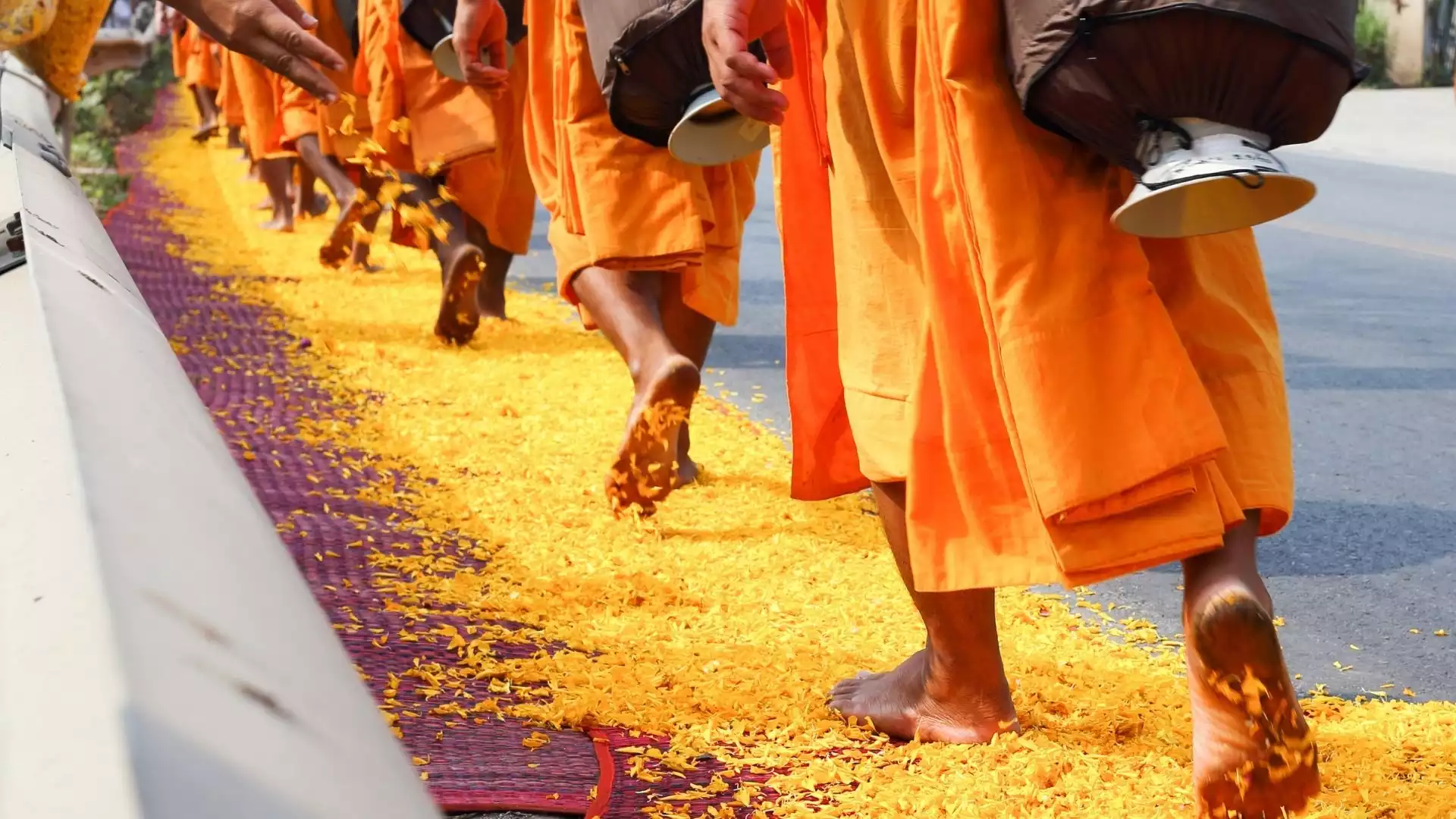
No account of a pilgrimage to Gaya would be complete without acknowledging the extraordinary presence of Bodh Gaya — the site where Siddhartha Gautama, who would become the Buddha, attained enlightenment beneath the sacred Bodhi tree approximately 2,500 years ago. Bodh Gaya is located just 13 km from Gaya town and is considered the most sacred site in Buddhism. Gautama Buddha’s enlightenment gave him an understanding that life is characterised by suffering (dukha), that suffering arises from craving and aversion, and that it can be overcome by following the Noble Eightfold Path — the middle way between self-indulgence and self-mortification. His teachings brought wisdom, tolerance, and understanding to millions of people across Asia and beyond. Buddhists believe that by following Gautama Buddha’s example and meditating at the spot of his enlightenment, they can accelerate their own journey toward liberation. The Mahabodhi Temple at Bodh Gaya — a UNESCO World Heritage Site — marks the precise location beneath which the Buddha sat in meditation. Buddhist monasteries from Japan, Thailand, Myanmar, China, Sri Lanka, Korea, and many other countries have been established in and around Bodh Gaya, making it an extraordinary gathering point of Buddhist traditions from across Asia. Pilgrims to Hindu Gaya frequently extend their journey to visit Bodh Gaya as well — the two sites, separated by just a short drive, together represent one of the most concentrated collections of living spiritual tradition anywhere in the world.Other Important Temples in and Around Gaya
Beyond the Vishnupada Temple and the Shraddha Vedis, Gaya and its surrounding area are home to several important temples worth visiting:- Surya Temple (Deo Sun Temple): Approximately 20 km from Gaya, this ancient Surya temple at the village of Deo is one of the most important centres of Sun worship in Bihar. It is especially crowded during the Chhath Puja festival.
- Barabar Caves: About 25 km from Gaya, these are the oldest surviving rock-cut caves in India, dating to the Mauryan period (3rd century BCE). Carved during the reign of Emperor Ashoka, they are extraordinary examples of ancient Indian rock-cut architecture.
- Dungeshwari Caves: Approximately 12 km from Bodh Gaya, this is the cave where Siddhartha Gautama practiced severe asceticism before abandoning it in favour of the middle path. There is a small Hindu temple here as well.
- Sita Kund and Rama Kund: Sacred tanks associated with Lord Rama and Sita’s sojourn at Gaya during the Ramayana period. Bathing in Sita Kund is believed to be particularly purifying.
- Pitamaheshwar Temple: Dedicated to Lord Shiva in his aspect as Pitamaheshwar — the great lord of the ancestors. This temple is an important stop for pilgrims performing Shraddha rites.
The Ramayana Connection: Why Gaya is Especially Sacred for Pind Daan
The Valmiki Ramayana narrates that Lord Rama, Sita, and Lakshmana travelled to Gaya specifically to perform Pind Daan for King Dasharatha. During the ritual at the Falgu River, when Rama went to collect flowers and Sita was alone, King Dasharatha’s soul appeared to Sita and asked her to perform the Pind Daan immediately, without waiting for Rama. Sita took sand from the Falgu River and offered it as a Pind — and Dasharatha accepted the offering, blessing Sita. This is why Gaya Pind Daan is said to be especially powerful when performed by daughters and daughters-in-law.
How to Plan Your Pilgrimage to Gaya Dham
Getting There: Transport to Gaya
- By Air: Gaya International Airport (IATA: GAY) is approximately 10 km from the Vishnupada Temple. Direct flights connect Gaya with Delhi, Kolkata, and several international cities during peak season. Taxis and autos are available from the airport to the temple area.
- By Train: Gaya Junction is a major station on the Delhi–Howrah main line and the Grand Chord. Direct trains connect from Delhi (12–14 hours), Kolkata (5–6 hours), Varanasi (4–5 hours), Patna (2–3 hours), and Mumbai. The railway station is approximately 2 km from the Vishnupada Temple.
- By Road: Gaya is approximately 100 km from Patna via National Highway 83. Regular bus services connect Gaya with Patna, Ranchi, Varanasi, and Nawadah. Taxis from Patna airport take approximately 2 hours.
Accommodation at Gaya
Gaya offers accommodation for every budget, from government dharamshalas (pilgrim rest houses) to mid-range hotels near the Vishnupada Temple. During Pitrupaksha, the city fills rapidly, and advance booking is essential. For a complete guide to places to stay, see our dedicated resource on accommodation options for Pind Daan at Gaya. Key accommodation zones:- Temple area (within 500m of Vishnupada): Convenient but busy and noisy. Ideal for pilgrims wanting immediate access to the main Vedi.
- Bodh Gaya (13 km from Gaya town): A wide range of international-standard hotels and guesthouses, many run by Buddhist organisations. Quieter and cleaner than Gaya town. Good base for visiting both Hindu and Buddhist sites.
- Gaya town: Multiple budget and mid-range hotels along the main roads. Approximately 10–20 minutes from the temple by auto.
Best Time to Visit Gaya for Pind Daan
While Pind Daan at Gaya is equally meritorious on any day of the year, certain periods are particularly significant:- Pitrupaksha (September–October): The 16-day period of ancestral rites. Gaya hosts a major Pitrupaksha Mela during this time, with enhanced ritual facilities, additional priests, and tens of thousands of pilgrims. This is the most concentrated period for Gaya Pind Daan. See our Pitrupaksha Pind Daan at Gaya guide for detailed planning.
- Amavasya (New Moon days): Each monthly new moon is considered auspicious for ancestral rites. Pilgrims arrive in larger numbers on Amavasya dates throughout the year.
- Winter months (October–February): The most comfortable weather for visiting Gaya. Temperatures are pleasant and the crowds of Pitrupaksha have reduced after October, making this an excellent period for a quieter visit.
- Avoid peak summer (April–June): Temperatures in Gaya regularly exceed 42°C in summer. The Falgu River is at its lowest and the ritual conditions are more challenging. Early morning and late evening visits are manageable, but the midday heat can be severe.
The Cost of Pind Daan at Gaya — What to Expect
The cost of Pind Daan at Gaya varies significantly based on the number of Vedis covered, the scope of the ritual, and whether accommodation and transport are included. As a general guide:- Standard single-day Pind Daan (key Vedis): ₹7,100 through Prayag Pandits (sale price; regular ₹11,000). This covers an experienced Gaya Panda, all ritual materials, Pindas, and Brahmin Bhoj.
- Extended 3-day complete Gaya Shraddha (45 Vedis): Prices vary based on the full scope. Contact us for a tailored quote that includes accommodation guidance.
- Independent priests at the Vedis: If approaching priests at the ghats independently, prices can range widely — from ₹2,100 for minimal rites to ₹21,000+ for an extended ceremony. Be cautious of demands made during the Sankalpa (see our warning below).
Important: Agree on Price Before the Sankalpa Begins
The most common difficulty experienced by pilgrims at Gaya is the practice of some independent priests demanding higher payment after the Sankalpa (sacred vow) has been recited. Once the Sankalpa is complete, the devotee has made a binding vow before Lord Vishnu — declining to pay the demanded amount feels spiritually compromised. Always fix the complete price in writing before the Sankalpa begins. Our pandits at Prayag Pandits charge fixed, transparent fees with no hidden demands during the ritual.
Most Popular
🙏 Book Pind Daan at Gaya Dham
Starting from
₹7,100
per person