
No rituals selected yet.
Browse Pooja Packages →Key Takeaways
In This Article
For the flourishing Hindu community residing in Malaysia, the physical distance from the holy land of Bharatavarsha often weighs heavily on the heart, especially when it comes to ancestral duties. Living in Kuala Lumpur, Penang, or Johor Bahru brings material prosperity, yet it creates a deep longing to fulfil the sacred Pitru Rina—the ancestral debt. The Vedas clearly state that without the liberation of ancestors, the lineage faces unseen obstacles, yet performing pind daan from Malaysia often seems daunting due to logistical fears and a lack of authentic guidance.
This complete 2026 guide is written specifically for Malaysian Hindu families. It explains the Vedic prescriptions in full, helping you understand every aspect of this sacred duty—from choosing the right holy city, to booking flights from Kuala Lumpur, managing currency, and what to expect on the day of the ritual. Whether you choose to travel to India or utilise the remote services of Prayag Pandits, our mission is to bridge the distance between your devotion and the holy banks of the Ganga and Phalgu.
Trusted by Families in Malaysia
Connecting the Global Diaspora to Roots
👥
50,000+
Rituals Performed
🌟
15+Years
Experience: Vedic Pandas
💯
100%
Vedic Vidhi
🛡️
24/7
Support: WhatsApp u0026amp; Video Call updates
The Spiritual Necessity of Pind Daan: Why Distance Cannot Be an Excuse
In our Sanatana Dharma, the soul’s journey does not end with the cessation of breath. The Garuda Purana describes the intricate state of the soul as it traverses the path to the abode of Yama. If the soul is trapped in the form of a Preta (wandering spirit) due to unfulfilled desires, sudden death, or lack of proper rites, it suffers great agony and looks toward its descendants for release.
The act of Pind Daan is not merely a ritual; it is the currency of liberation. The very Sanskrit word for son—Putra—means “one who saves his parents from the hell called Put.” For Malaysian NRIs, this duty transcends geography. The Skanda Purana does not exempt the diaspora from ancestral obligations. On the contrary, it emphasises that the longer the rites are delayed, the stronger the Pitru Dosh grows—manifesting as stagnation in career, childlessness, recurring illness, or unexplained family conflicts.
The good news is that in 2026, both travel infrastructure and digital pandit services make pind daan from Malaysia more accessible than ever before. This guide removes every barrier between your intention and action.
Understanding the Three Pillars: Prayagraj, Gaya, and Varanasi
While you may perform annual Tarpana at home in Malaysia, the Skanda Purana mandates specific Tirthas—holy crossing points—in India for the complete and final release of the soul. Each of the three great pilgrimage cities serves a distinct spiritual purpose in the ancestral rites sequence.
1. Prayagraj — The First Step of Purification
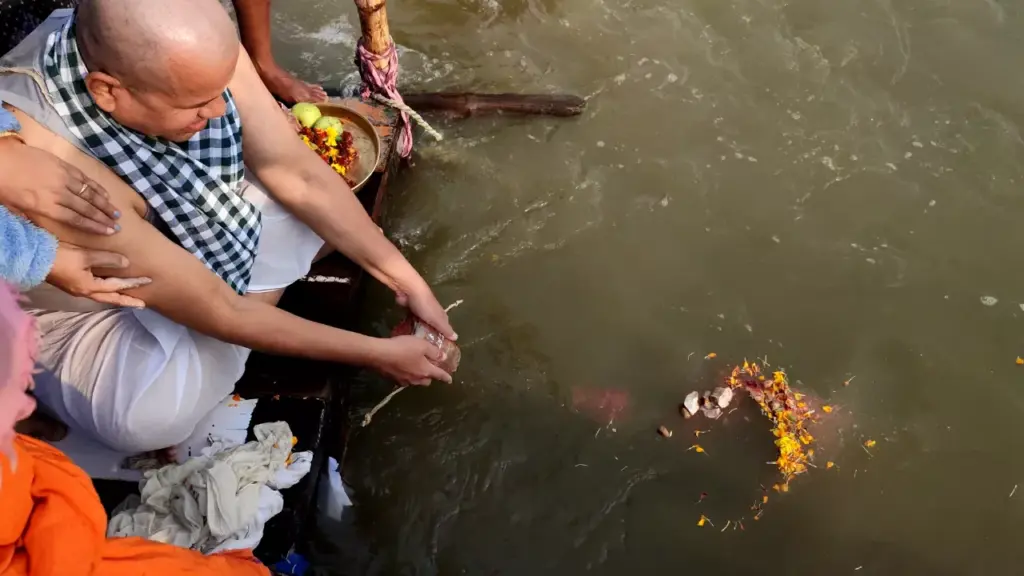
According to the Skanda Purana and Agni Purana, Prayagraj is the Tirtharaja—the King of all Tirthas. It is the sacred confluence (Sangam) of the white Ganga, the dark Yamuna, and the invisible Saraswati. The scriptures state that ancestral rites performed here possess “undecaying merits.” The Brahma Purana further declares that ancestors who receive Pinda offerings at Prayagraj attain liberation not just for themselves but bestow health, prosperity, and abundance upon seven generations of their living descendants.
The Agni Purana prescribes tonsure or head-shaving (mundan) as a mandatory rite here. It is believed that for every hair that falls at the Sangam, sins accumulated over lifetimes are washed away—purifying the doer before the solemn rites at Gaya. The Pind Daan at Prayagraj is ideally the opening act of your ancestral liberation journey.
2. Gaya — The Ultimate Moksha Dham for Pind Daan
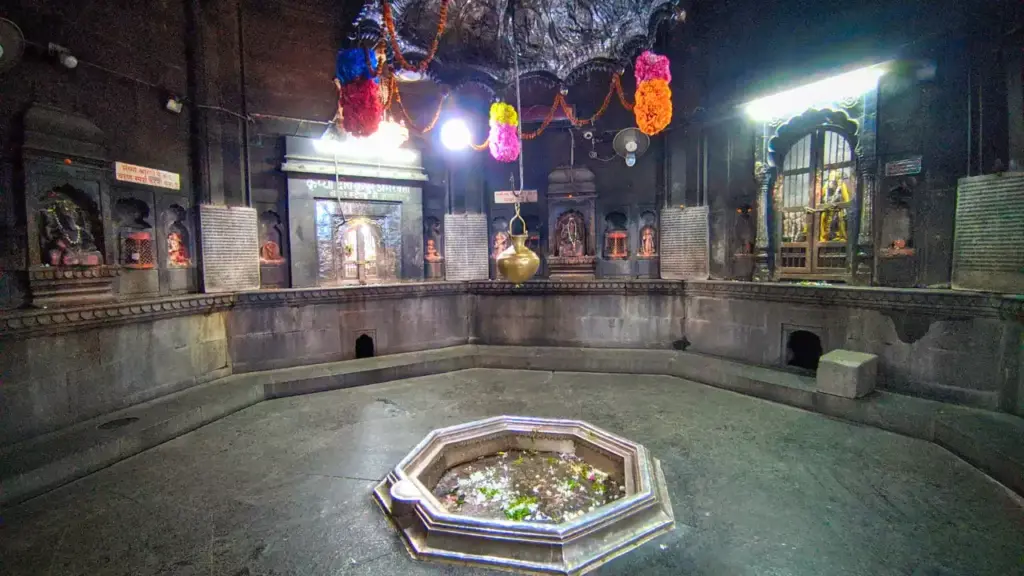
If Prayagraj is for purification, Gaya is for liberation. The Vayu Purana and Garuda Purana describe Gaya as the specific location created by the divine for the release of ancestors who may be trapped in suffering or wandering as spirits. This is the most critical destination for pind daan from Malaysia.
The presiding deity of Gaya is Lord Vishnu in his mace-bearing form, Gadaadhara. The Puranas teach that He is eternally present here in the very form of the Pitrs. Any offering made in Gaya is therefore a direct offering to Lord Vishnu and your entire ancestral line. The sanctity of Gaya is linked to the great demon Gayasura, who performed such immense penance that Lord Vishnu asked him to offer his body as a sacred altar. In return, Vishnu granted him the divine boon: the land covering his body would forever be the most sacred place for performing ancestral rites, and any Shradh performed here would bear imperishable fruit.
- Vishnupada Temple: The Agni Purana prescribes worship of Lord Vishnu’s footprint here. This ancient temple houses a divine footprint embedded in rock, and the main Pinda Daan ceremony is performed within its sacred precincts.
- Phalgu River: Offering Pinda (rice balls) at the Phalgu-tirtha frees the ancestors instantly. Lord Rama himself is said to have offered pindas for his father Dasharatha at the banks of this river. The Phalgu is unique—its waters flow beneath a vast expanse of sand, symbolising a hidden, spiritual current saturated with the essence of Lord Vishnu.
- Akshayvat: The eternal banyan tree at Gaya is another potent site where offerings acquire permanent merit (akshaya phala). Any rite performed here becomes eternal and undiminishing.
- Gayashiras and Pretashila: Offerings at Gayashiras (the “head” of Gayasura) and Pretashila ensure complete liberation from the state of ghosthood. These additional sites within Gaya Kshetra are covered in the 3-day pilgrimage package.
- Why Gaya is Unique: Unlike other Tirthas that cleanse general sins, Gaya specifically targets the liberation of ancestors stuck between realms. A single pinda offered here can elevate hundreds of generations of your family, freeing them from the three debts—to the Devas, the Rishis, and the Pitrs.
3. Varanasi (Kashi) — For Accidental and Unnatural Deaths
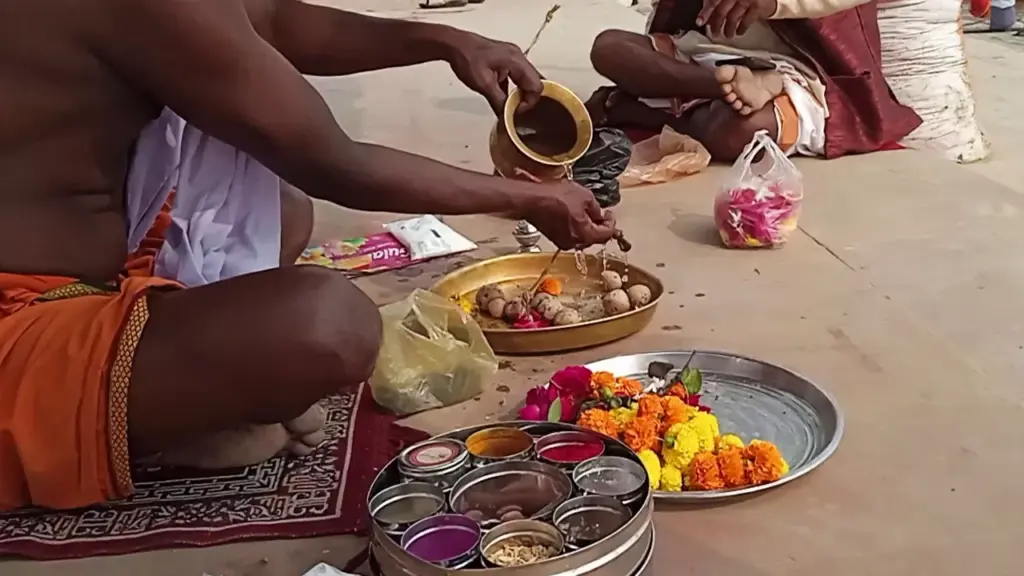
Varanasi, the city of Lord Shiva, is where the cycle of rebirth ends. Known as Avimukta—the place never forsaken by the Lord—it holds particular potency for families with ancestors who passed away in accidents, sudden illness, or other unnatural circumstances.
- Pishacamocana Tirtha: The Skanda Purana states that Shradh performed here frees the soul from the state of a Pishaca (wandering spirit). If any member of your family died suddenly without last rites, Varanasi is essential.
- Manikarnika Ghat: The scriptures assert that Lord Shiva whispers the Taraka Mantra into the ears of the dying here, granting immediate salvation.
- Panchakoshi Parikrama: Circumambulation of the five-kos sacred boundary of Kashi removes accumulated sins going back 21 generations of your lineage.
Which City Should You Visit First?
The classical sequence is: Prayagraj (purification) → Gaya (liberation) → Varanasi (final sanctification). However, if time is limited, Gaya alone—with its Vishnupada puja and Phalgu river rites—is the single most powerful location for ancestral liberation.
Understanding the Types of Shradh and Ritual Procedure
Before you book your pind daan from Malaysia, it helps to understand the different forms of Shradh prescribed in the scriptures. Each serves a distinct purpose, and our pandits will guide you on which is appropriate for your family’s situation.
Three Forms of Shradh
- Ekoddishta Shradh: Performed for a single, recently deceased individual. This focused rite is appropriate when a family member has recently passed and you wish to ensure their peaceful transition. It concentrates all spiritual merit on one soul’s passage.
- Parvana Shradh: Performed for a collectivity of three generations of ancestors—father, grandfather, and great-grandfather on both paternal and maternal sides. This is the most common form for Malaysian families performing Pind Daan for the first time, as it honours the entire ancestral chain.
- Tirtha Shradh: A Shradh performed at a sacred pilgrimage site like Prayagraj, Gaya, or Varanasi. The scriptures state that a Tirtha Shradh yields everlasting and undiminishing spiritual fruits—far exceeding the merit of Shradh performed at home or local temples.
Step-by-Step Ritual Procedure
Whether you participate in person at the ghats or join via live video from Kuala Lumpur, the ceremony follows the Vedic sequence prescribed in the Garuda Purana and Agni Purana:
- Sankalp (Sacred Declaration): The ritual begins with the formal declaration of intent. The pandit recites the time (Samvatsara, lunar month, Tithi), the place (e.g., Triveni Sangam), and your identity—full name, father’s name, Gotra, and the names of ancestors being honoured. Even when participating via video from Malaysia, your presence in the Sankalp makes the ritual fully valid.
- Tarpan (Water Offerings): Water mixed with black sesame seeds (til), flowers, and sacred Kusha grass is offered to three generations of paternal ancestors, three generations of maternal ancestors, and any other departed family members. A special dharam pind is also offered for those who died unnaturally or whose lineage details are forgotten. The offering must be made facing South, using the Pitr Tirtha—the space between the index finger and thumb of the right hand.
- Pinda Daan (Rice Ball Offerings): Consecrated rice balls formed from cooked rice mixed with honey, sesame, milk, ghee, and sacred herbs are offered. Each Pinda represents a departed ancestor and serves as a spiritual body through which the ancestor receives nourishment and liberation. The Pindas are offered at the water’s edge accompanied by specific mantras for each ancestor.
- Brahmin Bhoj and Dana: Following the Pind Daan, it is customary to arrange Brahmin Bhoj (feeding Brahmin priests) and Dana (charitable offerings of cloth, grains, or dakshina). Malaysian families who wish to add Suvarnadaan (gold), Vastradaan (clothing), or Gau Daan (cow donation—believed to help ancestors cross the Vaitarani river) can arrange this through our pandits.
The entire ceremony, from Sankalp to final Tarpan, takes approximately 2 to 3 hours. You receive a comprehensive documentation package—photos of each ritual stage and a video recording—so your family has a permanent record.
For Tamil and South Indian Families in Malaysia
A significant portion of the Malaysian Hindu diaspora traces its roots to the Tamil, Telugu, and Kannada lands of South India. Many families wonder whether rites performed at the holy Kaveri or Tamraparni rivers are sufficient.
The Brahma Purana acknowledges the Kaveri and Tamraparni as holy rivers capable of bestowing merit. However, the Skanda Purana provides a clear answer: while Southern rivers are sacred, for specific Pitr-mukti—ancestral liberation and release from the realm of Put—a visit to the Northern Tirthas of Gaya and Prayaga is prescribed for all inhabitants of Bharatavarsha and its global diaspora, regardless of regional origin.
Prayag Pandits works with pandits fluent in Tamil, Telugu, and Kannada, ensuring the Sankalp and ritual proceedings feel fully connected to your specific regional tradition. Our complete Pind Daan packages accommodate all South Indian sampradayas. In Gaya, the hereditary Gayawal priests have for generations served South Indian pilgrims, and many speak Tamil fluently. They employ assisting Acharyas from Tamil Nadu to ensure every mantra and instruction is communicated in your mother tongue. Practices such as the anti-clockwise circumambulation (apsavya) for ancestral rites, which is specific to South Indian tradition, are well-understood and correctly guided.
Travelling from Malaysia to India for Pind Daan: Complete Logistics Guide
Planning a pilgrimage from Kuala Lumpur, Penang, or Johor Bahru to the holy cities of North India requires careful logistics. Here is everything you need to know for 2026.
Best Flight Routes from Malaysia
The most efficient routing depends on your destination city:
- For Gaya: No direct flights exist from KUL to GAY. The best routes connect via Bengaluru (BLR), Delhi (DEL), Kolkata (CCU), or Chennai (MAA). Airlines operating this route include IndiGo, Air India, AirAsia, Batik Air, and Malaysia Airlines. Total journey time: 16-24 hours with 1-2 stops. Approximate one-way fare: MYR 745-1,500. Book via Skyscanner or MakeMyTrip for the best deals.
- For Prayagraj: Fly KLIA to Delhi (DEL) on AirAsia X, Malaysia Airlines, or IndiGo (approx. 5.5 hours direct). From Delhi, take a connecting flight to Prayagraj (IXD, 1 hour), a Rajdhani/Shatabdi train (4-5 hours), or a private car via Yamuna Expressway (6-7 hours). You can also fly KLIA to Varanasi (VNS), which is just 2 hours by road from Prayagraj. One-way fare from KUL to IXD: MYR 960-2,500 via platforms like Skyscanner, GoIbibo, or EaseMyTrip.
- For Varanasi: Fly into Lal Bahadur Shastri Airport (VNS) via Delhi or Mumbai. One-way fare from KUL: MYR 535-1,200. Trip.com and Skyscanner often have competitive deals on this route.
- For the Full Circuit (Prayagraj + Gaya + Varanasi): Fly into Delhi, take the train or flight to Prayagraj, proceed to Gaya by road or train (approx. 4 hours), then onward to Varanasi (approx. 3 hours). Return from Varanasi to Delhi for the flight home.
Best Time to Book Flights
For the most competitive fares, book your tickets 5-6 weeks (40 days) in advance. October and June generally offer lower prices. During Pitru Paksha (late September-early October), fares to Gaya and Varanasi increase significantly due to peak pilgrimage demand—early booking is essential.
Visa and Documentation for Malaysian Passport Holders
- Malaysian Citizens (non-OCI): Malaysian citizens are eligible for a free 30-day e-Tourist Visa for pilgrimage purposes (available until at least December 31, 2026). Apply online at indianvisaonline.gov.in. Processing typically takes 3-5 business days, but apply at least 2 weeks before travel. The High Commission of India in Kuala Lumpur provides official visa guidance.
- OCI Card Holders: If you hold an Overseas Citizen of India (OCI) card, you do not need a separate visa. The OCI card functions as a lifelong, multi-purpose visa. Apply at ociservices.gov.in.
- Passport Validity: Your passport must be valid for at least six months beyond your arrival date in India, with a minimum of two blank pages for immigration stamps.
- Ritual Documentation: Prepare a written list of at least three generations of ancestors on your paternal side—names, dates of passing (or approximate years), and your family Gotra. Your pandit requires this for the Sankalp invocation. If you do not know the Gotra, inform us—our pandits will guide you on the appropriate recitation.
Currency Exchange and Cost Planning (MYR to INR)
As of 2026, 1 MYR ≈ 18–19 INR. Here is a realistic budget framework for a Malaysian family of two performing Pind Daan at the three holy cities:
- Return flights (2 persons, KLIA to Delhi/Gaya): MYR 3,000–5,000 (approx. ₹55,000–90,000)
- Hotel accommodation (4 nights, 3-star): MYR 800–1,500 (approx. ₹15,000–28,000)
- Pind Daan at Gaya (Prayag Pandits package): ₹7,100–21,000 depending on the package tier
- Pind Daan at Prayagraj: ₹5,100 onwards
- Pind Daan at Varanasi: ₹5,100 onwards
- Local transport (cab, train): MYR 400–600 (approx. ₹7,500–11,000)
- Daan (charity), prasad, incidentals: ₹5,000–15,000
We accept international payments via Wise (formerly TransferWise), PayPal, and direct bank transfer to our Indian account. This allows Malaysian families to pay from their local bank in MYR with no hidden charges. Contact us for a customised package quote for your family.
Pind Daan Package Costs in MYR: City-Wise Breakdown
To help Malaysian families plan with clarity, here is a detailed breakdown of ritual package costs at each holy city, with approximate MYR conversions (at 1 MYR ≈ 19 INR).
Pind Daan Packages at Prayagraj
- Pind Daan in Prayagraj (In-Person or Online) — ₹7,100 (approx. RM 380): Full ritual at the Triveni Sangam including Puja Samagri, dedicated boat to the Sangam point, experienced Prayagwal Pandit, Sankalpa recitation, Pinda offerings, and Tarpan. Online sessions include live WhatsApp/Zoom video streaming.
- Shradh at Prayagraj — ₹7,100 (approx. RM 380): Complete Shradh ceremony with ritual offerings, Brahmin Dana, and prayers for ancestral peace. Can be combined with Pind Daan.
- Pind Daan + Shradh + Gau Daan — ₹11,000 (approx. RM 580): Includes the sacred cow donation ritual believed to help ancestors cross the Vaitarani river.
Pind Daan Packages at Gaya
- Standard 1-Day Pind Daan at Phalgu River — ₹7,100 (approx. RM 380): Essential rites at the Phalgu River with experienced Gayawal priest and all ritual materials.
- Pind Daan in Gaya for Two Persons — ₹15,000 (approx. RM 790): Complete ceremony at three essential sites: Falgu River, Vishnupad Temple, and Akshayavat. Includes experienced priest and all samagri.
- Pitru Paksha Special (3 Days) — ₹31,000–35,000 (approx. RM 1,630–1,840): Elaborate multi-day ritual series covering all significant sites in Gaya. Includes Brahmin Bhoj and charitable acts.
- Platinum Package with Gau Daan — ₹35,000 (approx. RM 1,840): Complete Pind Daan at three main sites plus sacred Gau Daan (cow donation). The highest form of charity combined with ancestral rites.
- Online Pind Daan in Gaya — ₹15,000 (approx. RM 790): Full ritual performed at Vishnupad Temple and Falgu River with live video streaming to Malaysia. Photo and video documentation provided.
Pind Daan Packages at Varanasi
- Pind Daan in Varanasi — ₹7,100 (approx. RM 380): Complete ritual at the sacred ghats of the Ganga with knowledgeable pandit, all ritual items, and ghat arrangements.
Combined and Tour Packages
- 3-in-1 Online Package (Prayagraj + Varanasi + Gaya) — ₹21,000 (approx. RM 1,100): Pind Daan at all three Maha Tirthas with live video at each location on successive days. Strongly recommended for families whose ancestors have not previously received Pind Daan at any Maha Tirtha.
- Prayagraj 1N/2D Package (with hotel and transfers) — ₹13,500 for 2 persons (approx. RM 710): Full Pind Daan with dedicated boat, airport/station transfers by private cab, and comfortable 3-star hotel stay. Contact us to book.
- Varanasi 1N/2D Package (with hotel and transfers) — ₹13,500 for 2 persons (approx. RM 710): Full Pind Daan, private cab transfers, and 3-star hotel stay. Contact us to book.
- 4N/5D Complete Teerth Shradh Tour (Prayagraj + Varanasi + Gaya) — ₹36,000 per person (approx. RM 1,900): The most comprehensive in-person package. Covers Pind Daan rituals in all three cities, full sightseeing, private boat at Prayagraj, Ganga Aarti at Varanasi, 3-star hotel accommodation, all inter-city travel by private car, and local transport to ritual sites.
3-in-1 Online Pind Daan Package: Prayagraj, Varanasi u0026amp; Gaya
This unique service allows you to perform the holy Pind Daan ceremony at the three most powerful Tirthas for ancestral liberation. Performed by our verified Teerth Purohits with live video streaming to Malaysia.
- 500,000+ Poojas Performed
- Online and Offline Pooja Available
- Experienced Pandits (Hindi, Tamil, English)
- Pooja Samagri Included
- WhatsApp Video Updates Sent to Malaysia
Accommodation and Food Costs for Malaysian Pilgrims
Knowing the on-ground costs in MYR helps Malaysian families budget accurately. Here is what to expect at the three holy cities.
Accommodation (Per Night)
- Budget Dharamshalas and Guesthouses: RM 45–120 per night (₹800–2,000). Basic rooms, often close to the ghats. Suitable for the frugal pilgrim.
- Mid-Range 2-3 Star Hotels: RM 150–340 per night (₹2,500–6,000). Comfortable air-conditioned rooms with modern amenities. Ideal for families.
- 4-Star Hotels and Homestays: RM 340–850+ per night (₹6,000–15,000+). Premium comfort with better service, amenities, and food. Bodhgaya (15 km from Gaya) offers the widest range of quality accommodation near the pilgrimage sites.
Food and Daily Expenses
- Local Eateries and Thalis: RM 8–17 per meal (₹150–300). Simple, wholesome vegetarian thalis with rice, dal, roti, and seasonal vegetables. The food in all three cities is predominantly vegetarian to respect the sanctity of the holy places.
- Hotel Restaurants: RM 28–70 per meal (₹500–1,200). Multi-cuisine vegetarian food in a more formal setting.
- Local Delicacies: Do not miss the famous Tilkut (sesame seed and jaggery sweet) and Khaja in Gaya, or the legendary Tamatar Chaat in Varanasi.
- Local Transport (Auto-rickshaws): RM 40–70 per day for getting around within a city.
- Inter-city Travel by Private Car: RM 330–500 per day.
- Miscellaneous (Daan, Dakshina, Souvenirs): Budget at least RM 150–350 for additional charity and personal expenses.
Best Time to Perform Pind Daan from Malaysia in 2026
Timing your journey wisely maximises both the spiritual merit and the practical comfort of your pilgrimage. There are several auspicious windows throughout 2026:
Pitru Paksha 2026 — The Most Auspicious Period
The 16-day fortnight of Pitru Paksha 2026 falls from September 27 to October 11. This is unequivocally the best time for pind daan from Malaysia. During this period, the veil between the earthly realm and the Pitru Loka thins significantly. The Brahma Purana states that the ancestors literally travel toward their descendants, waiting at the doorstep for offerings. Any Shradh or Pind Daan performed during these 16 days yields merit multiplied many times over compared to other times of the year.
Mahalaya Amavasya (October 11, 2026) is the final and most powerful day of Pitru Paksha. Pind Daan on this Amavasya is believed to liberate ancestors who have been unable to find peace even after many years. This single day carries the concentrated spiritual force of the entire fortnight.
Malaysian families should book flights and packages at least 6–8 weeks in advance, as October is peak pilgrimage season. Our Pitru Paksha 2026 slots fill up by August.
Other Auspicious Times in 2026
- Monthly Amavasya (New Moon): Every new moon day is a mini-Pitru Paksha. Pind Daan on any Amavasya is highly meritorious and flights/hotels are considerably cheaper than during Pitru Paksha.
- Magha Purnima (February 2026): The full moon of the month of Magha is sacred at Prayagraj. Combined with ancestral rites at the Sangam, this is a beautiful time to visit.
- Gaya Shradh — Year-Round: Gaya is unique in that Pind Daan performed here is equally potent on any day of the year, not just Pitru Paksha. The scriptures state that Gaya Shradh is “like Pitru Paksha every day.” This makes it ideal for Malaysian families who cannot take leave in September-October.
- Sankranti Days: The day the sun transitions between zodiac signs yields ten times the merit of ordinary days for ancestral rites, per the Shiva Purana.
- Solar and Lunar Eclipses: The Vedic tradition considers eclipses as particularly powerful times for ancestral rites at Tirthas. Contact us to check eclipse dates during your planned travel window.
- Solstices and Equinoxes: The summer and winter solstices (ayanas) and vernal and autumnal equinoxes (vishuva) are also highly auspicious for Shradh, per the Dharmashastra texts.
NRI Special
🙏 Book Pind Daan from Malaysia — 2026
Starting from
₹5,100
per person
- Live video ceremony streamed to Malaysia
- Pandits fluent in Tamil, Telugu, Hindi, English
- Complete documentation and photos provided
- Pay securely in MYR via Wise or PayPal
Online Pind Daan from Malaysia: When Travel Is Not Possible
The scriptures allow for Pratinidhi Karma—ritual performed via a designated representative—when the devotee genuinely cannot travel due to illness, age, visa issues, or work commitments. This is not a compromise; it is a Vedic provision that has been part of our tradition for centuries.
Through Prayag Pandits’ Online Pind Daan service, Malaysian families can participate in the ritual in real time via WhatsApp or Zoom video call. Our Teerth Purohit performs the complete ceremony—including Sankalp (invoking your name, gotra, and ancestors), Pinda formation and offering, Tarpan, and final Visarjan—while you watch and participate from Kuala Lumpur or anywhere in Malaysia.
Time Zone Advantage: Malaysia to India
Malaysia (MYT, UTC+8) is only 2.5 hours ahead of Indian Standard Time (IST, UTC+5:30). This means auspicious morning rituals scheduled at 7:00 AM IST begin at 9:30 AM in Malaysia—a very comfortable hour for the entire family to gather and participate together from home. We use high-speed 5G mobile networks at the Sangam Ghats and in Gaya to ensure a stable, clear video connection. If the live call drops for any reason, we reconnect immediately, and the entire session is recorded as backup.
How Online Pind Daan Works for Malaysian Families
Perform the sacred rites from Malaysia via Live Video Call
🗓️
Book Your Slot Online
Select your preferred date and holy city (Gaya, Prayagraj, or Varanasi). Pay securely in MYR via Wise or PayPal.
📸
Sankalp via Live Video
Our Teerth Purohit connects with you on WhatsApp/Zoom for the Sankalp ritual, invoking your name, gotra, and your ancestors.
🙏
Full Ritual Performed
The complete Pind Daan—Pinda formation, Tarpan, Visarjan—is performed at the holy site on your behalf with full Vedic procedure.
☸️
Photos and Certificate
Ceremony photos, video recording, and a digital ritual certificate are sent to your WhatsApp within 24 hours.
Physical Pilgrimage: A 7-Day Itinerary for Malaysian Families
For families who choose to travel to India, here is a well-structured 7-day itinerary that covers the complete circuit of all three holy cities, designed specifically around the logistics of travel from Malaysia.
- Day 1: Depart KLIA. Evening flight to Delhi (DEL). Check in to hotel near IGI Airport.
- Day 2: Early morning flight from Delhi to Prayagraj (IXD), or take the Prayagraj Express overnight train (departs Delhi 9:45 PM, arrives 6:00 AM). Check in to hotel near the Sangam. Afternoon: Sangam Snan (holy bath at the confluence). Evening: attend Ganga Aarti at the Triveni Sangam ghat.
- Day 3: Morning: Pind Daan at Prayagraj with Prayag Pandits. Ritual includes Sankalp, head-shaving rite if desired, Pinda offering at the Sangam, and Tarpan. Afternoon: visit Bade Hanuman Ji Temple (unique reclining idol of Lord Hanuman), Alopi Devi Shaktipeeth, or the Anand Bhawan museum. Depart for Gaya by car (approx. 4 hours via NH19).
- Day 4: Full day in Gaya. Morning: Pind Daan at Gaya—Tarpan at the Phalgu River, main Pinda Daan at Vishnupada Temple, and concluding rites at Akshayvat. The entire process takes approximately 5-6 hours. This is the most spiritually intense day of the pilgrimage.
- Day 5: Morning: optional visit to the Mahabodhi Temple in Bodhgaya (15 km from Gaya) for a serene experience. Depart Gaya for Varanasi (approx. 3.5 hours by road or 4 hours by train). Check in to hotel near Assi Ghat. Evening: witness the magnificent Ganga Aarti at Dashashwamedh Ghat.
- Day 6: Morning: Pind Daan at Varanasi ghats—Pishacamocana Tirtha and Manikarnika. Visit Kashi Vishwanath Temple. Afternoon: boat ride on the Ganga. Evening: leisure or final Ganga darshan.
- Day 7: Morning: collect sacred Ganga Jal in sealed containers to take back to Malaysia. Flight from Varanasi (VNS) or train to Delhi. Evening flight KLIA. Return to Malaysia with the peace of having fulfilled your ancestral dharma.
Shorter Itinerary: 3-Day Gaya-Only Pilgrimage
If you have limited leave from work, a focused 3-day trip to Gaya is the most spiritually efficient option. Since Gaya Shradh is potent on any day of the year, you are not restricted to Pitru Paksha dates.
- Day 1: Arrive at Gaya Airport (GAY) via connecting flight from KUL through Kolkata, Delhi, or Bengaluru. Transfer to hotel in Bodhgaya. Rest and acclimatize. Optional evening visit to the Mahabodhi Temple.
- Day 2: The main day of Shradh and Pind Daan. Morning: Tarpan at the Phalgu River. Mid-day: main Pinda Daan ceremony at Vishnupad Temple. Afternoon: concluding rites at Akshayvat and Gayashiras. The entire process takes approximately 5-6 hours with our Gayawal priest guiding you at every step.
- Day 3: Peaceful morning. Transfer to Gaya Airport for return flight home.
Prayag Pandits Assisted Tour Service
We offer a complete assisted pilgrimage package for Malaysian families. This includes pre-coordinated pandits at all three cities, premium cab transfers between cities, curated 3-star and 4-star hotel bookings, and a dedicated Prayag Pandits coordinator on WhatsApp throughout your journey. Contact us to receive a personalised itinerary and quotation.
Asthi Visarjan at Prayagraj: The Final Rite of Immersion
Many Malaysian families travelling to Prayagraj carry the ashes (asthi) of their departed loved ones for immersion at the Triveni Sangam. This is the sacred rite of Asthi Visarjan, and Prayagraj is considered the most powerful location for it.
The chief mourner, after a purificatory bath and often a tonsure (ritual head-shaving), takes the ashes to the confluence by boat. The mourner formally invites the soul of the deceased to reside in the holy tirtha and look after the family’s welfare. The ashes are then immersed into the sacred waters, completing the soul’s earthly journey. In Prayagraj, this act is believed to grant immediate and final liberation. Our pandits handle all logistics including the boat, ritual materials, and the immersion ceremony. Read our complete guide to Asthi Visarjan for detailed information.
Essential Preparation Checklist for Malaysian Devotees
What to Prepare Before You Leave Malaysia
- Gotra and Lineage List: Write down the full names of at least three generations of ancestors on both your father’s and mother’s side. Include dates or years of passing where known. If your gotra is unknown, our pandits can help establish the correct procedure.
- Passport and OCI/Visa: Ensure validity of six months beyond your travel dates. Apply for the free 30-day e-Tourist Visa at indianvisaonline.gov.in at least 2 weeks before travel.
- Travel Insurance: Your Malaysian health insurance typically does not cover India. Purchase a short-term travel insurance policy that includes medical evacuation coverage.
- Currency: Exchange MYR to INR at a licensed money changer in Kuala Lumpur (better rates than at Indian airports). Carry ₹20,000–30,000 in cash for ghats, temples, and small transactions. Keep international cards active for hotels and larger payments.
- Ritual Clothing: Men: white cotton dhoti and angavastram. Women: simple cotton saree in white, cream, or yellow (avoid black). Pack a spare set of ritual clothes in a separate dry bag.
- Medications: Carry a small medical kit with personal prescriptions, ORS sachets, and general travel medicines. Get a doctor’s note for any prescription medication.
- Indian SIM Card: An Airtel or Jio tourist SIM is available at major airports. Having a local Indian number is essential for coordinating with our pandits and drivers.
- Ganga Jal Containers: Bring sealed containers if you wish to carry sacred Ganga water back to Malaysia for use in home rituals and pujas.
What NOT to Bring to the Ritual Site
- Leather items: Remove leather belts, wallets, and shoes before entering any ritual area. Leather is considered impure near sacred fire and water.
- Non-vegetarian food: Do not consume meat, fish, or eggs for at least 24 hours before the ritual. Many pandits recommend three days of vegetarian food before Pind Daan.
- Alcohol: Completely abstain from alcohol for the duration of your pilgrimage. This is not merely a suggestion but a Vedic requirement for the ritual to be effective.
- Excessive electronics: While photographs are acceptable during the ritual (our team takes photos for your record), phones should be on silent and kept away during the Sankalp and Pinda offering itself.
Why Prayag Pandits for Malaysian NRIs
Over the past 15 years, Prayag Pandits has served thousands of families from Malaysia, Singapore, Australia, the UK, and the USA. Our NRI service model has been built specifically around the concerns and requirements of the global diaspora.
- Authentic Vedic Procedure: We do not cut corners. Whether it is the Pishacamocana rite in Kashi or the Vishnupada Puja in Gaya, our Teerth Purohits follow the prescriptions of the Agni Purana and Garuda Purana strictly. No shortcuts, no pre-recorded ceremonies.
- Hereditary Prayagwals: Our Pandits at Prayagraj are hereditary Prayagwals—priestly families whose lineage at the Triveni Sangam extends back many generations. The “Bahi Khata” (family records book) maintained by Prayagwal priests is one of the most revered traditions at Prayagraj, recording the names of pilgrims and their ancestors across centuries. Your family’s name will be added to this living record.
- Language Accessibility: Our pandits communicate in Hindi, English, Tamil, Telugu, Kannada, and Sanskrit. Every step of the ritual is explained to you in real time.
- Video Proof: Every ceremony is documented with high-quality photos and a video recording sent directly to your WhatsApp. You receive a digital certificate of the ritual for your family records.
- Transparent Pricing: Our package prices are fixed and published. There are no surprise dakshina demands or add-on charges. International payment options are available in MYR, SGD, USD, and AUD.
- 100% Ritual Completion Record: We have never cancelled or failed to complete a scheduled ritual. Every Pooja booked with us has been performed as committed.
- Post-Ritual Guidance: After the Pind Daan, our pandits guide you on the ongoing Pitru Tarpan routine you can maintain from Malaysia—including monthly Amavasya rituals you can perform from home.
Read our NRI’s comprehensive guide to Pind Daan for deeper background on the ritual’s theological significance. You may also wish to read the complete pre-travel checklist for NRIs and our seasonal guide on the best time for Teerth Shradh.
A Final Word: Your Ancestors Are Waiting
The Skanda Purana tells us that meditating on Janardana (Vishnu) in Gaya rids one of the three great debts—to the Devas, the Rishis, and the Pitrs. The Puranas teach that ancestors who may be suffering in hell or wandering as restless spirits yearn for a descendant to visit Gaya and act as their saviour. A correctly performed Shradh elevates them directly to Brahmaloka—the highest heavenly realm.
Do not let distance or doubt delay this sacred duty. The blessings of liberated ancestors are the invisible foundation upon which every generation of your family stands. Whether you choose to fly to India for a transformative pilgrimage or trust our verified Teerth Purohits to perform the rites on your behalf from Malaysia, take the step in 2026.
Begin with a conversation. WhatsApp us at +917754097777 with your family’s details—your gotra, the names of your ancestors, and your preferred dates. We will guide you from there.
Let your ancestors attain the supreme abode of Vaikuntha. Let your family inherit the peace that follows.
✨ Honour Your Lineage with Dignity
Whether you plan to visit India or perform rituals remotely from Malaysia, our expert team ensures a hassle-free, fully Vedic experience.
Starting from
₹3,100/-
per person
- 50,000+ Poojas Performed
- Pooja Samagri Included
- Experienced Pandits
- Average 4.8 Star Reviews
Frequently Asked Questions
Can Pind Daan be performed from Malaysia without visiting India?
Yes. The scriptures allow for Pratinidhi Karma—rituals performed by a designated priest on your behalf. Through Prayag Pandits' Online Pind Daan service, you join the ceremony via live WhatsApp or Zoom video call. The Teerth Purohit performs the complete ritual in your name and gotra at the holy site, while you participate and witness from Malaysia. Photos, video, and a digital certificate are provided.
How do Malaysian families pay for Pind Daan services?
We accept secure international payments via Wise (TransferWise), PayPal, and direct bank transfer to our Indian account. Malaysian families can pay in MYR with competitive exchange rates and zero surprise charges. At current rates, our base package of ₹7,100 INR is approximately RM 380. Contact us for a package quote and payment link.
Which is better — Gaya, Prayagraj, or Varanasi for Pind Daan?
Each city serves a distinct purpose. Gaya is the most powerful site specifically for ancestral liberation (Pitr-mukti). Prayagraj is prescribed for purification before Gaya. Varanasi is especially important for ancestors who died in accidental or sudden circumstances. If you can only visit one city, the scriptures point to Gaya as the primary destination for Pind Daan.
What are the best dates in 2026 for Pind Daan from Malaysia?
Pitru Paksha 2026 (September 27 to October 11) is the most auspicious period, with Mahalaya Amavasya (October 11) being the single most powerful day. However, for families who cannot travel during this window, any monthly Amavasya (new moon day) is equally suitable. Gaya is unique in that Pind Daan performed there is spiritually potent on any day of the year.
Do your pandits speak Tamil or English for Malaysian families?
Yes. Our Teerth Purohits are fluent in Tamil, Telugu, Hindi, English, and Sanskrit. For Tamil and South Indian families in Malaysia, we ensure the Sankalp is performed in a manner fully aligned with your regional sampradaya. In Gaya, we work with Gayawal priests who have generations of experience serving South Indian pilgrims and employ assisting Acharyas from Tamil Nadu.
How far in advance should Malaysian families book?
For Pitru Paksha 2026 (September 27 – October 11), we strongly recommend booking at least 3 to 4 months in advance, as senior Prayagwal and Gayawal pandits are limited in number. For other times of the year, 2–4 weeks advance booking is generally sufficient. Contact us on WhatsApp at +917754097777 to check current availability.
What details do I need to provide for the Sankalp?
To perform the Sankalp correctly, please provide: (1) Your full name as the performer (Karta), (2) Your father's name, (3) Your family Gotra, (4) The names of the ancestors for whom Pind Daan is being performed—ideally three generations on the paternal side (father, grandfather, great-grandfather) and three on the maternal side. If you do not know the Gotra, inform us and our pandits will guide you on the appropriate recitation.
Do you provide proof that the ritual was performed?
Yes. After every ritual we send you: (1) a photo album covering each stage of the ceremony from Sankalp through Pinda offerings, (2) a video recording of the full ritual, and (3) confirmation that your family's name has been entered in the Prayagwal Bahi Khata—the traditional record book maintained by priestly families at Prayagraj. This is a permanent ancestral record. All documentation is sent to your WhatsApp within 24 hours.
Is the Indian e-Visa free for Malaysian citizens?
Yes. Malaysian citizens are eligible for a free 30-day e-Tourist Visa for pilgrimage purposes, available until at least December 31, 2026. Apply online at indianvisaonline.gov.in. Processing typically takes 3-5 business days. Ensure your passport is valid for at least 6 months beyond your travel dates with a minimum of two blank pages.
Book Your Sacred Ritual
Authentic ceremonies performed by Veda-trained pandits with video proof at sacred sites across India.
2,263+ families served
Video proof included
Since 2019
