Rituals

Read here! The compelling story of Brahma Kapal, Badrinath

Prakhar Porwal · 11 min read · Reviewed Apr 14, 2026
Key Takeaways
    In This Article

    Brahma Kapal

    • Brahma Kapal, a platform on the banks of the Alaknanda River, is also where Pind Daan is performed.
    • The Badrinath Temple, one of Hinduism’s most revered temples, is located in this town and forms part of the Char Dham Yatra.
    • Brahma Kapal is 200m from Badrinath Temple.
    • It is 500 km from New Delhi.
    • Lord Vishnu is honoured in this temple. The Badrinath Temple is the most important of the Sapta Badri’s seven temples.
    • At Brahma Kapal, Lord Shiva severed Brahma’s fifth head (Kapala), fulfilling his vow to the Devas, Brahma’s head got entangled in Lord Shiva’s hand.
    • Lord Shiva was cursed with the Brahmahathi Dosha.
    • When Mahalakshmi put Bhiksha in the Kapala, the curse was lifted and the Kapala got off Lord Shiva’s hand.

    How Brahma Kapal got its name

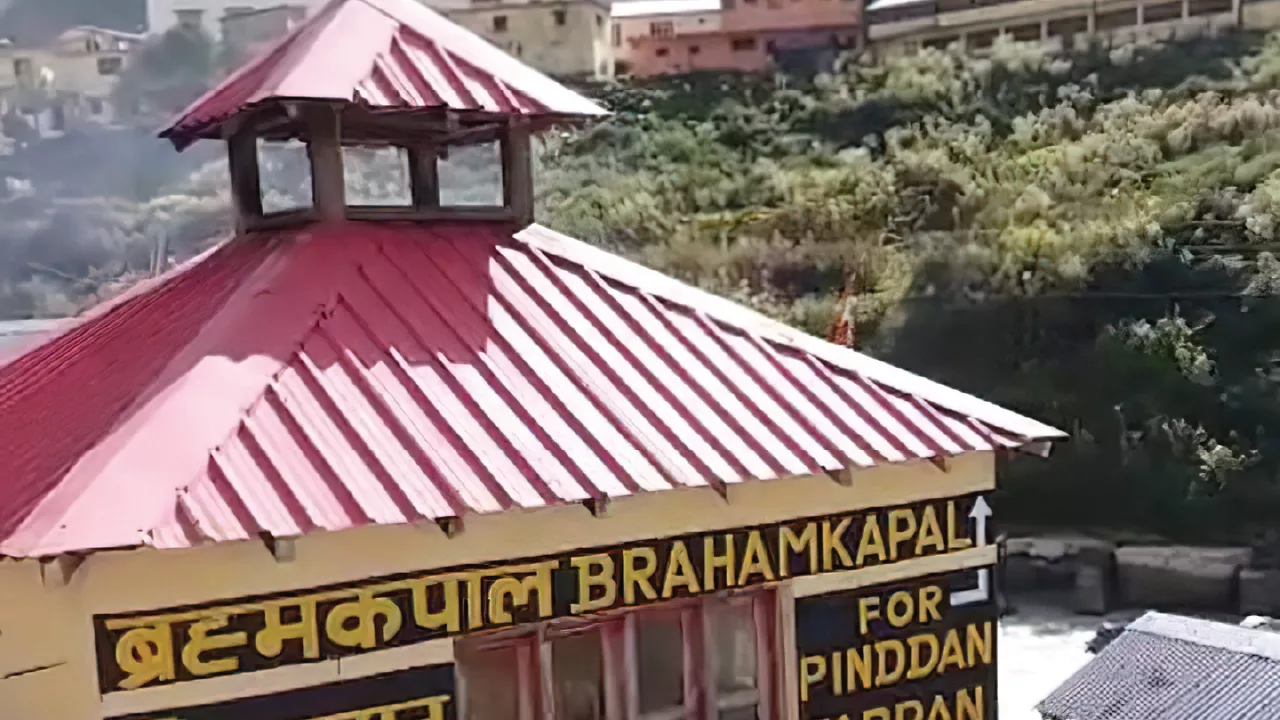
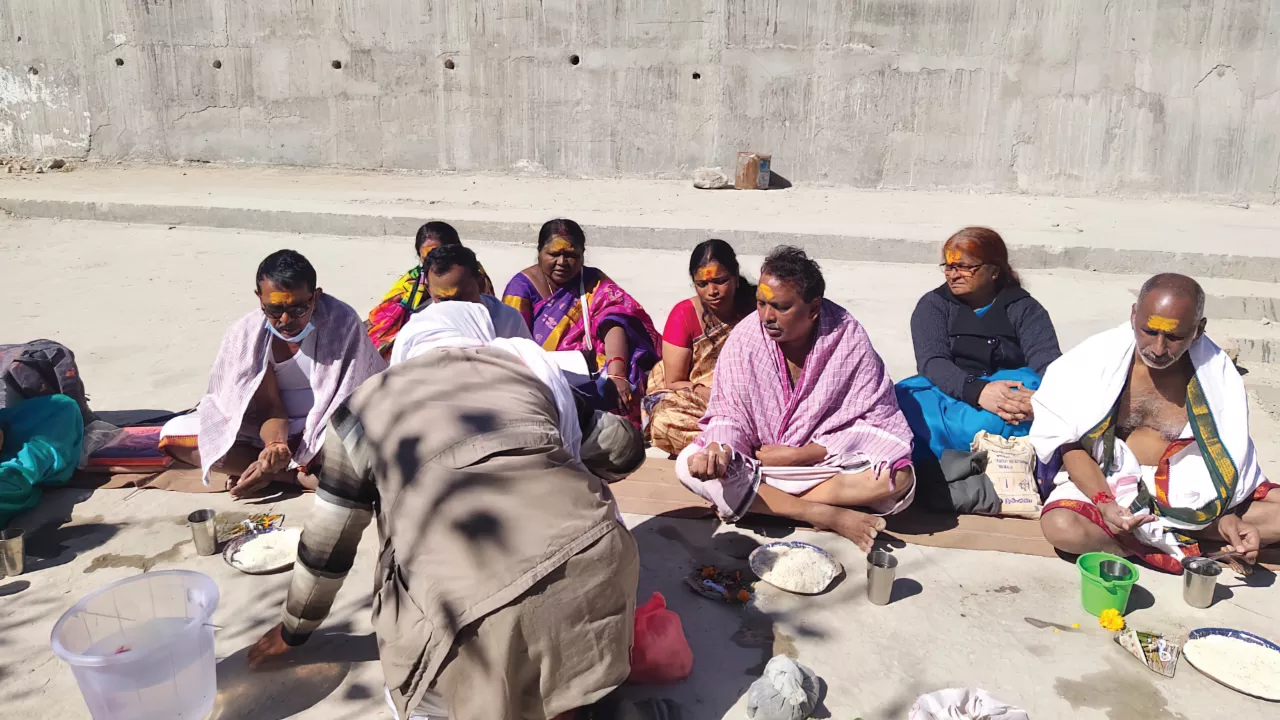
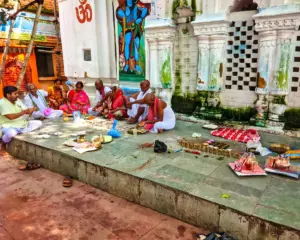
    For Hindus, Brahma Kapal is particularly significant since it is thought to be the location where people pay reverence to the souls of their ancestors. Brahma Kapal, a flat platform on the banks of the Alaknanda River, is also where cherished seniors’ death rites are performed. Families who wish to perform Pind Daan at Brahma Kapal Badrinath can book this service through Prayag Pandits with experienced pandits at this sacred site. For those unable to travel to the Himalayas, the same sacred ceremony can be arranged remotely through our Online Pind Daan at Brahmakapal Badrinath service, conducted live via video call by our pandits stationed at the tirth.It’s about 2 kilometres from Badrinath’s hills. All of the supplies needed to complete the seniors’ funeral rites are readily available at surrounding stores. Pilgrims who wish to combine the ancestral rites with the Char Dham darshan can book the Pind Daan at Badrinath (Brahmakapal) package, which includes pandit arrangements at both Brahma Kapal and the Badrinath Temple.It is claimed that Lord Brahma resides in Brahma Kapal, and that when their family members do their last rites or shraddha karma here, the departed souls are freed from the cycle of birth and death. Several pundits (priests) can be found here, sitting with samagri (materials) to perform the ceremonies.The Brahmanical triad is comprised of three members: Lord Brahma, Lord Vishnu, and Lord Shiva. Brahma is the deity of creation, and he is often regarded as the Creator of the cosmos.
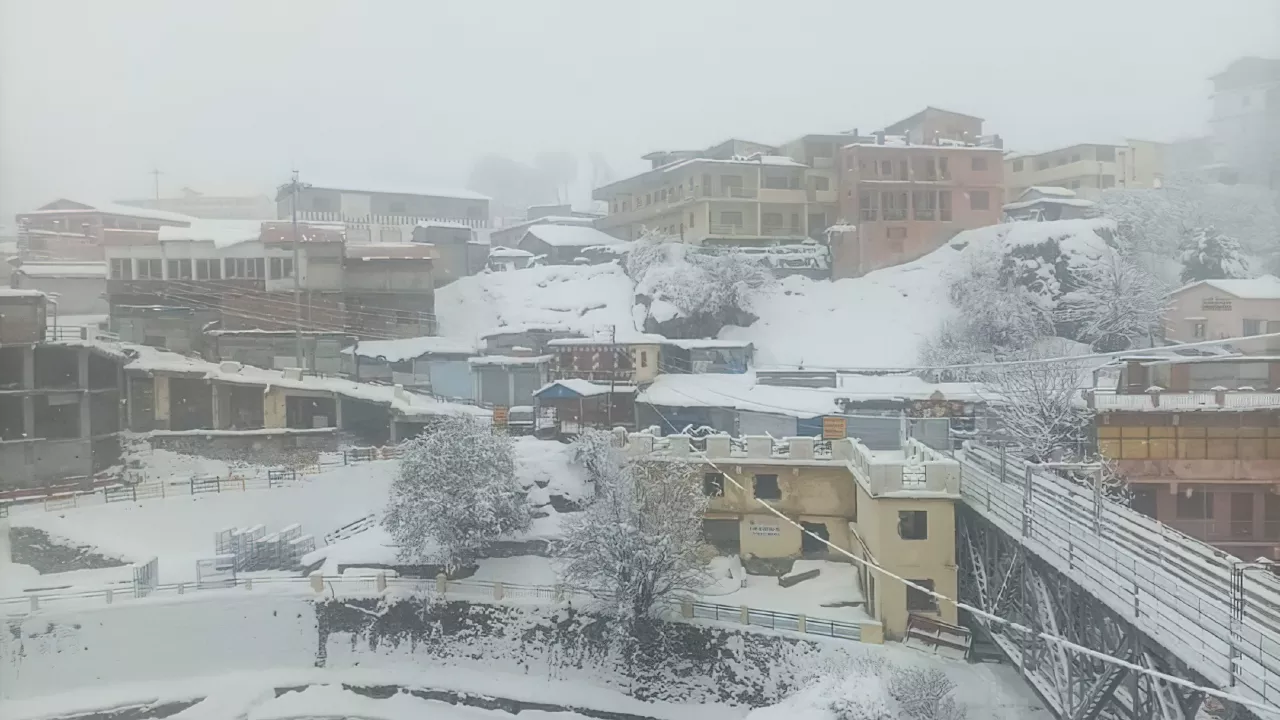
    Brahma Kapal Badrinath in winters
    Brahma Kapal Badrinath in winters
    A person’s subtle body is made up of his mind and intellect, or his complete thinking process. The subtle body of man is responsible for the construction of his gross body as well as the world he lives in. The sort of physical body a person has is determined by his ideas. The individual’s ideas are also accountable for the sort of reality he encounters around him. As the mind thinks, so the world thinks. If a person has positive thinking, he sees a positive world. If his ideas are negative, he will perceive a negative reality. Duryodhana saw vice everywhere, but Yudhishtra, a virtuous man, saw goodness everywhere. There is no world when ideas are absent. There are no thoughts, no world, in profound slumber. This phenomenon may be observed not just in the microcosm but also in the macrocosm. The cosmic subtle body is the sum of all living creatures’ subtle bodies. The Hiranyagarbha, a cosmic subtle body, is supposed to be the creator of the entire cosmos. Brahma is the name of the creator.

    Five Heads of Lord Brahma

    According to tradition, Brahma was born with only one head. However, when he made Goddess Saraswati from one of his limbs, he instantly fell in love with her. Goddess Saraswati, on the other hand, was trying to flee from him due to her shyness. Lord Brahma now produced four more heads for himself to maintain watch of the movements of Goddess Saraswati in all directions. The five heads worked together to keep a close eye on all four cardinal directions as well as the upward direction to report the whereabouts of Goddess Saraswati (This was why, when Goddesses Saraswati wanted to get away from Lord Brahma at Prayag, she took the form of a river which flowed into the earth, the only direction in which Brahma could not see).Lord Brahma strode over the entire universe with his five heads, swelled with pride and glory at the magnificence of his creation. He was critical of the Devtas and the other Trimurtis. He became vain and disagreeable, and the Devas were soon irritated by his actions. They contacted Lord Shiva and begged him to put an end to Lord Brahma’s newfound pride.

    Devas approach Lord Shiva for help

    “Maheshwara,” they called out in unison, “Lord Brahma’s deeds are getting increasingly difficult to bear.” We find it difficult to listen to his self-serving ramblings about his own accomplishments. “Please put a stop to this.”Lord Shiva nodded as if he didn’t need any explanations about the circumstance. Omniscient knew everything and told all the Devtas that everything would be well soon.Brahma Kapal TempleThe Devtas had convened to devise a simple plan to enrage Lord Brahma and thereby Lord Shiva. They all felt that the best and simplest solution was to just send him to Kailash. “With that largemouth of his, he’s bound to irritate Maheshwara sooner or later,” one of the Devtas remarked. Everyone agreed on the concept and proceeded to Lord Brahma. They simply told him to go to Kailash to meet Lord Shiva, and Lord Brahma agreed immediately.So Lord Brahma entered Kailash, anticipating a long-awaited amicable chit-chat with a co-trinity. Lord Shiva went on his daily tour of the cosmos, and Devi Parvati was the only one present. When the holy mother saw Lord Brahma from a distance, she assumed Lord Shiva had returned and ran to him with the ingredients needed for Paada Pooja. Shakti began adoring Lord Brahma’s feet without even glancing up. Lord Brahma remained silent, savouring the show of adoration.Lord Shiva entered at that point. A single look at Lord Brahma’s sheepish expression was enough to explain everything. His rage sprang forth.Brahma, Lord Brahma, stammered!Shakti looked up, and seeing Lord Shiva’s enraged expression, she immediately realised her error and fled the scene.“Just because Shakti didn’t see your face and offered Paada Pooja to you, does that imply you accept it without protest?” Lord Shiva said.Lord Brahma merely hung his heads, his chattering mouth zipping for the first time.“Because it was your five heads that started this entire mess, may you be without them!” Shiva yelled. And with a swift motion, Lord Shiva severed Brahma’s fifth head, fulfilling his vow to the Devas. Lord Brahma became four-headed, as we know him today, and walked away quietly, his heads bowed in shame.

    The Brahma Kapalam

    However, that was only the beginning of Lord Shiva’s unending torment. Lord Shiva was cursed with the Brahmahathi Dosha because he tortured Lord Brahma, the foremost Brahmana. Lord Brahma’s skull (Kapalam) became entangled in Lord Shiva’s hands and refused to budge.Lord Shiva was taken aback by this previously unknown complexity. He was now stuck with the skull in his grasp. In his panic, he begged Agni, the supreme cleanser of all things, to blow the Kapala from his grasp. However, no matter how hard Agni tried, he remained unsuccessful. To make matters worse, Agni was also infected with the Dosha.Lord Shiva was now terrified. He travelled all over the world in pursuit of a solution. Parvati came to her husband’s aid at that point. “Swami, only Vishnu can deliver you from this agony.” Visit numerous Sthalas and receive bhiksha at the Kapala. You will be rid of the Dosha at the point where the Kapala overflows.”
    Brahma Kapal Pind daan
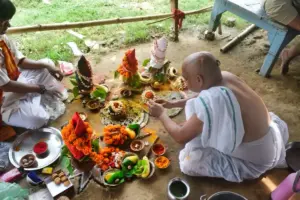
    Pind Daan at Brahma Kapal
    As a result, Lord Shiva travelled from place to place as Bikshadanar, carrying the Kapala in his palm, in search of release from the curse. Wherever he acquired bhiksha, it would vanish as soon as he touched the Kapala, and the Kapala would remain empty. 

    Shiva Washes Away the Brahmahathi Dosha

    So, after hopping from one area to another, he arrived in Thirukkandiyur. There, Sthala Perumal dispatched Mahalakshmi to bestow bhiksha on Lord Shiva. Mahalakshmi, too, appeared in all her grandeur and began dumping bhiksha into the Kapala. The Kapala spilled and fell to the earth all at once (Some legends also claim that Lord Maha Vishnu cut his chest and offered the pouring blood into the Kapala). Shiva was immediately freed from the curse and hailed Lord Vishnu for his prompt assistance. Lord Vishnu was given the name HaraSaabaVimochanar after he cured Lord Shiva of his curse. Lord Shiva remained as Brahma Sira Khanedeeshwarar in his position. The temple is located across from the Hara Saaba Vimochanar temple.In other versions of the storey, Saraswati is substituted by the feminine form of Lord Brahma, ‘Satarupa,’ who is then affected by Manmadh’s arrow.Manmadh was a devotee of Lord Brahma, and after a long tapa, he was given three arrows that, when used on anyone, increased their love and romance. Manmadh used the first arrow on Brahma himself to test the arrow. Lord Shiva became enraged when he saw Brahma’s attraction to Satarupa and chastised him for his deeds, believing that Satarupa was like a daughter to Lord Brahma. Lord Shiva was the one who chastised Lord Brahma in every rendition. Shakti’s act of Paada Pooja is not taken into account. These traditions are only a means of conveying the law of karma to mankind; even the Supreme Lord, the Trinity, cannot escape it! Whether it’s Lord Brahma for the wrong attraction or Lord Shiva causing harm to the Creator himself.

    Perform Pind Daan at Brahma Kapal — Book with Prayag Pandits

    Brahma Kapal is one of the few places on earth where the Shradh karma performed is said to grant instantaneous mukti to the departed soul. The combined spiritual energy of the Alaknanda River, the proximity to the Badrinath Temple, and the sacred history of this flat river platform make it uniquely powerful for ancestral rites. Our experienced pandits perform the full Pind Daan vidhi here as per Vedic tradition — with the correct mantras, the appropriate number of pindas, and the rituals for multiple generations of ancestors.

    Whether you are visiting Badrinath as part of the Char Dham Yatra or undertaking a dedicated pilgrimage for your family’s ancestral karma, Prayag Pandits can arrange all the necessary samagri and pandit services at Brahma Kapal. For families abroad or those who cannot travel, our Online Pind Daan at Brahmakapal is performed live at the tirth and streamed directly to you. All three packages — in-person, online, and combined Badrinath darshan — are available to book directly.

    Sacred Himalayan Rites

    🙏 Pind Daan at Brahma Kapal Badrinath

    Starting from ₹ 5,100 per person
     

    Pind Daan at Brahmakapal: Cost, Procedure, and Who Can Perform

    Who Can Perform Pind Daan at Brahmakapal?

    Any Hindu devotee can perform Pind Daan at Brahmakapal regardless of caste, gender, or age. Daughters, wives, nephews, and even distant relatives are eligible. The Skanda Purana Kedar Khand states that anyone who performs ancestral rites at Brahmakapal with sincere devotion earns liberation for their ancestors up to seven generations.

    Best Time for Pind Daan at Brahmakapal

    Brahmakapal temple is open from May to November each year (closed during winter due to heavy snowfall). The most auspicious periods are: Pitrupaksha (September-October) — the most powerful 16-day window; Amavasya dates (new moon days) throughout the open season; and any Ekadashi or Chaturdashi within the open months. However, Pind Daan can be performed on any day the temple is open.

    Cost of Pind Daan at Brahmakapal Badrinath

    The cost depends on the ritual complexity and pandit arrangement. Basic Pind Daan starts at Rs 5,100 (pandit dakshina + samagri). A comprehensive package including Pind Daan + Tarpan + Navagraha Puja ranges from Rs 11,000 to Rs 19,999. Book Brahmakapal Pind Daan with Prayag Pandits — our packages include qualified Gaya-trained pandits, all samagri, and video documentation.

    Samagri (Materials) Required

    The essential items include: black sesame seeds (til), barley (jau), rice, kusha grass (darbha), Gangajal, ghee, milk, honey, white cloth, flowers, and an earthen pot (kalash). Prayag Pandits arranges all samagri at Brahmakapal — families do not need to carry anything from home.

    Pind Daan for Untimely or Accidental Deaths

    Brahmakapal holds special significance for ancestors who died by accident, violence, suicide, or any form of Akal Mrityu (untimely death). The Skanda Purana specifically prescribes Brahmakapal as one of the most effective tirthas for performing Narayan Bali alongside Pind Daan for such souls. The Alaknanda River flowing past Brahmakapal is believed to carry the offerings directly to Pitrulok.

    For families planning the Char Dham Yatra in 2026, our complete guide to Pind Daan at Badrinath covers the full procedure, route guide from Delhi, Badrinath Temple opening dates 2026, and the online option for families who cannot travel in person.

    Frequently Asked Questions

    What is Brahma Kapal at Badrinath and why is it significant?

    Brahma Kapal is a sacred flat rock platform on the banks of the Alaknanda river at Badrinath, approximately 500 meters from the main Badrinath Temple. According to the Skanda Purana and Vishnu Purana, Brahma Kapal is where Lord Shiva gained release from the sin of Brahmahatya (killing a Brahmin — specifically Brahma's fifth head) by performing ancestral rites. This makes Brahma Kapal uniquely powerful for: liberating ancestors from Brahmahatya dosha, liberating souls who committed suicide or died violently, resolving generational Pitra Dosh, and granting moksha to souls trapped in Preta state. The scriptures state that Pind Daan at Brahma Kapal grants eight times the merit of Pind Daan at Gaya for specific types of ancestral afflictions.

    Why is performing Pind Daan at Brahmakapal Badrinath considered extremely significant?

    Pind Daan at Brahmakapal is believed to grant ultimate and final liberation (Moksha) to ancestors. Scriptures like the Skanda Purana state that rituals performed here are eight times more potent than those at Gaya. It's believed Lord Brahma resides here, and Lord Shiva was absolved of his sin (Brahma Hatya) at this spot. Performing Pind Daan here ensures ancestors, even those restless or trapped elsewhere, attain permanent peace and a place in the highest celestial abodes, potentially eliminating the need for future annual Shraddha rituals

    Who can perform Pind Daan at Brahmakapal?

    Traditionally, the eldest son performs Pind Daan. However, other male relatives like younger sons, grandsons, nephews, or even fathers can perform the ritual at Brahmakapal. In contemporary practice, especially if no male heir is available, daughters, wives, or other female relatives are also permitted to perform Pind Daan at Brahmakapal. Guidance from the local Badrinath Pandits is recommended in such cases. Anyone wishing liberation for their ancestors can perform it.

    When is the best time for Pind Daan at Brahmakapal Badrinath?

    The ideal time is when the Badrinath temple is open (late April/early May to Oct/Nov). The most auspicious period is Pitru Paksha (the 16-day fortnight dedicated to ancestors, usually Sep/Oct). Performing Pind Daan on the ancestor's specific death anniversary (tithi) or during Amavasya (new moon days) within the open season is also highly beneficial. It is often recommended to perform Pind Daan at Prayagraj, Kashi, and Gaya before performing it at Brahmakapal, which is considered the final place.

    What is the Pind Daan procedure typically followed at Brahmakapal?

    After a purifying bath (often in Tapt Kund or Alaknanda), the devotee, usually wearing a white dhoti, sits facing south at the Brahmakapal ghat. Guided by a Pandit, they take a Sankalpa (vow). Pindas (rice balls, usually 7) are prepared and offered to ancestors, invoking their names and lineage while chanting specific mantras. Tarpan (water offering) is also usually performed. Finally, the Pindas might be offered into the Alaknanda River or placed at a designated spot as per the priest's instruction.

    What is the approximate cost for Pind Daan at Brahmakapal?

    Costs vary. A basic Pind Daan ceremony perform[1]ed by a Pandit at Brahmakapal might range from ₹2,100 to ₹5,000, often including basic samagri. More elaborate Shraddha ceremonies, including Pind Daan, Tarpan, and possibly Brahmin Bhoja,n can cost anywhere from ₹5,000 to ₹15,000 or more. Packaged services booked online (e.g., through Prayag Pandits or 99Pandit) might offer fixed rates around ₹11,000 - ₹13,000, covering Pandit fees and materials. Always clarify costs beforehand.

    What Samagri are needed for Pind Daan at Brahmakapal?

    Key materials include rice flour, barley (jau) flour, black sesame seeds (til), honey, milk, ghee, Kusha grass (darbha), flowers, and water from the Alaknanda. Pandits at Brahmakapal usually arrange the necessary Samagri as part of their service. If you have specific family requirements, discuss them with the Pandit beforehand. Basic materials are easily available in the Badrinath market if needed.

    What is the role of the Alaknanda River during Pind Daan at Brahmakapal?

    The Alaknanda River is integral to the sanctity of Pind Daan at Brahmakapal. Originating near Badrinath, its waters are considered holy and purifying. Taking a dip cleanses the devotee before the ritual. Water from the Alaknanda is used in the Pind Daan ceremony itself (for mixing Pindas, for Tarpan). Offering the Pindas into the flowing Alaknanda after the ritual is a common practice, symbolizing the final release and journey of the ancestors.

    What happens to the Pindas after they are offered at Brahmakapal?

    What happens to the Pindas after they are offered at Brahmakapal?

    Is a Pandit necessary for Pind Daan at Brahmakapal How to find one?

    Yes, engaging a local Pandit is essential for performing Pind Daan correctly at Brahmakapal according to Vedic procedures and local customs. They know the specific mantras, rituals, and significance tied to Brahmakapal. Pandits specializing in Shraddha rites are readily available at the Brahmakapal ghat itself and near the Badrinath temple. You can approach them directly or book in advance through pilgrimage service providers, hotel references, or contacts established beforehand.

    Share

    Book Your Sacred Ritual

    Authentic ceremonies performed by Veda-trained pandits with video proof at sacred sites across India.

    2,263+ families served Video proof included Since 2019
    About the Author
    Prakhar Porwal
    Prakhar Porwal Vedic Ritual Consultant, Prayag Pandits

    Prakhar Porwal is the founder of Prayag Pandits, a trusted platform for Vedic rituals and ancestral ceremonies. With deep roots in Prayagraj's spiritual traditions, Prakhar has helped over 50,000 families perform sacred rituals including Pind Daan, Shradh, and Asthi Visarjan across India's holiest cities.

    2,263+ families served · Operating since 2019
    Share
    Continue where you left off?

    Your Booking

    🙏 Add ₹0 more for priority scheduling

    No rituals selected yet.

    Browse Pooja Packages →
    Need help booking? Chat with us on WhatsApp