Key Takeaways
- Why this rock
- What makes it different from Gaya or Prayagraj
- The rite, step by step
- What it costs
In This Article
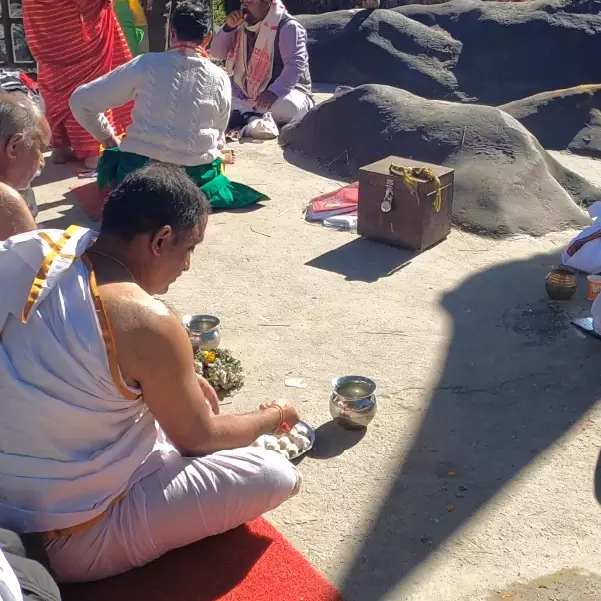
Brahma Kapal is a flat rock on the bank of the Alaknanda behind Badrinath temple, and it is where Pind Daan is performed in the Himalaya. The rite costs from ₹10,999 and takes about two hours. The one thing that governs everything is the season: Badrinath temple opens around Akshaya Tritiya in late April or May and closes in November. Our Pind Daan at Brahma Kapal page has the packages.
Why this rock
Brahma Kapal means Brahma’s skull. The tradition holds that Shiva severed one of Brahma’s five heads and the skull fastened itself to his hand, the brahmahatya dosha following him until he reached this spot, where it fell away. The rock is where that release happened, and it is why offerings made here are held to carry weight beyond the ordinary.
The fuller account, with the Thirukkandiyur episode and the five-heads narrative, is in our story of Brahma Kapal.
What makes it different from Gaya or Prayagraj
The three are not substitutes and the distinction is worth knowing before choosing.
| Place | Open | Chosen for |
|---|---|---|
| Brahma Kapal, Badrinath | May to November only | The tradition that the rite here need not be repeated, and families already on the Char Dham yatra |
| Gaya | Year round | The foremost tirtha named for Pind Daan |
| Prayagraj | Year round | The Sangam, and families combining with Veni Daan |
Many families perform the rite at Brahma Kapal because they are already travelling to Badrinath. That is a perfectly good reason, and the rite is complete as performed there.
The rite, step by step
- Shuddhi. Purification before the rite. Most families bathe at Tapt Kund, the hot spring below the temple, which is usable even in cold weather.
- Sankalpa. The vow, naming your gotra, the ancestors and the purpose.
- Pinda preparation. Rice, black sesame, barley and honey, prepared under the pandit’s direction.
- The offering. Pinda offered on the rock with the mantras for the departed.
- Tarpan. Water offered to the Alaknanda by the family.
- Close. The pandit completes the rite and the family takes darshan at the temple.
What it costs
| Package | Price | What it covers |
|---|---|---|
| Pind Daan at Brahma Kapal | ₹10,999 | Pandit, samagri, the rite on the rock with tarpan |
| Pind Daan at Badrinath Brahmakapal | ₹11,000 | The extended sequence |
| Performed on your behalf | ₹10,999 | You do not travel; video and photographs after |
| Pitru dosh nivaran | ₹21,000 | The longer observance for unperformed ancestral rites |
Travel, stay and the journey up are separate. Badrinath accommodation is limited and simple, and in season it books out.
🕉️ Book Pind Daan at Brahma Kapal
- Performed on the rock behind the temple
- Pandit assigned before you travel
- Sankalpa in your family gotra
- All puja samagri included
Getting there
The road runs from Rishikesh through Joshimath, about 295 kilometres and ten to twelve hours depending on conditions. The nearest railhead is Rishikesh and the nearest airport Dehradun. Helicopter services operate in season from Dehradun to Joshimath.
The mountain road is subject to landslides and closures in the monsoon, July and August especially. Build slack into the plan rather than booking the rite for the day after you expect to arrive.
If you cannot travel
The rite can be performed at Brahma Kapal on your behalf, with the sankalpa in your gotra and a pratinidhi standing in for the family. You receive the recording and photographs. For a destination this hard to reach, and open only half the year, this is what most families outside India use.
Pitra dosh
Pitra dosh is the condition described when ancestral rites have been left undone across generations. The remedy the tradition prescribes is the rite itself, performed properly. Brahma Kapal carries a particular association with release from dosha because of the Brahma story. We do not promise outcomes beyond that, and a service that guarantees one is telling you what you want to hear.
Common questions
When exactly does the temple open?
On Akshaya Tritiya, which falls in late April or May and moves each year, and it closes in the fortnight around Diwali. Confirm the current year’s dates before booking travel.
Does Pind Daan here replace Gaya?
The rite is complete as performed at Brahma Kapal. Families who want the Gaya rite specifically still travel there, and some do both over time.
Can it be done during Pitru Paksha?
Yes, Pitru Paksha falls in September or October while the temple is still open. It is a popular time and the town is busy.
Can a daughter perform it?
Yes. Tell us the relationship so the sankalpa is set correctly.
Arranging the rite
Send us the ancestors’ names, your gotra and when you can travel, and we will confirm the pandit and the total before anything is paid. Check the temple dates first. Packages are on our Pind Daan at Brahma Kapal page.
Book Your Sacred Ritual
Authentic ceremonies performed by Veda-trained pandits at sacred sites across India.