
No rituals selected yet.
Browse Pooja Packages →Key Takeaways
In This Article
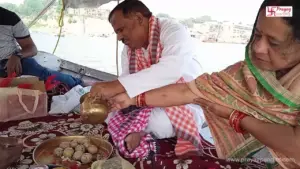
In the ancient architecture of Hindu ancestral rites, Brahmin Bhoj — the sacred feeding of qualified Brahmins — holds a position that no other offering can replicate. It is not simply a charitable act or a social custom. It is a direct channel through which the food and intention offered on earth reaches the souls of departed ancestors. When a satisfied Brahmin accepts a meal offered with devotion and correct ritual procedure, the scriptures affirm that the ancestors — wherever they reside in the cosmos — receive that offering and are nourished by it.
This guide explores the full significance of Brahmin Bhoj within the context of Pind Daan, Shraddh and Tarpan, the scriptural basis of the tradition, the five essential rules that govern its performance, and how families today can arrange a proper Brahmin Bhoj as part of their complete shraddha ceremony.
The Scriptural Foundation of Brahmin Bhoj
The importance of feeding Brahmins is among the most consistently repeated teachings across Hindu sacred literature. The Manu Smriti (III.189) states that a shraddha without Brahmin Bhoj is incomplete and does not reach the ancestors. The Garuda Purana goes further, explaining the mechanics: Brahmins who have mastered the Vedas and maintain purity in thought, word, and action carry a special vibratory quality — a tapasic shakti — that transforms the food they consume. When they accept food offered during a shraddha with the proper mantras and intentions, that food’s subtle energy is transmitted to the pitrus.
The Bhagavata Purana describes Lord Vishnu as being present wherever qualified Brahmins are honoured. Since Vishnu is also understood to be Pitru Devata — the lord of the ancestors — the connection is direct: honouring a Brahmin at a shraddha is, in the deepest sense, honouring the divine presence that oversees the welfare of the departed souls.
In the Mahabharata, the famous story of Karna in the afterlife underlines this teaching powerfully. Despite his legendary generosity during his lifetime, Karna had never offered food or tarpan to his ancestors. When Indra asked why, Karna explained he had never known his ancestors. Indra granted him sixteen days to return to earth — the period now observed as Pitrupaksha — during which Karna performed Brahmin Bhoj and ancestral rites. This story is cited as the very origin of the sixteen-day Pitrupaksha observance.
Why Do the Brahmins Represent the Ancestors?
To understand Brahmin Bhoj fully, one must understand the Vedic cosmology underlying it. In the Hindu worldview, the universe is interconnected through networks of shakti (energy) that flow between different realms of existence — the mortal world (Bhu), the ancestral realm (Pitru Loka), and the divine realms. Brahmins, through their sustained practice of Vedic recitation, meditation, and ritual purity, are understood to vibrate at a frequency that resonates with the divine realm.
When a Brahmin is seated and fed with the appropriate mantras — specifically the naming of the ancestor in the sankalpa — the subtle energy of the food becomes amplified and attuned to the frequency of the ancestral realm. The Garuda Purana describes this as the food becoming pitru-anna (ancestor-food) through the Brahmin’s role as a transmitter. The satisfaction of the Brahmin’s body generates a prana-shakti that crosses the boundary between worlds.
This is not metaphor — it is presented in the scriptures as a literal cosmic mechanism. The Brahmins are, in this context, serving as living yantras (sacred instruments) through which the offering is channelled to its intended recipient.
Brahmin Bhoj Within the Three Pillars of Shraddha
A complete Shraddha ceremony rests on three inseparable pillars. Neglecting any one of them is considered to diminish the efficacy of the entire rite:
1. Pind Daan — The Offering of Rice Balls
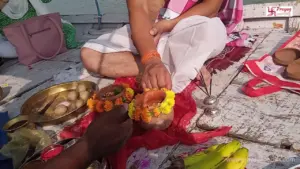
Pind Daan involves the preparation and offering of sacred rice or barley balls (pindas) mixed with milk, ghee, honey, sesame, and flowers. Three pindas are typically offered — one each for the father, grandfather, and great-grandfather. The pindas symbolise the subtle body of the ancestor and provide direct nourishment to the soul in the afterlife. Pind Daan is the physical, tangible heart of the shraddha ceremony.
2. Tarpan — The Water Offering
Tarpan (from the Sanskrit root meaning “to satisfy”) is the offering of water mixed with black sesame seeds, kusha grass, and barley, poured through the fingers while chanting the names of the ancestors. It is the simplest and most accessible form of ancestral worship — it can be performed daily at any sacred river or water body. Tarpan is particularly important during Pitrupaksha and on Amavasya (New Moon) days. It directly refreshes and sustains the ancestor’s subtle body.
3. Brahmin Bhoj — The Feeding of Brahmins
Brahmin Bhoj completes the triad. If Pind Daan nourishes the physical-subtle dimension of the ancestor and Tarpan nourishes the energetic dimension, Brahmin Bhoj nourishes the dimension of grace — the divine channel through which cosmic blessing flows. The Garuda Purana states that “the pinda given without Brahmin Bhoj does not reach the pitru.” The three must work together for the full merit of the ceremony to manifest.
Pitrupaksha, Tithis, and the Timing of Brahmin Bhoj
The most significant annual occasion for Brahmin Bhoj is during Pitrupaksha — the sixteen-day lunar fortnight in Bhadrapada month (typically September) when the sun transits into Virgo. During this period, the ancestors are believed to descend to the earth realm, and any offering made to them during these sixteen days carries exceptional merit.
The ideal approach is to perform Brahmin Bhoj on the same tithi (lunar day) that matches the death anniversary of the ancestor. The tithi system recognises specific days for specific ancestors:
- Pratipada — for ancestors who died on this tithi
- Navami (Matru Navami) — specifically dedicated to female ancestors (mothers, grandmothers)
- Chaturdashi — for those who died by weapons, accidents, or sudden death
- Amavasya (Sarva Pitru Amavasya) — for all ancestors, especially those whose death date is unknown
Beyond Pitrupaksha, Brahmin Bhoj is also performed on:
- Monthly Amavasya (new moon) days
- Solar festivals like Makar Sankranti and Kumbh Mela
- The annual death anniversary (Barsi) of the departed
- Before major family milestones: weddings, sacred thread ceremonies, housewarming
The Five Essential Rules for Brahmin Bhoj
The Dharmashastra literature specifies precise protocols for both the family hosting the Brahmin Bhoj and the Brahmins who accept it. These rules are not arbitrary — they are designed to maintain the energetic integrity of the offering so that it successfully reaches its intended destination.
Rules for the Organising Family
Rule 1: Cook with Purity and Happiness
The food must be strictly vegetarian and prepared in a clean, purified kitchen. The person cooking must be in a positive mental and emotional state — no arguing, no negative speech, no impure thoughts during the cooking process. The Garuda Purana specifically states that food cooked in a negative emotional atmosphere carries that negativity into the offering. This rule reflects the deep Hindu understanding that food is not merely physical matter but a carrier of subtle energy (prana). When cooked with love, devotion, and purity of intent, it becomes sacred (prasad-like) rather than merely nutritional.
Rule 2: Follow the Correct Serving Sequence
The serving of Brahmin Bhoj follows a specific sequence that must be observed:
- Seat the Brahmins facing south (the direction of the ancestors and of Yama, lord of the dead)
- Perform the sankalpa — formally declaring the name of the ancestor, the gotra, and the tithi, dedicating the meal to them
- Set aside portions for crows, dogs, and cows before the Brahmins begin eating (these represent messengers to Yama’s realm)
- Serve food on traditional plates — Palash leaf plates, banana leaf, or silver plates are most auspicious; avoid plastic or disposable plates of modern origin where possible
- Serve with both hands — serving with one hand is considered disrespectful in the shastras and is specifically prohibited during sacred meals
- Never rush the Brahmins — allow them to eat at their own pace and to their full satisfaction
Rule 3: Offer Food and Water Together
Water must be offered at the beginning of the meal and kept available throughout. The Brahmins begin with water and end with water — this frames the meal within a ritual context. After the meal, the Brahmins should be offered water for hand-washing and mouth-rinsing as a mark of respect and courtesy.
Rules for the Brahmins Accepting the Bhoj
Rule 4: Maintain Silence During the Meal
The Brahmins should maintain silence while eating. They may communicate through gestures if absolutely necessary, but verbal conversation is to be avoided until after they have washed their hands and rinsed their mouths following the meal. This silence is not rudeness — it is a form of meditative focus that maintains the sacred quality of the offering. When eating in silence, the Brahmin’s attention remains with the ritual intention rather than with worldly matters. No feedback should be given about the food — neither praise nor criticism — during or after the meal.
Rule 5: Limit Participation and Timing of Dana
The Shastras specify that a Brahmin should not accept Brahmin Bhoj invitations from more than three households on the same day, and should not eat at home on the same day they have participated in a Brahmin Bhoj. This rule preserves the energetic purity and intensity of the offering.
Regarding dana (charitable gifts to the Brahmins): the guidelines specify that dana should not be given on the same day as the meal itself. The proper time for dana is the day following the shraddha and tarpan. This separation ensures that the Brahmin’s acceptance of food is not confused with a commercial transaction but remains a sacred act of spiritual service.
What to Serve at Brahmin Bhoj
Traditional Brahmin Bhoj includes khichdi (rice and lentil dish), puri, sabji, kheer (rice pudding), and seasonal fruits. The meal should be simple, sattvic (pure), and sufficient in quantity. Avoid onion, garlic, and non-vegetarian ingredients entirely. Offer sweets — especially kheer or halwa — as these are particularly associated with ancestral offerings. The ancestors are believed to receive the essence (rasa) of the sweet offering.
Brahmin Bhoj When a Brahmin Is Not Available
Modern life creates practical challenges. In cities far from traditional Brahmin communities, at pilgrimage sites during peak seasons, or for families in the diaspora, finding qualified Brahmins for Brahmin Bhoj can be difficult. The Shastras address this with characteristic practicality:
- If multiple Brahmins are unavailable: Feed at least one qualified Brahmin with the full ritual procedure
- If no Brahmin is available: Feed the nephew (bhanja — sister’s son) of the departed person, who holds a special place in the ancestral lineage
- If even this is not possible: Perform tarpan with full devotion, offer pindas, and make a sincere resolve (sankalpa) to perform Brahmin Bhoj at a later date when possible
- For NRI and overseas families: Arrange for Pind Daan for NRI families through trusted pandit services, who perform the complete ceremony including Brahmin Bhoj on your behalf at the sacred tirtha
The underlying principle is that sincere intention combined with the best available action is always accepted. The scriptures are humane — they recognise the constraints of ordinary life and provide alternatives that preserve the spirit of the offering even when circumstances prevent its ideal form.
Brahmin Bhoj at Major Tirthas: Prayagraj, Gaya, and Varanasi
Performing Brahmin Bhoj at a major tirtha carries exponentially greater merit than performing it at home. The sacred geography of India’s pilgrimage sites is considered to amplify all ritual actions performed within their boundaries. Among the most powerful locations:
Prayagraj — Triveni Sangam
At the sacred confluence of the Ganga, Yamuna, and Saraswati, Pind Daan at Prayagraj combined with Brahmin Bhoj at the Sangam ghats is considered among the most potent of all ancestral rites. The Padma Purana specifically highlights Prayag as a Mahatirtha where all shraddha rites yield exceptional results. Prayagpandits.com provides complete arrangements — including qualified Brahmins who specialise in ancestral rites — at the Triveni Sangam.
Gaya — Pitru Tirtha
Gaya in Bihar is the supreme Pitru Tirtha. The Shraddha in Gaya tradition involves performing Pind Daan at 48 sacred altars, and Brahmin Bhoj forms an essential part of each day’s ceremony at Gaya. The Vishnupad temple priests maintain traditions of Brahmin Bhoj that have been unbroken for centuries.
Varanasi — City of Liberation
In Kashi, Brahmin Bhoj takes on an added dimension because the city itself is considered the body of Shiva — every Brahmin who resides here partakes of that divine presence. Pind Daan in Varanasi followed by Brahmin Bhoj at the ghats is particularly recommended for ancestors who died sudden, violent, or accidental deaths, as Kashi is believed to grant liberation to all such souls.
The Connection Between Brahmin Bhoj and Pitra Dosh Removal
Pitra Dosh — the astrological condition caused by unsatisfied ancestors — is among the most commonly diagnosed afflictions in Hindu astrology. It manifests as persistent obstacles in career, health difficulties in the family, delayed marriages, and a general sense of stagnation. The primary remedies prescribed by learned pandits and jyotishis almost always include: Pind Daan at a major tirtha, regular Tarpan during Pitrupaksha, and Brahmin Bhoj — ideally all three performed together.
When performed sincerely and correctly, Brahmin Bhoj as part of a complete shraddha ceremony has been the turning point for countless families who report that previously intractable problems began to resolve in the weeks and months following the rite. This is the living testimony of a tradition maintained for thousands of years.
Common Mistakes to Avoid in Brahmin Bhoj
Do not invite Brahmins who have taken money upfront or treat the bhoj as a commercial service — this breaks the sacred nature of the offering. Do not mix non-vegetarian food in the kitchen on the day of the bhoj. Do not rush through the ritual or skip the sankalpa. Do not argue or speak harshly near the cooking area. Do not forget to offer portions to crows, dogs, and cows before the Brahmins begin eating.
How Prayag Pandits Arrange Brahmin Bhoj for You
For families travelling to Prayagraj for ancestral rites, arranging qualified Brahmins and the complete Brahmin Bhoj ceremony can be logistically challenging. Prayag Pandits handles every aspect of the arrangement — from identifying the appropriate Brahmins with the correct Vedic credentials for ancestral rites, to overseeing the preparation of the sattvic meal, to ensuring all five rules are properly followed.
Our experienced pandits guide the entire ceremony — the sankalpa, the Pind Daan, the Tarpan, and the Brahmin Bhoj — as a unified sacred act rather than a series of disconnected rituals. This integrated approach ensures the full merit of the ceremony reaches your ancestors. We work with families across India and internationally, including complete arrangements for NRI families who cannot be physically present.
Complete Package
🙏 Book Shraddha + Brahmin Bhoj at Prayagraj
Starting from
₹7,100
per person
- Qualified Vedic pandits
- Pind Daan + Tarpan included
- Brahmin Bhoj arranged
- All puja samagri provided
- Sankalpa with gotra details
Performing the Sacred Duty With Devotion
Brahmin Bhoj is one of the most beautiful expressions of Hindu dharma — the interweaving of the practical and the sacred, the living and the departed, the human and the divine. In feeding a Brahmin with love and correct intention, we extend the reach of our love to those we can no longer see or touch. We honour the chain of life that made us possible. We discharge the ancient debt of gratitude that connects every generation to all that came before.
If you are planning a Shraddha ceremony, Pitrupaksha observance, or any ancestral rite at Prayagraj, Prayag Pandits is here to guide you through every step. From the initial sankalpa to the final dana, our experienced pandits ensure the ceremony is performed with the authenticity, depth, and devotion that your ancestors deserve. Contact us to plan your ceremony today.
Related Services by Prayag Pandits
- 🙏 Shradh at Prayagraj — Starting from ₹7,100
- 🙏 Online Brahmin Bhoj / Shradh in Prayagraj — Starting from ₹21,000
- 🙏 Brahmin Bhoj at Garh Mukteshwar — Starting from ₹21,000
Frequently Asked Questions
Why is Brahmin Bhoj considered essential for Pind Daan and Shraddha?
Brahmin Bhoj (feeding Brahmins) is considered the direct means by which Shraddha offerings reach departed ancestors. According to the Garuda Purana (Pretakhanda 10.47-52), the food eaten by a Brahmin during Shraddha is spiritually transmitted to the ancestors in Pitru Loka — what the Brahmin consumes, the ancestor consumes in subtler form. This is why Brahmin Bhoj is not a "meal" but a sacred ritual of transmission. The Manusmriti (3.203-205) states that even the smallest Pind Daan without Brahmin Bhoj is considered incomplete, while the largest feast with proper Vedic pandits confers merit across seven generations. This is the scriptural reason every serious ancestral ceremony includes Brahmin Bhoj as its culmination.
How many Brahmins should be fed for a complete Brahmin Bhoj?
Scriptures prescribe specific numbers for different occasions: 3 Brahmins minimum for daily Nitya Shraddha, 5 Brahmins for monthly Masika Shraddha, 11 Brahmins for annual death-tithi Shraddha, 16 Brahmins for Pitrupaksha Shraddha, and 21 Brahmins for major liberation ceremonies like Gaya Pind Daan or Sapindikarana. The ideal Brahmins should be Vedic scholars who know the Pitri Sukta and the specific mantras for the ceremony. In practice, 5-11 Brahmins is most common for home ceremonies, while 11-21 is standard at major tirthas. Our standard packages include Brahmin Bhoj for 5-11 Brahmins; premium packages cover 21. The spiritual merit scales with both the number and the quality (knowledge) of the Brahmins.
Can Brahmin Bhoj be performed at home or only at a tirtha?
Brahmin Bhoj can absolutely be performed at home, and for many families this is the primary mode of annual Shraddha. The scriptural requirement is that the Brahmins be genuinely learned (Vedic pandits), the food be freshly cooked, strictly vegetarian, following Shraddha rules (no onion, garlic, or tamasic ingredients), and served before the family eats. Home Brahmin Bhoj is valid for Masika Shraddha, annual tithi Shraddha, and Pitrupaksha Shraddha. For major ceremonies like Gaya Pind Daan, Varanasi Sapindikarana, or Prayagraj Asthi Visarjan, tirtha-based Brahmin Bhoj carries significantly greater merit. We can arrange Brahmin Bhoj both at home (through our associated pandit networks in major Indian cities) and at the tirthas.
What food should be prepared for Brahmin Bhoj during Shraddha?
The traditional Shraddha Brahmin Bhoj follows strict dietary rules: (1) Strictly vegetarian — no meat, eggs, or fish, (2) No onion, garlic, or tamasic foods, (3) Freshly cooked sattvic food — rice, dal, sabzi, chapati, kheer, fruits, (4) Specific scriptural favourites — the Garuda Purana mentions kheer (rice pudding) with ghee, halwa, black sesame seeds (til), honey, and seasonal fruits as most pleasing to ancestors, (5) Served on banana leaves or in sacred copper/brass plates (not steel or plastic), (6) Accompanied by Ganga Jal for sipping. The cooking should be done by family members or a Brahmin cook, and the food must be offered to crows, dogs, and cows first (as messengers of Yama) before serving the Brahmins. Our packages include complete Brahmin Bhoj arrangements with scriptural menu.
Does Brahmin Bhoj during Pitrupaksha help remove Pitra Dosh?
Yes. Brahmin Bhoj performed during Pitrupaksha — especially on the ancestor's death tithi or on Sarva Pitru Amavasya — is considered one of the most effective remedies for Pitra Dosh (ancestral affliction) in Vedic astrology. The logic is that Pitra Dosh arises when ancestors are unsatisfied (due to missed Shraddha, incomplete rituals, or unresolved karmic issues), and Brahmin Bhoj directly nourishes them — removing the root cause. Many families whose birth charts show Pitra Dosh perform annual Brahmin Bhoj during Pitrupaksha specifically to progressively clear the dosha. Combined with Gaya Pind Daan and Tarpan at the Triveni Sangam, this forms the complete Pitra Dosh remedy. Our Pitrupaksha Brahmin Bhoj packages include 11-16 Brahmins with proper scriptural menu and complete ceremony.
Can women serve food during Brahmin Bhoj, and are there rules?
Yes, women can serve food during Brahmin Bhoj, and there is no scriptural prohibition. Traditional Dharma Shastras describe the wife of the Yajamana (host) actively participating in Shraddha preparations — cooking, serving, and the final Sankalpa. Modern practice universally accepts female participation. The Dharma Shastras emphasise that food served with devotion and respect is what the ancestors receive — the gender of the server is secondary to the sincerity of the offering. The only traditional restriction was during menstruation (some communities still observe this), but this varies by region and is not a universal scriptural mandate. Our pandits welcome full family participation in Brahmin Bhoj ceremonies at the tirthas — it is considered especially meritorious when the entire family serves together.
Book Your Sacred Ritual
Authentic ceremonies performed by Veda-trained pandits with video proof at sacred sites across India.
2,263+ families served
Video proof included
Since 2019
