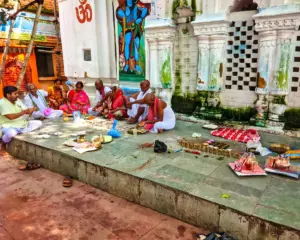
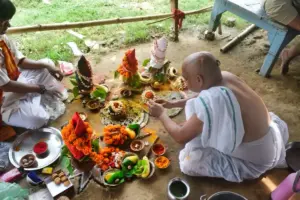
The Holy Sites for Shradha and Pind Daan in 2026: A Prayag Pandits Guide

Written by: Prakhar P
Updated on: February 28, 2026

Quick Summary

India has 9 major tirthas for Pind Daan and Shradh. Prayagraj is the supreme Tirtha Raj, promising eternal liberation at the Triveni Sangam. Gaya specialises in Pind Daan at the Vishnupad Temple. Varanasi channels Shiva liberation energy. Haridwar, Badrinath Brahmakapal for permanent moksha, Rameshwaram, Nashik Ramkund on Godavari, Ujjain, and Siddhpur Matru Gaya for maternal rites each serve distinct needs. The Puranas unanimously recommend Prayagraj if only one tirtha is possible.

India has 9 major tirthas for Pind Daan and Shradh. Prayagraj is the supreme Tirtha Raj, promising eternal liberation at the Triveni Sangam. Gaya specialises in Pind Daan at the Vishnupad Temple. Varanasi channels Shiva liberation energy. Haridwar, Badrinath Brahmakapal for permanent moksha, Rameshwaram, Nashik Ramkund on Godavari, Ujjain, and Siddhpur Matru Gaya for maternal rites each serve distinct needs. The Puranas unanimously recommend Prayagraj if only one tirtha is possible.

📅

Pitrupaksha 2026 runs from Purnima (September 26) through Sarva Pitru Amavasya (October 10). Planning your tirtha journey now ensures you secure accommodation, pandit bookings, and travel arrangements well in advance for this peak pilgrimage season.

Of all the questions a devout Hindu family faces before Pitrupaksha, one carries the greatest weight: Where should we perform our Shradh and Pind Daan?

The answer matters because the scriptures are explicit — the same ritual performed at a sacred tirtha (pilgrimage site) yields merit incomparably greater than the same ritual performed at home. The Garuda Purana, Padma Purana, and Vishnu Purana all contain detailed passages describing the spiritual geography of India’s most powerful ancestral rites locations. These ancient texts were not simply listing geography. They were providing a practical guide to leveraging the spiritual power concentrated at certain convergences of sacred rivers, divine presence, and centuries of collective prayer.

This comprehensive guide covers every major holy site for Shradh and Pind Daan across India — their scriptural basis, unique spiritual benefit, practical considerations, and who each site is best suited for. Whether you are planning a pilgrimage for Pitrupaksha 2026 or simply want to understand the landscape of India’s ancestral rites tradition, this is the definitive guide.

To understand the ritual procedures you will perform at any of these sites, see our complete guide to Pitrupaksha rituals step by step. For the full spiritual philosophy behind these rites, read our Pitrupaksha Complete Ritual Guide.

Why Place Matters: The Concept of Tirtha Shradha

The word tirtha comes from the Sanskrit root tir, meaning “to cross over.” A tirtha is literally a crossing point — a place where the boundary between the physical world and the subtle realms is thin enough to permit genuine spiritual transaction. The Skanda Purana explains it this way: just as certain soils grow crops more abundantly than others, certain places in the physical world generate spiritual merit (punya) more abundantly than others.

Most of India’s great tirthas share several characteristics:

  • Presence of a holy river, or confluence of rivers
  • Association with a specific divine act or event recorded in the Puranas
  • Continuous tradition of ritual practice spanning thousands of years
  • Presence of learned Brahmins specialising in ancestral rites

When you perform Tirtha Shradha — Shradh performed at a tirtha — the physical infrastructure of the sacred site amplifies the power of your offerings. The holy water carries them, the energetic history of the site supports them, and the collective merit of millions of pilgrims before you creates a spiritual field of extraordinary potency.

Now let us tour each of the major holy sites, in order of their scriptural ranking for Pind Daan specifically.

1. Prayagraj — The Tirtha Raj, King of All Pilgrimage Sites

Every text, every acharya, every tradition of Hinduism that addresses the subject of pilgrimage hierarchy places Prayagraj — the Tirtha Raj — at the apex. This is not a regional bias or sectarian preference; it is the unanimous verdict of the Puranas themselves.

The Spiritual Power of the Triveni Sangam

Prayagraj is home to the Triveni Sangam — the meeting point of three sacred rivers: the Ganga (visible), the Yamuna (visible), and the mystical Saraswati (invisible, flowing underground in the Vedic understanding). This triple confluence is described in the Matsya Purana as the most sacred point on earth, a place where the divine presence of all three rivers — each itself a goddess — converges in a single location.

The Padma Purana states: “Prayagasya tu yo dattvā pinda-dānaṁ pitṛbhyaḥ teshāṁ muktiḥ sarvadā” — “One who offers Pind Daan at Prayagraj ensures eternal liberation for their ancestors.” This is the ultimate promise: not just temporary peace, not just reduced suffering, but moksha — permanent freedom from the cycle of rebirth.

What Makes Prayagraj Unique for Ancestral Rites

  • The Akshaya Vata: The undying banyan tree within the fort at Prayagraj is one of the most sacred objects in Hinduism. Making an offering near this immortal tree during Pitrupaksha is considered to generate akshaya punya — inexhaustible, eternal merit.
  • Samudra Manthan connection: The Puranas record that during the great churning of the cosmic ocean, a drop of the nectar of immortality (amrit) fell at Prayagraj. This act sanctified the earth here at the deepest possible level.
  • Lord Brahma’s first yajna: The Creator himself performed the primordial yajna at Prayagraj, establishing it as the original sacred site before any other.
  • Comprehensive scope: Unlike some tirthas that specialise in one form of ancestral rite, Prayagraj is the prescribed site for Tarpan, Pind Daan, Asthi Visarjan, and the full spectrum of Shradh ceremonies.

Practical Information for Prayagraj

  • Best time: The entire Pitrupaksha fortnight, with Sarva Pitru Amavasya (October 10, 2026) being the most important single day
  • Main ghat: Triveni Sangam — the confluence point, most easily reached by boat from Sangam Ghat
  • Getting there: Prayagraj has an airport (Prayagraj Airport), a major railway junction (Prayagraj Junction), and excellent road connectivity from all major North Indian cities
  • Services: Pind Daan services at Prayagraj are available through Prayag Pandits, with complete packages including pandit, ritual materials, and boat access to the Sangam

Best suited for: Families seeking the highest possible merit and the ultimate gift of moksha for their ancestors. Any family performing Pind Daan for the first time should begin here.

2. Gaya — The City of Lord Vishnu’s Footprint

Gaya, in the state of Bihar, holds a unique and singular status in the Hindu tradition: it is the place most specifically dedicated to Pind Daan. While Prayagraj is the supreme tirtha for all purposes, Gaya is the tirtha where Pind Daan has been performed with the greatest intensity and elaboration for millennia.

The Legend of Gayasura and Lord Vishnu’s Feet

The Vayu Purana narrates the story of Gayasura, a demon of such profound piety that any soul who gazed upon him attained liberation. This was causing a problem in the cosmic order — the three worlds were being emptied of souls before their time. The Devas appealed to Lord Vishnu, who agreed to solve the problem by requesting Gayasura to lie still as an altar for a great yajna. Gayasura agreed, and Lord Vishnu placed his foot upon the demon’s chest to stabilise him. That footprint — visible today at the Vishnupad Temple in Gaya — is the central sacred object of the entire city.

The Spiritual Architecture of Gaya

Pind Daan in Gaya is performed at a series of specific vedis (altars), each carrying distinct significance:

  • Vishnupad Temple: The central and most powerful location, where a 40-cm footprint of Lord Vishnu is embedded in solid rock. Offering pindas here is believed to send the ancestor’s soul directly to Vaikuntha — the abode of Lord Vishnu.
  • Phalgu River: Pind Daan is also performed on the banks of this sacred but often dry river. The Phalgu flows underground for much of the year; its sand is considered sanctified and is used as a substitute for water in the offerings.
  • Akshaya Vata at Gaya: Like Prayagraj, Gaya also has an undying banyan tree near the Vishnupad Temple, under which pindas are offered for maximum ancestral liberation.
  • Pretshila Hill: Offerings made at this hill are specifically for ancestors who died in difficult circumstances or who may be wandering as unsettled spirits.

Practical Information for Gaya

  • Best time: The peak of Pitru Paksha, but Gaya Shradh can be performed on any auspicious day throughout the year
  • Duration: A complete Gaya Shradh circuit takes 3–5 days. Shorter one-day versions focused on Vishnupad are also valid and commonly performed.
  • Getting there: Gaya has its own airport (Gaya International Airport) and is a major railway station on the Grand Chord line
  • Services: Our Pind Daan services include guidance through the complete Gaya circuit

Best suited for: Families whose ancestors are devotees of Lord Vishnu, and families seeking the most elaborate and specific Pind Daan circuit in India. Gaya is also particularly recommended when a family member died in unusual or difficult circumstances.

Prayagraj or Gaya — Which to Choose?
If you can visit only one tirtha, the Puranas unanimously recommend Prayagraj as the Tirtha Raj whose merit includes and transcends all other tirthas. If you have the time for a two-tirtha journey, the classical combination is Prayagraj first (for Tarpan and initial Pind Daan) followed by Gaya (for the complete Vishnupad circuit). Our pandits can help you plan this combined pilgrimage for Pitrupaksha 2026.

3. Varanasi (Kashi) — Where Shiva Grants Liberation at Death

Varanasi — also known as Kashi, the City of Light — occupies a singular place in the Hindu religious imagination. It is the eternal city, one of the world’s oldest continuously inhabited urban centres, and the sacred abode of Lord Shiva himself.

The Kashi Liberation Doctrine

The Kashi Khanda of the Skanda Purana contains an extraordinary promise: anyone who dies within the boundaries of Kashi automatically receives liberation, because Lord Shiva himself whispers the Taraka mantra (the liberating mantra) into the ear of the departing soul. This doctrine makes Varanasi unique among all tirthas — the city itself is the spiritual agent of moksha.

For ancestral rites, this same liberating energy is channelled through the Shradh ceremony. Performing Pind Daan on the ghats of Kashi — particularly at Manikarnika Ghat, the great cremation ground, or at Asi Ghat — taps into the same Shiva-energy that grants liberation at death. The offerings reach your ancestors carrying the blessing of the Mahadeva himself.

The Sacred Ghats of Varanasi for Ancestral Rites

  • Manikarnika Ghat: The most powerful cremation ghat in the world, where fires have burned continuously for thousands of years. Pind Daan here is believed to bring peace to souls who did not receive the gift of dying in Kashi.
  • Pishach Mochan Kund: A sacred tank specifically associated with releasing souls trapped in difficult transitional states. Pind Daan at this tank is especially prescribed for ancestors who died young, in accidents, or in violent circumstances.
  • Dashashwamedh Ghat: The main ghat of Varanasi, where the magnificent Ganga Aarti is performed nightly. Performing Tarpan here during the early morning hours is deeply meritorious.
  • Kedar Ghat: Associated with Lord Shiva’s Kedarnath form, this ghat is considered especially powerful for Shradh performed for ancestors who were devotees of Shiva.

Practical Information for Varanasi

  • Best time: Throughout Pitrupaksha, and also on every Amavasya of the year
  • Getting there: Varanasi has excellent air connectivity (Lal Bahadur Shastri Airport) and is a major railway junction
  • Services: Pind Daan services at Varanasi through Prayag Pandits cover all major ghats

Best suited for: Families with Shaiva traditions, those whose ancestors were devotees of Lord Shiva, and families seeking Shradh at a site combining ancestral rites with the profound experience of witnessing the eternal Ganga Aarti.

4. Haridwar — Gateway to the Himalayas, Doorway to Liberation

Haridwar — “the gateway of Hari (Vishnu)” — is where the sacred Ganga river descends from the Himalayas into the plains. It is both the final major sacred city before the Ganga enters the mountains and the gateway through which pilgrims have historically entered the Char Dham circuit.

Why Haridwar is Powerful for Ancestral Rites

The Ganga at Haridwar flows directly from the Himalayas, carrying with it the accumulated purity of its mountain origin. The Vedic tradition holds that the Ganga at Haridwar is at its most potent — before the plains have diluted her sacred nature. The primary ghat for Shradh and Pind Daan at Haridwar is Har Ki Pauri, the central ghat of Haridwar proper, where the divine footprint of Lord Vishnu is believed to be embedded in stone. This is where the famous Ganga Aarti takes place every evening and where Tarpan is performed in the sacred current.

Key Sites at Haridwar for Pitrupaksha

  • Har Ki Pauri: The central and most sacred ghat for Tarpan and Pind Daan
  • Kushavarta Ghat, Rishikesh: Located nearby, associated with the sage Dattatreya. Performing Tarpan here is considered as meritorious as bathing in the entire length of the Ganga.
  • Asthi Visarjan at Haridwar: Haridwar is one of the most popular sites for immersing the ashes (asthi) of departed family members. Many families combine Asthi Visarjan with Shradh and Pind Daan at Haridwar in the Pitrupaksha season.

Practical Information for Haridwar

  • Nearest airport: Jolly Grant Airport, Dehradun (approximately 35 km)
  • Getting there: Excellent rail and road connectivity from Delhi (approximately 4–5 hours by road)

Best suited for: Families in Uttarakhand, Delhi, and North India seeking a shorter pilgrimage; families combining Asthi Visarjan with Pitrupaksha rites; and those with Vaishnava traditions.

5. Badrinath — Brahmakapal and the Promise of Permanent Liberation

Badrinath, nestled in the Garhwal Himalayas at an altitude of 3,133 metres, is one of the four Char Dham pilgrimage sites and the abode of Lord Badrinarayan (a form of Vishnu). The ancestral rites performed here carry a very specific and extraordinary promise that distinguishes Badrinath from every other tirtha.

The Brahmakapal Promise

Adjacent to the Badrinath temple is a sacred platform called Brahmakapal Ghat, located on the banks of the Alakananda river. The scriptural promise associated with Brahmakapal is strikingly precise: performing Pind Daan and Tarpan here achieves liberation for the ancestor so completely and finally that no further annual Shradh is ever needed for that soul again. The soul is considered to have attained moksha permanently.

This makes Brahmakapal unique. At other tirthas, families perform Shradh annually out of love, duty, and the ongoing need to sustain the ancestor’s wellbeing in the ancestral realm. At Brahmakapal, a single complete ceremony is considered sufficient for all time — the ancestor is entirely freed.

Practical Information for Badrinath

  • Season: Badrinath is only accessible from May to November; the temple closes for winter. For Pitrupaksha 2026 (late September–early October), Badrinath is open and accessible.
  • Getting there: The nearest airport is Jolly Grant, Dehradun (approximately 295 km). A helicopter service operates from Phata or Sersi to Badrinath.
  • Altitude consideration: The high altitude (3,133 metres) means elderly family members or those with cardiac or respiratory conditions should consult a doctor before this journey.

Best suited for: Families who wish to permanently complete their Shradh obligation for a specific ancestor; Char Dham pilgrims combining Badrinath darshan with ancestral rites; families from Uttarakhand and the Himalayan belt.

6. Rameshwaram — Where Rama Performed Shradh

At the southernmost tip of India’s sacred geography, Rameshwaram holds a unique position: it is the site where Lord Rama himself performed Shradh for those who died in the Lanka war. This association with the Ramayana makes Rameshwaram one of the most emotionally and spiritually resonant sites for ancestral rites in all of India.

The Agni Teertham

The primary site for Shradh and Pind Daan at Rameshwaram is Agni Teertham — the ocean shore adjacent to the Ramanathaswamy Temple. Performing Tarpan in the sea at this point is considered equivalent to performing it in the Ganga itself. The sea water here, sanctified by Lord Rama’s own ritual acts and by the proximity of the great Jyotirlinga temple, carries extraordinary spiritual potency.

The 22 sacred theerthas (ritual water points) within the Ramanathaswamy Temple complex are each associated with specific ancestral and spiritual benefits. Many families perform their Shradh after bathing in all 22 theerthas — a practice that is itself considered a powerful form of ancestral merit generation.

Practical Information for Rameshwaram

  • Getting there: Rameshwaram is connected by rail via the famous Pamban Bridge. Nearest airport is Madurai (approximately 170 km).
  • Climate: A coastal island, Rameshwaram is warm year-round. September–October sees the tail end of monsoon — manageable but pack for rain.

Best suited for: South Indian families and devotees of Lord Rama; families combining Rameshwaram Jyotirlinga darshan with ancestral rites; those for whom the Ramayana tradition is particularly meaningful.

7. Nashik — The Ramkund on the Godavari

Nashik, in Maharashtra, holds the Kumbh Mela every 12 years at Trimbakeshwar — but for ancestral rites, the key site is the Ramkund on the banks of the Godavari river in the heart of the city. This is the spot where Lord Rama bathed during his forest exile and where he performed the Shradh of his father King Dasharatha.

The Godavari is known as the Dakshini Ganga — the Ganga of the South — and carries a scriptural status approaching that of the Ganga proper. Shradh performed at the Ramkund on the Godavari is considered especially potent for those who cannot easily travel to North India’s pilgrimage centres.

Practical Information for Nashik

  • Getting there: Well connected by road and rail from Mumbai (approximately 3–4 hours), Pune, and Aurangabad
  • Best time: Pitrupaksha and monthly Amavasya days

Best suited for: Families from Maharashtra, Gujarat, and Goa; those for whom travel to North India is impractical; devotees of Lord Rama.

8. Ujjain — The Chakra Tirtha on the Shipra

Ujjain, on the banks of the Shipra river in Madhya Pradesh, is one of India’s seven sacred cities (Sapta Puri) and the home of the great Mahakaleshwar Jyotirlinga. For ancestral rites, the key site is Chakra Tirtha on the Shipra. The Skanda Purana describes Chakra Tirtha as a place where Shradh performed satisfies ancestors for entire Manvantaras — cosmic time periods. Ujjain is also known as the site of Lord Krishna’s education under the sage Sandipani, making it a place of deep Vaishnava significance alongside its Shaiva identity.

Practical Information for Ujjain

  • Getting there: Ujjain is approximately 55 km from Indore (which has a major airport and railway junction)

Best suited for: Families from Madhya Pradesh, Rajasthan, and Central India; those combining Mahakaleshwar darshan with Pitrupaksha rites; those following Shaiva traditions.

9. Siddhpur (Bindu Sarovar) — The Matru Gaya for Maternal Ancestors

One tirtha rarely mentioned in popular discussions of Pind Daan yet deeply important in the tradition is Siddhpur in Gujarat — specifically the Bindu Sarovar sacred lake. Siddhpur is known as Matru Gaya — “Gaya for the Mother.” It is the specific, classically prescribed site for performing Shradh for one’s maternal lineage.

The story behind this designation is from the Puranas: the sage Kardam performed the Shradh of his mother at Bindu Sarovar, establishing the tradition of maternal ancestral rites at this location. As a result, Siddhpur is unique in being specifically designated for matru paksha — the maternal side of the family — where most tirthas address the paternal lineage primarily.

Practical Information for Siddhpur

  • Getting there: Siddhpur is approximately 120 km north of Ahmedabad. Well-connected by road. No direct flights; Ahmedabad airport is the closest.

Best suited for: Gujarati families; families where the maternal lineage needs to be specifically honoured; anyone who has already performed paternal-lineage rites at another tirtha and wants to complete the maternal side.

The Scriptural Ranking Is Clear
While all the tirthas described here are genuinely powerful sacred sites, the Hindu scriptures establish a clear hierarchy: Prayagraj (Tirtha Raj) at the apex, followed by Gaya (for specific Pind Daan), then Varanasi (for Shiva’s liberation blessing), and then the regional sacred sites. If you have the blessing of visiting Prayagraj, the Puranas promise that a single ritual at the Triveni Sangam surpasses the merit of a thousand rituals elsewhere.

Choosing the Right Tirtha: A Practical Decision Guide

Given the wealth of options, how does a family decide where to perform their Pitrupaksha rites? Here is a practical framework our pandits use when guiding families:

Your Priority Recommended Tirtha
Highest possible ancestral merit Prayagraj (Triveni Sangam)
Complete, permanent liberation for one specific ancestor Gaya (Vishnupad) or Badrinath (Brahmakapal)
Shaiva family tradition Varanasi (Kashi) or Ujjain
Ramayana devotees Rameshwaram or Nashik (Ramkund)
Maternal lineage rites Siddhpur (Bindu Sarovar / Matru Gaya)
Closest to home (West India) Nashik or Ujjain
Closest to home (South India) Rameshwaram
Closest to home (North India) Haridwar, Prayagraj, or Varanasi
Combining with Char Dham yatra Badrinath (Brahmakapal)

What Our Pandits Recommend

After decades of guiding families through Pitrupaksha rites across all these sacred sites, the acharyas of Prayag Pandits offer this guidance: if your family can make one focused pilgrimage for your ancestors, make it to Prayagraj.

The scriptural authority is unambiguous. The practical accessibility is high — Prayagraj is a major city with full transport infrastructure, quality accommodation, and all services available. And the energy at the Triveni Sangam during Pitrupaksha, when thousands of families converge from across India and the world, creates a spiritual environment of extraordinary power.

If you come to Prayagraj for Pitrupaksha 2026, Prayag Pandits will handle every ritual detail — from the Sankalpa to the final immersion of the pindas — so that you can devote yourself entirely to the act of love that these ceremonies truly are. Learn more about what to expect in our Sarva Pitru Amavasya guide.

Pitrupaksha 2026

🙏 Book Pind Daan at the Tirtha Raj — Prayagraj

Starting from ₹5,100 per person

For Families Unable to Travel: Remote Pind Daan Services

We recognise that not every family — particularly NRI families in the US, UK, Canada, Australia, Singapore, and Malaysia — can physically travel to India for Pitrupaksha. Geographic distance, work obligations, or health constraints should not prevent any family from fulfilling their ancestral duties.

Prayag Pandits offers a complete remote Pind Daan service where our pandits perform the ceremony on your behalf at the Triveni Sangam in Prayagraj. The Sankalpa is made in your name, your family’s gotra, and your ancestors’ specific names. A video of the complete ceremony is sent to you. The full spiritual benefit of Prayagraj Pind Daan reaches you regardless of your location — because the Sankalpa creates the spiritual connection, not physical proximity.

Planning Your Pitrupaksha 2026 Tirtha Journey

Pitrupaksha 2026 runs from September 26 through October 10. This is a high-demand period for accommodation, transport, and pandit services at all major pilgrimage sites across India. Families planning to travel for Pitrupaksha 2026 should begin their arrangements no later than August 2026.

At Prayag Pandits, we begin accepting Pitrupaksha bookings several months in advance. Our complete Pitrupaksha service packages include rituals at the Triveni Sangam, all puja samagri, accommodation guidance, and a senior acharya to guide your family through the entire ceremony.

Do not leave this most important of duties to chance or last-minute arrangements. Your ancestors have been waiting. Give them the gift of the most sacred place on earth — Prayagraj, the Tirtha Raj — at the most sacred time of year, Pitrupaksha 2026.

Contact Prayag Pandits today to begin planning your Pitrupaksha 2026 journey. Let us ensure your ancestors receive everything the scriptures promise them.

Facebook
Twitter
LinkedIn
Pinterest

Leave a Reply

Your email address will not be published. Required fields are marked *

0

No products in the cart.