Key Takeaways
- Aarti timings
- What an aarti is
- Har Ki Pauri and the Brahmakund
- What happens during the ceremony
In This Article
The Ganga Aarti at Haridwar is performed every evening at Har Ki Pauri, when priests of the Ganga Sabha wave multi-tiered brass lamps over the river to the sound of conch shells and bells. It runs roughly 7 pm to 8 pm from April to October and an hour earlier in winter. There is a morning aarti too, quieter and much less attended.
Aarti timings
The aarti is performed twice a day, and the timings move with sunrise and sunset.
| Aarti | April to October | November to March |
|---|---|---|
| Morning (Pratah Aarti) | 5:30 am to 6:30 am | 6:00 am to 7:00 am |
| Evening (Sandhya Aarti) | 7:00 pm to 8:00 pm | 6:00 pm to 7:00 pm |
The evening aarti is the one most people come for and it draws far larger crowds. For a position on the upper platform steps, arrive at least 45 minutes early. On Ganga Dussehra, Dev Deepawali and Kartik Purnima, allow an hour. Confirm the day’s timing locally before you set out — it shifts with the season and on festival days.
What an aarti is
Aarti, from the Sanskrit aaratrika, is the waving of a lit lamp before a deity as an offering of light. Performed on the Ganga, the river herself is the deity: Ganga Mata, venerated as a descent of divine grace. The Puranic literature holds that the Ganga purifies, carries the prayers of the living, and has particular power for the departed — which is why the ghat is as much a place for ancestral rites as for darshan.
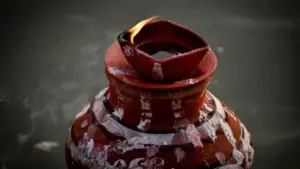
At Haridwar the aarti is performed by trained priests of the Ganga Sabha. The evening ceremony is the elaborate one: rows of priests in saffron, each lifting a large brass lamp — sometimes seven-tiered, holding dozens of ghee wicks — and turning it in slow circles over the water, in time with the mantras, the bells and the conches.
Har Ki Pauri and the Brahmakund
Har Ki Pauri means the steps of Hari. Vishnu’s footprint is held to be enshrined here, and a dip in the Brahmakund at this ghat is said to carry the merit of bathing at every tirtha in India. The ghat is attributed to King Vikramaditya, built in memory of his brother Bhartrihari, who is said to have meditated at the spot.
The organised form of the evening ceremony was settled by the Ganga Sabha, the body of priests responsible for Ganga worship at Haridwar, and has grown over decades from an evening prayer into the choreographed ritual it is now. Haridwar is one of the Sapta Puri cities and the dwar, the gate, where the Ganga comes down from the mountains onto the plains; the Brahmakund is described as the point where she touched the earth.
What happens during the ceremony
As it gets dark the vendors move along the steps with diyas and prasad in leaf cups, and the priests take their places on the platforms that jut into the river, in matching robes and marigold garlands. The ceremony opens with Om Jai Gange Mata. As the chanting builds, the lamps come up together.
When a priest brings a lamp close, devotees on the steps cup their hands over the flame and draw the warmth towards their faces — receiving the blessing through the fire. Out on the water, leaf boats carrying lit diyas are set adrift, and several hundred of them move downstream with the current.
Where to stand
- The upper steps, above the Brahmakund. The fullest view — all the priests, the lamps and the river together. The position everyone wants, so come early.
- The chain bridge. Directly above the priests, looking down. Less crowded, and a little further from the ceremony.
- The opposite bank. The whole lit ghat spread out across the water, which is the view worth having when the diyas go onto the river. An hour early.
- A boat, mid-river. The ghat rising in front of you, lit from below. Access is sometimes restricted at festival times, so check before you count on it.
Practical notes
- Dress. Cover shoulders and legs. Saffron or white is considered auspicious but is not expected.
- Footwear. Shoes come off at the ghat steps. Carry a bag or use the storage counters.
- Photography. Generally allowed; no flash during the ceremony, and no drones.
- Valuables. It is a large, tight crowd. Keep money and phone on your body and leave bags behind.
- Diyas. Vendors sell flower-and-diya offerings at the steps, usually ₹20 to ₹50.
- Crowds. Weekdays are manageable. Saturdays are much busier, and Shivratri, Ganga Dussehra and Kartik Purnima are very busy indeed — book accommodation well ahead.
Rites at the ghat
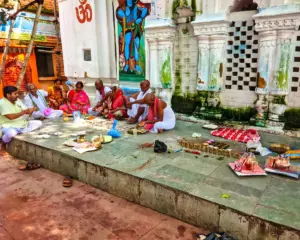
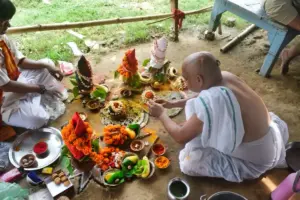
Many families come to Haridwar for the ancestral rites rather than for the aarti, and perform both on the same visit. Asthi Visarjan — the immersion of a relative’s ashes — and Pind Daan are both performed at the ghat, and taking the evening aarti afterwards is how most families close the day.
| Rite | Price | What it covers |
|---|---|---|
| Asthi Visarjan in Haridwar | ₹7,100 | Immersion at the ghat, pandit and samagri included |
| Pind Daan in Haridwar | ₹7,100 | Pinda offered in your gotra, with tarpan |
| Tarpan in Haridwar | ₹5,100 | The water offering on its own |
| Asthi Visarjan and Pind Daan together | ₹11,000 | Both rites in a single visit |
🙏 Asthi Visarjan or Pind Daan at Har Ki Pauri
- Pandits at Har Ki Pauri, Haridwar
- Sankalp in your family gotra
- All puja samagri included
- The evening aarti on the same visit
Temples near the ghat
- Mansa Devi, on Bilwa Parvat, reached by ropeway. One of the Panch Teerth shrines of Haridwar.
- Chandi Devi, on Neel Parvat across the river. Another of the Panch Teerth.
- Maya Devi, in the city close to the ghat. One of the older Shakti Peethas, where the heart and navel of Sati are held to have fallen.
- Sapt Rishi Ashram, about 5 km out, where the seven sages meditated and the Ganga is said to have divided into seven streams so as not to disturb them.
- Daksha Mahadev, in Kankhal just south of the city, at the site of Daksha’s yajna. Our guide to Kankhal covers that story and the rites performed there.
Getting there
By train. Haridwar Junction is a major railhead with direct trains from Delhi — the Shatabdi takes about four and a half hours — and from Mumbai, Kolkata and Varanasi. The station is about 1.5 km from Har Ki Pauri, an easy walk or a short auto ride.
By road. About 220 km from Delhi, five to six hours on NH-58, with regular buses and taxis. Rishikesh is 24 km away and Dehradun 54 km. The ghat area is pedestrian, so park at the designated areas and walk in.
By air. Jolly Grant at Dehradun is the nearest airport, about 35 km and an hour by taxi. Most families arriving from abroad come through Delhi, 220 km away, and continue by train or road.
Haridwar or Varanasi for the aarti
Both cities are known for it and they are different in character. Haridwar’s is at a single central ghat, which makes it feel concentrated, and the setting does a lot of the work — mountain air, a broad fast current straight off the Himalayas, the chain bridge overhead and the Shivalik hills behind. The format follows the Ganga Sabha’s own protocol closely.
Varanasi’s, at Dashashwamedh Ghat, is more elaborate in its presentation, with decorated stages and a longer ceremony. Our Varanasi aarti guide covers it. If your route takes in both cities, see both; and if Pind Daan at Varanasi or the Triveni Sangam at Prayagraj is part of the journey, the rites and the aarti sit together naturally on the same trip.
Common questions
What time is the Ganga Aarti at Haridwar?
Around 7 pm from April to October and around 6 pm from November to March, with a morning aarti at 5:30 am or 6:00 am. Check locally on the day, as it moves with sunset.
Is there a ticket or a booking?
No. The aarti is open to everyone and there is nothing to book. Position is first come, first served, which is why arriving early matters.
Which is the best ghat for Asthi Visarjan at Haridwar?
Har Ki Pauri is where most families perform it, and Kankhal is the other site used — our Kankhal guide sets out the difference.
Can the aarti and the ancestral rites be done on one visit?
Yes, and that is how most families arrange it — the rites during the day, the aarti in the evening.
Arranging a visit
Tell us which rite your family needs and when you can travel, and we will confirm the pandit, the ghat and the total before anything is paid. We can arrange a pandit who speaks the sankalp in your language, and fit the rites and the evening aarti into the same day. The best time to visit Haridwar covers the seasons, and Haridwar itself covers the wider city.
Book Your Sacred Ritual
Authentic ceremonies performed by Veda-trained pandits at sacred sites across India.