
When darkness falls on the banks of the Ganga during the month of Kartik, thousands of earthen diyas begin to flicker across the water — a river of light stretching from ghat to ghat, from devotee to devotee. This is Deep Daan: the gift of light. And in the vast treasury of Hindu spiritual practice, few offerings carry the depth of meaning, the scriptural weight, and the transformative power that Deep Daan holds.
This ancient ritual of lamp donation — called Deepa Daan or Deep Daan (दीप दान) in Sanskrit — is far more than the act of placing a flame near a deity’s image. It is a declaration of devotion, a gesture of remembrance for the departed, a form of tapas (austerity), and an act of cosmic alignment that the Padma Purana, Agni Purana, Brahmavaivarta Purana, and Skanda Purana all describe with exceptional reverence. This guide explores every dimension of Deep Daan — its scriptural foundations, the five most auspicious days, the correct method of performance, its connection to the souls of ancestors, and why it reaches its fullest expression at sacred confluences like Prayagraj.
The Scriptural Foundations of Deep Daan
The authority of Deep Daan is not a matter of folk belief alone — it is enshrined across multiple Puranas with explicit detail. Understanding what the scriptures say transforms Deep Daan from a ritual gesture into a profoundly intentional act.
The Padma Purana’s Testimony
The Padma Purana devotes considerable space to the subject of lamp donation during Kartik. In the Uttarakhanda section, Mahadev himself instructs Kartikeya on the supreme merit of Deep Daan during the Krishna Paksha of Kartik — particularly across the five-day period from Rama Ekadashi to Deepawali. The scripture declares: “Whatever is donated during these five days is renewable and satisfies all desires.”
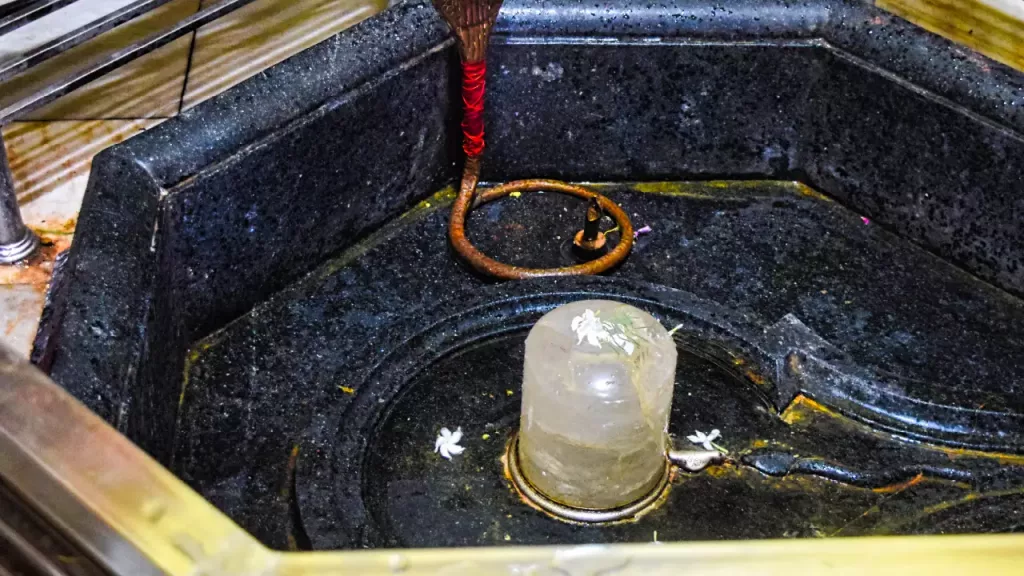
The Padma Purana further states that any person who lights a lamp at a temple, on the riverbank, or beside a road during Kartik receives the blessings of sarva-vyaapi Lakshmi — the all-pervading grace of Goddess Lakshmi. The text specifically instructs: light two lamps every day in Kartik. One should burn in front of Shri Hari Narayan; the other before a Shivling.
The Agni Purana’s Promise
The Agni Purana offers a sweeping declaration: “Whoever donates a lamp to a deity temple or a Brahmin’s home receives everything.” The word “everything” here is not hyperbole — in the Puranic context, it refers to dharma (righteous merit), artha (material prosperity), kama (fulfilment of desires), and moksha (liberation). All four purusharthas — the four objectives of human life — are said to be accessible through the sincere gift of light.
The Brahmavaivarta Purana on Ghee Lamps
The Brahmavaivarta Purana records a particularly striking promise regarding ghee lamps offered to Shri Hari in Kartik: “Whoever offers Lord Vishnu a ghee lamp during Kartik will dwell in Haridham for as long as that lamp continues to burn.” The duration of the lamp’s burning becomes the duration of divine proximity. This understanding explains why devotees carefully choose high-quality cotton wicks and pure cow ghee — the longer and steadier the flame, the greater the accumulation of merit.
The Kalika Purana’s Instruction
Even the technical details of lamp placement carry scriptural authority. The Kalika Purana specifically cautions that lamps must never be placed directly on bare earth — the ground itself, which sustains all of creation, cannot bear the concentrated heat of an unmediated flame. The lamp must always be elevated on a seat of rice, wheat, or saptadhanya (seven sacred grains) before being lit.
Deep Daan in the Month of Kartik: Why This Month Is Sacred
To understand Deep Daan, one must understand Kartik — the final month of Chaturmas, the four-month period during which Lord Vishnu is considered to be in cosmic sleep (Yoga Nidra). Kartik is the month when he awakens on Devutthana Ekadashi, making it one of the most spiritually charged periods in the Hindu calendar.
During Kartik, the Sun transits its weakened sign, Libra (Tula Rashi). Astrologically, this weakening of the solar principle corresponds to a literal lengthening of darkness. The scriptures understood this cosmic phenomenon and prescribed the counterbalancing act of light — Deep Daan — as the antidote. By donating lamps, the devotee symbolically participates in maintaining the cosmic balance between light and darkness.
The month of Kartik is also considered the last leg of Chaturmas. Lord Vishnu’s awakening on Devutthana Ekadashi marks the reopening of divine grace to the world. Deep Daan performed during this period is said to receive Vishnu’s direct attention and blessings, amplifying its merit many times over compared to lamp donations in other months.
The Five Most Auspicious Days for Deep Daan
While every day of Kartik carries merit for Deep Daan, the scriptures identify five days as especially powerful. These five days span the Krishna Paksha (dark fortnight) from Rama Ekadashi to Deepawali — the most sacred cluster of days in the entire Kartik month.
1. Rama Ekadashi
Rama Ekadashi, which falls on the eleventh lunar day of Krishna Paksha in Kartik, is dedicated to Lord Vishnu. Lamp donation on this day, combined with jagran (overnight vigil) and Vishnu Sahasranama recitation, is said to grant liberation from the cycle of rebirth.
2. Pradosh Vrat (Trayodashi)
The thirteenth lunar day (Trayodashi) marks Pradosh Kaal — the twilight period considered most auspicious for Shiva worship. Deep Daan to Shivlings during Pradosh on Kartik Trayodashi is described in the Brahmavaivarta Purana as conferring a thousand yugas of heavenly residence for every lamp offered.
3. Naraka Chaturdashi (Choti Diwali)
On this fourteenth lunar day, lamps are lit specifically for protection against Naraka — hell — and to ease the passage of departed souls. The tradition of lighting fourteen lamps outside the home on Naraka Chaturdashi is directly connected to the ancestral dimension of Deep Daan.
4. Deepawali (Amavasya)
The new moon night of Kartik is Deepawali, the Festival of Lights. Lamp donation on this night has the combined power of all other days amplified. The Padma Purana states that lamps offered on Deepawali night on riverbanks particularly please both Goddess Lakshmi and the ancestors who dwell in the pitru loka.
5. Kartik Purnima (Dev Deepawali)
Kartik Purnima — the full moon — is considered the Diwali of the Gods. On this night, all the devas (divine beings) are said to descend to the sacred rivers to bathe and receive lamp donations from devotees. Prayagraj, Varanasi, Haridwar, and Ayodhya observe Dev Deepawali on this night with thousands of lamps floating on the river. The Skanda Purana states that bathing in the Ganga on Kartik Purnima yields the full merit of a year’s worth of daily Ganga baths.
Deep Daan and the Ancestors: The Pitrupaksha Connection
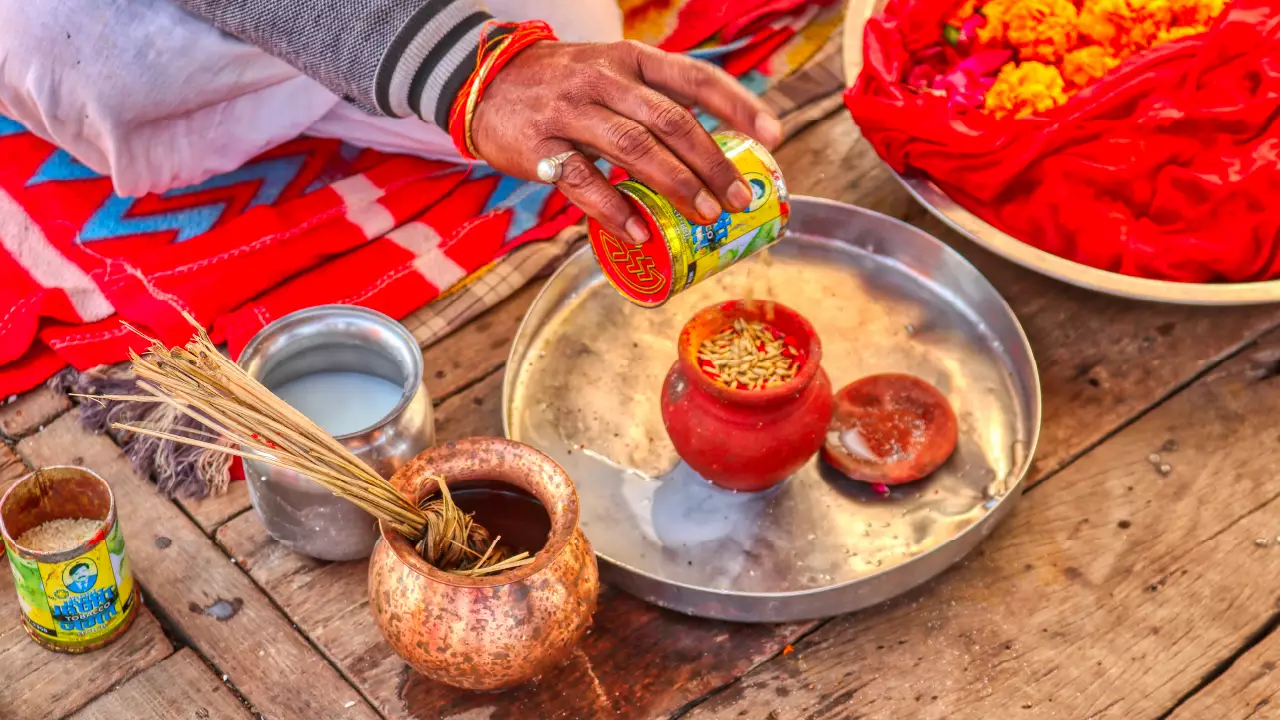
One of the most profound dimensions of Deep Daan — and one that is often overlooked in popular treatments of this ritual — is its deep connection to ancestral welfare. The tradition of lighting lamps for the dead is ancient, pre-Puranic, and woven into the very fabric of the Hindu relationship with those who have passed.
The Mahabharata records that after the devastating Battle of Kurukshetra, the Pandavas and Draupadi lit Akash Deepa — sky-hanging lamps — in honour of the fallen warriors. This gesture of light offered to the departed is one of the earliest recorded instances of Deep Daan as an ancestral ritual. The lamp is understood as a guide — it illuminates the path of the departed soul through the liminal space between this world and the next.
During Pitrupaksha — the sixteen-day period of ancestral rites that falls in the Krishna Paksha of Bhadrapada month — Deep Daan acquires a specific purpose: to provide light to the ancestors in Pitru Loka. The Garuda Purana teaches that the soul of a departed person wanders in darkness between death and its next birth. Lamps donated in their name provide guidance and peace.
Many families combine their Pitrupaksha Shradh and Pind Daan ceremonies with Deep Daan at the riverbank — offering the lamp to the Ganga after the Pind (rice ball offering) has been placed in the water. This combined ritual is considered particularly complete because it addresses both the physical (through the Pind) and the spiritual (through the lamp) needs of the departed soul.
Deep Daan at the Ganga Ghats of Prayagraj
Prayagraj — the Triveni Sangam, where the Ganga, Yamuna, and the invisible Saraswati converge — holds a special place in the geography of Deep Daan. The Padma Purana specifically names Prayagraj as one of the tirtha-kshetras (sacred pilgrimage sites) where lamp donation yields multiplied merit. The confluence of three sacred rivers creates what the scriptures call trigunatmika shakti — a triple-powered field of spiritual energy.
On Kartik Purnima, the ghats of Prayagraj — Dashashwamedh Ghat, Ram Ghat, Sangam Ghat — are transformed into carpets of light as hundreds of thousands of diyas float on the joined waters of the three rivers. The visual effect is one of the most spectacular spiritual sights in all of India. But beyond the visual, the act carries immense scriptural weight: according to the Skanda Purana, lamp donation at a sangam (confluence) yields merit equivalent to lamp donation at a hundred individual sacred rivers.
Deep Daan at Prayagraj is also inextricably linked to the ritual of Pind Daan for ancestors. Many pilgrims who come to Prayagraj for Pitrupaksha Pind Daan also perform Deep Daan at Sangam Ghat on the same visit, completing a full ancestral offering that satisfies both the gross and subtle dimensions of the departed soul’s need.
Deep Daan and Dev Deepawali at Varanasi
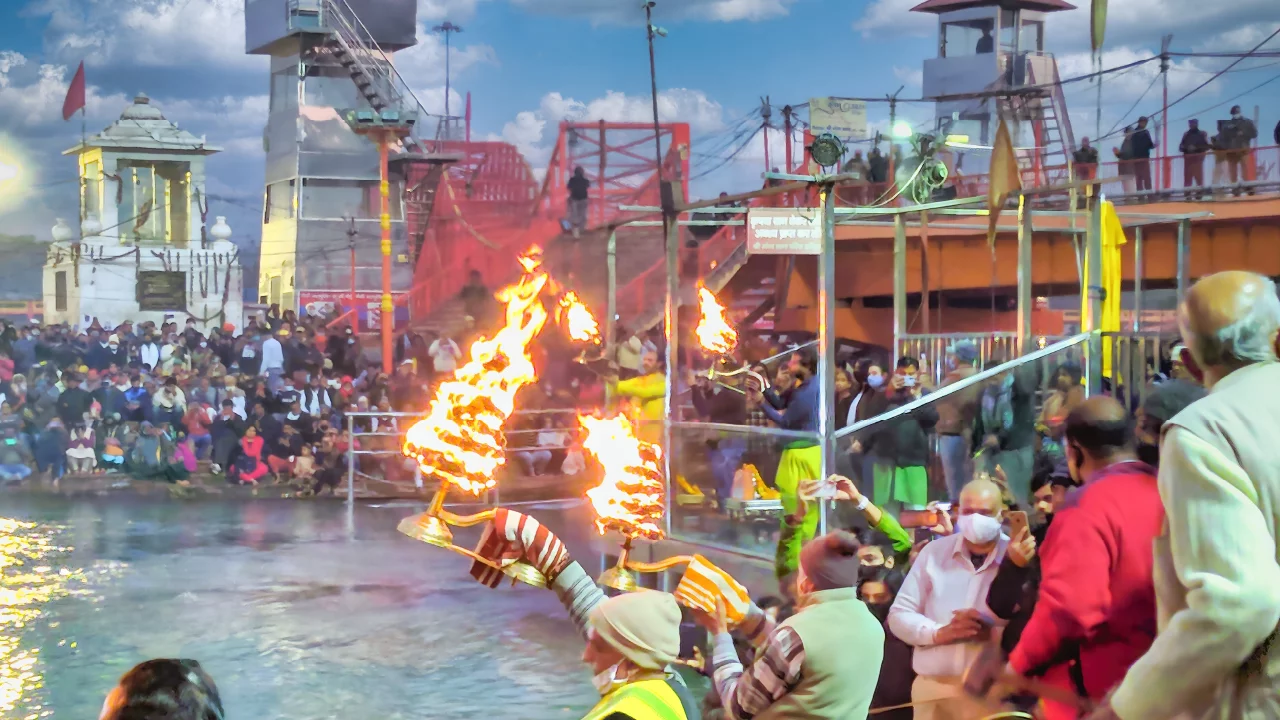
While Prayagraj offers the most sacred confluence for Deep Daan, Varanasi is the city most associated with the spectacular celebration of Dev Deepawali — literally “the Diwali of the Gods.” On Kartik Purnima, Varanasi’s eighty-four ghats are illuminated from Assi Ghat to Raj Ghat in an unbroken line of lamps, extending twelve kilometres along the Ganga’s western bank.
Dev Deepawali at Varanasi draws over a million devotees on the night of Kartik Purnima. The ritual begins with the bathing of all the deities of Kashi — Lord Vishwanath, Goddess Annapurna, and Kaal Bhairav — whose idols are ceremonially carried to the Ganga ghats. As the evening progresses, priests from all the major temples perform the grand Ganga Aarti while lakhs of lamp-wicks are set afloat on the river. The Ganga in this moment appears to mirror the Milky Way — an ocean of light against the night sky.
The spiritual tradition behind Dev Deepawali holds that Lord Vishnu, upon awakening on Devutthana Ekadashi, invited all the devas to celebrate his awakening with him on Kartik Purnima night at the ghats of Kashi. The gods descended, bathed in the Ganga, and offered lamps — and devotees replicate this divine gesture every year. To offer a lamp at Varanasi on Dev Deepawali night is, in the Puranic imagination, to participate in a divine celebration that transcends ordinary time.
The Correct Method of Performing Deep Daan
The scriptures are precise about the method of Deep Daan — the materials, the timing, the placement, the mantras, and the intent. Following this method correctly is what transforms a simple candle-lighting into a genuine act of sacred donation.
Choosing and Preparing the Lamp
Lamps may be made of clay (mitti), copper (tamra), brass (pital), silver (chandi), or gold (sona). Clay lamps are most traditional and most widely used — they are made from the earth and return to the earth, symbolising the cycle of creation. Before use, soak clay lamps in water for a few hours, then dry them completely. Copper and brass lamps should be polished and purified with water before use.
Choosing the Fuel and Wick
For lamps offered to Vishnu — use pure cow ghee (go-ghrita) with a cotton wick. The Brahmavaivarta Purana specifically praises the ghee lamp for Vishnu, promising Haridham residence for the donor. For lamps offered to Shiva — use sesame oil (til ka tel) or regular oil with a red thread (kalava) wick. The red thread wick is considered especially auspicious for Shiva worship.
The Timing: Pradosh Kaal
Deep Daan is most powerfully performed during Pradosh Kaal — the period beginning approximately ninety minutes before sunset and extending until forty-five minutes after sunset. This is the transition between day and night, when the lamp’s light holds maximum symbolic and ritual significance. If Pradosh Kaal is not feasible, Deep Daan may be performed after sunset but before midnight.
The Seat of the Lamp
As instructed in the Kalika Purana, never place a lamp directly on bare earth. Prepare a small seat of rice grains, wheat, or saptadhanya (seven grains: wheat, rice, black sesame, barley, mung, moth beans, chana) on a wooden plank or metal plate. Place the lamp on this seat. This elevates the lamp physically and spiritually.
The Deepak Mantra
Before lighting, recite the Deepak Mantra while holding the unlit lamp:
“Bhoo bhuva suvaha, deepo jyoti parabrahma, deepo jyotir janardhana, deepo harastu papam mama jyotir namostute.”
Translation: “The lamp is the light of the Supreme Brahman. The lamp is the light of Vishnu. Let the lamp destroy my sins. I bow to the light.”
The Offering and Conclusion
After lighting, offer incense (dhoop), flowers, and Akshat (unbroken rice grains with turmeric). Circumambulate the lamp once clockwise. If the lamp is being floated on a river, gently place it in the water’s current while mentally offering it to the Ganga and your departed ancestors. Observe the lamp as it drifts — this moment of witnessing is itself a form of meditation.
Specific Benefits of Deep Daan According to the Ancient Texts
The Puranas describe benefits of Deep Daan that correspond to the duration, quantity, and type of lamp donated. These prescriptions, drawn from the Agni Purana and related texts, offer a remarkably specific pharmacopoeia of light:
- For success in a journey: Donate a lamp with 32 tolas of ghee in a metal vessel of 32 tolas. Offer at a crossroads or temple entrance before departure.
- For relief from planetary afflictions (Graha Dosha): Donate a lamp with sixty-four tolas of oil. Specific graha doshas — particularly Shani, Rahu, and Ketu — are said to be pacified through sustained lamp donation over 11 or 21 days.
- For incurable disease: Light a lamp of eighty tola oil for twenty consecutive days. This extended commitment is understood as a sustained act of surrender to divine will.
- For removal of negative energies and obstacles: Light oil lamps continuously for twenty-one consecutive days. The unbroken continuity of the flame represents the unbroken intention of the devotee.
- For removal of fear (including legal matters): Light a quarter-foot oil lamp for forty days. The forty-day period mirrors the number of major nadis (energy channels) in the subtle body.
- For the desire for a child: Light a lamp of one and a half feet of oil for nineteen days, with prayers to Santana Gopal form of Vishnu.
- For the welfare of departed ancestors: Light lamps at riverbanks during Pitrupaksha, particularly on Sarvapitru Amavasya. Float the lit lamp on the river while reciting the names of the departed.
Deep Daan as Ancestral Offering: The Pitrupaksha Dimension
Among all the occasions for Deep Daan, Pitrupaksha — the sixteen-day period of ancestral remembrance — holds a unique place. The Garuda Purana, which contains the most detailed treatment of post-death rituals in Hindu literature, explicitly instructs that lamp donation is among the offerings most beneficial to departed souls.
The soul in its journey through pitru loka (the realm of ancestors) is understood to experience conditions that mirror the physical world — including darkness. When a descendant offers a lamp in the name of a departed ancestor, that lamp is said to illuminate the ancestor’s path in the spirit world, bringing comfort and hastening their progress toward liberation or rebirth.
The most auspicious moment for this ancestral Deep Daan during Pitrupaksha is on Sarvapitru Amavasya — the final day of Pitrupaksha, also known as Mahalaya Amavasya. On this day, lamps offered at any sacred river or temple carry the merit of all sixteen days of Pitrupaksha combined.
Many families who perform Pind Daan in Prayagraj during Pitrupaksha combine their rice-ball offering with Deep Daan at the Sangam. This combination — the Pind (gross offering) and the Deepa (subtle offering of light) — is considered the most complete form of ancestral tribute that a living descendant can offer.
Deep Daan at Ayodhya: Ram ki Paidi and the Deepotsav
Ayodhya, the birthplace of Lord Ram, has an equally significant tradition of Deep Daan centred on its own sacred river — the Saryu. The Deep Daan at Ayodhya, performed particularly at Ram ki Paidi on the Saryu’s bank, carries the combined blessings of Vishnu (as Ram) and the sanctity of the river herself.
On the occasion of Diwali, Ayodhya celebrates the Deepotsav — a state-level festival during which hundreds of thousands of lamps are lit along the banks of the Saryu. This festival commemorates the return of Lord Ram to Ayodhya after fourteen years of exile, when the citizens of Ayodhya are said to have illuminated every home and riverbank to welcome their king. Deep Daan on Deepotsav night at Ayodhya is thus both a ritual act and a participation in one of the most celebrated moments in sacred history.
How to Arrange Deep Daan Through Prayag Pandits
For many devotees — particularly those in other cities or abroad — personally visiting Prayagraj or Varanasi for Deep Daan during Kartik or Pitrupaksha is not always possible. Prayag Pandits offers a dedicated service for proxy Deep Daan performed by experienced pandits at the Sangam in Prayagraj on behalf of devotees and their departed ancestors.
Our pandits perform the complete Deep Daan ritual — lamp preparation, mantra recitation, ancestral invocation, and lamp floating at the Triveni Sangam — on the specific dates and occasions requested by the devotee. A video of the ceremony and prasad (sacred offering) can be arranged and dispatched to the devotee.
🪔 Book Deep Daan at Triveni Sangam, Prayagraj
Frequently Asked Questions About Deep Daan
Conclusion: The Gift of Light Is the Gift of Grace
In a world where so much devotional practice can feel abstract or distant from daily life, Deep Daan offers something immediate and tangible: a flame you can hold, a light you can watch, a gift you can give with your own hands. The scriptures across every major Purana agree that this act — small in material cost, immense in spiritual weight — touches the divine in ways that elaborate ceremonies sometimes fail to reach.
Whether you light a diya on your home altar during Kartik, float a lamp on the Ganga at Prayagraj’s Triveni Sangam, or offer a ghee-fed flame to Lord Vishwanath at Varanasi’s Dev Deepawali, you are participating in one of Hinduism’s oldest and most beautiful traditions. And if you light that lamp in the name of a departed loved one — with their name on your lips and their memory in your heart — you are doing something that the Garuda Purana says the ancestors themselves feel: a warmth, a comfort, a light in the darkness between worlds.
If you wish to have Deep Daan performed on your behalf at the sacred Triveni Sangam in Prayagraj, or if you are planning a visit to Prayagraj during Kartik Purnima or Pitrupaksha and would like to arrange the complete ritual with a qualified pandit, we invite you to reach out to our team. The lamp awaits its donor.
Also see: Deep Daan at Ayodhya — The Deepotsav and Ram ki Paidi Tradition | Dev Deepawali at Varanasi — India’s Most Spectacular Festival of Lights
Related Services by Prayag Pandits
- 🙏 Deep Daan at Garh Mukteshwar — Starting from ₹2,100
- 🙏 Gati / Deep Daan / Pitra Maha-yagya at Garh Mukteshwar — Starting from ₹11,000
- 🙏 Online Pind Daan / Deep Daan at Garh Mukteshwar — Starting from ₹7,100