No rituals selected yet.
Browse Pooja Packages →Key Takeaways
In This Article
For Odia Hindu families, shraddha (ଶ୍ରାଦ୍ଧ) is among the most sacred obligations a son or daughter can fulfill for departed parents and ancestors. The Odia shraddha paddhati — the prescribed method of performing ancestral rites — follows the Vedic tradition while incorporating regional customs unique to Odisha.
This guide covers the complete shraddha process as practiced in Odia families: shraddha barsika (annual death anniversary), mahalaya shraddha (during Pitru Paksha), dashaha (ten-day rites), and the mantras recited during each ceremony. We include key terms in Odia script (ଓଡ଼ିଆ) alongside English explanations for families who may be performing these rites for the first time.
At Prayag Pandits, our pandits are familiar with Odia ritual traditions and perform all ceremonies respecting Odia customs. We have served hundreds of Odia families from Bhubaneswar, Cuttack, Puri, Sambalpur, and the Odia diaspora worldwide.
ଶ୍ରାଦ୍ଧ ବାର୍ଷିକ (Shraddha Barsika) — The Annual Death Anniversary
Shraddha barsika is the most important annual ritual obligation in an Odia Hindu family. It is performed on the death anniversary of the departed, calculated by the tithi (lunar date) from the Hindu panjika (Odia almanac), not the English calendar date.
Key terms in Odia:
- ଶ୍ରାଦ୍ଧ ବାର୍ଷିକ (Shraddha Barsika) — annual death anniversary ceremony
- କର୍ତ୍ତା (Karta) — the person performing the rite (usually eldest son)
- ପିଣ୍ଡ (Pinda) — rice balls offered to ancestors
- ତର୍ପଣ (Tarpana) — water offering with sesame seeds
- ବ୍ରାହ୍ମଣ ଭୋଜନ (Brahmana Bhojana) — feeding Brahmins in the ancestor’s name
How to Calculate the Shraddha Barsika Date
The date is determined by the tithi on which the person died, in the same paksha (fortnight) and masa (month) of the Hindu calendar. For example, if someone passed away on Kartika Krishna Dashami, the barsika falls on Kartika Krishna Dashami every year.
In Odisha, the Odia Panjika (published by institutions like the Kohinoor Panjika or the Utkal Jyotish Parishad) provides the exact tithi dates mapped to the English calendar. If you do not have access to a panjika or are unsure of the tithi, our pandit team can calculate it from the English date and year of death. Contact us with the date.
What is Included in a Barsika Ceremony
A properly performed barsika includes:
- ସଙ୍କଳ୍ପ (Sankalpa): The formal vow, stating the ancestor’s name, gotra, and the purpose of the offering. The karta sits facing south.
- ପିଣ୍ଡ ଦାନ (Pinda Daan): Offering of rice balls mixed with til (sesame), barley, and kusha grass. In Odia families, the pinda is typically placed on a banana leaf or peepal leaf.
- ତର୍ପଣ (Tarpana): Water offering using a copper or silver vessel, mixed with black sesame seeds. Performed facing the south direction (Yama’s direction).
- ବ୍ରାହ୍ମଣ ଭୋଜନ (Brahmana Bhojana): Feeding at least one Brahmin in the ancestor’s name. The food served is typically sattvic — rice, dal, vegetables, and kheer (payasa). No onion, garlic, or masoor dal.
- ଦାନ (Daan): Charitable offerings — clothes, food grains, or money — given to a Brahmin or to the needy in the ancestor’s name.

ମହାଳୟା ଶ୍ରାଦ୍ଧ (Mahalaya Shraddha) — During Pitru Paksha
Mahalaya Shraddha is performed during Pitru Paksha (ପିତୃ ପକ୍ଷ), the 16-day period specifically designated for ancestral rites. In 2026, Pitru Paksha runs from September 26 to October 10.
During this period, the veil between the mortal world and the pitru loka (ancestral realm) is considered thinnest. Offerings made during Mahalaya carry special potency. Many Odia families who perform barsika at home throughout the year choose to perform Mahalaya Shraddha at a sacred tirtha like Gaya or Prayagraj for additional merit.
In Odia tradition, families who cannot travel to a tirtha perform tarpan at home on each day of Pitru Paksha, offering water and sesame while reciting the ancestors’ names. The Pitrupaksha 2026 guide has the complete tithi calendar.
ଦଶାହ ବିଧି (Dashaha Vidhi) — The Ten-Day Post-Death Rites
When a family member dies, the Odia Hindu family observes a ten-day mourning period called dashaha (ଦଶାହ) or dashkriya. During these ten days, specific rites are performed each day:
- Day 1-3: Antim Kriya (ଅନ୍ତିମ କ୍ରିୟା) — cremation and initial rites. In Odisha, cremation traditionally takes place at the local smasana (cremation ground). The eldest son lights the pyre.
- Day 4: Collection of asthi (ashes/bone fragments) from the cremation site. These are preserved for later asthi visarjan at a river or sea.
- Day 1-10: Daily pinda daan by the karta, using small rice balls. A different mantra is recited each day, gradually building the subtle body (ativahika sharira) of the departed.
- Day 10: Dashaha ceremony — the formal end of the mourning period. The family is purified, and the home is cleansed with Ganga water or turmeric water. The karta shaves his head.
After Dashaha: Sapindikaran and Shraddha
On the 12th or 13th day after death, the sapindikaran (ସପିଣ୍ଡିକରଣ) ceremony is performed. This ritual formally unites the departed soul with the ancestors (pitru). Until sapindikaran is complete, the departed is considered a preta (wandering spirit). After it, the soul joins the pitru loka.
Read our Sapindi Shradh guide for the full procedure.
After the immediate post-death rites, the family is expected to observe shraddha barsika every year (see above) and perform tarpan on Amavasya days and during Pitru Paksha.
ଶ୍ରାଦ୍ଧ ସାମଗ୍ରୀ (Shraddha Samagri) — Items Needed for the Ceremony
A complete list of items needed for an Odia shraddha ceremony:
| Item (Odia) | English | Purpose |
|---|---|---|
| ଚାଉଳ | Uncooked rice | For pinda preparation |
| ତିଳ (ବୁଦାତିଳ) | Black sesame seeds | Mixed with rice for pinda; used in tarpan water |
| ଯବ | Barley grains | Mixed into pinda |
| କୁଶ ଘାସ | Kusha grass (darbha) | Worn on ring finger; placed under pinda |
| ପାଣି (ଗଙ୍ଗା ଜଳ) | Water (preferably Ganga water) | For tarpan and purification |
| ନୂଆ ଧୋତି | New dhoti (white) | Worn by the karta during the ceremony |
| ଧୂପ, ଦୀପ, ଫୁଲ | Incense, lamp, flowers | Standard puja offerings |
| କଦଳୀ ପତ୍ର | Banana leaf | Plate for pinda placement |
| ଗୋ-ଘୃତ | Cow ghee | For havan/homam if included |
When you book shraddha with Prayag Pandits at Gaya or Prayagraj, all samagri is provided by us. You only need to bring personal items (new dhoti, ancestor details).
Odia Shraddha at Sacred Tirthas — Why Gaya and Prayagraj
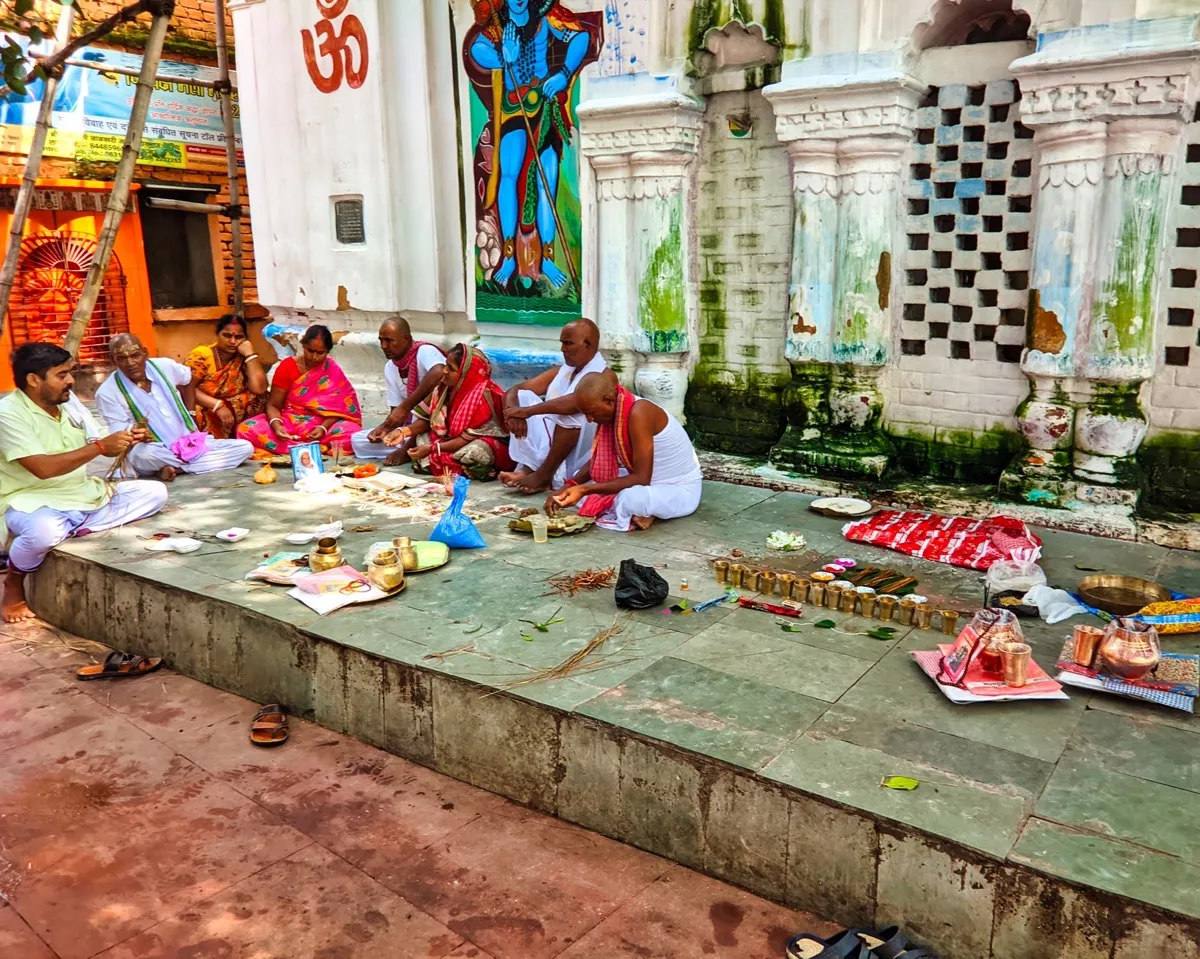
While shraddha can be performed at home with a local Odia Brahmin pandit, performing it at a sacred tirtha carries significantly greater spiritual merit. The Garuda Purana states that Pind Daan at Gaya liberates seven generations of ancestors — a promise not made for home ceremonies.
Many Odia families from Bhubaneswar, Cuttack, and Puri travel to Gaya specifically for shraddha. Read our detailed Gaya Pind Daan from Odisha guide for travel routes, accommodation, and booking information.
For families who cannot travel, our online shraddha service via live video call allows you to participate from Odisha while the pandit performs the ceremony at the tirtha. Book online shraddha — Rs 11,000.
ଶ୍ରାଦ୍ଧ ନିୟମ (Shraddha Niyam) — Rules for the Karta
The person performing the shraddha (karta) must follow specific rules before, during, and after the ceremony:
Before the Ceremony
- Fast from the previous evening (or eat only sattvic food)
- Bathe early morning with til (sesame) mixed in the water
- Wear clean white clothes (new dhoti preferred)
- Apply chandan (sandalwood) tilak
- Tie the pavitra ring of kusha grass on the right hand ring finger
During the Ceremony
- Face south — the direction of Yama, lord of the ancestors
- Use the apasavya position of the sacred thread (over right shoulder, under left arm) for pitru karma. This is the reverse of normal savya position used for devata (god) worship.
- Recite the ancestor’s name, gotra, and the specific tithi during sankalpa
- Do not speak to others during the tarpan — maintain silence and focus
- Feed the Brahmin before eating yourself
After the Ceremony
- The karta may resume normal activities after feeding the Brahmin and receiving ashirvad (blessing)
- Distribute prasad to family members
- In Odia tradition, some families also feed cows and crows — crows are considered messengers of Yama
These rules are based on the Dharma Sindhu and the Nirnaya Sindhu, the two authoritative texts on Hindu ritual procedure. Our pandits guide the karta through each step so that even first-time performers complete the ceremony correctly.
Kartik Purnima and Kumar Purnima — Odia Festival Connections to Shraddha
In Odisha, two festivals carry special ancestral significance:
Kartik Purnima (ମାଣବସା ଗୁରୁବାର / ବୋଇତ ବନ୍ଦନା): The full moon of Kartik month marks the end of the month-long habisha observance. Kartik Purnima is traditionally a day for ancestral tarpan in many Odia families. The famous Boita Bandana festival in Puri commemorates the maritime voyages of ancient Odia traders — but the day also carries a spiritual dimension connected to ancestral blessings for prosperity.
Kumar Purnima: Falling in the month of Ashwin (usually October), Kumar Purnima coincides with the end of the Pitru Paksha period. For families who observed shradh during Pitru Paksha, Kumar Purnima marks the return to normal life after the period of ancestral remembrance.
Book Shraddha with Odia-Speaking Pandits
Whether you need to perform shraddha barsika, mahalaya shraddha during Pitru Paksha, or the complete dashaha vidhi for a recently departed family member, Prayag Pandits is here to help. Our pandits speak Odia, Hindi, and English, and perform all ceremonies respecting Odia traditions.
- Pind Daan at Gaya for Odia Pilgrims — Rs 7,100
- Online Pind Daan at Gaya (Video Call) — Rs 11,000
- Prayagraj Pind Daan for Odia Families
- Asthi Visarjan for Odisha Pilgrims — Prayagraj
Contact: +91-7754097777 (WhatsApp) | Online enquiry
ଜୟ ଜଗନ୍ନାଥ। ଜୟ ବିଷ୍ଣୁ।
Book Your Sacred Ritual
Authentic ceremonies performed by Veda-trained pandits with video proof at sacred sites across India.
2,263+ families served
Video proof included
Since 2019
