Garh Ganga, Garhmukteshwar — Delhi's Nearest Sacred Ganga Tirtha for Asthi Visarjan
There is something quietly remarkable about Garhmukteshwar. It sits on the banks of the Ganga just 65 to 70 kilometres from Delhi — close enough that a family can leave home early in the morning, perform the complete Asthi Visarjan ceremony at this ancient tirtha, and return by afternoon. For tens of thousands of families across Delhi NCR, Ghaziabad, Noida, Meerut, Muzaffarnagar, and western Uttar Pradesh, this closeness is not a compromise. It is the reason Garhmukteshwar has served as the primary cremation and ancestral rite site for these communities for centuries.
But proximity is only part of the story. Garhmukteshwar is not simply convenient — it is a deeply sacred tirtha in its own right. The presiding deity here is Mukteshwar Mahadev, one of the ancient Shiva lingas associated in the Skanda Purana with the bestowal of mukti — liberation from the cycle of rebirth. The very name of the town encodes this promise: Garh, the fort or stronghold, and Mukteshwar, the Lord of Liberation. Shiva, who grants liberation from the bonds of karma, is the presiding witness to every last rite performed on these ghats. The soul of the departed is surrendered not merely to the Ganga but to Mukteshwar himself — and the Puranic tradition understands this as a form of divine acceptance.
Families who have performed Asthi Visarjan at Garhmukteshwar repeatedly describe the same experience: a sense of completeness, of having done the right thing in the right place. The Ganga here flows freely through the doab floodplains, wide and unhurried, without the density of larger pilgrimage cities. Brij Ghat — the primary cremation and Asthi Visarjan ghat — carries the quiet weight of generations of grief and release. When the ashes of a loved one enter these waters, they enter a river that has received such offerings across centuries of devotion.
Why Garhmukteshwar Is One of the Most Significant Tirthas for Asthi Visarjan
Many families from Delhi and Haryana are surprised to learn that Garhmukteshwar is not merely a convenient alternative to Haridwar or Prayagraj — it is itself a tirtha of considerable Puranic standing. The Skanda Purana mentions Garhmukteshwar (referred to as Brijakshyetram in its original references to this stretch of the Ganga) as a place where ancestral rites carry heightened efficacy, particularly for families from the Mathura-Meerut-Delhi corridor. This is the sacred geography that has shaped Hindu pilgrimage patterns in North India for two thousand years.
The Ganga at Garhmukteshwar carries a specific character. Unlike the Ganga at Haridwar, which descends from the mountains and still carries the energy of its glacial origin, the Ganga here has settled into the plains and flows with a measured, maternal quality. The water at Brij Ghat is renowned for its purity — one of the cleaner stretches of the river in Uttar Pradesh, relatively unaffected by industrial discharge at the point of the ghat. Pilgrims who bathe here during the Kartik Mela — one of North India's largest annual pilgrimage fairs — number in the hundreds of thousands. The ghat is a living tirtha, not a ceremonial relic.
The Mukteshwar Mahadev temple, which stands adjacent to the ghats, has a further significance for Asthi Visarjan specifically. In the tradition of Shiva as Mrityunjaya — the Conqueror of Death — performing last rites in the vicinity of a Shiva temple adds the dimension of divine benediction to the ceremony. The pandit who performs the Asthi Visarjan begins with a brief prayer at the temple before proceeding to the ghat, connecting the ceremony to the presiding deity's grace. This dual axis — the Ganga as purifier and liberator, and Mukteshwar Mahadev as the divine witness — gives the ceremony at Garhmukteshwar a completeness that pure river-based rituals elsewhere sometimes lack.
For a full account of this tirtha's history, geography, and significance for ancestral rites, see our detailed guide: Garhmukteshwar — Complete Guide to the Ganga's Closest Tirtha to Delhi.
What Is Included in Our Asthi Visarjan Package
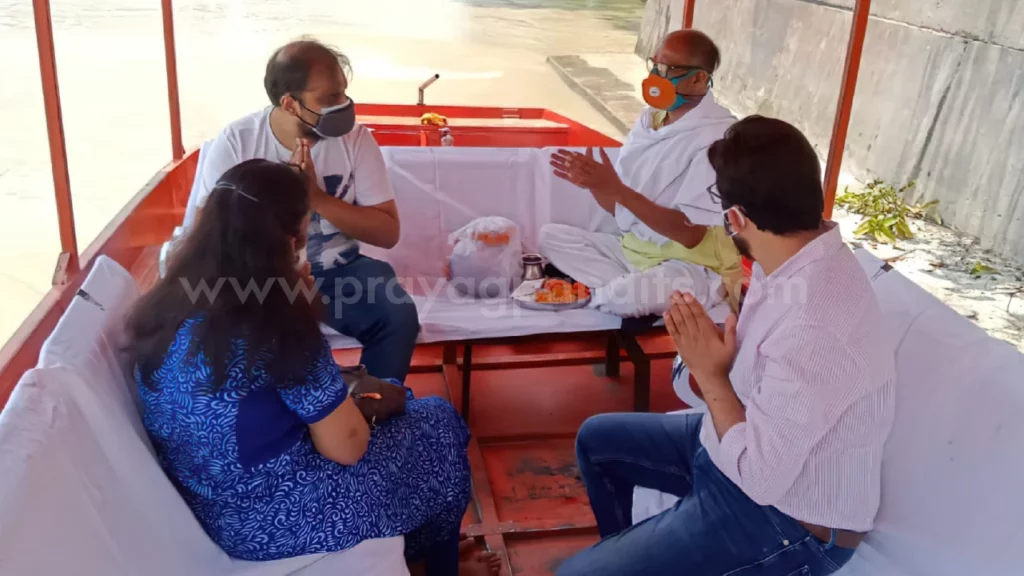
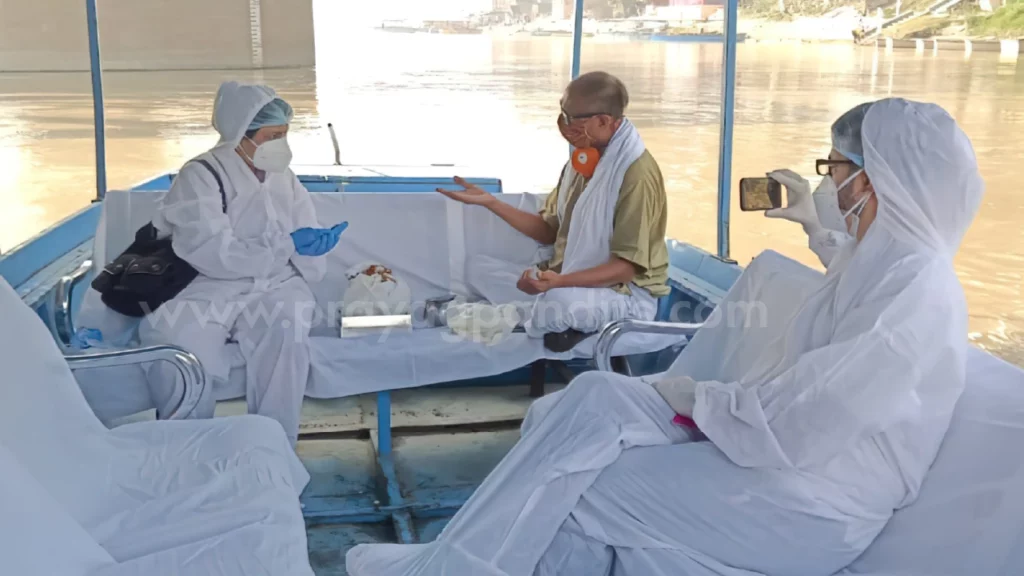
Every aspect of the ceremony is arranged by our team. Your family arrives at Brij Ghat carrying only the Asthi Kalash. Our pandit handles everything else.
- Experienced Tirth Purohit: Pandit Kuldeep Shukla, with over 10 years of experience conducting ancestral rites at Garhmukteshwar and other sacred tirthas, guides the complete ceremony from Sankalp to the final closing prayers.
- Complete Puja Samagri: All ritual materials are arranged — sesame seeds (til), barley (jau), kusha grass, fresh flowers, tulsi leaves, ghee, honey, milk, Gangajal, incense, earthen lamps, and every other item prescribed for Asthi Visarjan Poojan.
- Sankalp with Family Name and Gotra: The formal declaration of intent is made in your family's name, with the name of the departed, your gotra, and the current tithi — placing the ceremony in correct ritual alignment.
- Asthi Visarjan in the Ganga: The complete immersion of the ashes in the flowing Ganga at Brij Ghat, conducted according to the full Vedic procedure as prescribed in the Garud Purana.
- Sacred Boat Ride on Ganga: The immersion is performed from a boat on the river, as tradition prescribes — the ashes are released into the main current, not at the shallow edge of the ghat.
- Tarpan — Ancestral Water Offerings: Gangajal mixed with sesame and barley, cupped in the palms and offered into the river in the names of the departed and all ancestors mentioned in the Sankalp.
- Pind Daan (Basic): A Pind offering — the nourishing rice-ball gift to the subtle body of the departed — is made as part of the ceremony.
- Ghat Arrangements: All logistics at Brij Ghat — access, boat, puja space, timing — are coordinated by our pandit.
- Brahmin Bhoj (on request): A meal for Brahmins can be arranged at additional cost if the family wishes to complete this meritorious act as part of the ceremony. Please mention this at the time of booking.
What Is Not Included
- Travel to Garhmukteshwar — your family makes its own arrangements to reach Brij Ghat
- Accommodation in Garhmukteshwar
- Meals for family members attending the ceremony
- Brahmin Bhoj (available on request at additional cost — please inform us when booking)
- Pandit dakshina — traditionally offered directly by the family to the pandit at the end of the ceremony; the pandit will guide you on this; it is voluntary and according to the family's wish and means
- Gau Daan (cow donation) — can be arranged at additional cost if the family wishes to perform this
If you would like to combine the ceremony at Garhmukteshwar with a full day of darshan at the Mukteshwar Mahadev temple or other local sacred sites, our team can suggest a program. The temple itself is an ancient structure worth visiting, and many families choose to spend part of the day in prayer there after completing the ceremony at the ghat.
Your Ceremony at Garh Ganga — What the Day Looks Like
Many families planning their first visit to Garhmukteshwar want to understand what the ceremony actually involves — how long it takes, what the sequence of rituals is, and what role family members play. The following account gives you a detailed sense of what to expect from the time you arrive at Brij Ghat to the moment the ceremony concludes.
The complete ceremony from arrival to closing takes approximately one to one and a half hours. Most families arrive in the morning — ideally between 6:00 AM and 10:00 AM, when the ghat is calmer and the ritual conditions are most auspicious. Our pandit will be present at Brij Ghat to receive you on arrival.
Before the ceremony begins, the pandit will spend a few minutes with the head of the family — typically the eldest son or nearest male relative — confirming the gotra, the name of the departed, the approximate date of death, and the name of the present city. These details form the core of the Sankalp, the formal declaration that initiates the ritual. If you do not know your gotra, please inform us in advance. The pandit will use the Kashyap gotra, which is the traditional default for families who have lost knowledge of their ancestral gotra.
How to Reach Brij Ghat, Garhmukteshwar from Delhi and NCR
Garhmukteshwar is exceptionally well connected to Delhi and the surrounding regions. The journey from most parts of Delhi NCR takes between 90 minutes and 2.5 hours depending on your starting point and traffic conditions. This accessibility — combined with the tirtha's genuine sacred weight — is why Garhmukteshwar has served as the primary site for Asthi Visarjan for millions of families across this region for generations.
By Road from Delhi and NCR
The most convenient route is via NH-9 (Delhi–Moradabad Highway, formerly NH-24). From Delhi, take the NH-9 exit from the Delhi-Meerut Expressway or via Akshardham and proceed toward Hapur. Garhmukteshwar is approximately 65 to 70 kilometres from central Delhi and 35 kilometres beyond Ghaziabad city. The town and Brij Ghat are well signposted from the main highway. Typical driving times:
- From Central Delhi (Connaught Place): 1.5 to 2 hours via NH-9
- From Noida / Greater Noida: 1.5 to 2 hours via NH-9 through Ghaziabad
- From Gurgaon / Faridabad: 2 to 2.5 hours via the Delhi ring road and NH-9
- From Meerut: 45 to 60 minutes on NH-9
- From Muzaffarnagar / Haridwar direction: 45 to 90 minutes on NH-9 toward Delhi
Most families coming for Asthi Visarjan prefer to hire a private vehicle — especially when carrying the Asthi Kalash — as it allows flexibility in timing and avoids the discomfort of public transport during a deeply emotional journey. Our team can suggest reliable local transport contacts if needed.
By Train
The nearest railway station to Garhmukteshwar is Hapur Junction, approximately 20 kilometres away. Multiple trains connect Delhi (Anand Vihar Terminal, New Delhi Station) to Hapur throughout the day, with journey times of 45 to 90 minutes. From Hapur Junction, Garhmukteshwar is accessible by auto-rickshaw or shared jeep in approximately 30 to 45 minutes. The Garhmukteshwar Road station (also called Garh station) on the Moradabad line is even closer — about 5 kilometres from Brij Ghat — though trains are less frequent at this station.
GPS Navigation
Enter "Brij Ghat Garhmukteshwar" in Google Maps or any navigation app. The ghat is well mapped and navigation is reliable. If approaching from the highway, follow signs for Garhmukteshwar town and then follow signs to the ghat area. Our pandit's contact details are shared at booking, and he can guide you by phone if needed.
Common Questions About Asthi Visarjan at Garhmukteshwar
When Is the Best Time to Perform Asthi Visarjan at Garh Ganga?
The Garud Purana recommends performing Asthi Visarjan within the first ten to thirty days after death, ideally coordinated with the eleventh-day (Ekadashi) rites. However, the scriptures are clear that the ceremony is fully valid whenever it is performed — weeks, months, or even years after the death. Many families who could not travel during the pandemic, or whose relatives passed away abroad, have performed Asthi Visarjan years later with complete scriptural validity. What matters is sincere intent and proper Vedic ritual — both of which our team ensures.
Particularly auspicious periods for Asthi Visarjan at Garhmukteshwar include Pitrupaksha (September–October), when the ancestral realm is most accessible; Amavasya (new moon days), which are universally sacred to the Pitrs; and Kartik month (October–November), when Brij Ghat hosts one of the largest pilgrimage gatherings in North India. Early morning — between 6:00 AM and 10:00 AM — is the most auspicious part of the day for performing the ceremony.
Can Asthi Visarjan Be Done for Multiple Family Members in One Ceremony?
Yes. If you have preserved the ashes of more than one family member, multiple can be immersed in a single ceremony. The Sankalp will include the names of all departed being honoured, and the pandit recites the prescribed mantras for each. Many families find it meaningful to honour parents, grandparents, or multiple generations together in a single ceremony at this tirtha. Please inform us at booking so the pandit can prepare the Sankalp accordingly.
Can NRI Families Book This Service Remotely?
Yes. Families based abroad who have preserved the ashes of a loved one can book this service. Two options are available. First, you can send the Asthi Kalash to a family member in India who then travels to Garhmukteshwar to perform the ceremony. Second, if no family member can travel to India, we offer a live online Asthi Visarjan at Garh Ganga — our pandit performs the complete ceremony at Brij Ghat while you participate and witness via WhatsApp video call in real time. For online bookings, please contact us on WhatsApp at +91 7754097777 to discuss the arrangement in detail.
What Happens to the Asthi Kalash After the Ceremony?
The container holding the ashes is traditionally immersed in the river immediately after the ashes have been released. If the vessel is clay, it goes directly into the Ganga. If it is metal or another material, the pandit will guide you — typically, clean ritual vessels are also immersed in the river. The pandit takes care of all guidance on this; you do not need to make any separate arrangements for the container. Some families also bring personal items of the departed — a piece of clothing, favourite flowers — to offer alongside the ashes. This is entirely at the family's discretion and the pandit will accommodate it within the ceremony.
Is It Possible to Combine Asthi Visarjan with Pind Daan at Garhmukteshwar?
Yes, and many families choose to do so. Our Pind Daan at Garh Mukteshwar service can be booked alongside this package, with both ceremonies performed on the same visit. Performing Pind Daan and Asthi Visarjan together at the same sacred tirtha fulfils both the immersion rite and the ongoing ancestral nourishment rite in a single journey. Please mention this when booking so we can coordinate the timing and arrange both ceremonies in the correct sequence.
Related Guides — Useful Reading Before You Travel
- Garhmukteshwar — Complete Guide to the Ganga Tirtha Closest to Delhi: Everything you need to know about the town, the ghats, the temple, and the best time to visit — a practical and spiritual guide for families planning to travel here.
- Asthi Visarjan Poojan — All You Need to Know: The complete guide to what Asthi Visarjan is, why it matters in Hindu tradition, the full ritual sequence, and answers to the most common questions families have before performing this ceremony.
- Best Places to Do Asthi Visarjan in India — 15 Sacred Locations Compared: A comprehensive comparison of all major Asthi Visarjan locations in India, including Garhmukteshwar, Prayagraj, Haridwar, Varanasi, Gaya, and more — with guidance on which location is best suited to your family's situation.
If Garhmukteshwar is not the right choice for your family and you are considering other sacred sites, we also offer Asthi Visarjan at Prayagraj (Triveni Sangam) and Haridwar (Har Ki Pauri) — two of the most sacred options in North India for families who can travel further.
Asthi Visarjan at Garh Ganga Cost — ₹5,100 All-Inclusive
Asthi Visarjan at Garh Ganga (Garh Mukteshwar) costs ₹5,100 (regular price ₹7,100). This is the most affordable sacred Ganga immersion site and closest to Delhi NCR — just 3 hours by road. The price covers the experienced pandit, complete samagri, ceremony at Brij Ghat, and full documentation. No hidden charges.



 Book Pind daan Gaya Platinum Package
2 × ₹11,000.00
Book Pind daan Gaya Platinum Package
2 × ₹11,000.00 Book Pind daan Gaya Platinum Package
  Tripindi Shradh Pooja Pitrupaksha in Prayagraj
  Asthi Visarjan for Odisha pilgrims in Prayagraj (with Private Boat)