


No rituals selected yet.
Browse Pooja Packages →


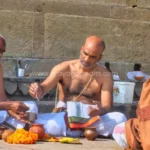
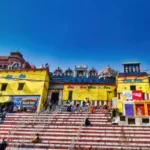
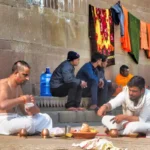
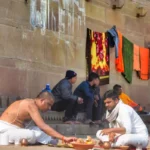
Pind daan in Varanasi this Pitrupaksha 2026
₹7,100
₹9,100
22% off
per family · all-inclusive
Verified Pandits
Since 2019
All Samagri Included
Free Cancellation
Why Families Choose Us
How It Works
1
Book & Confirm Your Date
Select your preferred date and complete the booking. Our team calls you within 2 hours to confirm details.
2
Share Family Details
Provide gotra, departed soul's name, and any requirements. Don't know your gotra? Our pandits will help.
3
Ritual Performed at Sacred Site
A Veda-trained pandit performs the complete ceremony as per shastra at the designated holy teerth.
4
Confirmation & Documentation
Booking confirmation on WhatsApp. Digital documentation available on select poojas within 48 hours.
What's Included
- Pind Daan at Ganga Ghat, Varanasi (Pitrupaksha 2026)
- Experienced Varanasi-trained pandit
- Complete samagri (Pind ingredients, sesame, kusha, Gangajal, flowers, incense)
- Sankalp with family name, gotra & ancestor names
- Pre-ceremony guidance
What's Not Included
- Travel to Varanasi
- Accommodation
- Station / airport pickup & drop
- Boat ride (ghat-based ceremony; available as add-on)
- Asthi Visarjan / Shradh (separate services)
- Photography / videography
- Extra Dakshina/Gifts/Donations made to the Priest/Pandit
About This Ritual
Lord Vishnu is said to love Varanasi so deeply that he calls it his own stomach — the seat of his inner life, the most protected and nourishing part of his divine body. The Kashi Khand of the Skanda Purana puts it this way: Kashi is the udar — the belly — of Vishnu, the place he holds most dear. And it is here, in the eternal residence of both Shiva and Parvati, on the banks of the Ganga that flows northward against natural geography, that Pind Daan becomes an act witnessed and blessed by the highest divine powers simultaneously.
Pind Daan in Varanasi during Pitrupaksha 2026 is among the most complete and meritorious ancestral offerings a family can make. The city itself is a living deity. Every act of worship performed here occurs in the presence of Shiva, Vishnu, and the Ganga in her most sacred form. Your ancestors receive the pind you offer not just from your hands but from the hands of this extraordinary divine convergence.
Our package is priced at ₹9,100 and includes experienced multilingual purohits capable of conducting the ritual in Tamil, Telugu, Hindi, English, Kannada, Odiya, Marathi, and Bengali, along with all ritual samagri. Families from across India can come to Varanasi and be served by a pandit who speaks their language and knows their regional traditions.
Why Varanasi for Pind Daan — The Scriptural Basis
Varanasi's relationship with ancestral liberation begins with Shiva's own promise, recorded in the Kashi Khand: every soul that departs within Kashi's sacred geography receives the Taraka Mantra — the liberation mantra — whispered directly by Shiva at the moment of death. This promise makes Kashi unique: it is the only place on earth where liberation is guaranteed for the departing soul, regardless of karma.
This divine guarantee extends to Pind Daan performed here. When you offer pinds to your ancestors in Varanasi, you do so in the city where death itself has been transformed into a doorway to liberation. The Ganga, which flows backward here from south to north — called the Uttarvahini Ganga — is considered the most potent section of the entire river, the stretch where the river herself turns to face her source. Offerings made to this stretch of the Ganga carry extraordinary transmission.
The Linga Purana places Varanasi among the supreme teerths for Pitr Karma specifically because of the combination of Shiva's presence and the Uttarvahini Ganga. It states that Pind Daan at Varanasi liberates ancestors across ten generations — a scope matched only by Gaya and Prayagraj among all sacred locations.
Those considering Pind Daan at Gaya for comparison can read our guide on the relative costs and logistics: Gaya Pind Daan Cost and Planning Guide.
The Sacred Ghats for Pind Daan in Varanasi
Varanasi's 84 ghats are each unique. For Pind Daan specifically, our purohits conduct the ceremony at four principal ghats, each chosen for its specific spiritual character and ancestral significance.
Raja Ghat
One of the quieter and more serene ghats of Varanasi, Raja Ghat offers a contemplative atmosphere particularly suited to ancestral rites. Away from the high traffic of the central ghats, it allows families to perform Pind Daan with focus and peace. It is associated with royal patronage and has been a place of Shraddh for generations of prominent families from across northern India.
Dashashwamedh Ghat
The most central and most energetically charged of Varanasi's ghats, Dashashwamedh is where Brahma performed the ten horse sacrifices that invited Shiva to return to Kashi. This accumulated merit makes Dashashwamedh an extraordinarily powerful location for any ritual. Pind Daan performed here occurs at the spiritual heart of the city, in the same space where one of the earliest divine Yagnas in creation was conducted. The evening Ganga Aarti held at this ghat is the most famous in the world — that same energy permeates the ghat throughout the day.
Panchganga Ghat
The name reveals its significance: Panchganga Ghat is the confluence of five sacred rivers — Ganga, Yamuna, Saraswati, Dhutapapa, and Kirana. Wherever rivers meet in the Hindu tradition, spiritual merit is multiplied. Panchganga thus offers what a single river cannot: the combined blessing of five sacred waters simultaneously. Pind Daan here reaches ancestors through a fivefold channel of transmission, making it particularly recommended for families with many ancestors to honour or complex ancestral situations to resolve.
Manikarnika Ghat
The most sacred of all Varanasi's ghats for matters of death and liberation, Manikarnika is the primary cremation ghat, where fires have burned continuously for thousands of years. According to Puranic tradition, the earring (manikarnika) of Sati fell here, and Shiva danced in grief at this spot. It is where Shiva's presence is most intense, where his promise of liberation is most immediately felt. For ancestors who may not have departed in auspicious circumstances, Pind Daan at Manikarnika is considered particularly powerful — Shiva's grace here is described as extending even to those who departed under difficult conditions.
Our pandit will recommend the most appropriate ghat for your family's specific needs and circumstances. For families with particular ancestral situations, we may recommend combining two or more ghats for the complete ceremony.
Pitrupaksha 2026 — When to Come
Pitrupaksha 2026 falls in September-October 2026, during the Ashwin Krishna Paksha — the dark fortnight of the Ashwin lunar month. It begins on the day after Bhadrapada Purnima and ends on Sarva Pitru Amavasya (Mahalaya Amavasya).
During Pitrupaksha, the ancestors are said to descend toward the earthly realm and wait for their descendants to remember them. At no other time of year are they as accessible or as easily reached by the offerings of the living. In Varanasi during Pitrupaksha, the ghats fill with thousands of families performing Shraddh and Pind Daan — the collective energy of this mass ancestral devotion creates an atmosphere of extraordinary spiritual intensity.
Specific dates within Pitrupaksha are assigned to specific kinds of ancestors based on how they departed. If your father died on a Chaturdashi, for instance, you would perform his Shraddh on the Chaturdashi of Pitrupaksha. Our pandits provide guidance on the correct tithi for your specific circumstances. Sarva Pitru Amavasya (the final day of Pitrupaksha) is universally valid for all ancestors and is a particularly good date for those uncertain of the correct tithi for individual ancestors.
Our Multilingual Purohits — Serving Families from Across India
Varanasi has always drawn pilgrims from every corner of India. Families from Tamil Nadu, Andhra Pradesh, Karnataka, Kerala, Maharashtra, West Bengal, Odisha, and every other region come to perform Pind Daan in Kashi. Recognising this, we have assembled a team of purohits who are fluent in multiple Indian languages and who are trained in the regional traditions of Shraddh practice specific to different parts of the country.
Our purohits conduct the ritual in:
- Hindi — for families from North India, Uttar Pradesh, Bihar, Madhya Pradesh, and Rajasthan
- Tamil — for families from Tamil Nadu
- Telugu — for families from Andhra Pradesh and Telangana
- English — for NRI families and those more comfortable in English
- Kannada — for families from Karnataka
- Odiya — for families from Odisha
- Marathi — for families from Maharashtra
- Bengali — for families from West Bengal
This is not merely about language. Different regional traditions have specific customs within the Shraddh ceremony — the way the pind is prepared, which additional prayers are included, which lineage deities are invoked. Our multilingual pandits are trained in these regional specifics, ensuring that your family's traditions are honoured correctly alongside the standard Vedic procedure.
What Is Pind Daan — The Ritual and Its Meaning
Pind Daan is the offering of pinds — balls of cooked rice mixed with sesame seeds, honey, ghee, barley flour, and sometimes milk — to the departed ancestors. The rice ball serves as a symbolic body for the ancestor's subtle being, providing the nourishment and material support that the soul needs as it moves through the intermediate realm between death and rebirth.
The Garuda Purana describes in considerable detail how the subtle body of a departed soul depends on the Shraddh offerings of its descendants during the period after death. Pind Daan is the most tangible and complete form of this nourishment. When performed correctly at a sacred location by an experienced pandit with sincere family participation, the pind reaches the ancestor directly and provides everything they need for their continued journey.
The act also creates an ongoing bond between the living and the departed — a bond of love and remembrance that the texts say benefits both sides of the veil. The ancestors are nourished and uplifted; the descendants receive the blessings of satisfied pitrs, which manifest as health, harmony, prosperity, and the gradual dissolution of any Pitr Dosha affecting the family.
Step-by-Step Process of Pind Daan in Varanasi
Arrival and Preparation
You are received at the designated ghat by your pandit. After a brief discussion of your family's details and the ancestors to be honoured, you perform ritual bathing in the Ganga — even a brief immersion or the ritual sprinkling is sufficient — to purify yourself before the ceremony.
Sankalpa
The ritual opens with the formal Sankalpa declaration: your name, gotra, city, the current auspicious time, and the precise intention of the ceremony — naming the ancestors you honour and the purpose of the offering. This is the spiritual contract that directs the entire ritual's energy toward your specific departed.
Pind Preparation
The pandit prepares or blesses the pinds — rice balls mixed with sesame, honey, and ghee — while reciting purification mantras. You participate in this stage by touching the pinds and declaring your intention.
Offering the Pinds
Facing south, each pind is offered with the name of the ancestor being honoured and the appropriate mantras. The pandit recites the full lineage (gotra) of the ancestor with each offering. Pinds are offered separately for the paternal father, grandfather, and great-grandfather, and separately for the maternal grandfather, great-grandfather, and great-great-grandfather. Additional specific ancestors can be named.
Tarpan
Following the pind offering, water Tarpan is performed — cupping Gangajal with sesame and barley and offering it southward to the same ancestors. This ensures both the symbolic body (pind) and the nourishing water (Tarpan) are offered together for completeness.
Closing Prayers and Blessings
The ceremony closes with prayers to Shiva, to the Ganga, and to Yama, requesting that the offerings reach the ancestors and be accepted. Blessings for the living family close the ritual.
Preparing for Your Visit
- Observe a fast or eat only sattvic food on the day of the ritual
- Wear clean, modest, preferably white clothing
- Bring names and approximate death dates of ancestors to be honoured
- Know your gotra — if unknown, the pandit will use Kashyap gotra as the default
- Come with time, without rush. This ceremony deserves your full presence.
Frequently Asked Questions
Is Varanasi or Gaya better for Pind Daan?
Both are among the supreme locations. Gaya is considered the highest specifically for Pind Daan — the Garuda Purana places it in a category of its own for the completeness of ancestral liberation it offers. Varanasi's advantage is its combination of Shiva's direct presence and Vishnu's love for the city — and Shiva's promise of liberation to all souls departing from Kashi. Families who cannot reach Gaya, or who wish to add Varanasi Pind Daan to a Gaya pilgrimage, find Varanasi an extraordinarily powerful and complete option.
Can I perform Pind Daan for my mother's side of the family as well?
Yes. The complete Pind Daan ceremony covers both the paternal lineage (pitr paksha) and the maternal lineage (matamah paksha) — the mother's father, grandfather, and great-grandfather. Let your pandit know before the Sankalpa that you wish to cover both lines, and they will include the maternal Sankalpa in the ceremony.
How long does the ceremony take?
The complete Pind Daan with Tarpan in Varanasi takes approximately 1.5 to 2 hours. For families honouring many ancestors or requesting additional prayers, the time may be slightly longer. Morning hours — particularly during Pitrupaksha — are the most auspicious timing and the most popular, so we recommend booking early morning slots well in advance.
Do I need to visit multiple ghats?
The ceremony is typically performed at one primary ghat selected by your pandit based on your circumstances. In some cases — particularly for families with complex ancestral situations or a desire for additional merit — the pandit may recommend a brief visit to a second ghat. This is discussed during the booking process.
What is the best time of day to perform Pind Daan?
Morning, specifically in the hours between sunrise and noon, is considered the most auspicious period for Pind Daan. The Kutub Muhurta — the period just around solar noon — is specifically mentioned in the Dharmashastra texts as auspicious for Shraddh. For Pitrupaksha ceremonies, we strongly recommend morning bookings as afternoons fill quickly. Visit our services page to book and discuss timing options with our team.
Pind Daan in Varanasi Cost — ₹7,100 All-Inclusive
Pind Daan in Varanasi (Kashi) costs ₹7,100 (regular price ₹9,100) — everything included, no hidden charges.
- Experienced Kashi Pandit — Purohit with knowledge of Varanasi ancestral rituals
- Complete Poojan Samagri — All items for pind preparation and offering
- Ghat Ceremony — Rituals at Dashashwamedh Ghat or Manikarnika Ghat
- Boat Puja on the Ganga — Sacred offering on the holy river
- Tarpan and Mantra Recitation — Water offering as per Vedic scriptures
- ceremony photographs and recording — Sent within 24 hours
Varanasi is mentioned in the Kashi Khand of Skanda Purana as a moksha-giving city. Performing Pind Daan here carries immense spiritual merit. For families who cannot travel, we offer Online Pind Daan in Varanasi.
What Families Say 4.1
My family performed Pind Daan through Prayag Pandits and it was a deeply spiritual experience. The location was serene and the pandit's chanting was beautiful. We felt connected to our…
First time booking online for a religious ceremony. Was skeptical but the service exceeded expectations.
We booked this for our grandfather's annual shradh. The ceremony was performed with great reverence. Pandit ji even shared stories from the Garuda Purana which were very enlightening for the…
We booked Pind Daan for our late father's shradh ceremony. The pandits were very knowledgeable and performed all rituals with proper Vedic mantras. The whole family felt at peace after…
Thoroughly impressed with the professionalism. The pandit ji was punctual and well prepared with all the samagri.
Third time booking with Prayag Pandits. Always reliable service. The pandits are well versed in the scriptures and perform rituals with full devotion. The pricing is fair and transparent. No…
Very professional service. The pandit ji explained every step of the ritual which helped us understand the significance. Everything was arranged well including the samagri. We are grateful to Prayag…
Had a wonderful experience. The booking process was easy and the ceremony was conducted with full devotion.
We had been wanting to perform Pind Daan for years but couldn't travel to India. This online service was a blessing. The entire ritual was done as per shastras. Thank…
After losing my father suddenly we needed guidance on the proper rituals. Prayag Pandits team was very compassionate and helped us through every step. The Pind Daan brought us immense…