No rituals selected yet.
Browse Pooja Packages →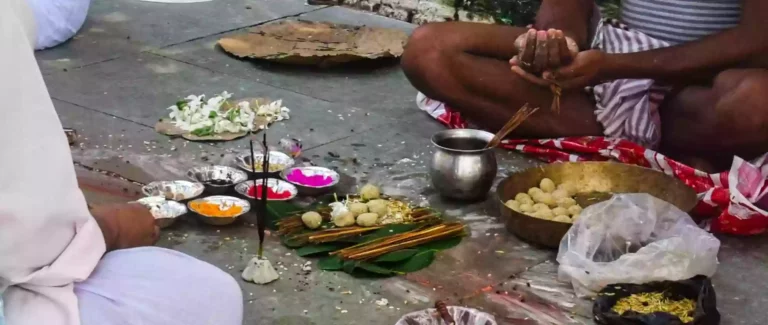 Save 32%
Shradh in Varanasi
Tripindi Shradh at Varanasi
Shradh in Varanasi is being performed at Raja Ghat and other Asthi...
from
₹21,000
₹31,000
Shraddha is a very meaningful and sacred practice in our Hindu tradition. It is a time, a ritual, where we honour and pay our respects to our ancestors, our pitrs, who have departed from this earthly life. The word itself comes from "Shraddha," meaning faith and reverence.
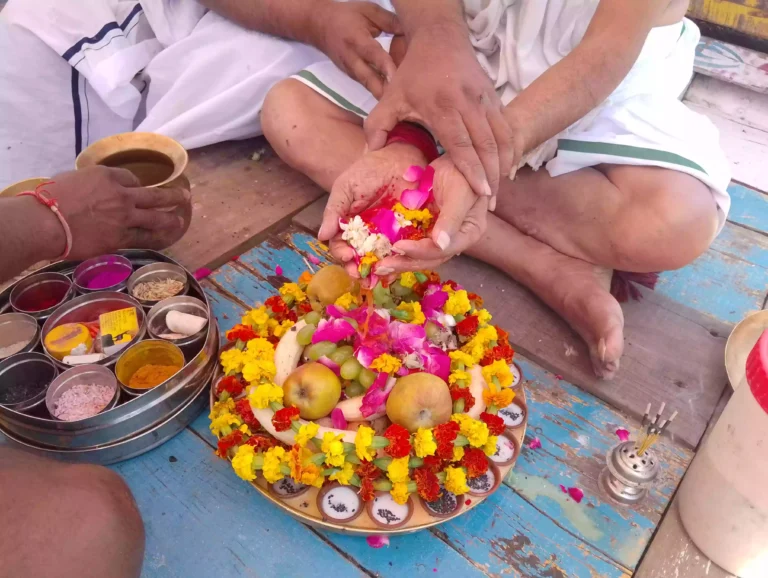
We perform these rites, often involving offerings of food like pindas (rice balls) and water (tarpan), to express our deep gratitude and love. It is believed these offerings nourish and support the spirits of our ancestors in their journey after death, bringing them peace and helping them towards liberation, or moksha. Performing Shraddha connects us to our lineage, repaying our debt to those who came before us. These ceremonies are usually performed on the death anniversary according to the Hindu calendar, and collectively for all ancestors during Pitru Paksha. It is a duty performed with sincerity, ensuring their well-being and seeking their blessings for the family.
In 2025, Pitrupaksha will commence on 7th September, and conclude with Mahalaya Amavasya on 21st September. Each day of this period is dedicated to performing Tarpan for different family members.
Here are the dates:
| Date | Name | Occasion |
|---|---|---|
| September 7 | Purnima Shraddha | Bhadrapada, Shukla Purnima |
| September 8 | Pratipada Shraddha | Ashwina, Krishna Pratipada |
| September 9 | Dwitiya Shraddha | Ashwina, Krishna Dwitiya |
| September 10 | Tritiya Shraddha | Ashwina, Krishna Tritiya |
| September 10 | Chaturthi Shraddha | Ashwina, Krishna Chaturthi |
| September 11 | Maha Bharani | Ashwina, Bharani Nakshatra |
| September 11 | Panchami Shraddha | Ashwina, Krishna Panchami |
| September 12 | Shashthi Shraddha | Ashwina, Krishna Shashthi |
| September 13 | Saptami Shraddha | Ashwina, Krishna Saptami |
| September 14 | Ashtami Shraddha | Ashwina, Krishna Ashtami |
| September 15 | Navami Shraddha | Ashwina, Krishna Navami |
| September 16 | Dashami Shraddha | Ashwina, Krishna Dashami |
| September 17 | Ekadashi Shraddha | Ashwina, Krishna Ekadashi |
| September 18 | Dwadashi Shraddha | Ashwina, Krishna Dwadashi |
| September 19 | Trayodashi Shraddha | Ashwina, Krishna Trayodashi |
| September 19 | Magha Shraddha | Ashwina, Magha Nakshatra |
| September 20 | Chaturdashi Shraddha | Ashwina, Krishna Chaturdashi |
| September 21 | Sarva Pitru Amavasya | Ashwina, Krishna Amavasya |
Shradh is a devotional rite performed in Varanasi to show homage to and serve the interests of deceased parents and ancestors. A person who does Shradh in Kashi with pure devotion and a calm mind is believed to be rid of all material world troubles.
As a result, everyone should be aware of the many sorts of Shradh and how to do it with the aid of a Pandit for Shradh in Varanasi in order to please one's parents and ancestors as well as for their personal well-being.
There is no other ritual in Kashi or elsewhere in the world that is more sacred and pure than Shradh, thus an enlightened being should endeavour to do Shradh in Kashi to assist his ancestors in moving on effortlessly to other planes of existence after death, thereby enhancing their spiritual journey.
Long life, health, money, success, intelligent children, positive energy, and a son who may continue the family lineage and bring prosperity are granted to those who conduct various sorts of Shradh.
The eldest son gets the first privilege to conduct Shradh karma with Tarpan or Pinddaan to the ancestors, according to Hindu scriptures.
Son can conduct Shradh with his wife after their marriage.
If the elder son is deceased, the younger son can execute Pinddaan, Tarpan, and Shradh karma as well.
In the absence of a son, Shradh karma might be performed by the grandchild of the son.
If a person does not have a son, his siblings might carry out Shradh karma on his behalf.
The daughter’s son has the right to conduct Shradh karma if the individual has exclusively daughters.
People flock to Varanasi or Kashi in pursuit of forgiveness and atonement for all of their sins committed during their lives, which may be found on the banks of the Ganga river. On the banks of the Ganga river, Shradh karma is also performed.
Select your package and complete booking. Our team calls within 2 hours to confirm details.
Provide your gotra, departed soul's name, and any special requirements.
Experienced pandit performs the complete ceremony at the sacred site.
Full ceremony video on WhatsApp within 24 hours. Digital certificate shared via email.
Save 32%
Shradh in Varanasi is being performed at Raja Ghat and other Asthi...
 Save 45%
Shradh refers to the offerings (food, etc.) presented to the Brahmans acting...
Narayani Shila Temple: Pandits specializing in this specific puja are available at the temple itself. This is often the best place to start. Online Platforms: Reputable websites that book Pandits for Haridwar rituals often list Pandits experienced in Narayan Bali…
Narayan Bali is a more elaborate ritual than standard Shradh. Costs in Haridwar can vary significantly based on the Pandit's experience, the number of Brahmins involved (for puja and bhoj), duration (usually 3 days), and included materials (samagri). Indicative ranges…
The primary and most significant location for performing Narayan Bali Puja in Haridwar is the Narayani Shila Temple, located near Mayapur. While preliminary rites like a holy dip might occur at a Ghat, the core rituals invoking Lord Vishnu for…
No, they are distinct but related rituals often performed together during Shradh. Tarpan: Offering water (with sesame seeds) to quench the thirst and provide satisfaction (Trupti) to ancestors. Pind Daan: Offering Pindas (food balls made of rice/barley flour) to provide…
If performed as a standalone ritual, the cost for a Pandit's guidance and basic materials for Tarpan might be relatively modest, perhaps ranging from ₹500 to ₹1500 or more, depending on the Pandit and duration. However, Tarpan is often part…
The essentials are simple: Water: Holy Ganges water is readily available at the Ghats. Black Sesame Seeds (Kala Til): Crucial for Pitru Tarpan. Kusha Grass (Darbha): Often used to make a ring (Pavitri) worn during the ritual and sometimes placed…
While the basic act of offering water can be done individually if one knows the procedure and basic intentions, having a knowledgeable Pandit (Tirth Purohit) from Haridwar is highly recommended, especially during specific events like Pitru Paksha or Shradh. The…
Tarpan is generally performed by men who have undergone the Upanayana (sacred thread) ceremony. Sons, grandsons, nephews, or any male relative can perform Tarpan for their ancestors. While traditionally less common for women to perform the water offering itself, they…