No rituals selected yet.
Browse Pooja Packages →Key observances
- Purnima Shraddha
- Pratipada Shraddha and Pitru Paksha begins
- Maha Bharani
- Navami Shraddha
- Dwadashi and Magha Shraddha
- Sarva Pitru Amavasya
Fiji: Pitru Paksha begins · 27 September
Sarva Pitru Amavasya · 10 October 2026A Fiji guide for Pitru remembrance
For Suva and the rest of Fiji, Pitru Paksha begins on 27 September and Sarva Pitru Amavasya falls on 10 October 2026. Fiji keeps one steady clock throughout the fortnight. Your family may therefore plan home remembrance with local guidance, or arrange physical Pinda Daan at Gaya, Prayagraj, Varanasi or Haridwar and join at a clearly confirmed Fiji time.
India is 6 hours 30 minutes behind FijiNo Fiji clock change during the fortnight
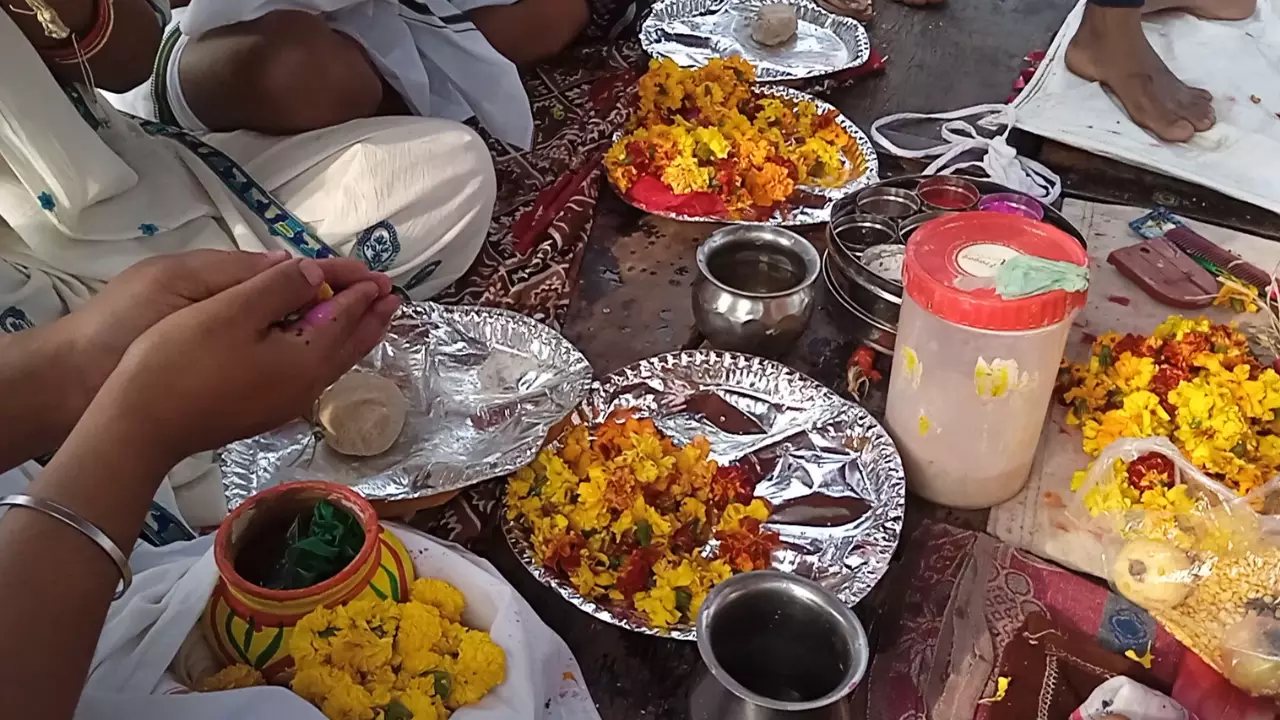
Four sacred tirthasGaya, Prayagraj, Varanasi and Haridwar
Family SankalpNames and gotra prepared respectfully
Live participationVia live video conferencing
Fiji time confirmedShared clearly before the ceremony
Suva panchang reference
The Suva calendar gives the civil dates below. Families in Nadi, Lautoka, Labasa, Ba and the outer islands use the same Fiji clock, while the particular Shraddha tithi should still follow any instruction already received from the family’s purohit or mandir.
Fiji remains on FJT
Throughout these dates, Fiji is six hours and thirty minutes ahead of India. For orientation, 7:30am in India is 2:00pm in Fiji, 9:00am is 3:30pm, and 10:30am is 5:00pm. These are examples only; the ceremony time is settled at the tirtha and then confirmed for your household.
Date reference: location-specific Shraddha calendar for Suva. Time reference: Fiji clock information for 2026.
Two different forms of participation
Tarpan or remembrance in Fiji
A family may pray, remember, give charity or perform a taught Tarpan practice at home. The mantra, direction, Karta and materials can differ by sampradaya, so local guidance is more helpful than copying a universal method from the internet. Prayag Pandits does not send a pandit to perform ceremonies within Fiji.
Read the Pitru Tarpan at-home guidePinda Daan at an Indian tirtha
For the featured sevas, the pandit prepares the Sankalp, pindas and stated samagri at Gaya, Prayagraj, Varanasi or Haridwar. Your family remains in Fiji and participates via live video conferencing while the rite itself is performed in India.
See India seva optionsThe spirit in which we remember
My dear family, Yajurveda 19.36 remembers the generations of parents, grandparents and great-grandparents through an offering made with reverence. When you are far from India, keep that same steadiness: give the pandit truthful family details, understand what is being performed, and join without fear or display.
Traditional reference: Yajurveda 19.36.Begin with the family’s actual need
Please tell us what has already been done and what the family now wishes to fulfil. That answer is more useful than choosing the largest arrangement.
For a family keeping the ancestor’s tithi or Pitru Paksha according to a taught household practice.
View Shradh and TarpanFor a family arranging the physical pinda offering at Gaya, Prayagraj, Varanasi or Haridwar.
Compare Pind Daan packagesChoose this only when ashes are to be carried or sent for respectful immersion. Pinda Daan itself does not require ashes.
View Asthi VisarjanNarayan Bali, Tripindi Shradh and Pitru Dosha Puja have distinct purposes. Do not substitute one for another without guidance.
See the NRI seva guideFour India destinations from Fiji
A family instruction comes first. When no place has been prescribed, compare where the rite occurs, what each seva includes and which Fiji joining time is practical for the Karta.
The physical ceremony remains at the selected tirtha in India. You join from Fiji via live video conferencing.
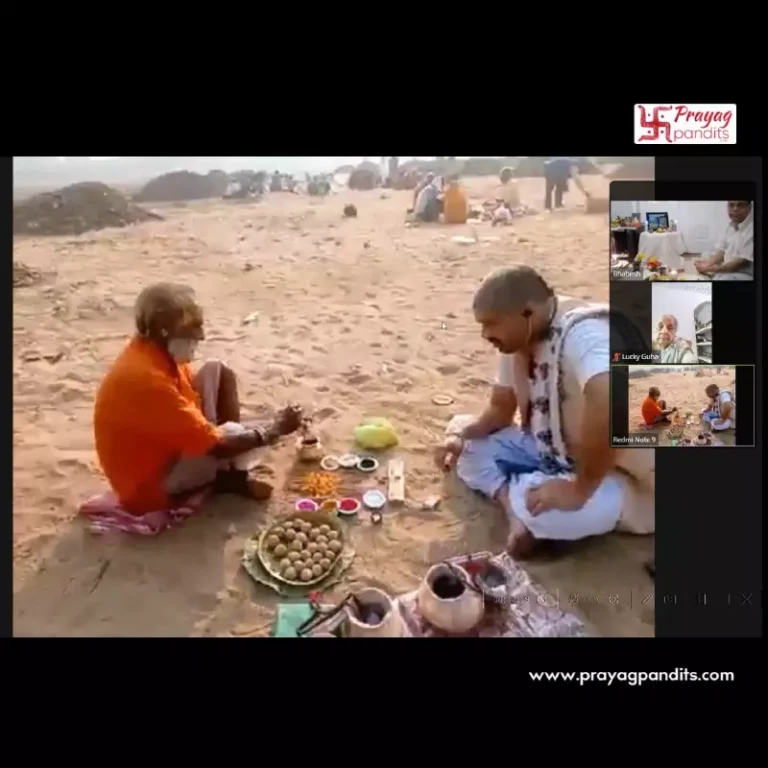
Vishnupad or Phalgu area
For a family choosing the Gaya Kshetra tradition at the Vishnupad or Phalgu area.
Pandit, samagri, family Sankalp and live participation
Please note: Tarpan, Brahmin Bhoj and Gau Daan are separate arrangements unless they are expressly named in the selected package.

Triveni Sangam
For a family seeking the ceremony at the confluence of the Ganga, Yamuna and Saraswati.
Pandit, samagri, family Sankalp and live participation
Please note: Travel, boat arrangements and other separate rites are not included in this online package.
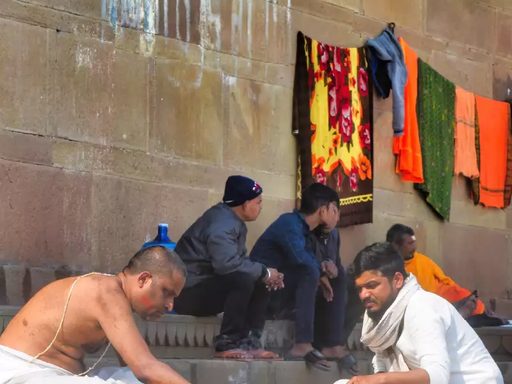
Ganga Ghat, Kashi
For a family wishing to offer Pind Daan in Kashi beside the sacred Ganga.
Pandit, samagri, family Sankalp and live participation
Please note: Tarpan, Asthi Visarjan, Narayan Bali and Tripindi Shradh are separate arrangements. Travel and optional donations are not included.

Har Ki Pauri
For a family wishing to offer Pind Daan where the sacred Ganga enters the plains.
Pandit, samagri, family Sankalp and live participation
Please note: Tarpan, Asthi Visarjan and other separate ceremonies are not included. Travel and optional donations are separate.
A clear family arrangement across the islands
Tell us whether the need is Pitru Paksha remembrance, Pinda Daan, Asthi Visarjan or another rite already advised.
One person can gather the Karta, ancestor, gotra and tithi details and keep relatives in different homes informed.
The India muhurta is converted by adding six hours and thirty minutes. Relatives outside Fiji receive their own local conversion.
Keep the device charged, sit together where possible, and join via live video conferencing a little before the confirmed time.
Families joining from several islands do not need separate bookings for the same Sankalp. Tell the coordinator how many households will connect so participation can be planned calmly.
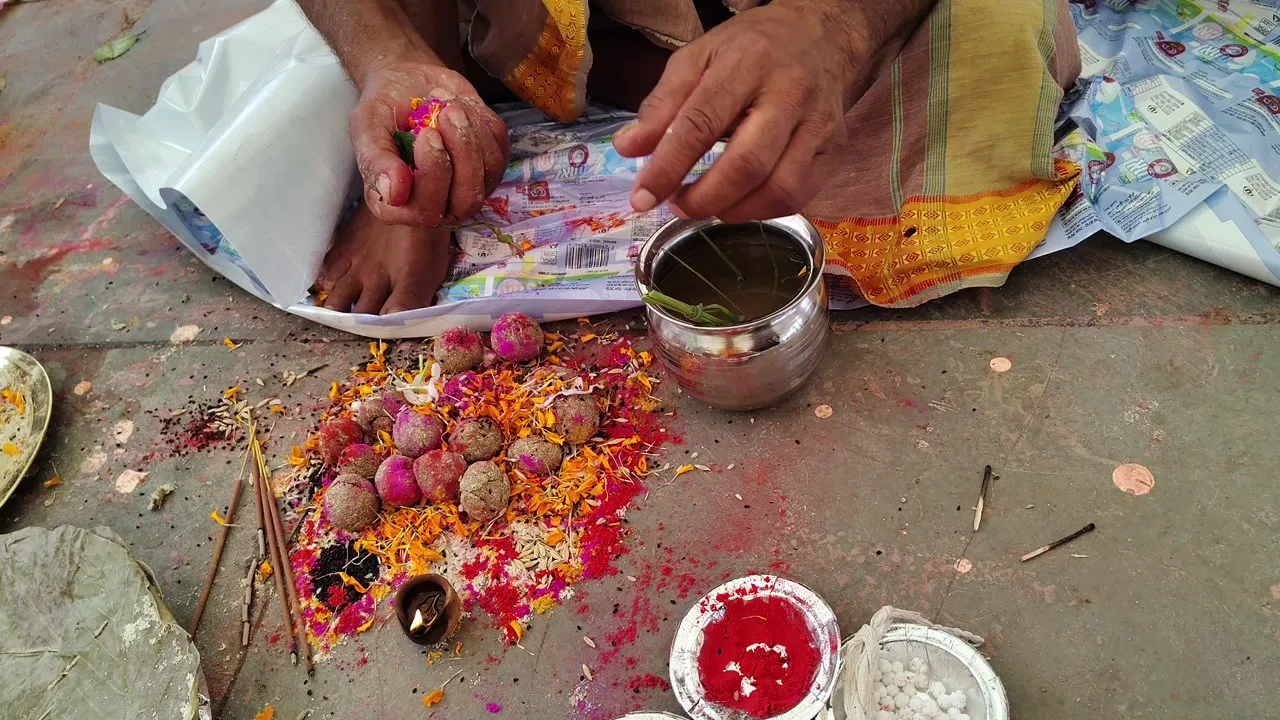
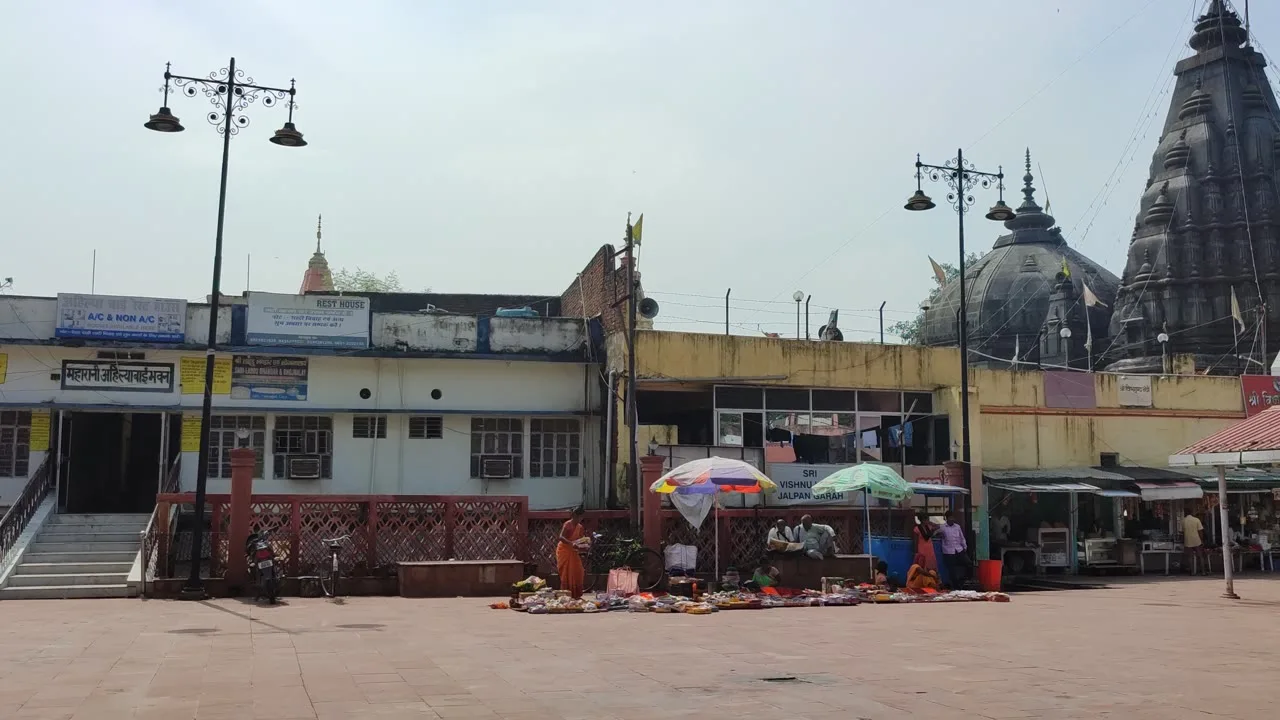
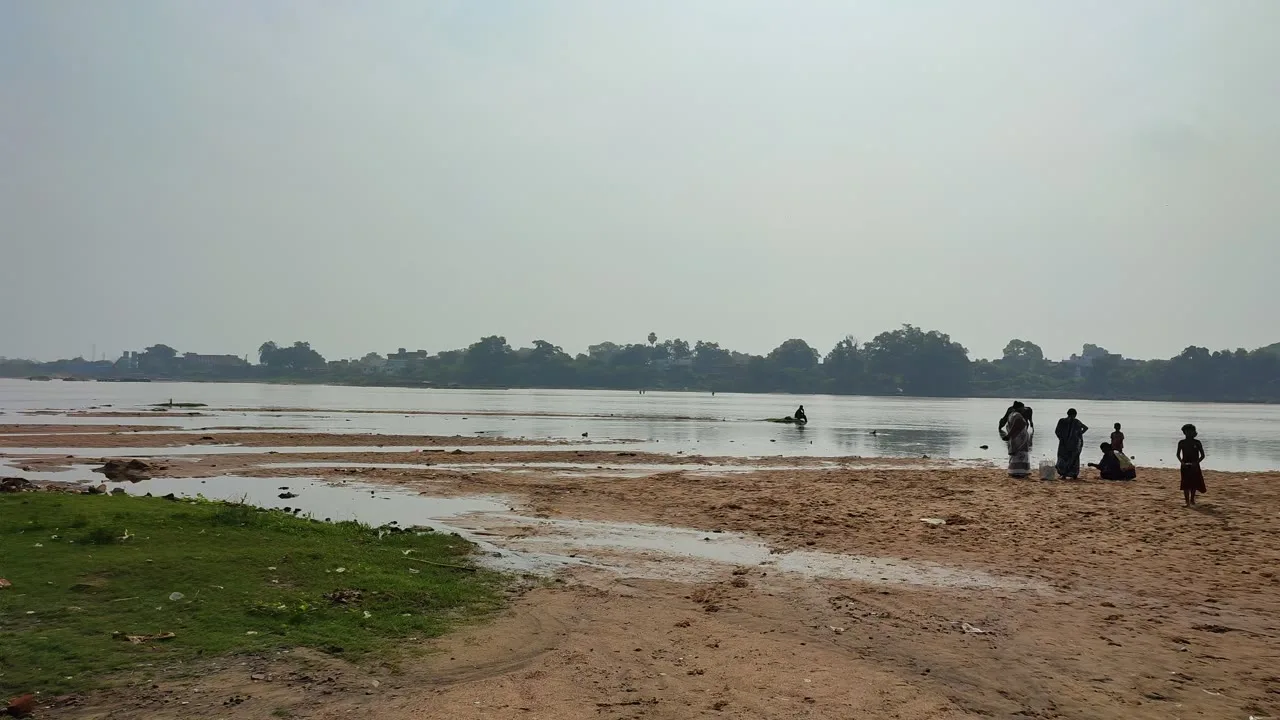
Supported from India
Read the selected product page once more before booking so the location, included rites and participation mode remain clear to the whole family.
Please read before booking
The 2026 Fiji calendar places Purnima Shraddha on 26 September, the opening Pratipada on 27 September and Sarva Pitru Amavasya on 10 October. These are useful civil dates for planning, but a death tithi or day already given by your own purohit remains the more personal instruction.
Fiji does not change clocks during the fortnight. The full period stays six hours and thirty minutes ahead of India, which is especially helpful for households coordinating between Suva, Nadi, Lautoka, Labasa and an Indian tirtha. You may consult the broader Shradh dates guide before settling the day.
Some Fiji families know the exact water-offering practice followed by their grandparents; others know only that they wish to remember with sincerity. If a method has been handed down, preserve it. If not, begin with prayer, a clean space, simple sattvic conduct and charity while you seek instruction from a local purohit.
The Karta, Sankalp, direction, kusha, sesame and mantra are not identical in every tradition. A mantra written in English letters is useful only when its context and pronunciation have been taught. Our Pitru Tarpan guide explains the purpose without presenting one formula as universal.
Pinda Daan may arise within immediate post-death observances, an annual remembrance, Pitru Paksha or a later journey to a tirtha. These occasions are related, but they are not one repeated transaction with a fixed number for every family.
Tell the pandit which rites were performed after the death, whether the first annual Shraddha has passed, and whether an elder has asked the family to visit a particular tirtha. If ashes are involved, remember that Asthi Visarjan is a separate arrangement.
When no son is available, many traditions allow a daughter, spouse or another appropriate relative to serve as Karta or participate meaningfully. The exact choice should respect the family’s sampradaya, living relationships and any instruction already received.
Prepare the proposed Karta’s name, the ancestors’ names and relationships, gotra and death tithi if known. When a name, gotra or date has been lost across generations, say so honestly. The Pind Daan family eligibility guide discusses these circumstances carefully.
A family may be spread between Viti Levu, Vanua Levu, Australia, New Zealand, Canada or the United States. Nominate one coordinator to confirm ancestor details and the intended Karta, then provide the location of every household that wishes to connect.
The Fiji time stays stable, while overseas relatives may have different clock rules. Each household receives a local conversion for the same India ceremony. On the day, gather a little early in a quiet room and participate via live video conferencing as the pandit guides the Sankalp.
Gaya, Prayagraj, Varanasi and Haridwar are all available for online Pind Daan. When no place has been prescribed, read the complete NRI Pind Daan destination guide, compare the physical location and the included rites, and then open the selected product page before paying.
PayPal checkout accepts international cards. After payment, the coordinator verifies availability, receives the Sankalp details and confirms the exact Fiji joining time. The appointed pandit, samagri and physical offering remain at the chosen tirtha in India.
Fiji family questions
Begin with the question that brought your family here. These answers address Fiji’s steady time difference, home remembrance, the Karta and arranging a physical ceremony in India.
For Suva, Purnima Shraddha is on 26 September, Pratipada Shraddha begins the fortnight on 27 September, and Sarva Pitru Amavasya is on 10 October 2026. A tithi already given by your family purohit or mandir should come before a general list.
No. Fiji remains on FJT throughout the period, six hours and thirty minutes ahead of India. Once an India ceremony time is settled, its Fiji conversion remains straightforward.
Use the method taught in your family, because the Karta, Sankalp, direction, materials and mantra can vary by sampradaya. If no method has been taught, please receive guidance from a trusted local purohit before offering water.
There is no single transliterated mantra that should be prescribed to every household without context. Ask which mantra belongs to your tradition and learn its pronunciation and meaning; sincere remembrance does not require guessing.
Household disciplines differ. Keep the days sattvic and respectful, and follow restrictions actually received from your elders or purohit. Do not become anxious because another family follows a different rule.
Yes. “Pinda Daan” is a common way of writing the same name. The rite centres on offering pindas for the ancestors under proper Sankalp and guidance.
There is no responsible one-number answer for every family. The rite may belong to immediate post-death observances, an annual remembrance, Pitru Paksha, or a tirtha visit. Explain what has already been performed and follow the family’s prescribed sequence.
Many traditions permit a daughter, wife or another appropriate woman to participate, especially when no son is available. The proposed Karta should be settled with regard to the family’s sampradaya and circumstances before the ceremony.
Tell the pandit what is truly known—the relationship, remembered name and any family history—and say plainly what is unknown. The Sankalp can then be prepared with proper guidance; there is no need to invent a detail.
This depends on the ancestor for whom the rite is intended and on your tradition. Share which parents and grandparents are living before choosing the Karta or package so the situation can be understood correctly.
No. Ashes are not required for Pind Daan. Asthi Visarjan is a separate rite and should be arranged separately when the family needs respectful immersion in India.
The featured online Pind Daan arrangements are available in Gaya, Prayagraj, Varanasi and Haridwar. Begin with a tirtha already named by an elder or family priest; otherwise, read each package scope before deciding.
Yes. Choose one family coordinator, then tell us who will join from Suva, Nadi, Lautoka, Labasa or elsewhere. Relatives in Australia, New Zealand, Canada, the United States or another country receive their own converted joining time.
Prepare the proposed Karta’s name, ancestor names and relationships, gotra and death tithi if known, the preferred tirtha, and any instruction already given by an elder or priest. One coordinator helps keep these details consistent.
Yes. PayPal checkout is available and international cards are accepted. Review the chosen package and amount shown at checkout, then the coordinator will confirm availability and the Fiji joining time.
Pitru Paksha · 27 September–10 October 2026
Gather what is known about the ancestors, keep any elder’s instruction beside you, and compare the four tirtha packages. When the family is ready, PayPal checkout accepts international cards and the confirmed Fiji time will be shared before the ceremony.