Kurukshetra ritual guidance

Asthi Visarjan in Kurukshetra

Asthi visarjan at Sannihit Sarovar,
the water tradition calls Vishnu's own, on Dharmakshetra.

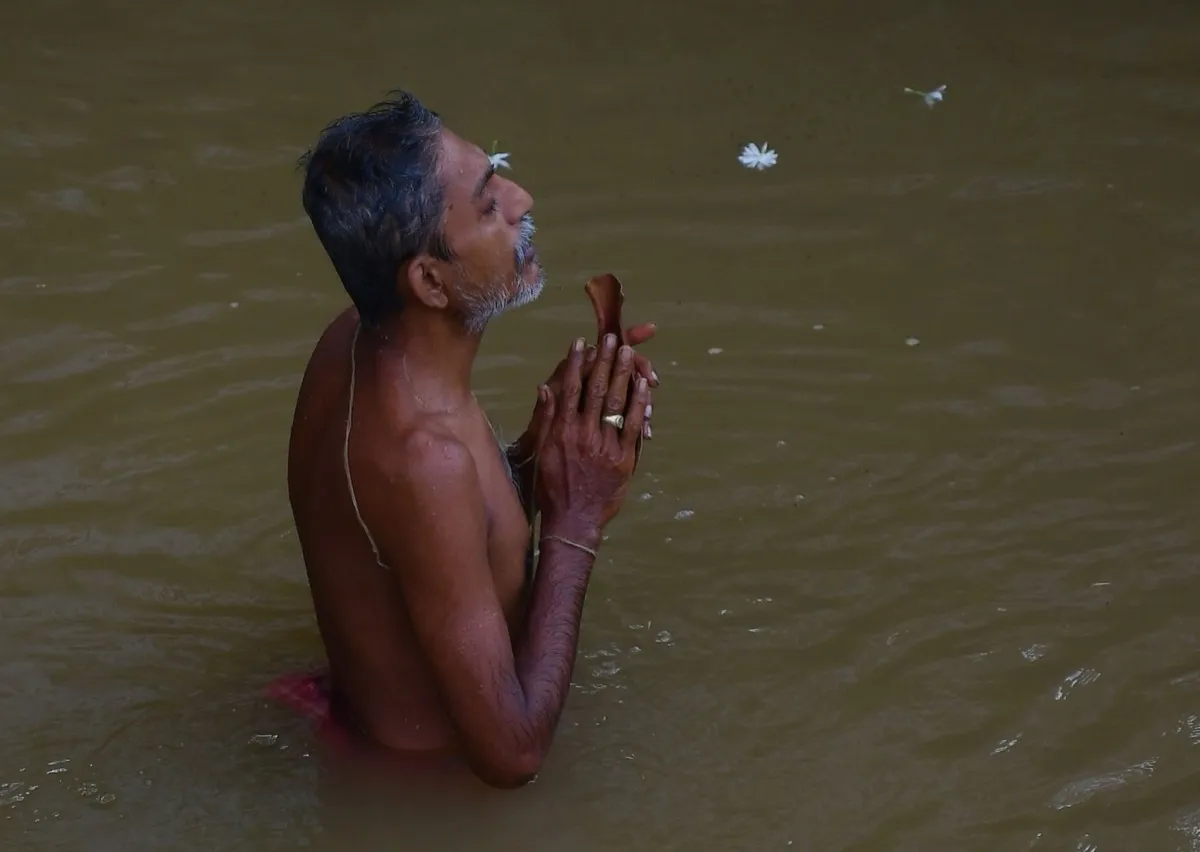
Immersion of the asthi at Sannihit Sarovar, Pehowa Road, three kilometres from Kurukshetra — performed by a Kurukshetra Tirth Purohit. Ideally inside the Garuda Purana day-ten window, and valid years later with a short Prayaschitta rite.

✓ Verified Pandits ✓ Clear Package Details 🕉 Vedic Vidhi 📦 All Samagri Included
2,263+
Families served since 2019
1
Curated packages
11
Sacred cities covered
Asthi visarjan ceremony at Sannihit Sarovar, Kurukshetra
Sannihit Sarovar · Pehowa Road
Kurukshetra, Haryana
Verified arrangement
Starting from
₹7,100 ₹11,000 Save 35%
Choose package →
Step 02 · Choose your package

Choose the arrangement
that fits your family

Every package includes an experienced Vedic pandit and the required puja samagri. The difference is in boat, location, stay, and tradition.

Showing 1 of 1 packages
Not sure which package fits? Talk to a family advisor — free, no obligation. We reply on WhatsApp Mon–Sat 10AM–9PM.

What's included

Every package is complete
no pressure for "extra dakshina" on the day

We've seen too many families face hidden boat fees, samagri costs, and "dakshina" pressure on the day. Here's exactly what's covered, and what isn't.

Included

Experienced Kurukshetra Pandit

Verified Tirth Purohit from the Sannihit Sarovar ghats — the lineage that conducts asthi visarjan, pind daan and shradh at the sarovar, including the dense Amavasya and eclipse days.

Included

All Puja Samagri

Til, jau, kusha, gangajal, flowers, white cloth and the kalash offerings — laid out at the sarovar before the family arrives. The samagri is offered to the asthi kalash during the vidhi, before the immersion itself.

Included

Package add-ons available

Darshan at Brahma Sarovar, at Jyotisar where the Bhagavad Gita was given, or at the Sthaneshwar Mahadev and Bhadrakali temples can be added to any in-person package. Combined pind daan or shradh at the sarovar is arranged on request.

Included

Family Coordinator

One person on WhatsApp through your entire booking — fluent in Hindi, English and major regional languages. Urgent day-ten bookings are handled on the phone rather than by form.

Included

Same-day Confirmation

WhatsApp message from the Kurukshetra pandit the same evening, naming the departed and the gotra for whom the immersion was performed.

Included*

Sannihit Sarovar coordination

The immersion is performed at <strong>Sannihit Sarovar</strong>, held in tradition to be the abode of Vishnu, on Pehowa Road about three kilometres from Kurukshetra. Shrines line its banks, and tradition holds that bathing in its waters brings peace to spirits still wandering. We arrange the ghat, the purohit and the samagri — and we book early for Amavasya and eclipse days, when the sarovar is at its most crowded.

Not included

Travel to Kurukshetra

Not included. Kurukshetra is in Haryana on the Delhi–Ambala corridor, with its own railway station; Delhi IGI is the nearest airport. Most families from Delhi NCR do it as a same-day trip. If you are inside the day-ten window, call rather than book online.

Not included*

Hotel / Accommodation

Not included in the base package. Rooms are scarce around an eclipse date, so tell us early if you need one held.

Not included

Cremation services

We do not arrange cremation. This package begins with the asthi already collected in the kalash and covers the immersion vidhi at Sannihit Sarovar.

Step 03 · How it works

Four steps.
We carry the rest.

From your first call to same-day confirmation — we handle every coordination, so the family can focus on what matters.

  1. Book & confirm

    Choose the package and complete payment online, or call if you are inside the day-ten window. Our team confirms the sarovar slot within 2 hours.

    ~ 5 minutes

  2. Share family details

    Provide the gotra, the name of the departed, the date of cremation, and where the kalash is now. Tell us if the asthi have been held beyond ten days — that changes the vidhi, not the validity.

    ~ 10 minutes

  3. Visarjan at Sannihit Sarovar

    The purohit performs the full vidhi at the sarovar — Sankalp in your name and gotra, the samagri offered to the asthi kalash, the prescribed mantras, then the immersion.

    45–120 min

  4. Confirmation & report

    Same-evening WhatsApp confirmation from the Kurukshetra pandit. Photos and video are opt-in add-ons.

    Same day

Start with WhatsApp We respond within 2 hours · No commitment required

When to perform

When to perform asthi visarjan at Kurukshetra — inside the day-ten window, and on Amavasya or an eclipse

The asthi are collected into the kalash on the third, seventh or ninth day after cremation and the immersion is ideally completed before the tenth. Practice varies by community and region, and the sound general principle is to perform it as soon as the family reasonably can. Late carries no penalty: for asthi held through migration, inherited custody or a family that simply could not travel, a short Prayaschitta rite restores the standing and the visarjan proceeds as normal, years later if need be. The kalash should not be kept inside the house while it waits. Kurukshetra adds a timing of its own: tradition holds that thousands of tirthas gather at Sannihit Sarovar on Amavasya and during a solar eclipse, and that rites performed then, with a bath in the sarovar, carry the merit of a thousand Ashwamedha sacrifices. Those are the densest days of the year here — book two to three weeks ahead for them.

  1. Day 1 Cremation
  2. Day 3 Collect
  3. Day 7 Kalash
  4. Day 10 Ideal
  5. Year+ Still valid

Performed by Tirth Purohits at Sannihit Sarovar, Kurukshetra since 2019

Two ways to perform

In-person at the sarovar,
or online from anywhere

Travel to Kurukshetra

Performed by your own hands at Sannihit Sarovar under a Kurukshetra Tirth Purohit. The karta recites the Sankalp, the samagri is offered to the kalash, and the karta performs the immersion.

  • Karta performs Sankalp & immersion personally
  • Sannihit Sarovar, Pehowa Road — 3 km from Kurukshetra
  • Amavasya and eclipse days available — book early
  • Add Brahma Sarovar, Jyotisar or Sthaneshwar darshan

Starts at ₹7,100

Online for NRI families

For families abroad or unable to travel, and for asthi already held in India while the family is not. The Sankalp is recited remotely in your name and gotra, the Kurukshetra purohit performs the visarjan at the sarovar as your Pratinidhi, and you join by live video. Arranged on request — ask us and we will confirm the date and the cost.

  • Live Zoom / WhatsApp ceremony
  • Purohit as Pratinidhi per Angirasa Smriti
  • Names & gotra confirmed remotely before sankalp
  • Same scriptural validity as physical presence

Starts at

Complete guide

Asthi Visarjan in Kurukshetra
everything families ask before booking

An editorial reference covering the ritual, the place, eligibility, timing, and what to keep ready — written for families weighing the decision.

About Asthi Visarjan

Asthi Visarjan in Kurukshetra

Book Online and Offline Asthi Visarjan in Kurukshetra Packages

Asthi visarjan at Kurukshetra is performed at Sannihit Sarovar on Pehowa Road, about three kilometres out — the tank tradition holds to be Vishnu’s own abode, with shrines along its banks and water said to bring peace to spirits still wandering. The rite does not require a flowing river: the Ganga is the most preferred water but not the only valid one, which is why families across Haryana, Punjab and Delhi NCR come here rather than travelling further. The asthi are collected into the kalash on the third, seventh or ninth day and the immersion is ideally completed before the tenth; held longer, a short Prayaschitta rite restores the standing and the visarjan proceeds as normal. Immersion at the sarovar is ₹7,100, and pind daan at the same sarovar can be sequenced into the same day.

  • 2,263+ Families Served Since 2019
  • Pooja Samagri Included
  • Experienced Pandits
  • 4.8/5 Average Rating
  • Online Pooja Available

What's Included

Included

  • Experienced Vedic Pandit
  • All Puja Samagri & Materials
  • Ceremony update on WhatsApp
  • Coordination support before the ritual

Not included

  • Travel to Kurukshetra
  • Hotel / Accommodation

How It Works

  1. 01

    Book & Confirm

    Select your package and complete booking. Our team calls within 2 hours to confirm details.

  2. 02

    Share Family Details

    Provide your gotra, departed soul's name, and any special requirements.

  3. 03

    Ceremony Performed

    Experienced pandit performs the complete ceremony at the sacred site.

  4. 04

    Updates Shared

    The family receives ceremony updates on WhatsApp after completion.

Common questions about the procedure

What is the procedure for Asthi Visarjan at Kurukshetra?

The purohit begins once the samagri is laid out at the sarovar. He recites the mantras the texts and local custom prescribe, and the karta — the family member performing the rite — repeats the portions the purohit indicates. The samagri is offered to the asthi kalash through the vidhi. Before the immersion the purohit asks that the offering be accepted and that the departed be granted moksha, and the karta then performs the visarjan in the sarovar. Allow between forty-five minutes and two hours.

Why Kurukshetra, and where exactly is the rite performed?

At Sannihit Sarovar, held in tradition to be the abode of Vishnu, on Pehowa Road about three kilometres from Kurukshetra. Shrines line its banks, and tradition holds that bathing in its waters brings peace to spirits still wandering. The city itself is Dharmakshetra, the field of the Mahabharata, where Krishna gave the Bhagavad Gita to Arjuna at Jyotisar. Honest framing: Kurukshetra is not in the moksha trinity of Prayagraj, Varanasi and Gaya, and it is not Gangadvara at Haridwar. Those carry named single-verse Mahatmyas for the rite. Kurukshetra carries Dharmakshetra standing and the sarovar’s own tradition — and for families across Haryana, Punjab and Delhi NCR it is the sacred water they can reach inside the window that matters.

Does the rite have to be performed in the Ganga?

No. Doctrine is explicit that the Ganga is the most preferred river for asthi visarjan but not the only valid one — any flowing or sacred water serves, and a sarovar held in tradition to be Vishnu’s own abode certainly does. This is the point families most often ask about when they are choosing between Kurukshetra and a longer trip to Haridwar.

What is special about Amavasya and the solar eclipse here?

This is Kurukshetra’s distinctive timing, and no other city we serve has it. Tradition holds that thousands of tirthas gather at Sannihit Sarovar on Amavasya and during a solar eclipse, and that shradh performed then, with a bath in the sarovar, carries the merit of a thousand Ashwamedha sacrifices. Families come from across north India for those days, so the sarovar is at its most crowded and we book two to three weeks ahead. If your day-ten window happens to fall on one, say so when you call.

On which day should Asthi Visarjan be performed?

Practice differs by community and region, so the general principle is to perform it as soon as the family reasonably can. The texts have the asthi collected and placed in the kalash on the third, seventh or ninth day after cremation, with the immersion ideally completed before the tenth day. If that window has passed, see the next answer — the rite is not lost.

The asthi have been kept for years. Is it too late?

No. Late is never wrong. For asthi preserved beyond the day-ten window — through inherited custody, a family abroad, migration or partition-era displacement — a short Prayaschitta (expiation) rite is performed first, restoring the standing, and the visarjan then proceeds exactly as it would have. Tell the coordinator how long the asthi have been held so the purohit can prepare it.

Where should the asthi kalash be kept until the immersion?

Not inside the house. Tradition is firm: the kalash is kept outside the living space — in a garden, on a patio, or on nearby open ground — until the immersion. If you are travelling to Kurukshetra with it, the purohit takes charge of it at the sarovar.

Can the rite be performed if we cannot travel?

Yes. The Angirasa Smriti authorises Pratinidhi Karma — performance by a qualified representative — specifically where the karta is at a distance, and the Nirnaya Sindhu sets out the conditions. The Sankalp is recited remotely in your name and gotra, the Kurukshetra purohit performs the visarjan at the sarovar, and you join by live video. There is no separate online Kurukshetra package in the catalogue at present, so this is arranged on request.

Spiritual depth & scriptural detail

Drawn from puranic references and pandit consultations — for families who want to understand the ritual's meaning before booking.

Who can perform the immersion?
The eldest son holds the first authority, and after marriage he performs it with his wife; then the younger son, the grandson through the son, the brother, or the daughter’s son. Where no male relative is willing or able, daughters, daughters-in-law and mothers perform the rite in full and the purohit conducts it as he would for a son.
How long does it take, and what should we wear?
Between forty-five minutes and two hours at the sarovar. Wear plain, modest clothing and bring a change if you can — part of the rite is performed at the water. Nothing is expected of the karta in advance; the purohit indicates at the Sankalp what to recite and when.
What else is worth seeing on the same trip?
Most families add at least one. Jyotisar is where Krishna is held to have revealed the Bhagavad Gita to Arjuna. Brahma Sarovar is the great tank held in tradition to have been created by Brahma himself. The Sthaneshwar Mahadev temple and the Bhadrakali temple are the other principal shrines. Tell the coordinator and the day is sequenced around the sarovar slot.
How do we reach Kurukshetra?
Kurukshetra is in Haryana on the Delhi–Ambala corridor and has its own railway station; Delhi IGI is the nearest airport. Most families from Delhi NCR treat it as a same-day road trip. Travel is not included in the package — tell the coordinator your arrival time and the sarovar slot is set around it.
Can we combine the immersion with pind daan?
Yes, and the same Tirth Purohit lineage conducts both at the sarovar, so they can be sequenced in a single day. Say so when you book. See our Pind Daan in Kurukshetra page for that rite — note that it is currently arranged on request rather than sold as a fixed package.
Is there any pressure to pay more on the day?
No. The package covers the purohit, the full samagri, the sarovar coordination and the dakshina. Nothing further is asked of you. Anything outside it — travel, hotel, darshan, a combined rite — is priced before you book, never after.

Voices from families

“They were rescuers
in our most difficult time”

★★★★★

Being abroad makes it difficult to perform these rituals in person. The online asthi visarjan option was perfect for our family. We could participate from three different countries via the video call. Jai Shri Ram.

Jyoti Patel
Asthi Visarjan at Kurukshetra -Pehowa, Sannihit Sarovar
Verified
★★★★

The team was very sensitive to our emotions during this difficult time. The pandit performed every ritual with care and explained the significance in simple language. Truly grateful for this service. Jai Shri Ram.

Neha Yadav
Asthi Visarjan at Kurukshetra -Pehowa, Sannihit Sarovar
Verified
★★★★★

The coordination was excellent. We received all details well in advance. The puja was performed exactly as described.

Vivek Bajpai
Asthi Visarjan at Kurukshetra -Pehowa, Sannihit Sarovar
Verified

Frequently asked

Questions families ask us

Compiled from 2,263+ family conversations on WhatsApp and over the phone.

Why is Kurukshetra and Pehowa significant for Asthi Visarjan?

The Kurukshetra-Pehowa region holds deep significance for ancestral rites including Asthi Visarjan. Pehowa (ancient Prithudaka), 25 km from Kurukshetra, is situated on the banks of the Sarasvati River and is one of India's oldest Pitru Tirthas. According to the Mahabharata (Vana Parva), King Prithu performed the first formal Shradh ceremony at Pehowa, establishing it as a permanent sacred site for ancestral rituals.

Sannihit Sarovar in Kurukshetra — believed to be the confluence of seven underground Sarasvati streams — is another major site where Asthi Visarjan is performed. The Vamana Purana states that Lord Vishnu resides in the waters of Sannihit Sarovar, making ash immersion here exceptionally meritorious.

For families in Haryana, Punjab, and Delhi-NCR, the Kurukshetra-Pehowa region offers the most accessible sacred destination for Asthi Visarjan without the longer journey to Haridwar or Prayagraj.

Where exactly in the Kurukshetra region is Asthi Visarjan performed?

Asthi Visarjan in the Kurukshetra region is performed at two primary sites:

Pehowa (Prithudaka) — The traditional Pitru Tirtha town 25 km from Kurukshetra, on the banks of the Sarasvati River. Pehowa has dedicated ghats along the Sarasvati where Teerth Purohits conduct Asthi Visarjan, Shradh, and Pind Daan ceremonies. This is the primary destination for ash immersion in the region, with the Sarasvati's sacred waters considered ideal for releasing the departed soul.

Sannihit Sarovar — A large sacred reservoir (1,500 × 450 feet) located 2 km west of Kurukshetra Railway Station. The marble and red stone ghats have dedicated platforms for ancestral rites. While Sannihit Sarovar is more commonly used for Pind Daan and Tarpan, Asthi Visarjan is also performed here by families who prefer a single-location ceremony.

Many families perform Asthi Visarjan at Pehowa's Sarasvati ghats and then visit Sannihit Sarovar for Tarpan and Pind Daan in a combined pilgrimage.

What is the role of the Sarasvati River in Asthi Visarjan at Pehowa?

The Sarasvati River at Pehowa is central to the ancestral rites tradition of the Kurukshetra region. Unlike the Ganga — which is the most common river for Asthi Visarjan across India — the Sarasvati at Pehowa carries its own unique scriptural authority for ancestral offerings.

The Rigveda (Book 7, Hymn 95) praises the Sarasvati as "the best of rivers" and "the purest in her course from the mountains to the sea." The Mahabharata (Shalya Parva) describes the Sarasvati at Prithudaka as a site where performing ancestral rites grants the same merit as a thousand-year penance.

The Sarasvati at Pehowa flows as a modest stream today (unlike its Vedic descriptions as a mighty river), but its spiritual potency for ancestral rites remains undiminished according to local Teerth Purohit tradition. During Pitrupaksha, the ghats at Pehowa come alive with hundreds of families performing ash immersion and Shradh ceremonies along the riverbank.

When is the best time for Asthi Visarjan at Kurukshetra-Pehowa?

Asthi Visarjan at Kurukshetra-Pehowa can be performed year-round, with these periods carrying enhanced merit:

Pitrupaksha (September–October) — The supreme 16-day ancestral rites period. Pehowa's ghats see their highest pilgrim activity during this time.

Solar eclipse days — Kurukshetra has a unique scriptural connection with solar eclipses. The Mahabharata associates enormous merit with rituals performed at Kurukshetra during eclipses.

Somvati Amavasya — Monday new moon days are particularly auspicious for ancestral offerings at Sannihit Sarovar.

October to March is the most comfortable period for travel. Haryana summers (April–June) can exceed 45°C.

The Sarasvati at Pehowa typically has the best visible water flow during and after the monsoon (August–October), coinciding with Pitrupaksha season.

How much does Asthi Visarjan at Kurukshetra-Pehowa cost?

Prayag Pandits offers Asthi Visarjan at the Kurukshetra-Pehowa region with transparent pricing:

Basic Asthi Visarjan at Pehowa (from ₹5,100): Experienced Teerth Purohit at Sarasvati ghat, all samagri, complete Vedic ceremony, and photo documentation.

Standard with Brahmin Bhojan (₹7,100–₹11,000): Includes feeding of Brahmins, extended Tarpan.

Combined Pehowa + Sannihit Sarovar (₹9,100–₹15,000): Asthi Visarjan at Pehowa's Sarasvati ghats followed by Pind Daan and Tarpan at Sannihit Sarovar in Kurukshetra — both ceremonies in a single day.

Prayag Pandits also offers the Asthi Visarjan at Kurukshetra package starting from ₹7,100 (sale price), covering pandit, samagri, and complete ceremony at Pehowa and Sannihit Sarovar.

Can NRI families arrange Asthi Visarjan at Kurukshetra remotely?

Yes. Prayag Pandits provides complete remote Asthi Visarjan services at Kurukshetra's Sannihit Sarovar and Pehowa for NRI families worldwide.

You provide your family details (ancestor names, gotra, date of passing) via WhatsApp or email. Ship the asthi kalash to our coordination centre — we assist with country-specific shipping guidance for cremated remains. Our Teerth Purohit performs the ceremony at Pehowa's Sarasvati ghat or Sannihit Sarovar with proper Sankalpa in your family's name.

Live video participation via WhatsApp or Zoom is available during the ceremony. We send complete photo and video documentation within 3-5 working days.

Remote Kurukshetra Asthi Visarjan starts from ₹5,100. Payment accepted in INR, USD, GBP, SGD, AED, CAD, and AUD. Contact us on WhatsApp +91 77540 97777.

Can a daughter, wife, or woman perform Asthi Visarjan?

Yes, a daughter, wife, daughter-in-law, or other female relative can perform Asthi Visarjan when a son is unavailable. Scriptural texts restrict bone collection by lineage (kula) rather than by gender — the performer must belong to the mother's or father's family line. The Garuda Purana and later Smritis explicitly acknowledge female participation when the male line is absent. We regularly guide daughters, wives, and granddaughters through the complete Asthi Visarjan ceremony at Prayagraj, Varanasi, Haridwar, and Gaya. The ritual's spiritual efficacy is identical regardless of the performer's gender, provided the correct gotra, sankalpa, and mantras are invoked.

How soon after death should Asthi Visarjan be performed?

Hindu tradition recommends performing Asthi Visarjan as early as possible — ideally within the first year after death. The ashes should be collected on the 1st, 4th, 7th, or 9th day after cremation. If circumstances prevented earlier immersion, the ritual can still be performed years later and remains fully valid. Do not let the passage of time stop you from fulfilling this duty.

Free consultation

Talk to a family advisor
today

We’ll listen, understand your family’s situation, and recommend the right package — never push. Reply within 10 minutes on WhatsApp, every day.

  • Free consultation, no booking required
  • Same-day service available
  • Same-day WhatsApp confirmation
  • 2,263+ families served since 2019
  • GST registered · 09AZAPK2937R1ZR

Your Booking

🙏 Add ₹10,000 more for priority scheduling

No rituals selected yet.

Browse Pooja Packages →
Need help booking? Chat with us on WhatsApp