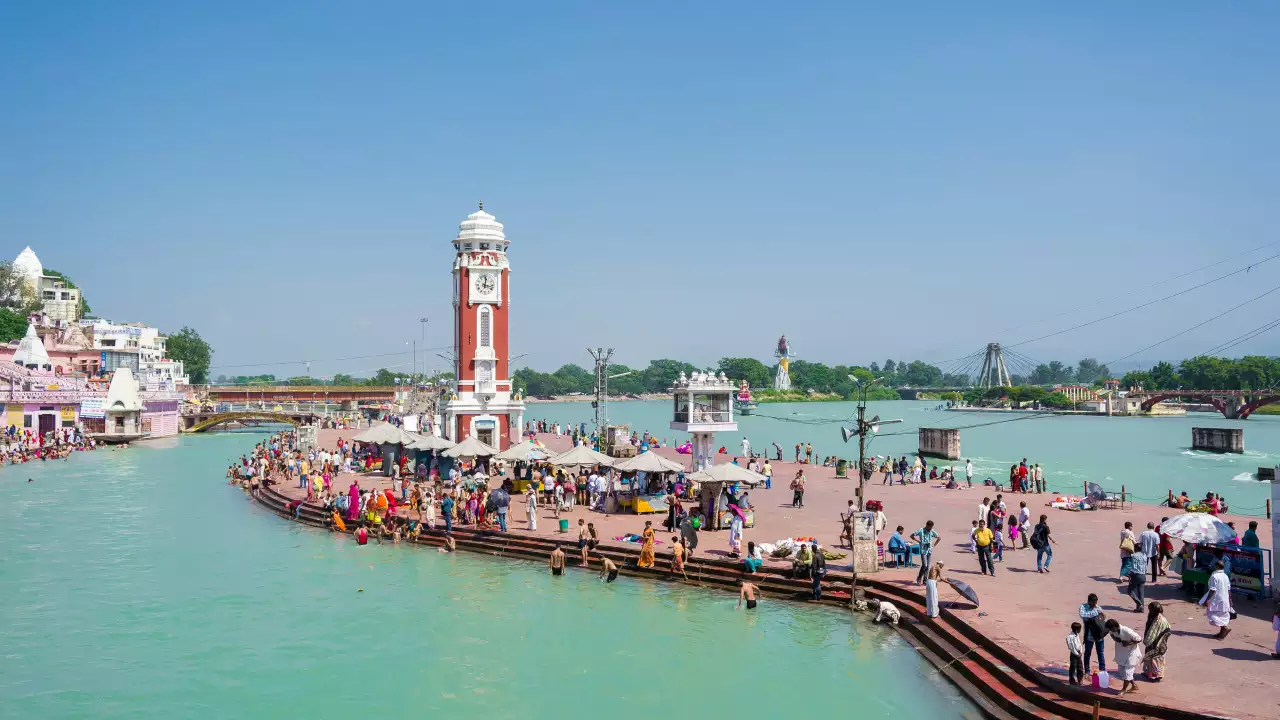
What materials are needed for Asthi Visarjan in Haridwar and Can they be obtained locally?
The primary item is the urn (Kalash), usually earthen, containing the ashes. Other items often used in the accompanying puja include flowers, incense, ghee,…
Questions about Asthi visarjan at Haridwar

The primary item is the urn (Kalash), usually earthen, containing the ashes. Other items often used in the accompanying puja include flowers, incense, ghee,…
At the Ghats: Pandits are readily available at major Ghats like Har Ki Pauri and Kankhal. Local Referrals: Ask for recommendations at temples or…
The cost varies depending on the services included, the Pandit's experience, and whether it's an online or in-person service. Based on available data: Basic…
Usually, the closest family members, particularly the son(s) or other male relatives (like grandsons), perform the ritual. However, other family members can participate, and…
The ritual, typically guided by a local Pandit (Tirth Purohit), involves: Collection & Transport: Ashes ('Asthi') are collected after cremation, usually kept in an…
Asthi Visarjan should ideally be performed as soon as possible after cremation. Traditionally, it's often done on the 3rd day, but if circumstances prevent…
Kankhal, an ancient town adjacent to Haridwar, holds immense mythological significance, particularly through the Daksheshwar Mahadev Temple, associated with King Daksha Prajapati and Goddess…
Several Ghats in Haridwar are used, with some being more prominent or traditionally significant: Har Ki Pauri: This is the most famous and considered…
Asthi Visarjan is the Hindu ritual of immersing the 'Asthi' (ashes and leftover bone fragments) of a deceased person after cremation into a holy…
Haridwar, meaning "Gateway to God," is one of the seven most sacred cities (Sapta Puri) for Hindus. Its significance for Asthi Visarjan is profound:…