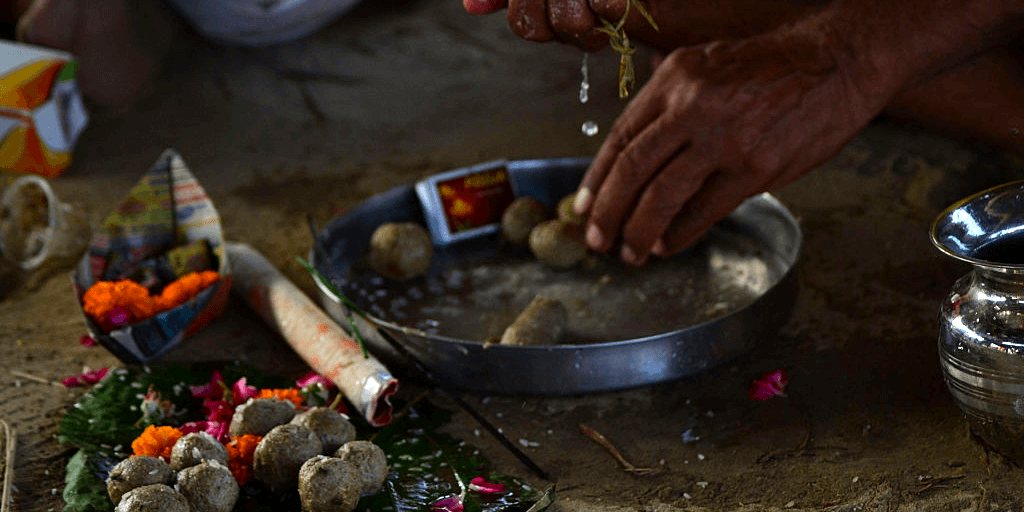
Why is sesame seed (til) significant in Pitrudosh rituals?
Sesame seeds (til) hold a unique position in all pitru rituals. The Padma Purana states that sesame originated from the perspiration of Lord Vishnu…
Questions about All Pitrudosh Nivaran

Sesame seeds (til) hold a unique position in all pitru rituals. The Padma Purana states that sesame originated from the perspiration of Lord Vishnu…
Yes, a simplified version of Pitrudosh Nivaran can be performed at home with a qualified pandit guiding the rituals. Home-based ceremonies typically include Tarpan…
Traditionally, the eldest male descendant performs Shradh and Pitrudosh Nivaran rites, as prescribed in the Dharmasutras. However, the Garuda Purana and several Smriti texts…
Pitrupaksha, the 16-day ancestral fortnight in the Hindu calendar (typically September-October), is considered the most auspicious time for Pitrudosh Nivaran. However, performing Tarpan on…
Yes, unresolved Pitrudosh passes through the family lineage and can affect up to seven generations on the father's side and four generations on the…
The Ganga holds unmatched significance in pitru rituals because the Puranas describe her as descending from heaven through Lord Shiva's matted locks, carrying the…
Yes, chants like the "Gayatri Mantra" and "Yama Suktam" from the Vedas are often recited to appease ancestors.
Pitrudosh Nivaran clears the accumulated ancestral debt (pitru-rina) that blocks progress across life areas. Families who complete these rites often report noticeable improvements: stalled…
Pitrudosh Nivaran is a structured set of Vedic rituals aimed at settling ancestral debts and releasing departed souls from suffering. The process typically includes…
Pitrupaksha, a period dedicated to ancestors, is considered the optimal time to perform rites to appease ancestors and mitigate Pitrudosh effects.
Showing 10 of 83 questions