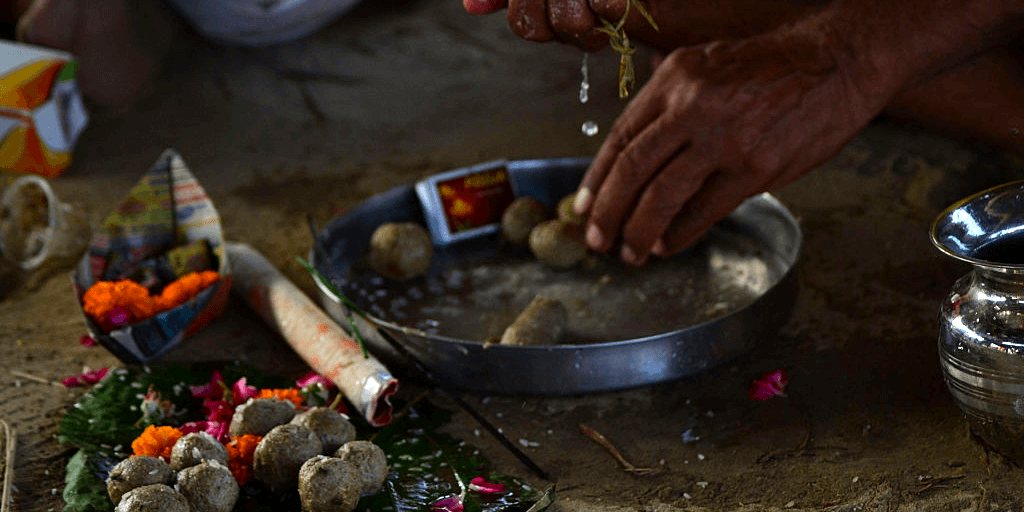
What are the three Tirthas used in Tarpan and how do they differ?
The Hindu tradition prescribes three specific hand positions called Tirthas for offering water during Tarpan, each used for a different category of beings:1. Deva…
Questions about Pitrupaksha

The Hindu tradition prescribes three specific hand positions called Tirthas for offering water during Tarpan, each used for a different category of beings:1. Deva…
The sankalpa (formal vow of intention) is recited at the beginning of Pitru Tarpan to formally commit to the ritual and to specify which…
According to the Manual of Hindu Funeral and Ancestral Rites, Pitru Tarpan for direct ancestors is performed using Pitru Tirtha (water offered through the…
Hindu tradition's view on this is compassionate: all departed souls need nourishment, peace, and the opportunity to progress on their journey — regardless of…
This situation is addressed in the tradition through the Sarva Pitru Amavasya on the final day of Pitrupaksha (October 10 in 2026). This day's…
The Dharmashastra texts recommend sattvic foods: kheer (rice pudding), puri, colocasia (arvi), bitter preparations, and foods made from sesame and barley. Onion, garlic, meat,…
Yes. While the primary performer in classical texts is the eldest son, the living tradition widely accepts daughters, granddaughters, daughters-in-law, and other female relatives…
According to Vedic Dharmashastra, performing Shraddha during Pitrupaksha is a mandatory duty for every householder — as obligatory as any other religious observance. The…
The Krishna Paksha (waning/dark fortnight) is traditionally associated with ancestral energy, the realm of the dead, and the moon's influence on the subtle planes.…
Home-based Sarva Pitru Amavasya rites are valid and honoured in the tradition. However, the scriptures promise that the same ceremony performed at Prayagraj's Triveni…
Showing 10 of 91 questions