




अभी तक कोई अनुष्ठान नहीं चुना गया।
पूजा पैकेज देखें →






Ganga Aarti
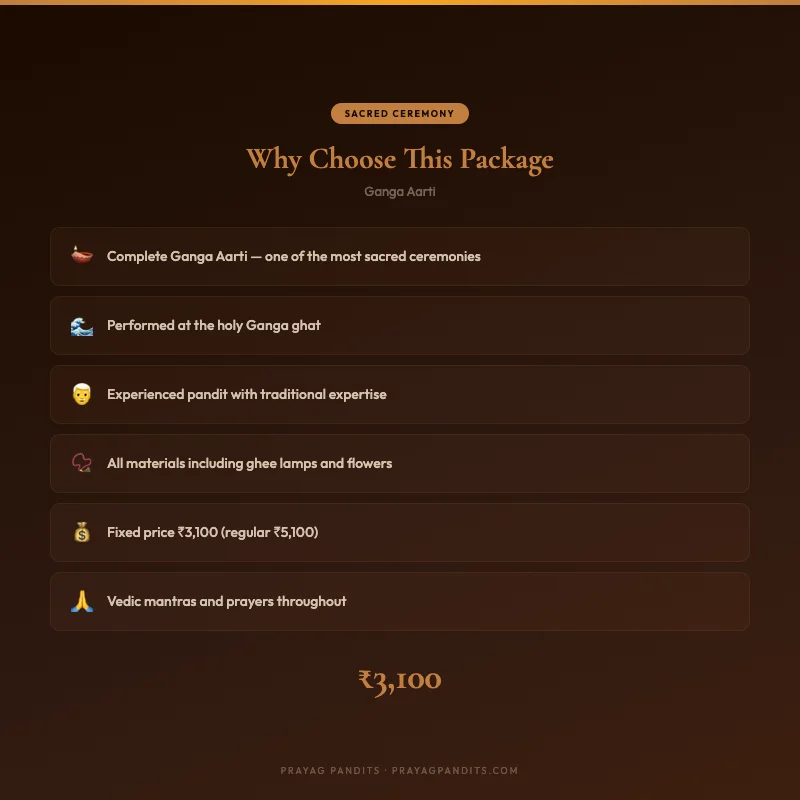
₹3,100
₹5,100
39% off
प्रति परिवार · सब शामिल
सत्यापित पंडित
2019 से
सभी सामग्री शामिल
निःशुल्क रद्दीकरण
यह पूजा बुक करें
पहले हमें व्हाट्सएप करें
No hidden charges · Cancel up to 48hrs · GST invoice provided
परिवार हमें क्यों चुनते हैं
यह कैसे काम करता है
1
Book & Confirm Your Date
Select your preferred date and complete the booking. Our team calls you within 2 hours to confirm details.
2
Share Family Details
Provide gotra, departed soul's name, and any requirements. Don't know your gotra? Our pandits will help.
3
Ritual Performed at Sacred Site
A Veda-trained pandit performs the complete ceremony as per shastra at the designated holy teerth.
4
Confirmation & Documentation
Booking confirmation on WhatsApp. Digital documentation available on select poojas within 48 hours.
इस अनुष्ठान के बारे में
Experience the beauty and spiritual significance of Ganga Aarti, a daily ritual held on the banks of the Ganges River in Varanasi. Attendees offer prayers, flowers, and other sacred items to the river believed to be a deity in Hinduism and a source of purification and salvation. The ceremony, attended by Hindus and tourists alike, includes chanting, music, and the lighting of lamps and incense. Dress modestly, show respect and reverence, and take in the rich cultural and spiritual traditions of Hinduism at this meaningful and immersive ceremony.
Introduction
Ganga Aarti is a daily ritual performed at dusk on the banks of the Ganges River in the Hindu holy city of Varanasi. It is a centuries-old tradition that has become an integral part of the spiritual and cultural identity of Varanasi. Ganga Aarti is held in honour of the Ganges River, which is considered a deity in Hinduism and is revered as a source of purification and salvation. During the ceremony, priests and attendees offer prayers, flowers, and other sacred items to the river in a ritual that is rich in symbolism and meaning. The ceremony typically takes place on a raised platform at one of the ghats (stairs leading down to the river) in Varanasi and is attended by a large crowd of devotees and tourists. The Ganges River has played a central role in Hindu mythology and religious practices for thousands of years, and Ganga Aarti is just one of the many ways in which Hindus express their devotion to the river. The ceremony is not only a way to pay respects to the deity, but also a way to connect with the divine and seek blessings.The Ceremony
The Ganga Aarti ceremony is a multi-sensory experience that involves chanting, music, and the offering of various items to the river. The ceremony takes place on a raised platform, or aarti ghat, where a large altar is set up with an image of the Ganges River and a lamp that is lit during the ceremony. The ceremony begins with the ringing of bells and the chanting of mantras by the priests, who are dressed in traditional Hindu attire. As the chanting continues, attendees join in and offer their own prayers and offerings to the river. These offerings may include flowers, incense, and small lamps that are lit and placed on the altar or floating in the river. Throughout the ceremony, the priests move around the altar in a clockwise direction, making offerings and performing various rituals. The ceremony concludes with the blowing of a conch shell and the ringing of bells, signalling the end of the ritual. While the priests play a central role in the ceremony, attendees also have the opportunity to participate by offering their own prayers and making their own offerings to the river. The ceremony is an inclusive and participatory experience that allows everyone in attendance to connect with the divine and seek blessings. During the Ganga Aarti ceremony, attendees and priests alike offer various items to the Ganges River as a way of paying respects to the deity and seeking blessings. Some of the common offerings made during the ceremony include Flowers: Flowers are a common offering made to the Ganges River, and are typically placed on the altar or floated in the river. In Hinduism, flowers are seen as a symbol of devotion and are often used to decorate altars and temples. Incense: Incense is another common offering made during the Ganga Aarti ceremony. The fragrant smoke is believed to purify the air and create a sacred atmosphere and is often used in Hindu rituals and ceremonies. Lamps: Small lamps, or diyas, are lit and placed on the altar or floated in the river as an offering to the Ganges River deity. The light of the lamp is seen as a symbol of enlightenment and the lamp itself is a symbol of knowledge and wisdom. Fruits: Fruits are sometimes offered as a way of seeking blessings and nourishment from the deity. Water: Water is a particularly important offering in the Ganga Aarti ceremony, as the Ganges River is seen as a source of purification and salvation. Attendees may offer small cups of water or pour water over the altar as a way of offering their devotion and seeking blessings. In addition to these offerings, attendees may also make personal prayers and offerings, such as offering their own personal possessions or making monetary donations to the temple or priests.The Significance of Ganga Aarti
The Ganga Aarti ceremony holds great spiritual and cultural significance for Hindus. The Ganges River is revered as a deity in Hinduism and is seen as a source of purification and salvation. Hindus believe that bathing in the waters of the Ganges or offering prayers and offerings to the river can help to cleanse the soul and bring one closer to enlightenment. The Ganga Aarti ceremony is also a way for Hindus to connect with their culture and traditions. For many Hindus, participating in the ceremony is a way to express their devotion to the Ganges River and to reaffirm their connection to their faith. Additionally, the Ganga Aarti ceremony has become an important tourist attraction in Varanasi, and many non-Hindus attend the ceremony out of curiosity or to learn more about Hinduism and Indian culture. The ceremony is a visually stunning and immersive experience that offers a glimpse into the rich spiritual and cultural traditions of Hinduism.Visiting Ganga Aarti
If you are interested in attending a Ganga Aarti ceremony in Varanasi or any other city, there are a few things to keep in mind to ensure that you have a meaningful and respectful experience. Here are some tips for visiting Ganga Aarti: Best time to go: Ganga Aarti is held daily at dusk, so you can choose a time that works best for your schedule. Many people prefer to attend the ceremony in the evening, as the setting sun provides a beautiful backdrop for the ceremony. What to wear: It is important to dress modestly and respect local customs when attending the Ganga Aarti ceremony. Men should wear trousers or knee-length shorts, and women should wear long skirts or skirts that cover the knees. It is also a good idea to remove your shoes before entering the aarti ghat. Cultural considerations: Ganga Aarti is a sacred ceremony for Hindus, and it is important to show respect and reverence while attending. Avoid taking photos or videos during the ceremony, and be mindful of your surroundings and behaviour. Nearby attractions: Varanasi is a city with a rich history and cultural heritage, and there are many other attractions and activities to enjoy while you are there. Some popular attractions in the area include the Kashi Vishwanath Temple, the Sarnath Archaeological Museum, and the Ramnagar Fort. By following these tips, you can have a meaningful and respectful experience while attending the Ganga Aarti ceremony in Varanasi.Conclusion
In conclusion, the Ganga Aarti ceremony is a daily ritual performed on the banks of the Ganges River in Varanasi that is rich in symbolism and spiritual significance. The ceremony involves the offering of prayers, flowers, and other sacred items to the river, and is attended by a large crowd of devotees and tourists. The Ganges River is revered as a deity in Hinduism and is seen as a source of purification and salvation. The Ganga Aarti ceremony is a way for Hindus to connect with the divine and seek blessings, as well as a way to express their devotion to their faith and cultural traditions. For those interested in attending the Ganga Aarti ceremony, it is important to dress modestly, show respect and reverence, and be mindful of local customs. Varanasi is a city with a rich history and cultural heritage, and there are many other attractions and activities to enjoy while you are there. Overall, the Ganga Aarti ceremony is a beautiful and meaningful experience that offers a glimpse into the spiritual and cultural traditions of Hinduism. Whether you are a Hindu seeking blessings or a tourist looking to learn more about Indian culture, the Ganga Aarti ceremony is an experience that is not to be missed.परिवार क्या कहते हैं 4.6
दिल्ली से गए थे, सब कुछ पहले से arranged था। कोई परेशानी नहीं हुई।
ऑनलाइन बुकिंग आसान थी। व्हाट्सएप पर जवाब तुरंत मिला। पूजा शुभ मुहूर्त में शुरू हुई और सही समय पर पूर्ण हुई। मूल्य भी उचित है। Dhanyavaad.
The online poojan option is great for people living abroad. We could participate from our home in the UK. The video was clear and the pandit made us feel included…
Affordable and authentic poojan services. We compared several providers before choosing Prayag Pandits and we made the right choice. The quality of service matched what was promised. Dhanyavaad.
আমার বাবার জন্য এই পূজা করিয়েছিলাম। সব কিছু ঠিকঠাক হয়েছে। পণ্ডিত জি খুব অভিজ্ঞ।
प्रयाग पंडित्स की सेवा से पूर्णतया संतुष्ट हूँ। उनकी टीम बहुत पेशेवर है और पंडित जी का ज्ञान गहन है। दूसरों को भी सिफारिश करूँगा। Dhanyavaad.
बहुत ही professional और भक्तिपूर्ण सेवा। सारी सामग्री included थी। Recommend करता हूँ।
बहुत ही professional और भक्तिपूर्ण सेवा। सारी सामग्री included थी। Recommend करता हूँ।
ऑनलाइन बुकिंग आसान थी। व्हाट्सएप पर जवाब तुरंत मिला। पूजा शुभ मुहूर्त में शुरू हुई और सही समय पर पूर्ण हुई। मूल्य भी उचित है। Dhanyavaad.
We have used Prayag Pandits twice now for different ceremonies. Both times the service was excellent. The team remembers returning customers and gives personal attention. Highly recommended. Dhanyavaad.
सामान्य प्रश्न
We live outside India — can you handle everything?
Yes. Over 40% of our families are NRIs from the US, UK, Canada, Singapore, and Malaysia. We manage every detail — you just share your family information and gotra. Your physical presence is not required.
How will I know the ritual was actually performed?
You receive a booking confirmation on WhatsApp immediately. For live poojas, ritual recordings are shared within 48 hours. Digital certificates are available on select poojas upon request.
What if I don't know my gotra?
Our experienced pandits will help determine your gotra based on your family lineage. We also accept Kashyap Gotra as a universally recognized alternative in the Vedic tradition.
Can I reschedule after booking?
Yes, you can reschedule up to 48 hours before the ceremony date at no extra charge. Contact us via WhatsApp or phone and we will adjust the date immediately.
Is the price final? Any hidden charges?
The price you see is the complete price. It includes pandit fees, all puja samagri, and ritual video. No separate charges for dakshina or materials. We are GST registered (09AZAPK2937R1ZR) and provide proper tax invoices.