Stepwise Guide to do Online Asthi Visarjan in Varanasi

Written by: Kuldeep Shukla
Updated on: March 1, 2026

Quick Summary

Online Asthi Visarjan in Varanasi allows NRI families to have the ashes of their loved ones immersed in the holy Ganga by a qualified Pandit. Ship the Asthi Kalash by courier, receive full video of the ceremony, and fulfil your dharmic duty from anywhere in the world.

Online Asthi Visarjan in Varanasi allows NRI families to have the ashes of their loved ones immersed in the holy Ganga by a qualified Pandit. Ship the Asthi Kalash by courier, receive full video of the ceremony, and fulfil your dharmic duty from anywhere in the world.

Performing Asthi Visarjan, the Hindu ritual of immersing the ashes of the deceased in a sacred river, is a vital part of the grieving and remembrance process. For those unable to travel to Varanasi, one of the holiest sites for this ritual, online Asthi Visarjan services offer a respectful and convenient alternative. This guide outlines the complete steps involved in conducting an online Asthi Visarjan in Varanasi, with a focus on the services provided by Prayag Pandits.
📅

Online Asthi Visarjan in Varanasi allows families — especially NRIs and those who cannot travel — to have the Asthi (ashes of the deceased) immersed in the holy Ganga at Varanasi by a qualified Pandit on their behalf. The Asthi Kalash is shipped by courier to Varanasi, the Pooja and Visarjan are performed with complete Vedic rituals, and the entire ceremony is video-recorded and shared with the family.

Why Asthi Visarjan in Varanasi? The Spiritual Foundation

Before understanding the process, it is worth understanding why Varanasi — also known as Kashi or Banaras — holds supreme importance for Asthi Visarjan in the Hindu tradition.

According to the Skanda Purana, Kashi is the Avimukta Kshetra — the never-forsaken city, the place Lord Shiva declared as His eternal abode. It states that those who depart from their bodies within Kashi’s boundaries do not take birth again. They receive moksha — liberation from the cycle of birth and death — because Lord Visveshwara himself whispers the Taraka Mantra (the mantra of liberation) into the ears of every departing soul.

The Ganga at Varanasi flows Uttarvahini — northward, against the natural southward direction of most rivers — turning back towards her Himalayan source and the realm of the gods. The Skanda Purana further reveals that on auspicious days, all sacred Tirthas of India converge into the Ganga at Kashi, making her waters there uniquely purifying for any soul’s final immersion.

When you arrange for Asthi Visarjan in Varanasi, you are entrusting the final physical remains of your loved one to the city of liberation, to the most sacred stretch of Ganga, and to the eternal presence of Mahadev. This is not merely a cultural custom — it is the most powerful act of love a family can perform for a departed soul.

For families who cannot make the journey to Varanasi, the principle of Pratinidhi — performing a sacred rite through a qualified representative — is well-established in the Vedic tradition. The merit flows to the departed soul and to the family regardless of physical presence, provided the sankalpa (sacred resolve) is taken correctly in the family’s name, gotra, and the departed person’s name.

Here is the Complete Stepwise Guide to Online Asthi Visarjan in Varanasi

Step 1: Preparing the Asthi Kalash

Preparing the Asthi Kalash-Stepwise guide to do online asthi visarjan in varanasi

The first step involves preparing the Asthi Kalash — the vessel containing the ashes and bone fragments of the deceased. Careful preparation ensures the remains travel safely and arrive intact at Varanasi.

a. Collect the Ashes Properly: After cremation, the Asthis (bone fragments and ashes) are traditionally collected on the 3rd, 7th, or 9th day after death. They are placed in a clean vessel — traditionally a copper or brass Kalash. If the remains are already stored from an earlier cremation, ensure they are in a sealed container.

b. Select a Sturdy Outer Container: Choose a strong, durable cardboard box that can securely hold the Asthi Kalash. This box should be able to withstand the rigours of courier transport without crushing or breaking.

c. Wrap and Pad the Kalash: Wrap the Asthi Kalash in a soft white cloth — white is the traditional colour for rites of the departed. Then place it inside the outer box. Fill all empty spaces with bubble wrap, thermocol pieces, or similar padding material to prevent any movement during transit.

d. Seal and Label Clearly: Once the Kalash is securely packed, seal the box with strong packing tape. Label it clearly with the destination address in Varanasi (provided by Prayag Pandits), your full return address, and contact information. It is advisable to also write “Religious/Ceremonial Items — Handle with Care” on the package.

e. Contact Prayag Pandits Before Shipping: Before dispatching the Kalash, contact the Prayag Pandits team to confirm the exact shipping address, to provide the departed person’s name and gotra, and to schedule the ceremony date. The team will guide you through any additional preparation steps specific to your situation.

What to Include with the Asthi Kalash
When shipping the Asthi Kalash, it is thoughtful to include a written note inside the package with: (1) the full name of the departed person, (2) their gotra (family lineage), (3) date of death, (4) your name as the person ordering the service, and (5) your contact number and email. This helps the Pandit take an accurate sankalpa and ensures the ritual is performed specifically for your loved one.

Step 2: Sending the Asthi Kalash to Varanasi

Sending the Asthi Kalash to Varanasi-Stepwise guide to do online asthi visarjan in varanasi

After the Asthi Kalash is properly packed, the next step is sending it to Varanasi through a reliable courier service.

a. Choose a Reputable Courier Service: Select a courier company known for handling religious or sensitive items with care. In India, services such as DTDC, Blue Dart, and India Post (Speed Post) have experience with sending such packages. For NRIs sending from abroad, international couriers like DHL or FedEx are recommended. Discuss the nature of the shipment — human remains for religious purposes — with the courier, as some providers have specific handling protocols.

b. Check Regulatory Requirements: For international shipments from countries like USA, UK, Canada, Malaysia, Singapore, or Australia, there are specific customs regulations around the shipping of cremated remains. Most countries permit the international shipment of cremated remains with proper documentation. Your funeral director or the courier service can guide you on the necessary paperwork, which typically includes a death certificate and cremation certificate.

c. Ship the Package with Tracking: Always send the package with a tracking number so you can monitor its journey. Share the tracking details with the Prayag Pandits team so they can anticipate the arrival and prepare for the ceremony accordingly.

d. Confirm Receipt: Once the Prayag Pandits team confirms receipt of the Asthi Kalash at Varanasi, the ceremony scheduling can be finalised.

Book the online Asthi Visarjan package here.

Step 3: Taking the Sankalpa — The Sacred Resolve

An important step that distinguishes a Vedic Asthi Visarjan from a simple ash immersion is the Sankalpa — the formal declaration of intent that connects the ritual to the specific departed soul and to the family performing it.

Before any pooja begins, the Pandit takes the Sankalpa in the name of the person requesting the service. This includes:

  • Your full name (the person ordering the service)
  • Your gotra (ancestral lineage)
  • The full name of the departed person
  • Their gotra
  • The relationship between you and the departed
  • The purpose of the ritual — Asthi Visarjan for the liberation and peace of the departed soul

The Sankalpa creates a spiritual thread that connects the ritual being performed in Varanasi to your family, regardless of where in the world you are located. This is the essential mechanism by which Pratinidhi Pooja (ritual performed by a representative) carries full merit for the commissioning family.

Step 4: Conducting the Pooja

Conducting the Pooja-Stepwise guide to do online asthi visarjan in varanasi

Upon receiving the Asthi Kalash in Varanasi, the Prayag Pandits team arranges for the complete Pooja to be conducted by a qualified Pandit on behalf of the family.

a. Selection of a Qualified Pratinidhi Pandit: The Pandit selected for Asthi Visarjan Pooja is experienced in the specific rites prescribed for Asthi Pooja — the consecration of the remains before immersion. The Pandit acts as the family’s Pratinidhi (representative), performing every ritual element with the same devotion and precision as if the family were physically present.

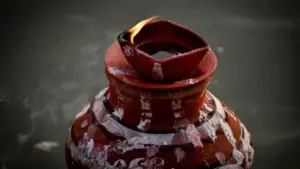
b. Asthi Pooja — Consecrating the Remains: Before the immersion itself, the Asthi Kalash is placed on a clean white cloth and worshipped with mantras, flowers, incense, and a ghee lamp. Specific Vedic hymns from the Rig Veda and the Atharva Veda that pertain to the release of the soul are recited. This step sanctifies the remains and prepares the soul for its journey onward.

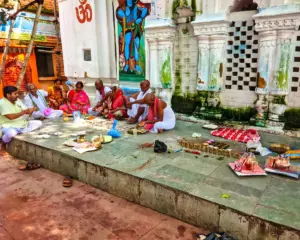
c. Performing the Pooja at the Ghat: The complete Pooja includes prayers, chanting of specific mantras for the liberation of the departed soul, Tarpan (water libations offered to the ancestors and to the departed), and the final immersion of the Asthi Kalash in the sacred Ganga. The entire process is conducted with utmost respect and adherence to Vedic procedures.

The Asthi Visarjan service for NRIs offered by Prayag Pandits covers this complete pooja package — nothing is abbreviated or skipped.

Step 5: Performing the Visarjan — Immersion into the Ganga River

Performing the Immersion into Ganga River-Stepwise guide to do online asthi visarjan in varanasi

The Visarjan — the actual immersion — is the heart of the entire ceremony. This is the moment the physical remains of your loved one enter the sacred waters of the Ganga and begin their final journey.

At Varanasi, the Asthi Visarjan is typically performed at one of the principal cremation or ritual ghats — most commonly at Manikarnika Ghat, the most sacred cremation ground in the Hindu world, or at Harishchandra Ghat. Both ghats have been in continuous ritual use for over three thousand years.

Manikarnika Ghat carries its own profound mythology. According to the Puranas, Maa Sati’s earring (manikarnika) fell here as Lord Shiva carried her body across the world in grief. This connection to Sati, the divine mother of sacrifice, makes Manikarnika supremely auspicious for the final rites of the departed. Funerary fires have burned here continuously for millennia — a flame never extinguished, tended by the Dom community who have served this sacred function for uncounted generations.

After the Asthi Pooja is completed, the Asthis along with all the Pooja material (flowers, tulsi leaves, sesame seeds, sacred grains) are immersed together into the Ganga. The Pandit recites the final mantras of release — including verses from the Rig Veda‘s funeral hymns — as the remains enter the river. This moment of immersion is considered the formal conclusion of the soul’s earthly journey and the beginning of its path toward liberation.

Step 6: Sharing the Recorded Videos with the Family

To ensure that the family can witness and feel part of the ceremony despite their physical absence, the entire ceremony is recorded on video.

a. Complete Video Documentation: The Asthi Visarjan ceremony is fully documented — from the Asthi Pooja at the ghat, through the chanting of mantras, to the final immersion of the Kalash in the Ganga. Every significant ritual moment is captured, so the family can see exactly what was performed and how.

b. Sharing with the Family: After the ceremony, the recorded videos are shared with the family via WhatsApp or email. This documentation provides a sense of closure, allows family members in different countries to witness the ceremony together, and serves as a permanent record of the ritual performed for their loved one.

Many families tell us that watching the video — seeing the Ganga receive the remains, hearing the mantras — provides a sense of profound peace that they could not find until that moment. The service bridges geography and grief.

Here is a video of a complete Online Asthi Visarjan in Varanasi ceremony performed by Prayag Pandits:

Which Ghat is Best for Asthi Visarjan in Varanasi?

Varanasi has 84 ghats lining the western bank of the Ganga. For Asthi Visarjan, the most significant are:

  • Manikarnika Ghat: The foremost cremation and Asthi Visarjan ghat of Varanasi. Considered the most auspicious because of its direct connection to Maa Sati and the continuous presence of Mahadev’s liberating grace. Most traditional Asthi Visarjan ceremonies are performed here.
  • Harishchandra Ghat: The second principal cremation ghat, named after the legendary King Harishchandra who worked here as a Dom to maintain his vow of truth. Performing rites here invokes the blessings of his extraordinary dharmic example.
  • Dashashwamedh Ghat: The most prominent and largest ghat of Varanasi, where the famous Ganga Aarti is performed every evening. Asthi Visarjan may be performed here as well, particularly for families who want to observe the evening aarti as part of their visit.
  • Assi Ghat: The southernmost of the principal ghats, considered auspicious because it marks the point where the Assi river meets the Ganga. Rituals here are peaceful and uncrowded compared to Manikarnika.

For the online Asthi Visarjan in Varanasi service, Prayag Pandits performs the ceremony at Manikarnika Ghat or Dashashwamedh Ghat depending on ritual conditions and the family’s preference.

When Should Asthi Visarjan Be Performed? Timing and Tradition

The timing of Asthi Visarjan is an important consideration in Hindu tradition. The Garuda Purana and the Grihya Sutras provide detailed guidance:

Ideal Days After Death: The Asthis should be collected on the 3rd, 7th, or 9th day after death. Traditionally, the Visarjan should be performed before the 10th day (Dasahan). However, in practice — especially for NRI families arranging international shipping — the Visarjan may be performed later without spiritual compromise, provided the intent is sincere and the ritual is performed properly.

Auspicious Days for Visarjan: If timing flexibility exists, Amavasya (new moon day) is considered especially powerful for all ancestral rites, including Asthi Visarjan. Pitrupaksha (the 15-day fortnight in Ashwin month, September–October) is the most potent period of the year for any rite connected to the departed. Performing Asthi Visarjan in Varanasi during Pitrupaksha 2026 (September 26–October 10) would be exceptionally auspicious.

Timing Varies by Region and Caste: Different communities within Hinduism have specific traditions about timing. Some communities perform Visarjan on the 12th or 13th day after death as part of the full funeral rites sequence. Your family Pandit can advise on the appropriate timing based on your regional and caste tradition.

Asthi Visarjan vs. Pind Daan — Do You Need Both?
Asthi Visarjan and Pind Daan are complementary but distinct rites. Asthi Visarjan immerse the physical remains in sacred water — releasing the body’s final connection to the material world. Pind Daan provides the departed soul with nourishment and merit for its onward journey. Many families perform both: Asthi Visarjan in Varanasi and then Pind Daan in Gaya, Prayagraj, or Varanasi. Prayag Pandits can arrange both services in a combined package.

Online Asthi Visarjan for NRIs: Special Considerations

For Non-Resident Indians living in the United States, United Kingdom, Canada, Malaysia, Singapore, Australia, Germany, and other countries, arranging Asthi Visarjan in Varanasi involves some additional considerations compared to families based in India.

International Shipping of Cremated Remains

Most countries permit the international shipment of cremated human remains with proper documentation. The key documents typically required are:

  • Death certificate (original or certified copy)
  • Cremation certificate issued by the crematorium
  • Funeral director’s declaration that the container holds only cremated remains
  • In some cases, a special customs form or declaration

Courier services like DHL and FedEx handle international shipments of cremated remains regularly and can guide you through the process. Prayag Pandits has received Asthi Kalash shipments from over 30 countries and can advise you on the process specific to your country of residence.

Is Online Asthi Visarjan Spiritually Valid?

This is the question that weighs most heavily on families considering this service. The answer, grounded in both Vedic tradition and the lived experience of thousands of families we have served, is: yes, emphatically.

The Vedic tradition has always provided for Pratinidhi Karma — rites performed through a qualified representative when personal attendance is impossible. A soldier far from home, a merchant in a distant land, a person ill in bed — all are recognised in the Dharmashastra texts as having the right to commission a qualified Pandit to perform their rites on their behalf.

What matters is the sincerity of intent, the accuracy of the sankalpa, and the qualifications of the Pandit. Prayag Pandits ensures all three. The Asthi Visarjan for NRIs service has brought peace to hundreds of families across the world — people who tell us that the weight they had been carrying since their loved one’s death lifted the moment they saw the video of the Ganga receiving the remains.

Can You Attend the Ceremony Online — Live?

Yes. Prayag Pandits offers live-streaming of the ceremony via WhatsApp video call for families who wish to witness the ritual in real time. You can see the Pandit take the sankalpa in your name, watch the Pooja at the ghat, and observe the moment of immersion — all from wherever you are in the world. A recording is also provided after the ceremony for family members in different time zones who could not attend the live stream.

Combining Asthi Visarjan with Pind Daan and Shradh at Prayagraj

For many families, particularly those who have not had the opportunity to perform complete post-death rites for their loved one, Asthi Visarjan in Varanasi is the beginning of a more complete ritual journey. The Asthi Visarjan Poojan connects seamlessly with Pind Daan in Varanasi, and many families extend the service to include rites at Prayagraj’s Triveni Sangam as well.

The Asthi Visarjan at Prayagraj — at the confluence of Ganga, Yamuna, and the invisible Saraswati — is considered especially powerful for souls seeking liberation. Many families perform Asthi Visarjan at both Varanasi and Prayagraj, believing that the double immersion in both sacred confluences maximises the spiritual benefit for the departed soul.

Prayag Pandits offers combined packages that include Asthi Visarjan, Pind Daan, and Shradh ceremonies across Varanasi and Prayagraj, all coordinated as a single service with complete documentation.

The Best Places to Do Asthi Visarjan in India

While Varanasi is considered the supreme location for Asthi Visarjan due to its unique status as Avimukta Kshetra and the Uttarvahini Ganga, the tradition recognises several other sacred sites as deeply meritorious for this final rite:

  • Haridwar: The Ganges enters the plains from the Himalayas at Haridwar — a threshold between the divine and earthly realms. Har ki Pauri ghat is the principal site for Asthi Visarjan here.
  • Prayagraj: The Triveni Sangam — the meeting of Ganga, Yamuna, and Saraswati — is considered a supreme Tirtha. Asthi Visarjan at the Sangam is exceptionally auspicious during Kumbh Mela and Pitrupaksha.
  • Nasik: Panchavati Ghat on the Godavari river — significant for Marathi and Deccani Hindu communities.
  • Pushkar: Pushkar lake in Rajasthan — important for communities in Rajasthan and surrounding regions.
  • Rameshwaram: Agni Theertham on the southern tip of India — particularly sacred for Asthi Visarjan in the tradition of Tamil Hindu families.

A comprehensive overview of all 15 sacred sites is available in our guide to best places to do Asthi Visarjan in India. Of all these locations, Varanasi remains supreme for its direct association with moksha as confirmed across multiple Puranas.

Trusted by NRI Families

🙏 Book Online Asthi Visarjan in Varanasi

Starting from ₹5,100 per person

What Happens After Asthi Visarjan? Completing the Rites

Asthi Visarjan is one link in the chain of post-death rites prescribed by Hindu tradition. After the Visarjan, the following rites complete the full sequence:

Shraddha and Pind Daan: These should be performed at a major Tirtha — Gaya being the supreme site — to provide the departed soul with nourishment and merit for its journey through the realms of the afterlife. Understanding Pind Daan and its role in ancestral liberation is essential for families planning a complete post-death ritual journey.

Annual Shradh During Pitrupaksha: After the initial post-death rites are complete, annual Shradh during Pitrupaksha sustains the connection between the living family and the departed ancestor. This is performed during the 15-day period each year in Ashwin month. The complete guide to Pitrupaksha Shradh covers everything you need to know about this annual observance.

Pitra Dosha Remedies: If the family’s astrologer has identified Pitru Dosha in the horoscope, additional remedies such as Tripindi Shradh, Narayan Bali, or specific Puja on Amavasya days may be recommended. Prayag Pandits can arrange these services as well.

Conclusion: Fulfilling the Final Duty from Wherever You Are

Online Asthi Visarjan services in Varanasi offer a dignified, spiritually complete, and accessible way for families — especially NRI families — to perform this essential Hindu rite even when physical travel is not possible. By following the steps outlined in this guide and working with a trusted service provider like Prayag Pandits, families can ensure that their loved ones are honoured according to tradition, allowing their souls to attain the peace and liberation that the sacred waters of the Ganga at Kashi uniquely provide.

Distance need not mean disconnection from dharma. The Ganga flows in Varanasi today as she has for thousands of years, and the Pandits who serve at her ghats carry a tradition unbroken since the Vedic age. When you cannot be there in person, we carry your love and intention across the miles — and the Ganga receives it, as she always has.

Frequently Asked Questions (FAQs) About Online Asthi Visarjan in Varanasi

Facebook
Twitter
LinkedIn
Pinterest

Leave a Reply

Your email address will not be published. Required fields are marked *

0

No products in the cart.