No rituals selected yet.
Browse Pooja Packages →Key Takeaways
In This Article
You may think that any day you remember your ancestors with love is a good day. And you are right—love is never wasted. However, certain cosmic alignments create powerful gateways, moments when the veil between our world and the realm of the Pitrus is thin. During these times, our offerings, our prayers, and our reverence reach them most effectively.
Think of it like this: you can call out to a friend across a noisy marketplace at any time, and they might hear you. But if you wait for a quiet moment, your voice carries clearly and your message is received without distortion. The Puranas guide us to these moments of cosmic quiet, ensuring our offerings of Shradh reach the Pitrus with the greatest impact.
This guide is written for NRIs living in Malaysia, Singapore, Australia, the UK, the USA, and beyond—people who must plan their pilgrimage carefully, factoring in flights, leave from work, and weather. We cover every auspicious window in the Hindu calendar alongside the practical seasonal wisdom you need for a comfortable and spiritually fulfilling journey. Understanding the best time for Teerth Shradh will help you plan with both devotional precision and practical confidence.
The Pinnacle: Pitru Paksha — The Fortnight of the Ancestors

If there is one period that stands above all others for performing Teerth Shradh, it is the sacred fortnight known as Pitru Paksha. This is, without any qualification, the single best time for Teerth Shradh.
When is Pitru Paksha 2026?
This hallowed period falls during the dark half (Krishna Paksha) of the lunar month of Bhadrapada, corresponding to September or early October in the Western calendar. Pitru Paksha 2026 runs from September 27 to October 11. The cosmos aligns in a special way during these 16 days. The Brahma Purana teaches us that when the Sun enters the zodiac sign of Kanya (Virgo), this period becomes exclusively dedicated to the ancestors.
The day when the Sun is in Virgo and the moon is in the Hasta nakshatra is known as Mahalaya—a day of immense significance that marks the opening of the ancestral fortnight. On Mahalaya, even the simplest act of remembrance performed with sincerity carries extraordinary weight.
Why Is This Fortnight So Powerful?
Our scriptures, including the Skanda Purana, tell us a beautiful truth: during Pitru Paksha, our ancestors are permitted to leave their abode and travel closer to the earthly realm—to be near their descendants. They arrive at the doorsteps of their children and grandchildren, eagerly waiting to receive offerings of water (Tarpan) and food (Pinda Daan).
They wait with anticipation, much like parents waiting for a child to return home. When we perform Shradh during this time at a sacred Teertha, we are directly feeding their essence, quenching their spiritual thirst, and bringing them profound peace. If this period passes without any offerings, the ancestors return to their realm disheartened. Performing Shradh at Prayagraj, Gaya, or Varanasi during Pitru Paksha brings immeasurable merit.
Planning Tip for NRIs
Book flights and Pind Daan packages for Pitru Paksha 2026 (September 27 – October 11) at least 8 weeks in advance. October is peak pilgrimage season at all three holy cities. Prices for flights from KLIA, SYD, LHR and JFK rise sharply after August.
Beyond Pitru Paksha: Other Powerful Windows for Teerth Shradh
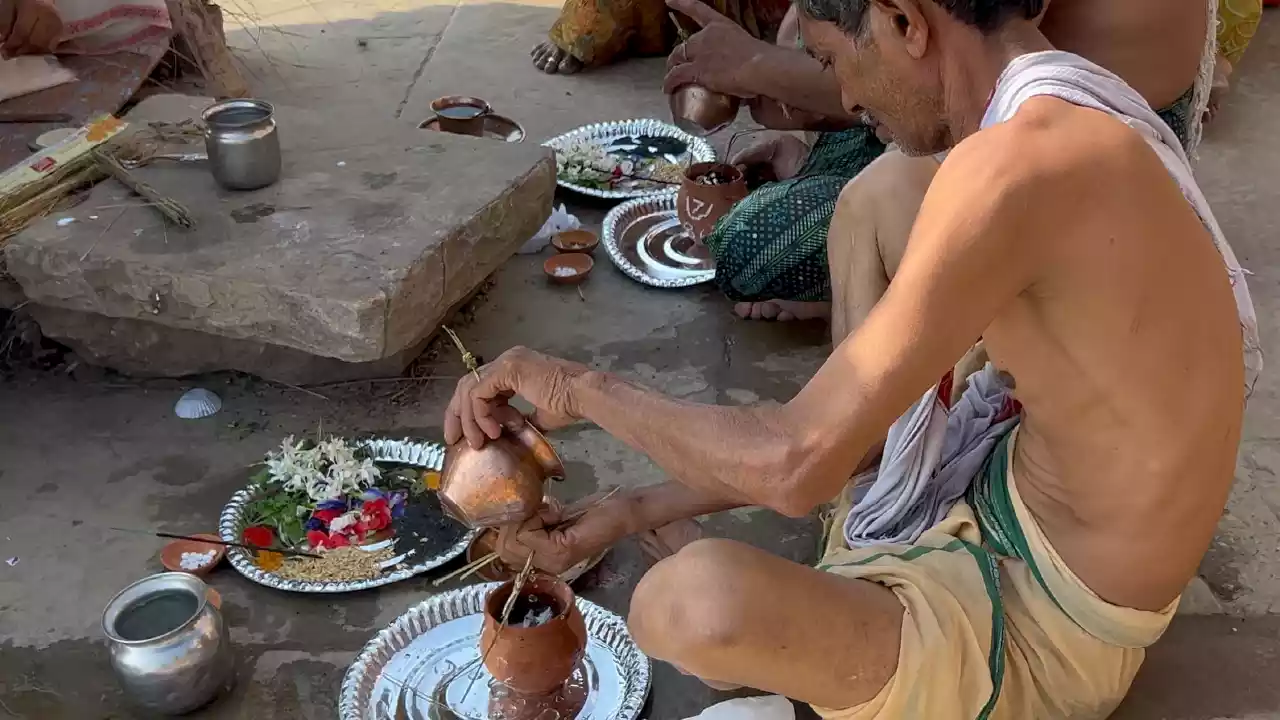
While Pitru Paksha is the supreme period, our compassionate tradition provides many other auspicious times for those who cannot make the journey during that specific fortnight. As an NRI with work obligations and visa considerations, knowing these alternatives empowers you to plan a pilgrimage that is both spiritually sound and practically feasible.
The Monthly Anchor: Amavasya (The New Moon)
Every month, the day of the new moon—Amavasya—is a powerful day for connecting with the ancestors. The waning period of the moon is generally considered suitable for Shradh, with Amavasya being the peak. This is a recurring monthly opportunity to renew your connection and offer your respects from anywhere in the world—or to plan a short pilgrimage to the Teertha of your choice.
For NRIs who cannot take extended leave, even a 4-day trip timed to coincide with a monthly Amavasya—arriving the day before, performing Shradh on Amavasya, and returning—yields excellent results. Gaya, Prayagraj, and Varanasi are all within reach of Delhi, and the northern Indian weather during most Amavasya days of the year is manageable.
Cosmic Alignments: Eclipses and Special Yogas
Certain astronomical events create incredibly potent moments for spiritual practices and ancestral rites:
- Solar and Lunar Eclipses (Grahan): Both Surya Grahan and Chandra Grahan are considered exceptionally powerful times for any spiritual act, including Shradh. Any ritual, charity, or bath performed during an eclipse yields “undiminishing benefits” per the Puranas. The 2026 calendar has two total solar eclipses visible from India—check the Hindu calendar for exact dates.
- Vyatipata Yoga: A specific celestial conjunction occurring roughly once a month, considered especially meritorious for ancestral rites. Our pandits can identify this day for you when you plan your visit.
- Vaidhriti Yoga: Another powerful yoga for Shradh. When Vyatipata or Vaidhriti coincides with Amavasya, the potency is multiplied several times.
The Sun’s Sacred Journey: Sankranti and Ayanas
The Sun’s movement through the zodiac holds enormous significance for ancestral rites:
- Sankranti: The day the Sun moves from one zodiac sign to another. The Shiva Purana states that Shradh performed on a Sankranti day yields ten times the benefit of ordinary holy days. Makar Sankranti (mid-January) and Karka Sankranti (mid-July) are particularly powerful.
- Uttarayan (Winter Solstice): Around January 14, when the Sun begins its northern journey. This is the beginning of the Devayana—the path of the gods. Beginning a pilgrimage around this time carries deep spiritual symbolism.
- Dakshinayan (Summer Solstice): Around July 14. The beginning of the Pitruyana—the path of the ancestors. The Bhagavad Gita (Chapter 8) mentions this path in the context of the soul’s journey after death. Ancestral rites performed at the start of Dakshinayan are deeply resonant.
- Equinoxes (Vishuva Sankranti): Both spring and autumn equinoxes are prescribed as highly meritorious times for Shradh and charity in the scriptures.
A Seasonal Guide for NRIs: Weather, Comfort, and Crowds
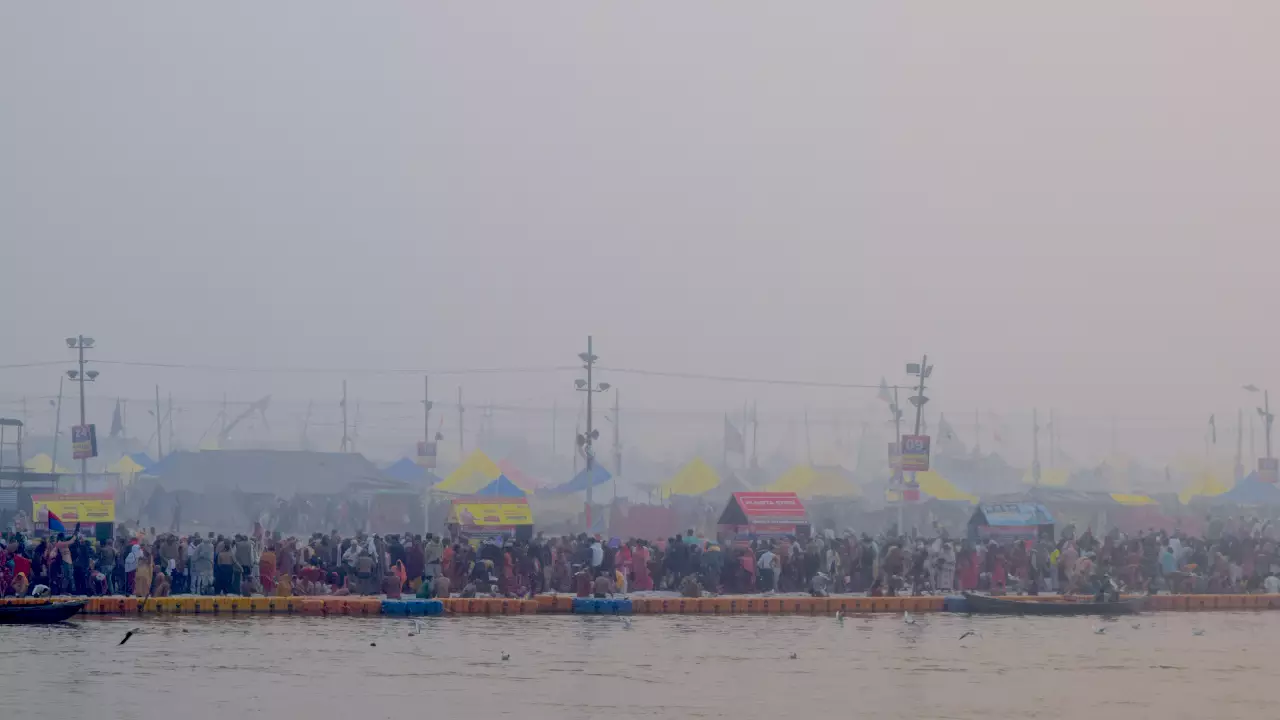
For NRIs living in Malaysia, Singapore, Australia, the UK, or North America, practical considerations like weather, crowd levels, and flight costs are important when planning a pilgrimage. Here is a month-by-month breakdown of the pilgrimage climate at Prayagraj, Gaya, and Varanasi:
January and February (Magha Month) — Excellent Time
This is one of the best practical windows for NRI pilgrims. Weather in North India is dry and clear, typically 8–22°C. Crowd levels are moderate (significantly lower than Pitru Paksha). The holy month of Magha is deeply sacred, especially at Prayagraj.
- Magha Purnima (Full Moon of Magha, February 2026): Bathing at the Triveni Sangam on Magha Purnima and performing Shradh here is described in the Puranas as equivalent to performing several years of penance. For NRIs who cannot attend Pitru Paksha, this is the most highly recommended alternative window.
- Flight prices from Malaysia and Australia: January and February are shoulder season—fares are 20–35% lower than in October.
- Gaya in January: The Vishnupada temple sees manageable crowds, mornings are cool but pleasant, and the Phalgu river is calm and accessible.
March and April (Chaitra Month) — Very Good Time
Spring brings pleasant weather—temperatures 18–30°C. This is an excellent time for pilgrims from UK and North America who have spring school holidays. The Chaitra Navratri in March–April creates an atmosphere of vibrant devotion across North India’s temple towns. Performing Teerth Shradh during Chaitra Navratri combines ancestral rites with the shakti energy of the season, multiplying the spiritual impact.
May and June (Grishma — Summer) — Possible, But Challenging
Temperatures in Prayagraj and Varanasi can exceed 42–46°C in May and June. For older family members and those with cardiovascular conditions, this period is not recommended for physical pilgrimage. However, it is perfectly suitable for Online Pind Daan performed by our pandits from Malaysia or UK. Rituals are just as spiritually effective in this season—the physical discomfort is simply a concern for the pilgrim’s body.
July to September (Monsoon) — Spiritually Rich, Logistically Complex
The rains arrive in July and last through September. The Garuda Purana mentions that Shradh performed during the rainy season with proper hymns brings great delight to the ancestors. However, the Ganga at Prayagraj and Varanasi can flood their ghats during heavy monsoon weeks, making ghat rituals temporarily inaccessible. Road travel between cities can also be disrupted.
- Gaya in Monsoon: Gaya is somewhat less affected by flooding than Prayagraj. The Phalgu river at Gaya is an underground river—its surface is sandy even in monsoon, and rituals at Vishnupada and the Phalgu bank proceed without disruption.
- Recommendation: If travelling during July–September, book a local guide through Prayag Pandits who monitors ghat accessibility. Alternatively, use this period for Online Pind Daan.
September–October (Pitru Paksha to Karttika) — Peak Sacred Season
This is the premier window for Teerth Shradh—combining the supreme spiritual potency of Pitru Paksha with the transition into the post-monsoon season. By late September, the ghats have cleared, weather cools to 25–33°C, and the rivers are full and auspicious. Immediately following Pitru Paksha, the month of Karttika (October–November) continues the elevated spiritual energy of the season.
- Karttika month: Sacred for Lord Vishnu and considered particularly meritorious for Shradh and Tarpan. Bathing in the Ganga in Karttika is equivalent to years of merit according to the scriptures.
- Dev Deepawali (Karttika Purnima): If your pilgrimage extends to mid-November, witnessing the extraordinary Dev Deepawali festival at Varanasi—when the Ganga ghats are illuminated by lakhs of diyas—is a once-in-a-lifetime spiritual experience.
November and December — Comfortable for Temple Visits
The northern Indian winter begins in November. Temperatures range from 12–25°C—comfortable for pilgrimage activities. December can be cold at night (8–10°C in Varanasi and Prayagraj). If you plan to perform Teerth Shradh in December, any Amavasya of that month is your best anchor day. Crowds are thin and the atmosphere is quiet and contemplative—ideal for the solemnity of ancestral rites.
Choosing the Right Tithi: The Lunar Day and Its Specific Blessings
Beyond the season or the month, the specific lunar day—Tithi—on which you perform Shradh can bestow particular blessings upon your lineage. The Markandeya Purana and Brahma Purana give us this beautiful guide:
| Lunar Day (Tithi) | Specific Blessings for Your Lineage |
|---|---|
| First (Pratipada) | Wealth and Prosperity for the family |
| Second (Dvitiya) | Good progeny or a virtuous spouse for descendants |
| Third (Tritiya) | The blessing of male heirs continuing the lineage |
| Fourth (Chaturthi) | Overcoming enemies and removing obstacles |
| Fifth (Panchami) | Acquiring assets, property, and virtuous children |
| Sixth (Shashthi) | Overall well-being and social honour |
| Seventh (Saptami) | Leadership, recognition, and success in ventures |
| Eighth (Ashtami) | Intelligence, clarity of mind, and wisdom |
| Thirteenth (Trayodashi) | Family growth, longevity, and sharpened intellect |
| New Moon (Amavasya) | Comprehensive liberation and peace for all ancestors |
Your Prayag Pandits coordinator can help you identify the optimal Tithi for your specific family intentions during the season of your planned visit.
When to Choose Online Teerth Shradh Instead of Travelling
Not every NRI family can travel to India every year. The Pratinidhi tradition in our scriptures—where a qualified pandit performs the rites as your representative—is a fully sanctioned Vedic provision. Prayag Pandits’ Online Teerth Shradh service is ideal in the following scenarios:
- When travel is not possible this year but you want to honour the Pitru Paksha 2026 window without missing it
- For elderly parents who wish to fulfil their duty but cannot undertake the physical journey
- As an interim solution while you plan a full physical pilgrimage in the following year
- For annual Amavasya Tarpan—maintaining a monthly or quarterly cadence of ancestral rites even when residing abroad
Our online service includes a live video connection during the Sankalp and offering, followed by photos, ceremony video, and a digital certificate sent to your WhatsApp. Read our detailed guide on Pind Daan from Malaysia to understand the full scope of our NRI services.
NRI Special
🙏 Book Teerth Shradh for Your Preferred Date
Starting from
₹5,100
per person
- Online and offline Pind Daan available
- Pandits fluent in Tamil, Telugu, Hindi, English
- Pitru Paksha 2026 slots: Sep 27 – Oct 11
- Live video connection during Sankalp
Practical Flight and Hotel Planning by Season
To help NRIs make an informed travel decision, here is a quick seasonal comparison of key practical factors:
| Season | Months | Weather | Crowd Level | Flight Cost (approx.) | Spiritual Quality |
|---|---|---|---|---|---|
| Pitru Paksha | Sep 27–Oct 11 | Post-monsoon, 26–33°C | Very High | High | Supreme |
| Karttika | Oct–Nov | Mild, 20–30°C | Moderate-High | Moderate | Excellent |
| Magha / Winter | Jan–Feb | Cool, 10–22°C | Low-Moderate | Low | Excellent |
| Spring | Mar–Apr | Warm, 22–34°C | Low | Low-Moderate | Very Good |
| Summer | May–Jun | Hot, 38–46°C | Very Low | Very Low | Good (Online preferred) |
| Monsoon | Jul–Sep | Humid, 28–36°C | Low | Low | Good (with planning) |
What is the best time for Teerth Shradh for NRIs who cannot travel during Pitru Paksha?
The next best option is the full moon of Magha (January–February), which is considered equivalent to extended penance by the Puranas. Any monthly Amavasya is also highly meritorious. If travelling in any season, Gaya is unique in that Pind Daan performed there is equally potent on any day of the year.
Can I perform Teerth Shradh in summer or during the monsoon?
Yes, the rituals are spiritually effective in any season. The concerns are practical — extreme heat in May–June and potential flooding of ghats in July–August. For the summer and monsoon season, our Online Pind Daan service lets you perform the rites without the physical hardship. Gaya’s Vishnupada Ghat typically remains accessible even in monsoon.
How far in advance should NRIs book for Pitru Paksha 2026?
Book your pandit services and accommodation by August 2026 at the latest. Pitru Paksha is the peak season at Gaya, Prayagraj, and Varanasi, and all services fill up quickly. Flights from KLIA, SYD, LHR, and JFK to Delhi or Gaya also become significantly more expensive after late August.
Is Magha Purnima (January–February) a good alternative to Pitru Paksha for Teerth Shradh?
Yes, absolutely. The full moon of Magha at Prayagraj is described in the Puranas as one of the most auspicious occasions for holy bathing and ancestral rites. The weather in January–February is pleasant and comfortable for travel, crowds are much lower than in October, and flight fares from NRI hubs are significantly cheaper. It is our most recommended alternative window for NRIs who cannot travel in September–October.
What is the significance of performing Shradh on a specific Tithi (lunar day)?
The Markandeya Purana and Brahma Purana describe specific blessings that correspond to each Tithi. For example, Shradh on the 2nd Tithi (Dvitiya) is recommended for those seeking good progeny, while the 7th (Saptami) brings leadership and success. Performing Shradh on a Tithi that matches your family’s specific intention amplifies the result. Our pandits can guide you on selecting the right Tithi for your visit.
A Final Word of Guidance
Remember: the best time for Teerth Shradh is ultimately when you come with a heart full of devotion, respect, and sincerity. The cosmic windows described in our scriptures are aids—powerful amplifiers—but they are not substitutes for genuine intent.
To summarise your planning:
- The Absolute Best: Pitru Paksha (September 27 – October 11, 2026). Book early.
- Excellent Alternative: Magha month, especially Magha Purnima (January–February 2026). Best weather, lowest crowds, lowest cost.
- Good Opportunities Throughout the Year: Any Amavasya (new moon), any Sankranti, or any eclipse day.
- Gaya is Always Potent: Uniquely among all Tirthas, Gaya Shradh carries full merit on any day of the year, making it the most flexible option for NRIs with unpredictable leave schedules.
Do not be discouraged if circumstances do not allow for the “perfect” time. The Pitrus understand the limitations of their children. Any act of remembrance, any offering made with a pure heart at a holy Teertha, will surely reach them. Consult our complete pre-travel checklist for NRIs to prepare fully for your journey. For Malaysian families specifically, our detailed Pind Daan from Malaysia guide covers every logistics detail.
Your effort to connect with your roots is, in itself, a great blessing—to your ancestors and to you.
May your path be clear, and may the blessings of your ancestors illuminate your life always.
Hari Om Tat Sat.
Book Your Sacred Ritual
Authentic ceremonies performed by Veda-trained pandits with video proof at sacred sites across India.
2,263+ families served
Video proof included
Since 2019
