Key Takeaways
In This Article
Why Gaya? Unraveling the Unparalleled Significance of Pinda Daan Here
Understanding why Gaya holds this unique position is crucial before delving into the ‘how’. Its power stems from a confluence of divine events and boons described vividly in our Puranas.
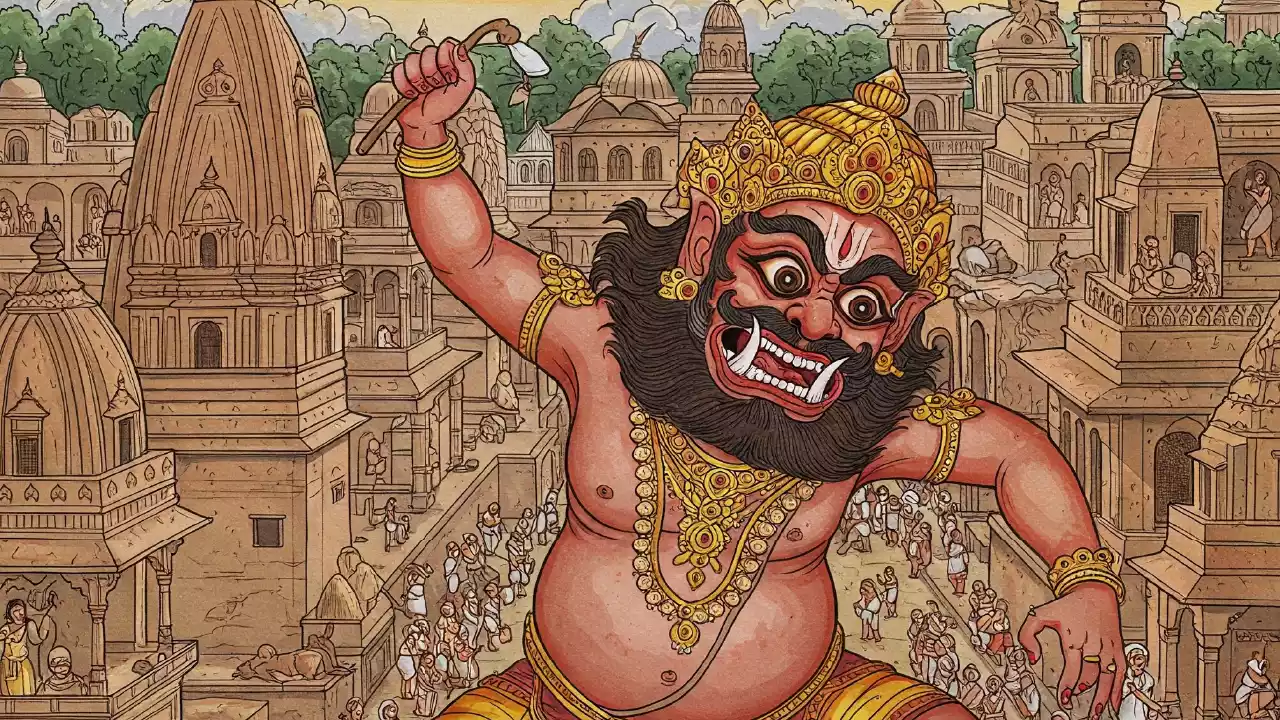
The Sacrifice of Gayasur and Divine Sanction
- The Boon: As we’ve discussed, the pious Asura Gayasur received a boon making his body the holiest of all places.
- The Yagna: The Devas performed a Yagna on his stabilized body to restore cosmic balance.
- Vishnu’s Presence: Lord Vishnu, in his Gadadhara form, along with Brahma, Shiva, and other deities, stood upon the Dharmashila placed on Gayasur to keep him steady.
- Gayasur’s Final Wish: Gayasur prayed that this spot, forever known as Gaya Kshetra, become the ultimate place for Shraddha, granting liberation to ancestors for whom rites are performed here.
- Divine Grant: Lord Vishnu and all Devas granted this boon, promising their eternal presence and ensuring the unparalleled efficacy of rituals performed here. Performing Pinda Daan in Gaya is thus seen as offering directly within the divine presence, on land consecrated by supreme sacrifice and devotion.
Liberation from Pitru Rin and Attainment of Moksha
- The Debt: We inherit not just genes, but also karmic threads from our lineage. Pitru Rin is the subtle obligation we have towards those who gave us life and nurtured our existence. Unsatisfied ancestors can linger in subtle realms, potentially hindering the progress of their descendants.
- The Offering: Pinda Daan is a symbolic offering of food and sustenance to the departed souls, nourishing them in their journey and expressing our gratitude.
- Gaya’s Power: Due to the unique boons associated with Gaya, the pindas offered here are believed to possess extraordinary power. They satisfy the ancestors immensely, liberating them from lower realms (pitru loka, preta loka, or even naraka) and propelling them towards higher states of existence, potentially even moksha.
- Multiple Generations: Scriptures like the Garuda Purana and Vayu Purana state that performing Shraddha correctly in Gaya can liberate not just one’s immediate parents, but numerous generations (often cited as 7, 21, or even 101 generations) of ancestors on both paternal and maternal sides.
The Fruits of Gaya Shraddha
Performing Pinda Daan at Gaya with faith (shraddha – the very word implies faith!) bestows numerous blessings:- Ancestral Liberation (Pitru Mukti): The primary and most significant fruit.
- Ancestral Blessings (Pitru Ashirwad): Satisfied ancestors bestow blessings for health, longevity, prosperity, progeny (santan), knowledge, and overall well-being upon their descendants.
- Removal of Obstacles: Blockages in life, often attributed to unsatisfied pitris (known as Pitru Dosha in Jyotisha), are believed to be alleviated.
- Personal Purification: The performer is cleansed of sins and accumulates immense spiritual merit (punya).
- Fulfillment of Dharma: It fulfills one of the essential duties prescribed for a householder in Sanatana Dharma.
Who Can Perform Pind Daan?
Traditionally, the primary responsibility lies with the eldest son. However, in his absence:- Other Sons: Any son can perform the rites.
- Grandsons: Paternal or maternal grandsons.
- Wife: A wife can perform rites for her deceased husband.
- Daughter’s Son (Dauhitra): Considered highly meritorious for a daughter’s son to perform Shraddha for his maternal grandparents.
- Younger Brother: For an elder brother.
- Nephew: For an uncle.
- Adopted Son: Has the right and duty.
- Disciple: A disciple can perform for their Guru.
- Women: While traditionally the male lineage takes precedence, scriptures and traditions acknowledge circumstances where women (like daughters, especially if there are no sons) can perform or facilitate the rites, often guided by the priest. The story of Sita Devi performing Pinda Daan at Gaya itself is a powerful, albeit exceptional, precedent. The Gayawal priests guide based on specific circumstances and family situations.
- Anyone with Faith: Ultimately, anyone with sincere devotion and a connection to the deceased can perform the rites under the guidance of a qualified priest, ensuring the intention (sankalpa) is pure.
Preparing for the Sacred Pilgrimage: Mental, Spiritual, and Practical Steps
(Guidance on preparing oneself before arriving in Gaya.)
Undertaking the Gaya Shraddha is not merely a physical journey but a profound spiritual undertaking. Preparation is key.Mental and Spiritual Readiness
- Faith (Shraddha): Approach the ritual with unwavering faith in the scriptures, the sanctity of Gaya, and the efficacy of the rites. Doubts diminish the results.
- Purity (Shaucham): Maintain physical and mental purity before and during the pilgrimage. This includes observing celibacy (brahmacharya) for a period, consuming Sattvic food (simple vegetarian meals), avoiding intoxicants, and refraining from harsh speech or negative thoughts.
- Intention (Sankalpa): Be clear about your intention – to liberate your ancestors and seek their blessings with selfless devotion.
- Remembrance: Spend time remembering your departed ancestors, cultivating feelings of gratitude and love.
Choosing the Auspicious Time (Muhurta)
- Pitru Paksha: The most auspicious time is the dark fortnight (Krishna Paksha) of the Hindu month of Ashwina (September-October). This 15-day period is exclusively dedicated to ancestral rites, and performing Pinda Daan at Gaya during this time is considered exceptionally powerful. The city throngs with pilgrims then.
- Anytime: However, the scriptures affirm that Gaya is eternally potent. Pinda Daan can be performed effectively at any time of the year on any day except Tuesdays generally (priest guidance needed here). Many choose dates associated with the ancestor’s death anniversary (tithi) or auspicious days like Amavasya (new moon), Ekadashi, Purnima (full moon), or during eclipses.
- Malamasa (Adhika Masa): The intercalary month, occurring every few years, is also considered highly meritorious for pilgrimage and rites at Gaya.
Gathering Information and Consulting
- Family Priest/Astrologer: Consult your family priest or a knowledgeable astrologer for guidance on suitable dates and preliminary rituals if any.
- Gayawal Priest: It is advisable, if possible, to establish contact with a Gayawal Panda (the traditional priests of Gaya specializing in Shraddha) beforehand, perhaps through references or online directories, although most pilgrims arrange this upon arrival. They can provide specific instructions.
- Know Your Ancestors: Compile a list of ancestors for whom you wish to perform the rites, going back at least three generations (father, grandfather, great-grandfather) on both paternal and maternal sides, if possible. Include names of other departed relatives you wish to honor.
Practical Arrangements
- Travel and Accommodation: Plan your travel to Gaya (well-connected by train and air via Patna or Gaya’s own airport) and book simple, clean accommodation. Many Ashrams and Dharamshalas cater to pilgrims.
- What to Bring: While most ritual items are arranged by the Gayawal priest, it’s good to bring:
- Simple, clean traditional clothing (Dhoti for men, Saree for women – preferably white or subtle colors). Avoid black, overly bright, or ostentatious attire.
- A list of ancestors’ names.
- Any specific items advised by your consulting priest (rarely needed).
- Sufficient funds for priest’s Dakshina, ritual materials, travel, and stay.
Performing the Pinda Daan: A Step-by-Step Guide to the Sacred Rituals
(The core of the guide, detailing the process as commonly practiced in Gaya.)
The Pinda Daan ceremony in Gaya is typically performed over one to several days, depending on the chosen package or the number of vedis (sacred altars/sites) one wishes to cover. The guidance of the assigned Gayawal priest is paramount throughout the process. The most common procedure involves performing rites at three main locations: Phalgu River, Vishnupad Temple, and Akshayavat.Step 1: Arrival in Gaya and Engaging a Gayawal Priest
- Reaching Gaya: Upon arrival, proceed towards the areas near the Vishnupad Temple or the Phalgu riverbank where numerous Gayawal Pandas have their establishments (gaddis).
- Selecting a Priest: Gayawals often maintain records of families they have served for generations (jajmans). If your family has a traditional Panda, seek them out. Otherwise, you can respectfully choose one. They are hereditary priests authorized to conduct these rites. They will explain the different procedures (e.g., single-day, three-day, multi-vedi rituals) and associated costs (dakshina expectations).
- Agreement: Once you select a priest, they become your guide for the entire duration. Trust their expertise.
Step 2: Sankalpa (The Sacred Vow)
- Setting the Intention: Before commencing the rituals, the priest will guide you in making the Sankalpa. This is a formal declaration of intent, stating your name, lineage (gotra), the names of the ancestors you are performing the rites for, the place (Gaya Kshetra), the time, and the purpose (ancestral liberation and blessings). This is a crucial step that focuses the mind and energy.
Step 3: Snana (Purificatory Bath)
- Phalgu River: The first ritual act is usually a purificatory bath in the sacred Phalgu River. Even if the riverbed appears dry (as per Sita’s curse), digging slightly reveals water. Sprinkling this water or bathing where available is done. If bathing directly is not feasible, water is brought for purification rites. This cleanses the body and prepares it for the sacred tasks.
- Alternative: Sometimes, bathing is done at a Kund (sacred pond) or even at the place of stay before proceeding.
Step 4: Mundan (Tonsure – Shaving the Head)
- Optional but Traditional: Traditionally, male pilgrims performing Shraddha for their parents undergo Mundan (shaving the head), keeping only a small tuft (shikha). This symbolizes detachment from ego and impurity, and complete surrender to the ritual process. It is often done on the banks of the Phalgu. It’s generally optional today, especially for those performing rites for other relatives, or based on family customs. Discuss this with your priest.
Step 5: Performing Rites at the Three Main Vedis
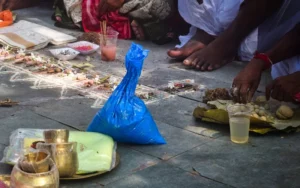
This is the heart of the ceremony, typically done sequentially. The priest provides all necessary materials (samagri) and guides the chanting of mantras.At the Phalgu Riverbank (Phalgu Shraddha):
- Tarpana: Facing south, you will offer Tarpana – libations of water mixed with black sesame seeds (til), barley (jau), and Kusha grass – invoking the names of your ancestors and praying for their satisfaction. This is done for Devas, Rishis, and Pitris.
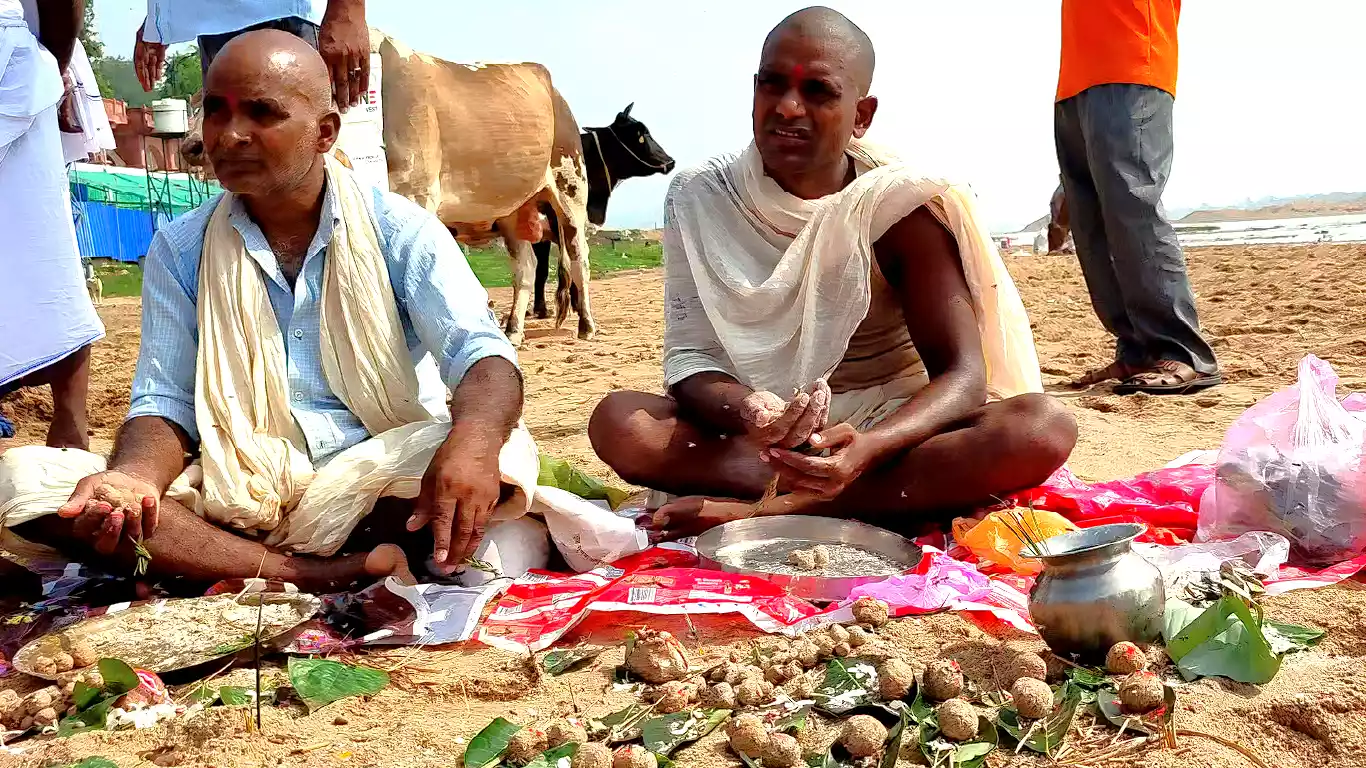
- Pinda Daan: The priest will prepare the pindas. These are traditionally made from rice flour or barley flour (jau ka atta), mixed with honey, ghee, milk, and black sesame seeds. Sometimes variations exist based on tradition.
- You will be guided to place Kusha grass on the ground (representing seats for the ancestors).
- The priest chants mantras invoking the ancestors.
- You offer the prepared pindas onto the Kusha grass with reverence, addressing your ancestors by name and lineage. Usually, three pindas are offered for the three immediate paternal ancestors (father, grandfather, great-grandfather), and optionally for maternal ancestors and others.
- Offerings of water, flowers (typically white), Tulsi leaves (if available and appropriate), and Sandalwood paste might accompany the pindas.
- Prayers are offered for their acceptance and satisfaction.
At the Vishnupad Temple (Vishnupad Shraddha):
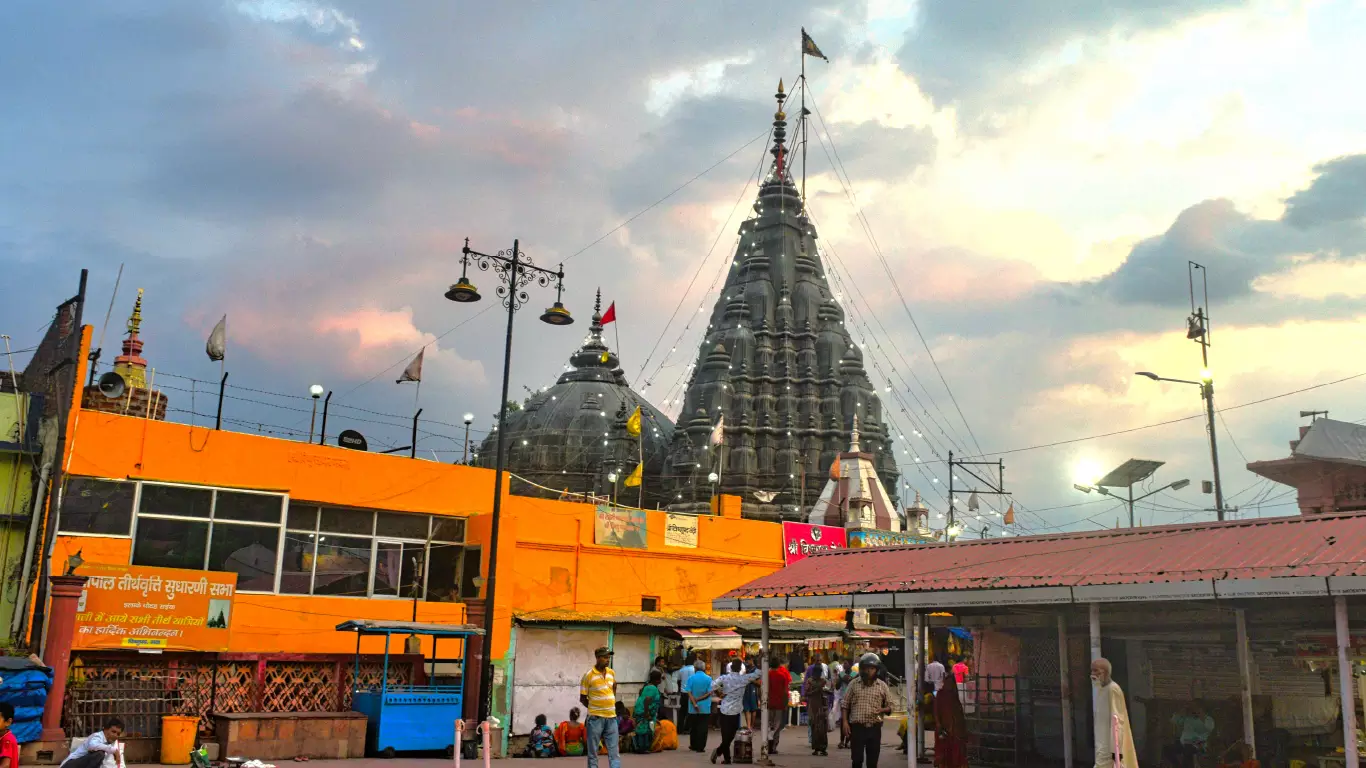
- Darshan: After rites at the Phalgu, you proceed to the historic Vishnupad Temple. First, have darshan of the sacred footprint of Lord Vishnu imprinted on the rock (Dharmashila), enshrined in silver. This is the spot where Vishnu stabilized Gayasur. Pray for His blessings.
- Pinda Daan: Within the temple complex, often in designated courtyards or platforms, the Pinda Daan ritual is repeated. The priest again guides the offerings of pindas (prepared anew or sometimes brought from the Phalgu ritual, practices vary) near the vicinity of the holy footprint. The atmosphere here is charged with divine energy, and offering pindas here is considered extremely potent due to Vishnu’s direct presence.
At the Akshayavat (Immortal Banyan Tree) (Akshayavat Shraddha):
- The Final Offering: The final and culminating Pinda Daan is performed under the ancient and sacred Akshayavat. This tree, blessed by Sita Devi to be immortal, represents the eternal nature of the merit gained.
- Pindas and Prayers: Pindas are offered here, often representing all ancestors for whom rites have been performed. Special prayers are chanted, asking for the acceptance of all offerings made during the pilgrimage and seeking Akshaya Tripti (inexhaustible satisfaction) for the ancestors.
- Blessing the Priest (Suphala): It is here, under the Akshayavat, that the Gayawal priest is formally honored. You offer Dakshina (monetary offering, clothes, etc., as agreed upon or as per your capacity) and seek his blessings. This act, called Suphala (making the ritual fruitful), is crucial for the completion of the rites. The priest pronounces blessings upon you and your family, confirming the successful completion of the Shraddha.
Step 6: Visiting Other Significant Vedis (Optional)
- Extended Pilgrimage: For those undertaking a more extensive pilgrimage (e.g., the traditional 45 or 54 Vedis circuit over several days), Pinda Daan and Tarpana are performed at numerous other sacred spots around Gaya, each with specific significance mentioned in the Puranas. Some important ones include:
- Pretashila Hill: For ancestors who died unnatural deaths or are in ghostly forms.
- Ramshila Hill & Ramkund: Associated with Lord Rama’s visit.
- Brahmayoni Hill: Site of Brahma’s yagna.
- Mangala Gauri Temple: One of the Shakti Peethas.
- Various Kunds (ponds) like Vaitarani Kund (helping ancestors cross the river of afterlife).
- Guidance: The Gayawal priest guides the pilgrim through these vedis if chosen.
Step 7: Dakshina and Bhojana (Offerings and Feeding)
- Priest’s Dakshina: Offering appropriate Dakshina to the Gayawal priest who guided you is essential. It should be given respectfully and willingly, according to your means and the understanding established beforehand.
- Brahmin Bhojana/Dana: Traditionally, completing the Shraddha involves feeding worthy Brahmins. Alternatively, giving Dana (charity – food grains, clothes, money) to Brahmins or the needy in the name of the ancestors is highly meritorious and considered part of the ritual’s fulfillment.
Essential Elements and Conduct During the Ritual
The Indispensable Role of the Gayawal Priest
- They are the authorized guides, knowledgeable in the specific rituals and mantras practiced in Gaya for generations. Their presence and guidance are considered essential for the correct performance of the rites. Trust their instructions.
Key Materials (Samagri)
- Pindas: Made primarily of cooked rice flour or barley flour, mixed with black sesame seeds (til), honey (madhu), ghee, and sometimes milk.
- Kusha Grass: Sacred grass used for purification, creating seats (asanas) for ancestors, and forming rings (pavitri) worn by the performer.
- Water (Jal): Preferably from the Phalgu or another sacred source.
- Black Sesame Seeds (Til): Considered dear to the Pitris, used in Tarpana and mixed in pindas.
- Barley (Yava/Jau): Often used in flour for pindas.
- Flowers: Simple, white flowers are preferred.
- Other items: Tulsi leaves (where appropriate), sandalwood paste, incense, lamps, etc., as guided by the priest. (These are usually arranged by the priest).
Mantras and Pronunciation
- The rituals involve chanting specific Vedic and Puranic mantras. The Gayawal priest chants these, and you will often be asked to repeat certain prayers or invocations. While perfect pronunciation is ideal, sincere devotion (bhava) is paramount. The priest ensures the core mantras are recited correctly.
Dress Code and Reverent Conduct
- Attire: Men typically wear a clean, white dhoti (often without upper cloth during certain rites). Women wear simple sarees (white, cream, or subtle colors). Avoid elaborate jewelry, leather items (belts, wallets during rites), and black clothing.
- Behavior: Maintain a solemn, respectful, and devotional attitude throughout. Avoid distractions, idle talk, or impatience. Focus entirely on honoring your ancestors. Be respectful towards the priests, the sacred sites, and fellow pilgrims.
After the Pind Daan: Embracing Peace and Continuity
(What to expect and do after completing the rituals.)A Sense of Fulfillment and Peace
- Most pilgrims report feeling a deep sense of peace, relief, and spiritual fulfillment after correctly performing Pinda Daan at Gaya, knowing they have fulfilled a sacred duty. There’s often a feeling of lightness, as if a burden has been lifted.
Continuing Respect for Ancestors
- Gaya Shraddha is a powerful event, but honoring ancestors is a continuous practice. Continue to remember them respectfully, especially on their death anniversaries (tithi) and during Pitru Paksha each year through simpler home rituals (like Tarpana) or offering food to Brahmins/the needy.
haring the Merit
- The blessings and merit (punya) acquired can be mentally shared with all family members and well-wishers.
Conclusion: Answering the Call of Dharma
The journey to Gaya for Pinda Daan is more than a pilgrimage; it is an answer to the profound call of Dharma, a testament to the unbroken chain of love and responsibility that binds us to our lineage. It is an act of immense faith, demonstrating our belief in the continuity of life beyond the physical realm and the power of sacred rituals performed at a divinely ordained tirtha.While the procedures may seem intricate, remember that the Gayawal priests are there to guide you, and the most crucial ingredient is your own sincere devotion (bhakti) and faith (shraddha). Approach Gaya Kshetra with humility, perform the rites with concentration, and trust in the blessings of your ancestors and the grace of Lord Vishnu Gadadhara. May your pilgrimage be successful, may your ancestors attain liberation and shower you with their choicest blessings, and may you return with a heart filled with peace and the satisfaction of having fulfilled a most sacred duty.|| Om Pitru Devatabhyo Namah ||🙏 Book Your Pind Daan / Shradh Package
Pind Daan in Gaya — All Packages
- Standard Package — ₹7,100 (1-day ceremony at Vishnupad Temple)
- Platinum Package — ₹11,000 (enhanced ceremony with additional tirthas)
- 3-Day Special — ₹31,000 (complete 3-day ceremony at all 45+ tirthas)
- Online Pind Daan — For NRI families and those who cannot travel

Frequently Asked Questions
Why is Gaya the most sacred place for Pind Daan?
Pind Daan is a vital Vedic ritual wherein offerings called Pinds (rice balls mixed with sesame, barley flour, honey, and ghee) are given to departed ancestors. The aim is to provide peace and liberation (moksha) to the soul. Gaya Ji in Bihar is mentioned in sacred texts like the Garuda Purana and Vayu Purana as the most powerful tirtha for Pind Daan because it is believed Lord Vishnu Himself granted mukti to demon Gayasura’s soul here. The Vishnupad Mandir—where Lord Vishnu’s footprint is present—is the central site where the rituals are conducted. Offering Pind Daan here is said to free even souls trapped in preta-yoni (ghostly form) or suffering in pitru loka.
What is the spiritual benefit of doing Pind Daan at Gaya?
According to Garuda Purana and various Smriti texts:
- It grants moksha to souls trapped in lower realms
- It may remove Pitru Dosh from family charts
- It leads to ancestral blessings for health, progeny, and peace
- It fulfills one’s duty toward ancestors (Pitru Yajna)
- It clears obstacles in career, marriage, and childbirth believed to be due to ancestral dissatisfaction Gaya is where Lord Vishnu Himself blesses the souls, making it unparalleled for such karmas.
Can Pind Daan be done online or through someone else if I can not go to Gaya?
In rare cases, due to health, age, or unavoidable circumstances, a proxy (sarva-sangrahi) may perform Pind Daan on your behalf. This should be arranged with a trustworthy Gaya Purohit, and you must send your consent and sankalp. While this is spiritually valid, personal presence is always superior, as the devotion and intention of the doer carry immense karmic weight.
What is the mythological background behind Gaya becoming a Pind Daan Tirtha?
According to the Gaya Mahatmya and Padma Purana, Gaya is named after Gayasura, a powerful demon who performed such intense penance that he earned blessings making his body so pure that anyone touching it would attain moksha. The Devas, unable to manage the flow of liberated souls, requested Lord Vishnu to intervene. Lord Vishnu, in a divine act, pressed Gayasura into the earth with His lotus foot, creating the sacred imprint now worshipped at Vishnupad Mandir. Gayasura requested that Gaya become a place where people could offer Pind Daan to liberate their ancestors. Lord Vishnu granted this boon, thus sanctifying Gaya as the most sacred Pitru Kshetra.
Is it mandatory to travel to Gaya or Prayagraj for Pind Daan?
No — Pind Daan can be performed at any sacred water body or even at home. However, performing it at a major tirtha such as Prayagraj (Triveni Sangam), Gaya, or Varanasi significantly amplifies the merit and the efficacy of the rite. The scriptures describe these locations as places where the boundary between the earthly realm and the ancestral realm is especially thin.
Is it necessary to perform Pind Daan if Narayan Bali is done in Gaya?
Often, Pind Daan is an integral part of the Narayan Bali ritual sequence in Gaya.[ The pandit performing the puja will guide you, but generally, performing Narayan Bali addresses the specific issue of unnatural death, and Pind Daan (offering of rice balls) is included within its procedures to nourish the soul as part of its liberation process.
How does Pind Daan at Gaya help in removing Pitru Dosh from a horoscope?
Pitru Dosh in astrology indicates displeasure or unfulfilled desires of ancestors, which may manifest as:
- Delayed marriage
- Childlessness
- Career struggles
- Recurring health issues Pind Daan at Gaya, when done with sincerity and proper mantras, appeases the souls, lifts the curse-like effects, and brings blessings into one's life. It is often recommended by astrologers as part of Pitru Dosh Nivaran remedies, especially during Pitru Paksha or after an astrologically significant transit.
Can Pind Daan be done at home, or only at sacred tirthas?
Pind Daan can be performed at home, but its merit is significantly amplified when performed at a recognised tirtha. Scriptures describe Gaya, Prayagraj (Triveni Sangam), Varanasi (Pishach Mochan), Haridwar, and a few other sites as places where the boundary between the earthly and ancestral realms is especially thin, making the ritual spiritually more effective. At-home Pind Daan is accepted in scriptures when travel is not possible, but most families choose to perform at least one tirtha-based ceremony for the liberation of ancestors. Our pandits can guide you through either option.
Who traditionally performs the Shraddh rituals for the family when they come to Gaya?
As in other places, the Karta (performer) for Shraddh in Gaya is traditionally the eldest son. If unavailable, younger sons, grandsons, or other male relatives from the paternal side can perform it. Daughters or wives can also perform Shraddh in Gaya if no suitable male member is available, guided by a Panda. The key role here in Gaya, however, is played by us, the Gayawal Pandas. We are the traditional priests of Gaya, authorized by lineage and custom to guide pilgrims through the specific rituals at the various vedis and to accept the offerings on behalf of the ancestors. You perform the actions, but the Gayawal Panda guides the entire Shraddh process in Gaya.
What essential items should a family bring when coming to perform Shraddh in Gaya?
Similar to Prayagraj, faith is foremost! Practically, for Shraddh in Gaya:
- Bring details of your ancestors (names, gotra if known, relation).
- Wear simple, clean clothes (dhoti/kurta, saree/suit preferred; avoid black, leather items during rituals).
- Carry basic toiletries and personal medicines, as facilities at some outdoor vedis in Gaya might be basic.
- Most specific puja samagri (rice flour, barley, sesame, kusha, etc.) required for the Shraddh in Gaya will be arranged by your Gayawal Panda as part of the service. You don't need to bring these raw materials.
- Bring funds for dakshina and potential daan.
Book Your Sacred Ritual
Authentic ceremonies performed by Veda-trained pandits with video proof at sacred sites across India.