Key Takeaways
- Sita's curse
- What the legend is saying
- A river that flows beneath
- What the river is used for
In This Article
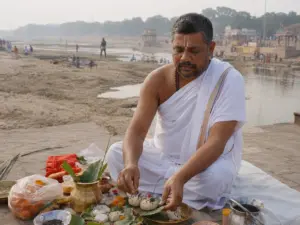
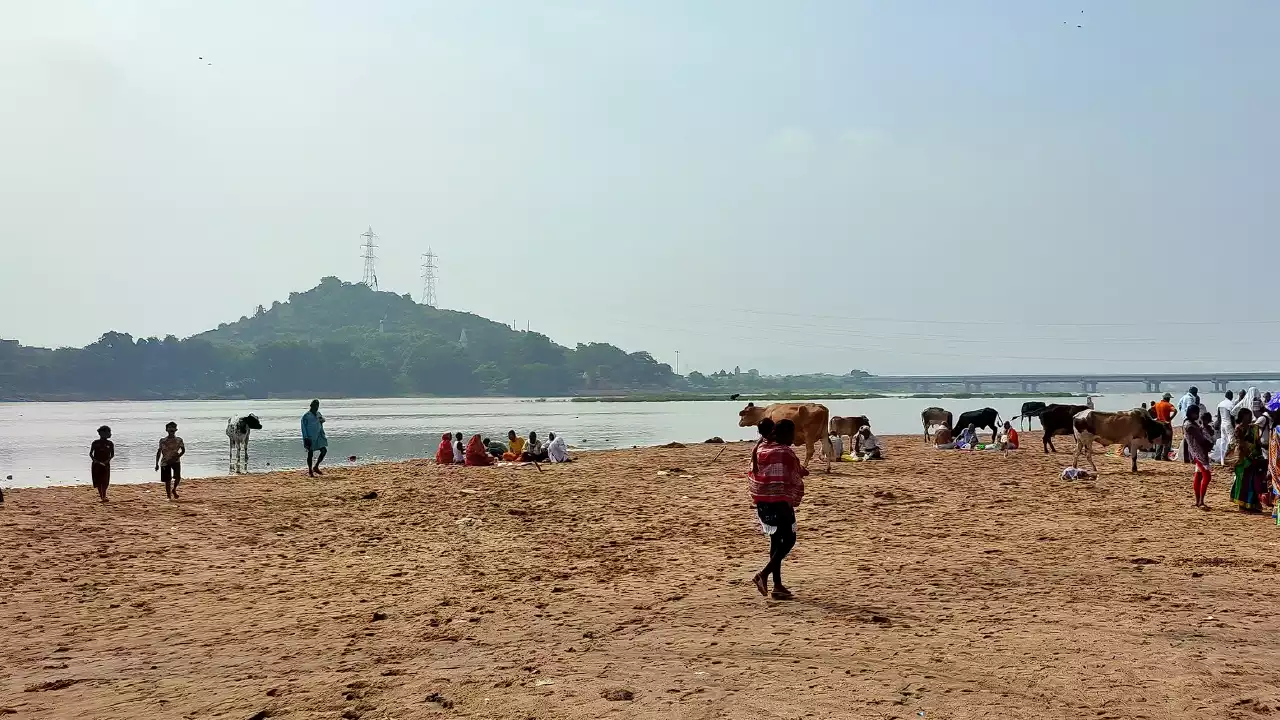
Stand on the Falgu’s bank near the Vishnupad temple and you will mostly see sand. The river is antahsalila — flowing beneath the surface — so pilgrims dig a shallow pit and the water seeps up clean. That hidden flow is the reason the river is famous, and the Ramayana explains it with a curse from Sita.
Sita’s curse
During the exile, Rama, Sita and Lakshmana came to Gaya to perform the shradh for Rama’s father Dasharatha. Rama and Lakshmana went to gather what the rites needed and left Sita waiting on the bank.
The muhurta began to pass and they did not return. Dasharatha’s spirit appeared before Sita and asked her to perform the rites herself. Rather than lose the hour she agreed, making the pindas from the sand of the Falgu’s bank — but she needed witnesses, and she called on the river, a banyan tree, a cow, the ketaki flower and a local brahmin priest.
When her husband and brother-in-law came back and asked whether the rites had been done, Sita said they had and called her witnesses to confirm it. The river, the cow, the ketaki flower and the brahmin all denied it. Only the banyan — the Akshayavat — told the truth.
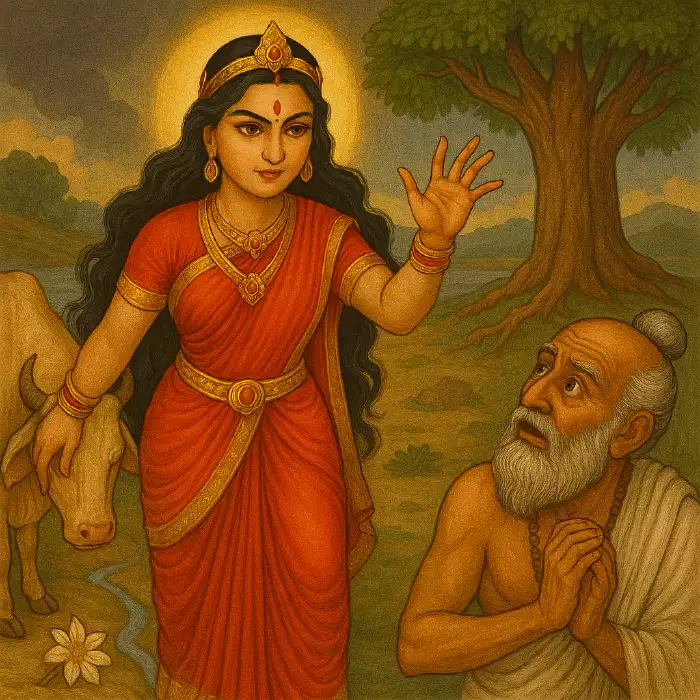
She cursed the four who lied. The Falgu would lose its surface water and flow underground, hidden, particularly at Gaya. The cow’s mouth would be held impure. The ketaki flower would never again be used in Shiva’s worship. The brahmin priests of Gaya would never be satisfied, always asking for more dakshina. And she blessed the Akshayavat with immortality, and decreed that rites performed under it would carry great merit to the ancestors.
What the legend is saying
A woman performed the rites alone, and they were accepted. Sita did it without her husband, which convention did not expect, and Dasharatha took the offering because the intention was right and the hour was right. Women perform ancestral rites in this tradition and the offering stands.
Truthfulness is the condition. The witnesses who lied lost their own standing — a sacred river lost its visible form over it. The rites want honest intention as much as correct procedure.
The cursed thing stayed sacred. The Falgu was sent underground and remains the river the Gaya rites are performed at. The hidden flow became part of what it is rather than a loss of status.
A river that flows beneath
For most of the year, outside the monsoon, the bed is a wide stretch of sand. Dig a shallow pit and clean water comes up. In a heavy monsoon the Falgu can run visibly above the surface, which pilgrims treat as auspicious.
The symbolism is read in the obvious way: that what is real is often not on the surface, and that the connection between the living and their ancestors continues whether or not anything is visible.
What the river is used for
- Snan. The purifying bath before the rites begin, in the river or with water drawn from the bed.
- Tarpan. The water offering to the ancestors, often standing knee-deep in a pit dug in the sand, facing south.
- The pindas. Prepared with, or offered with, the Falgu’s water.
- Sand pindas. Made from the Falgu’s own sand, as Sita made them. Particularly done during Pitru Paksha, and the most direct connection to the legend.
- The place itself. The main site for Pind Daan is the bank, with the Gayawal pandas working at designated spots along it.
Why Gaya is the first of these sites
The Garuda Purana and the Vayaviya Samhita both put Gaya first among the sites for ancestral offering. The reason given in the Gaya Mahatmya is that Vishnu is present here as Gadhadhara, his footprints in the Vishnupad stone, so an offering made at Gaya reaches the ancestors through him directly rather than waiting.
The Gaya rite is a circuit rather than a single ceremony, across several sites in the Gaya Kshetra, and the Falgu supplies the water, the sand and the ground for its first stages. A full tarpan in the correct sequence with a qualified Gayawal panda is held to liberate many generations of ancestors at once.
The sequence
- Bath in the Falgu, or with water drawn from the bed
- Tarpan on the bank, facing south — the direction of the ancestors
- On to the Vishnupad temple for darshan and the main Pind Daan
- To the Akshayavat, the banyan that witnessed Sita’s offering, for the final pinda under its shade
- Closing at Pretshila and Ramshila hills, where further pindas are offered
The Vishnupad temple stands on the Falgu’s western bank, and the whole circuit — Pretshila, Ramshila, Akshayavat, Brahma Kund — is oriented on the river. Our step-by-step guide to the Gaya vidhi covers the full procedure.
Pitru Paksha at the Falgu
The rites can be performed at Gaya all year, but Pitru Paksha — the fortnight in Bhadrapada, falling in September or October — is the season. The tradition holds that Pitrloka comes close to the human world during it, and that the closeness is most pronounced at Gaya because of Vishnu’s presence here.
Practically, hundreds of thousands of pilgrims arrive, and the sandy banks fill. Book months ahead if you intend to come then.
What we charge
| Package | Price | What it covers |
|---|---|---|
| Pind Daan in Gaya | ₹7,100 | Pind Daan and tarpan at the Vishnupad temple and the Falgu bank |
| Pind Daan Gaya Platinum | ₹11,000 | The extended circuit — Vishnupad, Falgu, Akshayavat and Ramshila |
| Online Pind Daan in Gaya | ₹11,000 | Performed on your behalf with a live video link |
| Tarpan in Gaya, Phalgu river | ₹11,000 | The water offering on its own, at the river |
| Pitru Paksha special, three days | ₹31,000 | The full three-day circuit during the fortnight |
| Platinum with Gau Daan | ₹25,000 | The platinum circuit with the gau daan added |
🙏 Book Pind Daan at the Falgu River
- Performed at the Falgu bank and Vishnupad
- Gayawal pandits, assigned before you travel
- Sankalp in your family gotra
- Live video option for families who cannot travel
For an ancestor who died in difficult circumstances, or where the rites have been missed for several years, Tripindi Shradh in Gaya is the rite prescribed instead, at ₹34,999. Families abroad use the remote service, with the ceremony streamed and the sankalp taken over the call.
Getting to Gaya
- By air. Gaya airport has direct flights from Delhi, Kolkata and other cities, and is also the entry point for Bodh Gaya, 13 km away.
- By train. Gaya Junction is on the Delhi–Kolkata Grand Chord, with daily trains from Delhi, Varanasi, Patna and Kolkata. Ten to twelve hours from Delhi.
- By road. Patna is 100 km and about two hours; Varanasi is 250 km.
Accommodation runs from pilgrim dharamshalas near the Vishnupad temple to hotels in the city centre, with a wider choice in Bodh Gaya 13 km away — many families stay there and come in each morning. Our note on where to stay at Gaya goes through the options.
Common questions
Why does the Falgu have no water?
It flows below the sand for most of the year. The Ramayana explains it as Sita’s curse on the river for denying her offering; pilgrims dig a pit in the bed and the water comes up.
Can the rites be performed when the bed is dry?
Yes — that is the normal condition. The water is drawn from the sand, and pindas made of the Falgu’s own sand follow Sita’s own precedent.
Is the Falgu the same as the Phalgu?
The same river. Both spellings are used, and our product pages use Phalgu.
When is the best time?
Pitru Paksha, in September or October, is the season — and the busiest time by a long way. The rites are valid all year, and outside the fortnight you will get an unhurried ceremony.
Arranging it
Tell us your gotra, the ancestors the rites are for, and when you can travel — or that you would rather it were performed on your behalf — and we will confirm the Gayawal pandit, the sites and the total before anything is paid. Message us on WhatsApp.
Book Your Sacred Ritual
Authentic ceremonies performed by Veda-trained pandits at sacred sites across India.