Pind Daan for NRI Families — Meaning, Process & Online Guidance
Understand what Pind Daan means, how the ceremony is performed and what an NRI family should prepare. When travel is not possible, the appointed pandit performs the rite physically at the selected tirtha in India while your family joins via live video conferencing.
Gaya · Prayagraj · Varanasi · Haridwar·Guidance in Hindi or English
The rite is performed in IndiaYour family may join the Sankalp from abroad
Explained simplyMeaning and purpose in clear English
Traditional contextGuidance without fear or pressure
Four tirthas availableGaya, Prayagraj, Varanasi and Haridwar
For families abroadJoin via live video conferencing
The meaning before the method
What Pind Daan for NRI families means in simple English
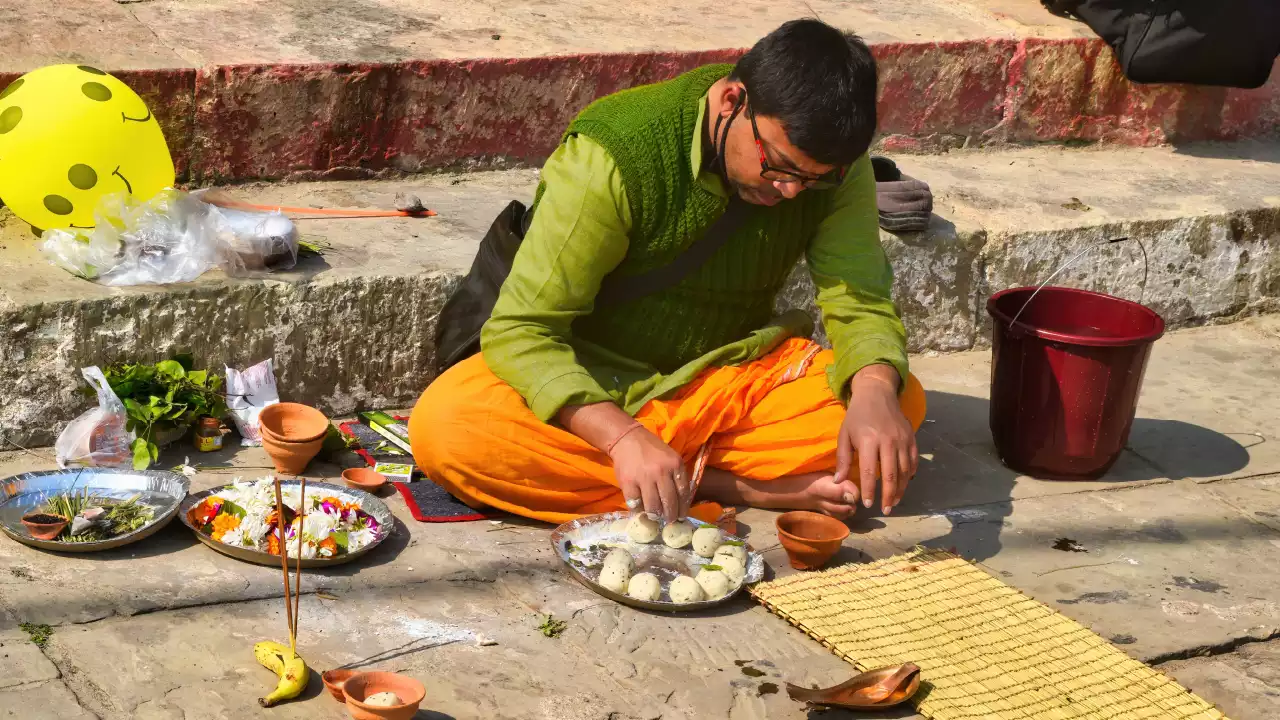
Pind Daan is an ancestral rite offered with remembrance, Sankalp and shraddha. Distance may change how the family witnesses the ceremony; it does not change the place where the appointed pandit performs it.
Pind Daan, Shradh and Tarpan are related, but not identical
A Pinda is a ritual offering prepared according to the tradition guiding the ceremony. Daan is the act of offering. Shradh is the wider observance undertaken with shraddha for the Pitrs, while Tarpan centers on offerings of water.
Their sequence and relationship can vary by family custom, tithi and tirtha. For this reason, one should read the selected package carefully and not assume that every arrangement includes every rite.
PindaThe ritual offering
SankalpThe family intention and remembrance
ShraddhaThe sincere disposition in which the rite is approached
ॐ
A restrained traditional reminder
Shraddha begins with sincere faith
The Skanda Purana, Book VI (Nagara Khanda), chapter 218, verses 1–3, explains that sincere faith gives Shraddha its name. For a family living abroad, this is a gentle reminder to approach the remembrance with steadiness rather than anxiety.
How the ceremony is understood
The Pind Daan process, without making it burdensome
The exact mantras and sequence follow the tradition of the pandit and tirtha. These are the principal parts a family should understand.
Sankalp and remembrance
The Karta’s name, gotra if known, and the names and relationships of the ancestors are spoken with the family intention.
Preparation of the Pindas
The pandit prepares the offerings and samagri according to the agreed ceremony and the tradition followed at the tirtha.
Offerings and prayers
The prescribed offerings are made physically at the sacred place. Related rites are included only when the arrangement states them.
Completion and guidance
The pandit completes the ceremony and guides the family through the concluding remembrance and any agreed observance.
The ceremony remains physical. The appointed pandit, Pindas and samagri are present at the selected tirtha in India. The family joins the confirmed live video conferencing arrangement and listens to the Sankalp and principal ceremony steps.
One family member should act as the coordinator. Share the Karta’s name, gotra if known, ancestor names and relationships, preferred tithi and any family custom that should be considered. The suitable Indian ceremony time is settled first, and the corresponding joining time is then shared with the family.
Each country page keeps the same four tirthas and explains the practical joining and booking path for that location.
Pitru Paksha 2026
Approach the tithi with steadiness
Pitru Paksha runs from 26 September to 10 October 2026. When the lunar death tithi is known, families commonly request the corresponding day. When it is not known, Sarva Pitru Amavasya may be considered with the pandit’s guidance.
Read the answer that matches your family’s concern
Every family carries its own tradition. These answers offer a clear beginning; a special family custom should still be discussed with the pandit.
What is Pind Daan in simple English?
Pind Daan is an ancestral rite in which ritual offerings called Pindas are prepared and offered with Sankalp, remembrance and prayer for departed family members. The exact materials, mantras and sequence are followed according to the tradition guiding the ceremony.
Is Pind Daan necessary for every family?
Families understand this through their own tradition, the guidance of elders and a trusted pandit. It should not be approached through fear. If your family is unsure whether Pind Daan, Shradh or Tarpan is suitable, first share the circumstances and seek calm guidance.
Can an NRI family arrange Pind Daan from abroad?
Yes. The appointed pandit performs the ceremony physically at the selected tirtha in India. The family details are spoken in the Sankalp, and relatives abroad may join through the confirmed live video conferencing arrangement.
Which tirtha can an NRI family choose?
The featured online arrangements are available in Gaya, Prayagraj, Varanasi and Haridwar. If an elder or family tradition has named a place, begin there. Otherwise, compare the location and exact package inclusions before choosing.
What if the gotra or exact death tithi is not known?
Share only what your family knows. The pandit can explain how an unknown gotra is handled and help identify a suitable tithi. During Pitru Paksha, Sarva Pitru Amavasya may be considered with proper guidance when the exact tithi is unknown.
How are Pind Daan, Shradh and Tarpan different?
Pind Daan centers on the offering of Pindas, Tarpan centers on offerings of water, and Shradh is the wider observance performed with shraddha for the Pitrs. Their relationship and sequence can vary by family tradition, tithi and tirtha, so one should not assume that every package includes all three.
When understanding becomes a family decision
Choose the tirtha with a settled mind
Review the four online arrangements, the current prices and their exact inclusions before booking.