No rituals selected yet.
Browse Pooja Packages →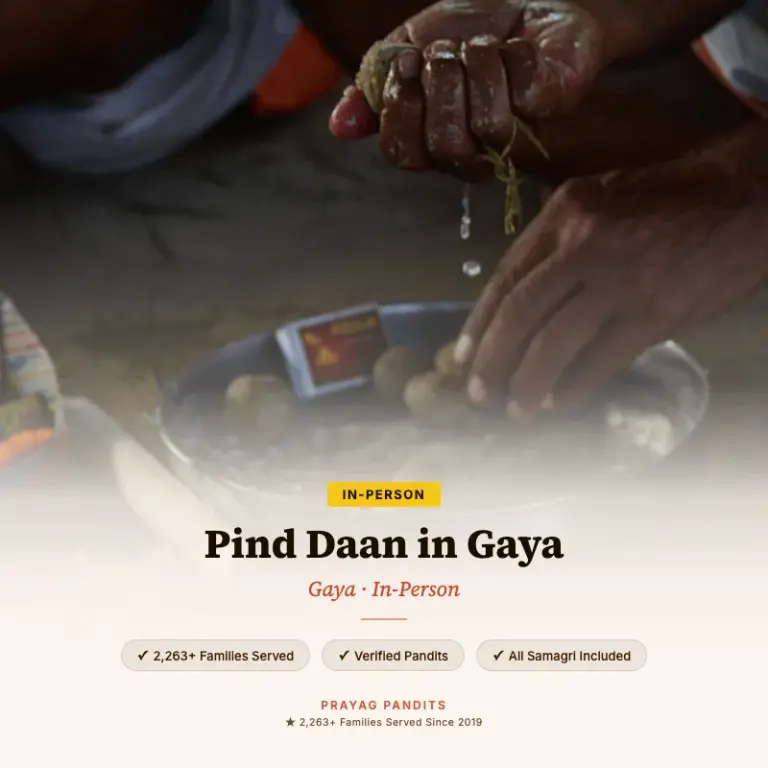 Save 35%
Gaya
Pind Daan in Gaya
Pind Daan at Vishnupad Temple / Phalgu River, Gaya Experienced Gayawal Pandit...
from
₹7,100
₹11,000
September 26 – October 10, 2026
Save 35%
Pind Daan at Vishnupad Temple / Phalgu River, Gaya Experienced Gayawal Pandit...
 Most Booked
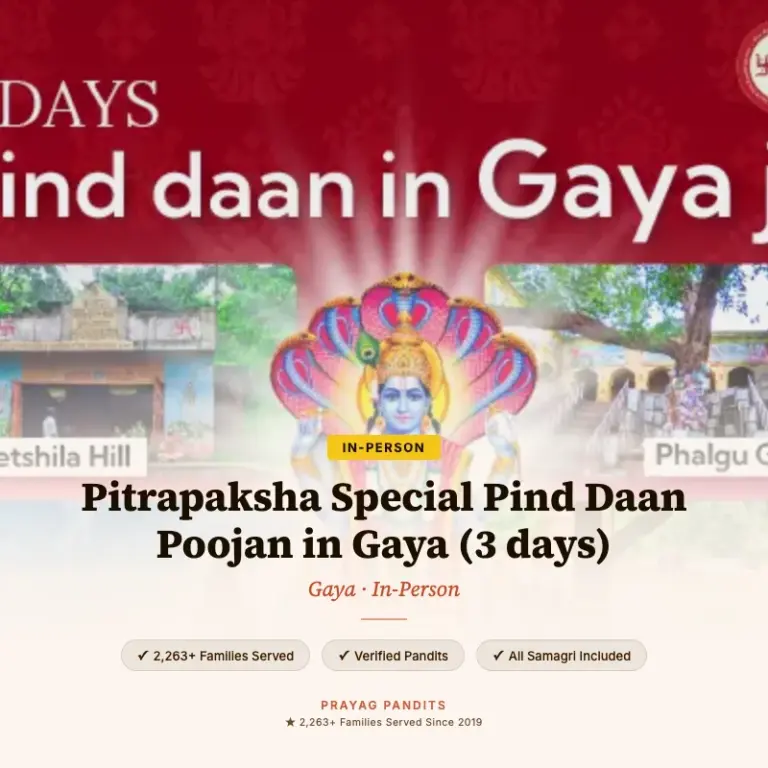
Pind Daan at Vishnupad Area AND Phalgu Area Dedicated experienced pandit for...
 Save 56%
Dedicated Vedic priest for 3 days Complete premium samagri Pind Daan at...
 Save 48%
Online Pind Daan at Vishnupad Area OR Phalgu Area Experienced pandit (Gaya...
 Save 40%
Online Pind Daan at Triveni Sangam, Prayagraj (live video) Online Pind Daan...
 Save 53%
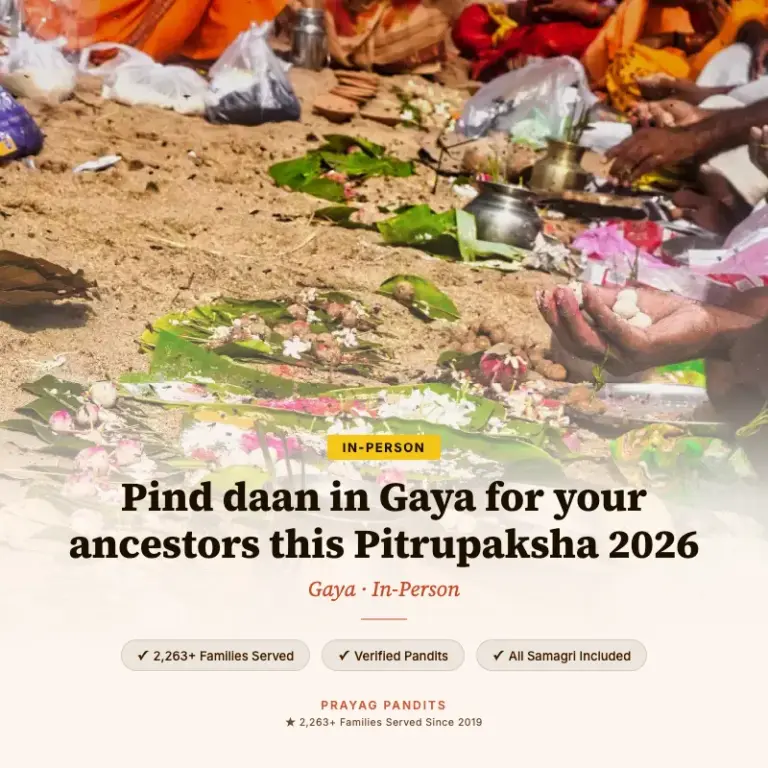
Experienced Gayawal Pandit (hereditary Gaya priests) Complete samagri (pinds, sesame, ghee, flowers,...
 Save 29%
Senior Gayawal Brahmin Pandit (hereditary) Pind Daan at Phalgu, Vishnupad & Akshaywat...
 Save 24%
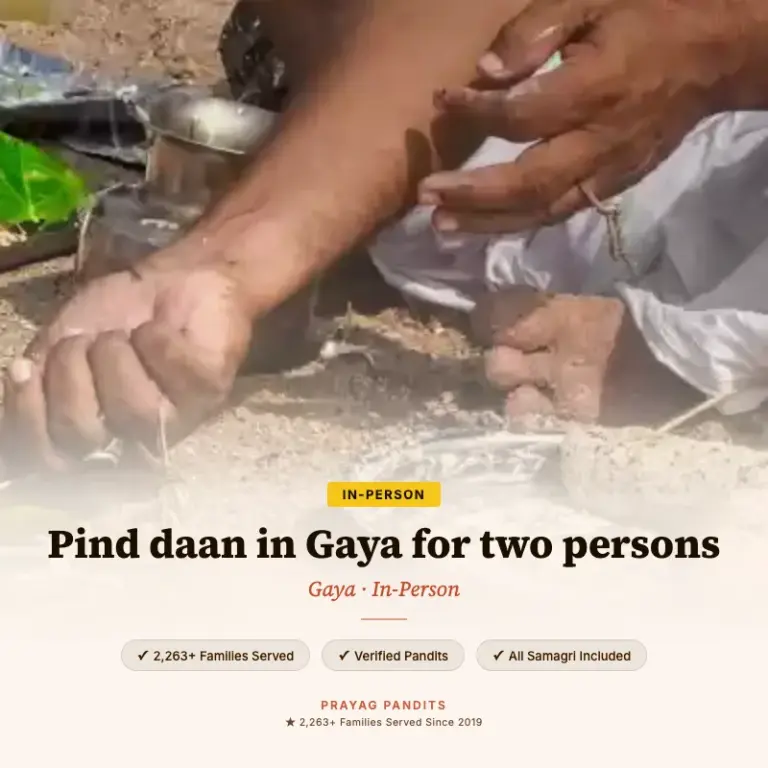
Complete Pind Daan ceremony for two persons (2 families) at Gaya Experienced...
Most Booked
Pind Daan at Vishnupad Area AND Phalgu Area Dedicated experienced pandit for...
Online Tripindi Shradh at Gaya (Phalgu / designated vedi) — Pitrupaksha 2026...
Tripindi Shradh at Phalgu River, Gaya (Pitrupaksha 2026) Experienced Gayawal Pandit All...
 Save 35%
Authorised Gayawal Pandit (hereditary) Complete Shradh ceremony at Vishnupad Area OR Phalgu...
 Save 31%
Online Shradh at Phalgu River / Vishnupad area, Gaya (live video) Authorised...
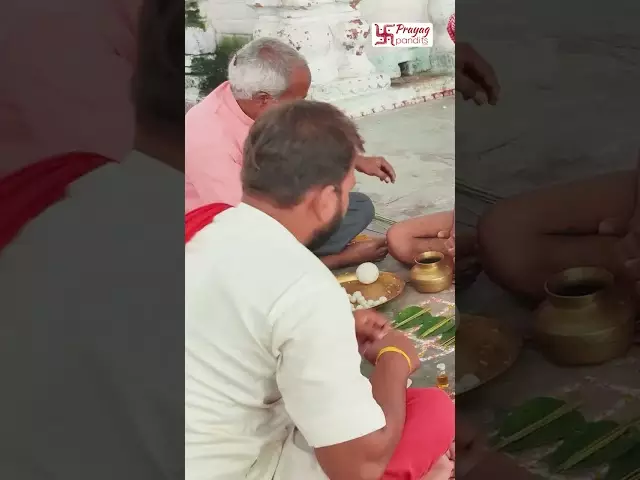 Save 27%
Online Shradh ceremony at Phalgu Vedi, Gaya Experienced Gaya Kshetra pandit All...
Pind Daan Pooja & Tarpan at Gaya, performed per the prescribed vidhi...
Pind Daan Pooja & Tarpan at Gaya, performed per the prescribed vidhi...
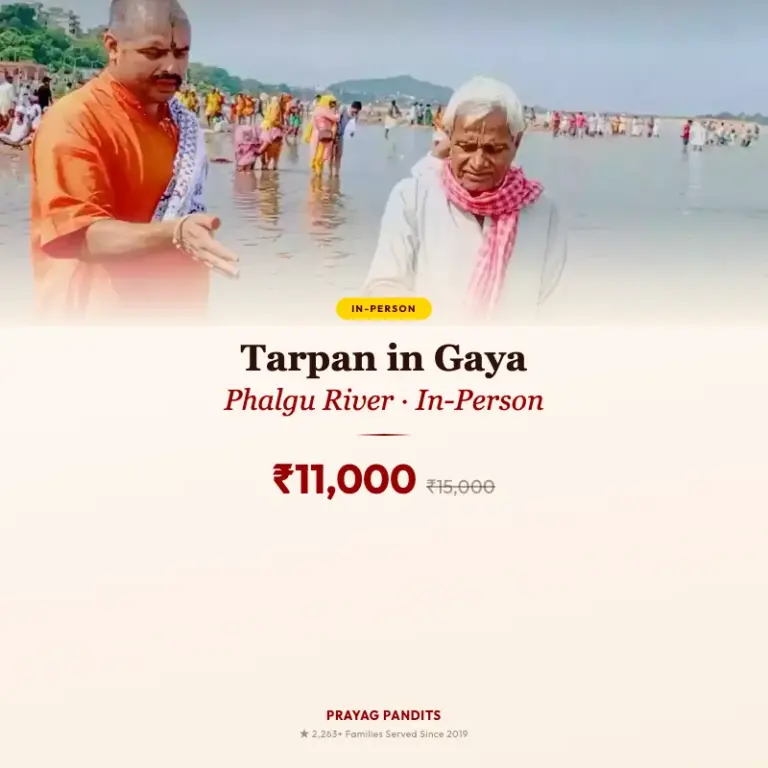 Save 27%
Tarpan at Phalgu River, Gaya Experienced Gaya-based pandit (Phalgu River Tarpan tradition)...
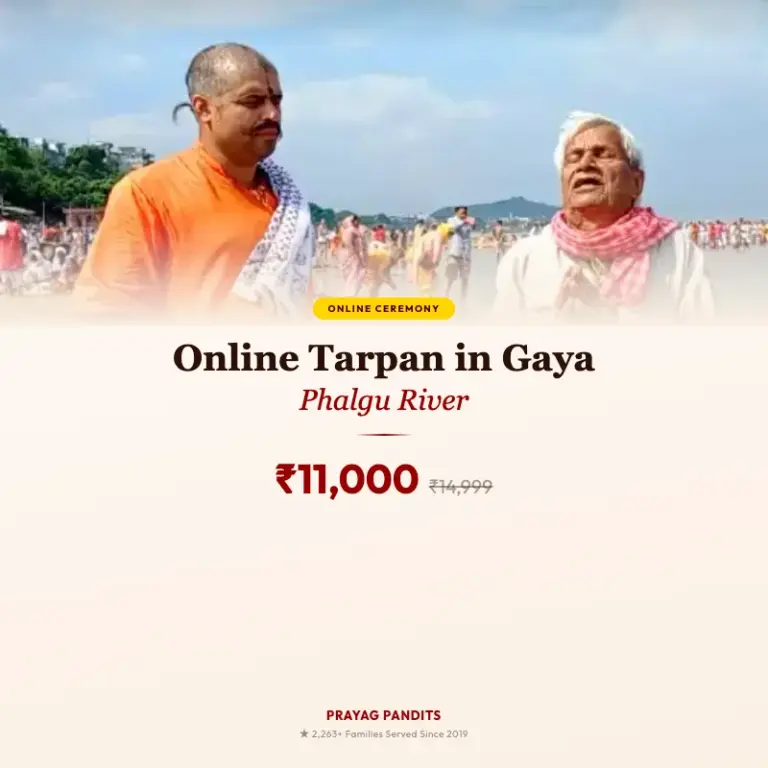 Save 27%
Online Tarpan at Phalgu River, Gaya (live video) Experienced Gaya-based pandit All...
 Save 27%
Tarpan at Phalgu River, Gaya (Pitrupaksha 2026) Experienced Gaya-based pandit All samagri...
 Save 27%
Online Tarpan at Phalgu River, Gaya (live video) Experienced Gaya-based pandit All...
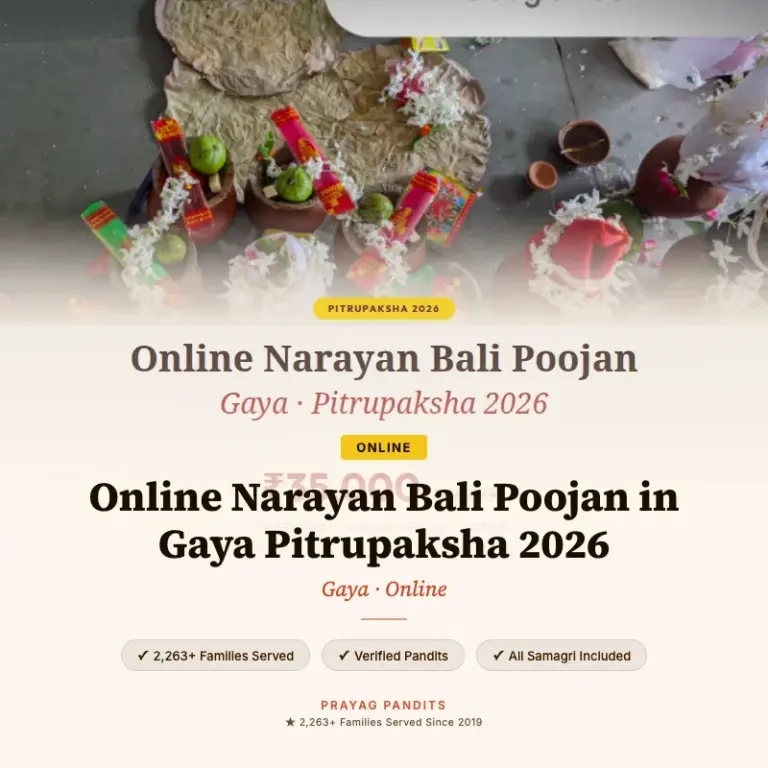 Save 24%
Online Narayan Bali Poojan at Gaya (live video, 4–5 hours) Experienced pandit...
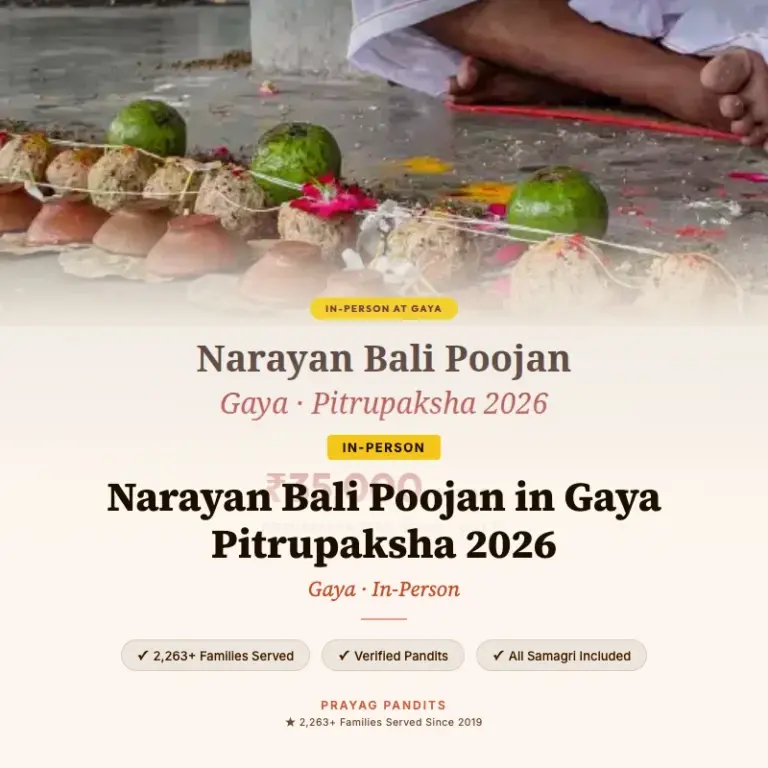
Complete Narayan Bali Poojan at Vishnupad Temple area, Gaya Experienced qualified pandit...
Online Tripindi Shradh at Gaya (Phalgu / designated vedi) — Pitrupaksha 2026...
Tripindi Shradh at Phalgu River, Gaya (Pitrupaksha 2026) Experienced Gayawal Pandit All...
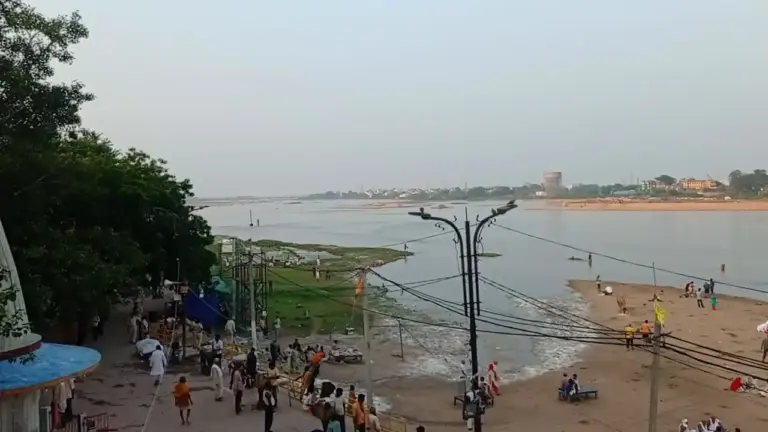
Asthi Visarjan at the sacred Falgu (Phalgu) river, Gaya Experienced Gaya Teerth-Purohit...
All ceremonies performed by verified pandits with 10+ years of experience in Vedic rituals.
Complete ceremony recording sent via WhatsApp within 24 hours. Digital certificate shared via email.
Every material required for the puja is arranged by us. Nothing extra to buy or carry.
Can't travel? We perform the ritual on your behalf with live video call option.
Bengali families traditionally travel to Gaya in two windows. The first is December through February — the post-harvest season after the Aman rice harvest — when families have both the time and financial means to undertake the pilgrimage. The weather is cool and pleasant, trains are less crowded than during the festival season, and the overall atmosphere at Gaya is serene. The second window is Pitru Paksha (September–October), specifically Mahalaya Amavasya, which in 2026 falls on October 10. This is the holiest day for Bengali tarpan and many families combine the Gaya yatra with their Mahalaya observance before returning home for Durga Puja. Book trains at least 3–4 months in advance for the Pitrupaksha window as demand is very high.
A single-vedi ceremony at the Vishnupad Temple, including the Sankalpa recitation, Pinda offering, and closing prayers, takes approximately 2 to 3 hours. A complete single-day ceremony covering Vishnupad Temple, Phalgu River Tarpan, and Akshaywat — the three most important vedis — takes approximately 5 to 7 hours including travel between sites. The 3-day Pitrupaksha Special package covers 10 or more vedis across the full Gaya Kshetra and is the most complete option. Come early in the morning (before 8 AM) to begin the snan at the ghat and have sufficient time for the full circuit.
Asthi Visarjan at Gaya can be performed throughout the year. However, certain periods carry heightened significance:
Pitrupaksha (September–October) — The supreme 16-day period for all ancestral rites at Gaya. During Pitrupaksha, hundreds of thousands of pilgrims gather at the Falgu River and Vishnupad Temple. The Falgu typically has visible surface water during this monsoon-adjacent period, and the spiritual charge of the Gaya Kshetra is at its peak. In 2026, Pitrupaksha runs from 7 to 21 September.
Monsoon (July–September) — The Falgu has the most visible surface water, making the physical immersion experience more tangible. Weather is warm and humid.
October–March — Comfortable weather for travel. The Falgu may be dry on the surface but rituals are performed on the sandy banks with Gangajal brought for the ceremony.
Amavasya days — New moon days throughout the year are considered powerful for ancestral offerings at Gaya.
Book early for Pitrupaksha — qualified Gayawal Brahmins are in extremely high demand during this period.
The Falgu River's underground flow is explained by one of Hindu scripture's most poignant stories. When Lord Rama visited Gaya to perform Pind Daan for his father Dashrath, he asked Sita to wait at the riverbank. When the auspicious moment arrived and Rama had not returned, Dashrath's spirit appeared before Sita asking for the offering. Sita performed the Pind Daan herself, using sand from the Falgu riverbed, and called upon the river, a nearby cow, a Tulsi plant, and a Brahmin as witnesses.
When Rama returned and doubted her account, the Falgu River — afraid of Rama's wrath — denied witnessing the offering. Sita, hurt by the betrayal, cursed the river to flow underground forever. This is why the Falgu is called "Antahsalila" — the river that flows beneath the surface.
Despite the underground flow, Asthi Visarjan at the Falgu is fully valid. The sacred waters are present beneath the sand year-round, and during the monsoon and Pitrupaksha season (September-October), surface water is visibly present. The Vayu Purana confirms that the Falgu's sanctity is undiminished regardless of its visible flow.
Panchak Nivaran puja is a specific Vedic ritual performed to neutralize the harmful effects of a death that occurred during Panchak kaal (the 2.5-day period when Moon transits through the last five nakshatras). It should be done BEFORE or DURING the cremation for maximum efficacy, though it can also be performed after cremation if the family did not know about Panchak at the time. The puja involves a qualified Brahmin performing sankalpa in the name of the deceased, preparing five kusha grass effigies (putlas), reciting specific mantras from the Garuda Purana and Yajurveda, placing the effigies on the pyre, and performing havan with specific samidha (fire offerings). The puja typically takes 2-3 hours. After cremation, follow-up rites include 11-day Mahamrityunjaya jap, Navagraha shanti, and a dedicated Pind Daan for the deceased at Prayagraj, Gaya, or Varanasi. Panchak Nivaran can also be performed as a preventive measure during Pitrupaksha for ancestors who died during Panchak in previous years. Prayag Pandits provides complete Panchak Nivaran services including the cremation-time puja, follow-up jap, and Pind Daan at sacred tirthas.
Pitru Paksha September 26 – October 10, 2026. Limited pandit availability — book early.