Ancestral liberation rite · India

Narayan Bali

A prescribed three-day Vedic rite for unresolved ancestral passage.

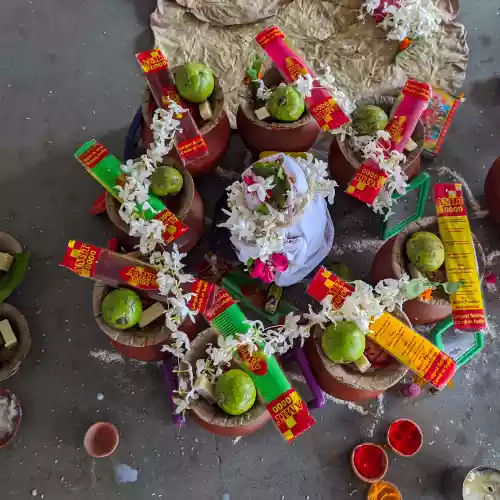
Narayan Bali ceremony arranged with pandits and ritual kalashas
Real ceremony photographyThree days, guided step by step Family Sankalp
Choose the arrangementIn person or online participation Choose place

Begin with the circumstances of death and your family’s ability to travel. A qualified Pandit can then guide the correct location and participation mode.

✓ Three-day ceremony ✓ Names and gotra Sankalp ॐ Complete Vedic procedure ✓ Online participation available
3 daysComplete ritual sequence
3 placesGaya, Prayagraj and Haridwar
2 modesIn person or online

There are deaths that leave a family not just grief-stricken but deeply unsettled — an inexplicable heaviness in the house, recurring bad dreams, children falling ill without cause, or a feeling that the departed has not found peace. When death occurs in sudden, unnatural, or violent circumstances, the scriptures prescribe a specific remedy: Narayan Bali.

This is a two-part ritual — Narayan Bali and Nagbali — performed together to liberate souls trapped in a state of unresolved death, and to remove the dosha this unresolved state creates in the family's lineage.

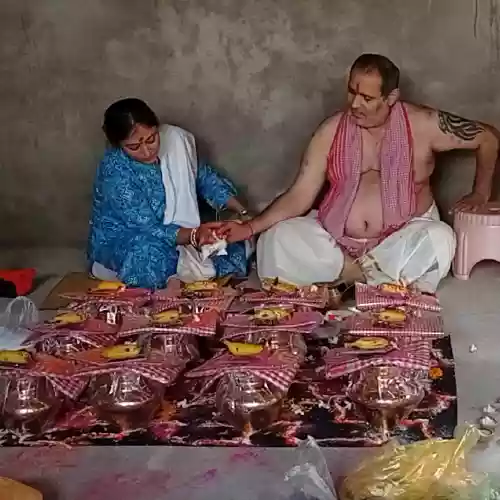
Pandit guiding a participant through Narayan Bali ritual offerings
The prescribed rite is performed with detailed ritual preparation.

Purpose of the rite

What Is Narayan Bali?

Narayan Bali is a Vedic ritual performed for souls who died in unusual or inauspicious circumstances. The name comes from Lord Narayan (Vishnu), who is invoked to guide the soul toward liberation. Bali here means a ritual offering made to appease and release.

The Bhavishya Purana describes clearly which situations call for Narayan Bali:

In such situations, the soul may be unable to move forward normally in its journey. It may linger in a troubled state — what the scriptures call a preta yoni — and this can manifest as ongoing disturbances in the family: illness, financial collapse, failed relationships, depression, or a persistent sense of unease.

Death by suicide
Accidental death — drowning, snakebite, animal attack, road accident, fall
Death by lightning or any natural calamity
Death of a child before the age of two (before the Mundana/Chudakarana samskara)
Death under unusual or unexplained circumstances
Death far from home or in a foreign land
Cases where proper last rites could not be performed at the time of death

Understand the distinction

Narayan Bali and Nagbali — Why They Are Done Together

01

Nagbali

The ancestral connection

Nagbali is performed alongside Narayan Bali when the ancestral disturbance is connected to the killing of a snake — particularly a large cobra — by an ancestor, whether intentionally or accidentally. The Naga (divine serpent) holds a significant place in Hindu cosmology, and such an act can create a naga dosha that passes through generations.

02

Combined ceremony

Why the rites are arranged together

In practice, both rituals are performed together as a combined rite of three days at a specially qualified location. The most authoritative location for this ceremony in all of India is Trimbakeshwar — though our pandits also perform this at Gaya, Prayagraj, and Haridwar for families who cannot travel to Nashik.

The complete sequence

The Ritual Process

Each day has a distinct role. The ceremony is planned as one continuous prescribed sequence.

01

Day one

Sankalpa and preparation

Narayan Bali is a three-day ceremony. On the first day, preparatory rites and sankalpa (declaration of intent) are performed.

02

Day two

The prescribed last rites

On the second day, a symbolic cremation is performed — a human effigy made of darbha grass or atta (flour) is created, representing the departed soul, and the full Antyesti (last rites) procedure is enacted for it. This gives the soul the proper funeral rites it may have missed at the time of actual death.

03

Day three

Pind Daan and liberation prayers

On the third day, Pind Daan is performed and Narayan's blessings are invoked for the soul's liberation and the family's relief from dosha. Throughout the ceremony, Vedic hymns from the Garuda Purana and specific mantras from the Skanda Purana are chanted.

Choose the sacred place

Where We Perform Narayan Bali

Use the city guide for local context, then open the matching in-person arrangement when your family is ready.

Narayan Bali ritual preparation for a family joining online
Online participationFamily Sankalp coordinated from overseas

For families unable to travel

Online Narayan Bali for NRIs

We understand that many NRI families and those settled far from India experience the effects of pitru dosha without being able to easily travel for a remedy. We offer Online Narayan Bali — ₹35,000 — where our pandit performs the complete three-day ceremony at the sacred location on your behalf.

Throughout the ceremony, you are connected via video call and can participate in prayers and sankalpa from wherever you are. After the ritual, you receive a detailed ceremony report and photos from each day.

Many families who felt helpless about a loved one's troubled death have found relief through this service. The intention and devotion you bring to the ceremony, whether present or remote, is what matters most.

International payment: PayPal checkout is available for overseas families.

When families seek guidance

Signs That Narayan Bali May Be Needed

Our pandits often advise families to consider Narayan Bali when they describe:

We also offer Kaal Sarp Dosha remedies at Ujjain and Mangal Dosha puja for families dealing with other astrological afflictions. If you are unsure which ritual is right for your situation, speak with our pandit — they will guide you honestly.

  • Repeated bad dreams involving the departed — particularly dreams where the person appears distressed or trapped
  • Unexplained illness in the household, especially affecting children
  • A series of accidents or sudden losses following a family member's unnatural death
  • A general feeling that the departed has not "moved on"
  • Astrologers or pandits identifying pitru dosha in the family kundali

Questions families ask

Narayan Bali FAQs

Read the answers connected with this page.

What is the unique significance of Pishach Mochan Kund in Varanasi for Narayan Bali?

Pishach Mochan Kund holds paramount importance for Narayan Bali and related rituals like Tripindi Shradh in Varanasi. Its name literally translates to "the pond where ghosts/spirits are liberated." Legends (mentioned in Kashi Khand of Skanda Purana) associate it with the liberation of a Pishach (spirit) through the grace of Lord Shiva (Kapardishwara Mahadev). It is considered the specific place in Kashi, uniquely powerful for performing rites to free souls trapped due to unnatural death, severe attachments, or lack of proper funeral rites. Many believe such rituals performed here are essential for releasing souls from the Pret/Pishach Yoni.

How is Narayan Bali different from Tripindi Shradh also performed at Pishach Mochan?

Narayan Bali: Primarily focuses on liberating souls who died an unnatural death (Akal Mrityu) and are consequently stuck (Pret Yoni). It addresses the specific trauma and unfulfilled desires associated with such deaths.

Tripindi Shradh: Addresses ancestors (usually across three generations - father, grandfather, great-grandfather) whose regular Shraddha rites might have been neglected over time, or who are causing trouble due to strong lingering attachments (to food, clothes, wealth etc.). It aims to pacify these general ancestral dissatisfactions.
While both are performed at Pishach Mochan and aim for ancestral peace, Narayan Bali targets the specific issue of unnatural death, whereas Tripindi Shradh addresses neglect or general restlessness across generations. Often, they might be performed together if both situations apply.

Where exactly is Pishach Mochan Kund located in Varanasi?

Pishach Mochan Kund is located near the Chetganj area in Varanasi. It's a well-known site, distinct from the main cremation ghats like Manikarnika or Harishchandra Ghat. It features a sacred pond (kund) and associated temples, including one dedicated to Kapardishwara Mahadev.

How long does the Narayan Bali Puja typically take in Varanasi?

The duration can vary:

  • Condensed versions focusing purely on the core Narayan Bali rites might take around 4-5 hours, often completed in a single day. (Sources mention this timeframe).
  • More elaborate packages, sometimes including Tripindi Shradh, extensive Daan (charity), or multiple priests, might extend over 3 days or potentially longer. (Source mentions 3-day Narayanbali packages).
    It's essential to confirm the expected duration and included components with the pandit or service provider.
What are the rules to follow after Narayan Nagbali?

Go directly home after the ceremony. Maintain vegetarian diet for 3 days. Avoid Nag Devata temples for 11 days. The head of family should observe celibacy for 3 days. Do not bring ritual materials home -- all are immersed by the priest. After 11 days, resume regular Shraddha practices.

Speak before you book

Book Narayan Bali

Narayan Bali is a significant commitment — three days, at a sacred location, with proper Vedic procedure. We ask families to book at least two to three weeks in advance so the pandit can prepare properly. For Pitrupaksha bookings, please contact us at least a month ahead.

Call or WhatsApp us at +91 7754097777. Share the name and gotra of the departed, the circumstances of death, and your preferred location. Our pandit will speak with you in detail and guide you through the process.

Your Booking

🙏 Add ₹10,000 more for priority scheduling

No rituals selected yet.

Browse Pooja Packages →
Need help booking? Chat with us on WhatsApp