
Ancestral rites · India

Tarpan

Tarpan is the offering of water to the ancestors, made at Gaya, Prayagraj, Varanasi, Haridwar or Garh Ganga.

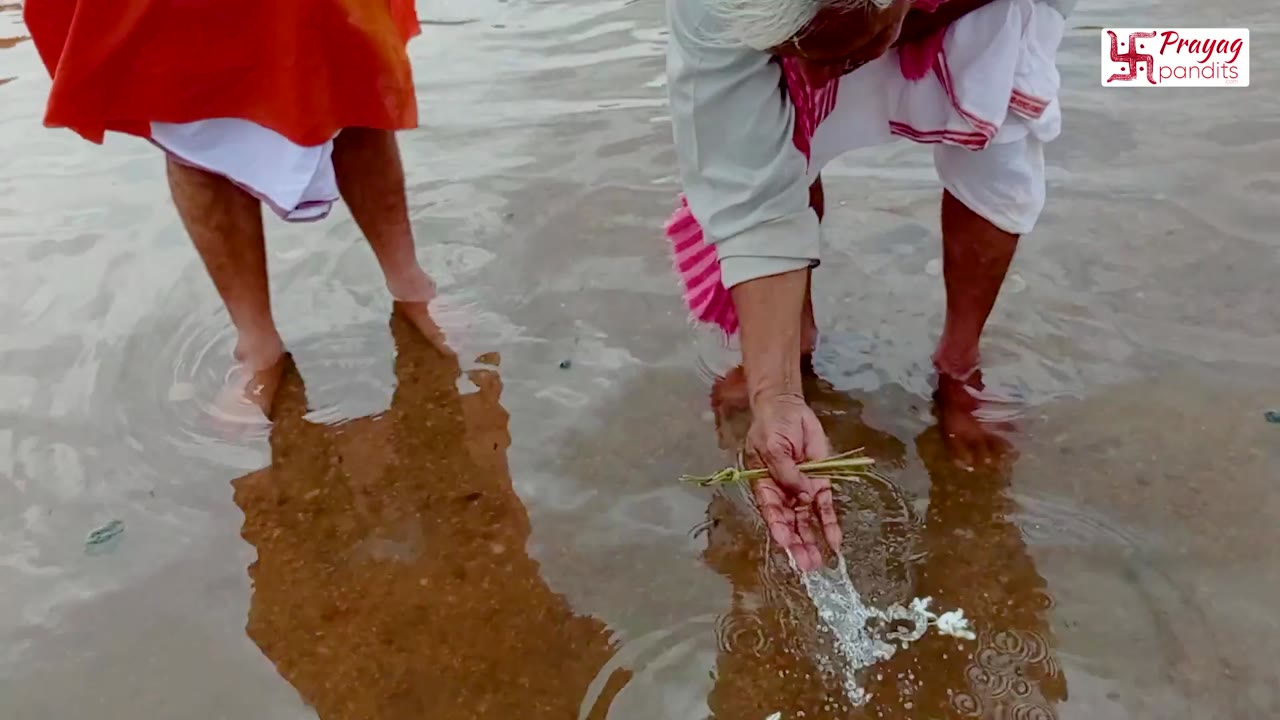
Water offered to the ancestors with kusha grass at the river
Five sacred ghatsWater offered, day after day Verified arrangement
Booking pathsAt the ghat, or performed on your behalf Choose the ghat
DailyA nitya-karma, not a one-time rite
5 ghatsGaya, Prayagraj, Varanasi, Haridwar, Garh Ganga
OnlineFor families unable to travel

Start here

What Tarpan is

Tarpan is jala-tarpana, the water libation. The Manusmriti, in its Pitri-yajna section, names it one of the five mahayajnas every householder performs daily after the morning bath. Water is offered with darbha grass and black til, in three directions, with the family's names and gotra recited in the Sankalp.

How it differs from Pind Daan and Asthi Visarjan

This is what separates tarpan from the rites it is usually confused with. Pind Daan and Asthi Visarjan are rites of release, performed once for a departed person. Tarpan is sustenance — it is repeated, and it continues for as long as the family keeps it.

The question families actually ask

When Tarpan is offered

Tarpan is valid on any day of the year. These are the occasions on which families most often observe it, and the ones our pandits are asked for most.

  • Daily nitya-karma, after the morning bath. The form the Manusmriti prescribes.
  • Pitru Paksha the sixteen-day fortnight falling in September or October. The peak window, and the one most families travel for. Dates and calendar
  • Amavasya the monthly no-moon day, the regular touchpoint between the annual observances.
  • The annual tithi the lunar date on which the person being remembered passed. The lifelong family obligation.
  • Year-round a family may arrange tarpan at any time, and there is no season in which it is not accepted.

What is performed

How Tarpan is performed

The Karta takes the Sankalp first, naming himself, his gotra and the ancestors being remembered. Water is then offered in three directions with the prescribed darbha twigs and the anjali count given in the Baudhayana sutra — deva-tarpan facing east, rishi-tarpan facing north, pitri-tarpan facing south.

When the family cannot recite it themselves

Where a family cannot recite it themselves, the pandit performs the rite on their behalf with the Sankalp taken in their name and gotra. The procedure does not change; only who holds the water does.

Tarpan vidhi, step by step The mantras, with meanings

Choose the ghat

Where Tarpan is performed

Five places, each with its own scriptural basis. Begin with the tirtha your family already follows; where none has been prescribed, choose on the river, the tradition and what else you intend to have performed on the same visit.

Two ways to have it performed

At the ghat, or on your behalf

Travel to the ghat and the Karta offers the tarpan with his own hands, with the pandit reciting and the samagri arranged. Families who cannot travel choose the online arrangement: the pandit performs the rite physically at the named ghat, relatives join by live video at the confirmed time, and the photographs follow afterwards.

Is one form better than the other?

Neither is a lesser form. What matters ritually is that the Sankalp carries the correct names and gotra and that the procedure is observed.

Online Tarpan for families abroad

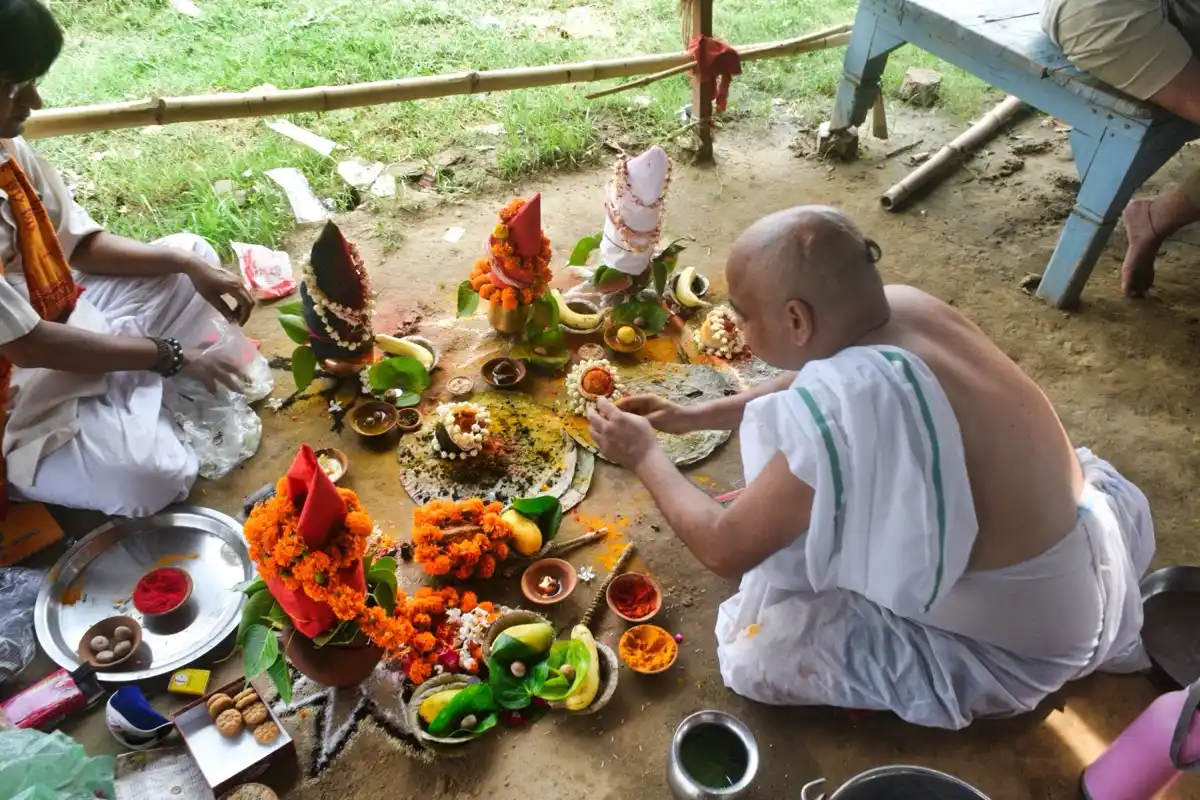
A family ancestral ceremony beside the river
Tarpan is one component of Shradh, not another name for it

Telling the rites apart

How Tarpan relates to Shradh and Pind Daan

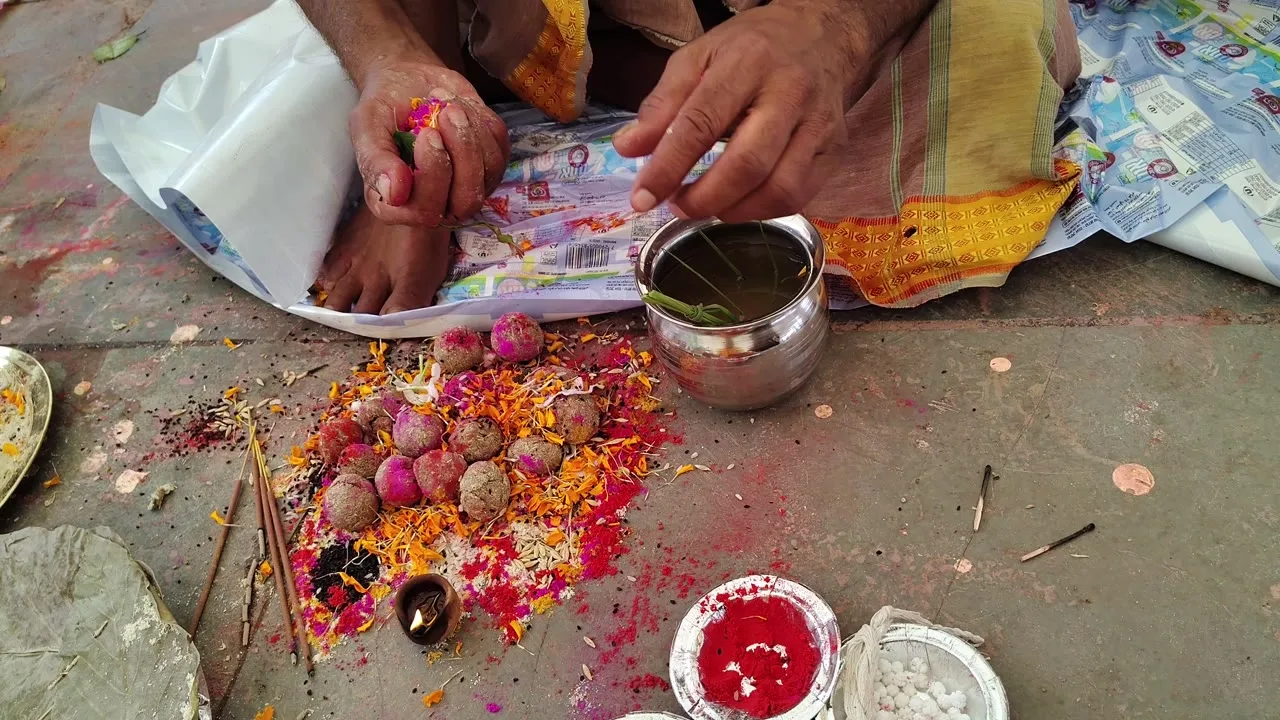
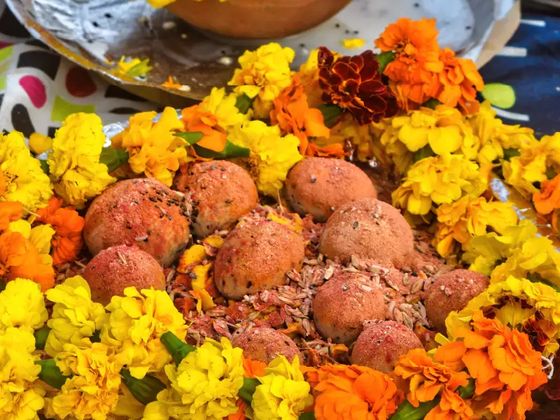
Tarpan is one component of Shradh, not another name for it. A full Shradh combines Brahmin Bhojan, dakshina and tarpan; tarpan on its own is the water libation alone. Pind Daan is a third rite again — the offering of pindas, not water.

What this means when comparing packages

This matters when comparing packages. Read what a product actually includes rather than assuming one name covers all three, and ask if you are unsure which your family has been advised to perform.

Before you book

What to keep ready

  • The Karta's full name
  • The gotra, if the family knows it
  • The names and relationships of the ancestors being remembered
  • The tithi, where it is known, or the English date of passing
  • The chosen ghat, or the occasion you intend to observe
  • Whether the family will travel or join by live video

An unknown gotra is not an obstacle. The pandit will explain how it is handled and help the family settle on a suitable day.

Questions families ask

Tarpan FAQs

Read the answers connected with this page, or browse the complete Tarpan collection.

See all Tarpan FAQs
Where in Haridwar is Tarpan typically performed?

Tarpan is primarily performed at the sacred Ghats along the Ganges River in Haridwar. Key locations include:

  • Kushavarta Ghat: This Ghat is specifically renowned and traditionally considered the most appropriate and auspicious place in Haridwar for performing Tarpan, alongside Shradh and Pind Daan.
  • Har Ki Pauri: The famous Brahma Kund area within Har Ki Pauri is also a highly sacred spot where devotees perform Tarpan, often after taking a holy dip.
  • Other Ghats: While the above are primary, Tarpan can also be performed at other Ghats like Vishnu Ghat, Gau Ghat, or any clean spot along the riverbank where one can face south (for Pitru Tarpan).
What is the difference between Tarpan and Shradh?

Tarpan is the water offering alone — the most basic form of ancestral rite. Shradh is the complete ritual complex that includes tarpan, brahmin feeding, and pinda offerings. Tarpan can be performed daily; shradh is performed on the death anniversary tithi and during Pitrupaksha.

What if I do not know my gotra or ancestor name?

You may use the general formula: Asmatkulasya Sarve Pitarah Triptyantu — May all the ancestors of my lineage be satisfied. Our pandits are experienced in helping families identify their gotra through lineage tracing, particularly through records at Prayagraj and Gaya where family registers have been maintained for centuries.

Is there a tarpan vidhi PDF available?

The complete mantras and step-by-step procedure on this page can be printed for reference. For a printer-friendly PDF with Devanagari text and English transliterations, contact us on WhatsApp and our pandits will send it to you. Many families keep this at home for daily Amavasya tarpan.

Can women perform tarpan?

Traditional texts vary, but the majority view in the Smriti tradition is that sons are primary performers of Pitru Tarpan. However, daughters, granddaughters, wives, and daughters-in-law are permitted and encouraged to perform tarpan in the absence of a male heir. Many families today have daughters perform tarpan, and several regional traditions have always included women in the rite.

Tell us the names and the gotra

Because it is a daily obligation rather than a single ceremony, the first question is not which tirtha but how often your family intends to observe it. A family keeping the annual tithi needs something different from a family travelling for Pitru Paksha.

Your Booking

🙏 Add ₹10,000 more for priority scheduling

No rituals selected yet.

Browse Pooja Packages →
Need help booking? Chat with us on WhatsApp