Key Takeaways
In This Article
For Odia Hindu families, shraddha (ଶ୍ରାଦ୍ଧ) is among the most sacred obligations a son or daughter can fulfill for departed parents and ancestors. The Odia shraddha paddhati — the prescribed method of performing ancestral rites — follows the Vedic tradition while incorporating regional customs unique to Odisha.
This guide covers the complete shraddha process as practiced in Odia families: shraddha barsika (annual death anniversary), mahalaya shraddha (during Pitru Paksha), dashaha (ten-day rites), and the mantras recited during each ceremony. We include key terms in Odia script (ଓଡ଼ିଆ) alongside English explanations for families who may be performing these rites for the first time.
At Prayag Pandits, our pandits are familiar with Odia ritual traditions and perform all ceremonies respecting Odia customs. We have served hundreds of Odia families from Bhubaneswar, Cuttack, Puri, Sambalpur, and the Odia diaspora worldwide.
ଶ୍ରାଦ୍ଧ ବାର୍ଷିକ (Shraddha Barsika) — The Annual Death Anniversary
Shraddha barsika is the most important annual ritual obligation in an Odia Hindu family. It is performed on the death anniversary of the departed, calculated by the tithi (lunar date) from the Hindu panjika (Odia almanac), not the English calendar date.
Key terms in Odia:
- ଶ୍ରାଦ୍ଧ ବାର୍ଷିକ (Shraddha Barsika) — annual death anniversary ceremony
- କର୍ତ୍ତା (Karta) — the person performing the rite (usually eldest son)
- ପିଣ୍ଡ (Pinda) — rice balls offered to ancestors
- ତର୍ପଣ (Tarpana) — water offering with sesame seeds
- ବ୍ରାହ୍ମଣ ଭୋଜନ (Brahmana Bhojana) — feeding Brahmins in the ancestor’s name
How to Calculate the Shraddha Barsika Date
The date is determined by the tithi on which the person died, in the same paksha (fortnight) and masa (month) of the Hindu calendar. For example, if someone passed away on Kartika Krishna Dashami, the barsika falls on Kartika Krishna Dashami every year.
In Odisha, the Odia Panjika (published by institutions like the Kohinoor Panjika or the Utkal Jyotish Parishad) provides the exact tithi dates mapped to the English calendar. If you do not have access to a panjika or are unsure of the tithi, our pandit team can calculate it from the English date and year of death. Contact us with the date.
What is Included in a Barsika Ceremony
A properly performed barsika includes:
- ସଙ୍କଳ୍ପ (Sankalpa): The formal vow, stating the ancestor’s name, gotra, and the purpose of the offering. The karta sits facing south.
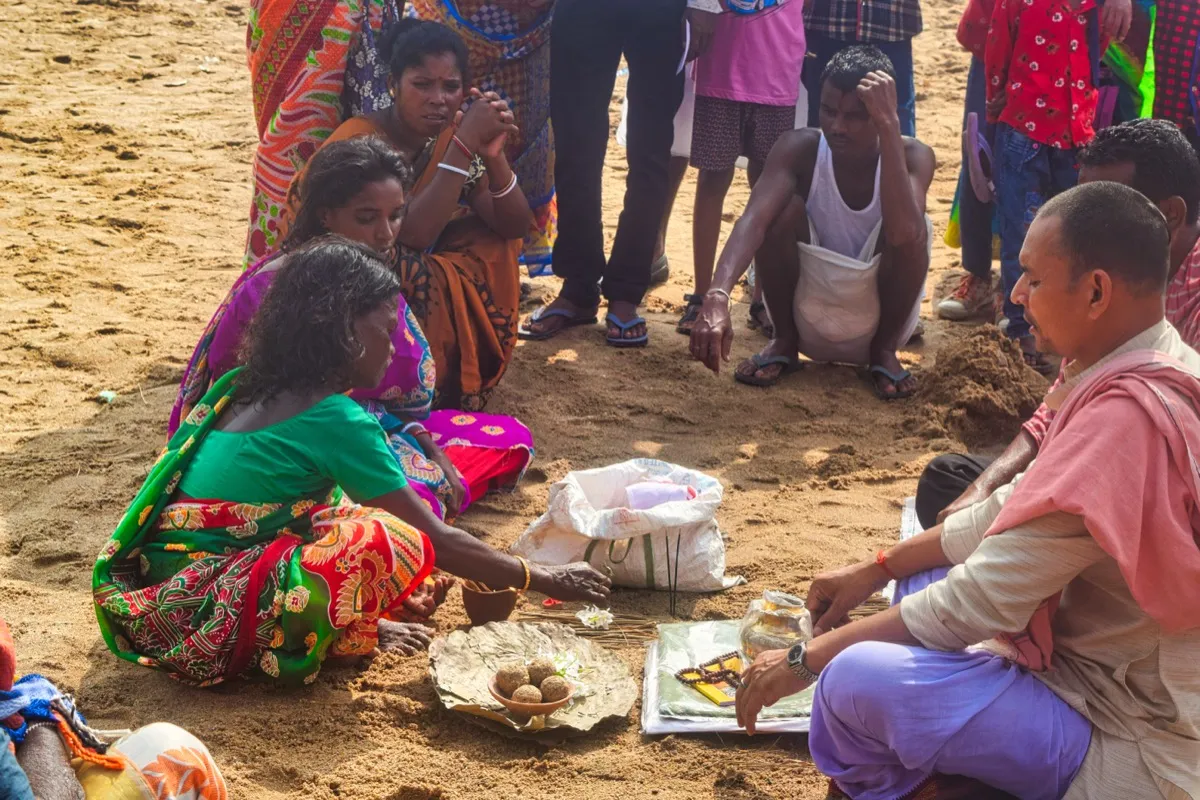
- ପିଣ୍ଡ ଦାନ (Pinda Daan): Offering of rice balls mixed with til (sesame), barley, and kusha grass. In Odia families, the pinda is typically placed on a banana leaf or peepal leaf.
- ତର୍ପଣ (Tarpana): Water offering using a copper or silver vessel, mixed with black sesame seeds. Performed facing the south direction (Yama’s direction).
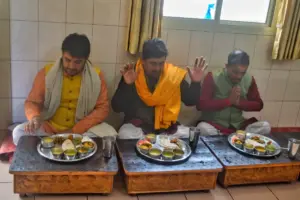
- ବ୍ରାହ୍ମଣ ଭୋଜନ (Brahmana Bhojana): Feeding at least one Brahmin in the ancestor’s name. The food served is typically sattvic — rice, dal, vegetables, and kheer (payasa). No onion, garlic, or masoor dal.
- ଦାନ (Daan): Charitable offerings — clothes, food grains, or money — given to a Brahmin or to the needy in the ancestor’s name.

ମହାଳୟା ଶ୍ରାଦ୍ଧ (Mahalaya Shraddha) — During Pitru Paksha
Mahalaya Shraddha is performed during Pitru Paksha (ପିତୃ ପକ୍ଷ), the 16-day period specifically designated for ancestral rites. In 2026, Pitru Paksha runs from September 26 (Purnima) to October 10 (Sarvapitri Amavasya). The Pitrupaksha 2026 guide has the complete tithi calendar with Odia panjika correspondences.
During this fortnight, the veil between the mortal world and the pitru loka (ancestral realm) is considered thinnest. Offerings made during Mahalaya carry special potency. The Garuda Purana specifies that a soul that did not receive timely odia shraddha in the year following death can still find peace if the family performs complete tarpan on Sarvapitri Amavasya (October 10, 2026) — the day when all ancestors are honoured regardless of their individual tithi.
For Odia families, Mahalaya Shraddha holds particular community significance. In the weeks before Durga Puja, families across Odisha — from the Mahanadi riverbank in Cuttack to the Bindusagar tank in Bhubaneswar — gather at these sacred water bodies for collective tarpan. The Bindusagar tank, which according to local tradition contains water from every holy tirtha in India, is considered especially auspicious for Odia tarpan. Families recite the gotranama (gotra and name of deceased) and pour til-mixed water three times for each ancestor they wish to invoke.
Many Odia families who perform barsika at home throughout the year choose to perform Mahalaya Shraddha at a sacred tirtha like Gaya or Prayagraj for additional merit. For families in the diaspora who cannot travel to Odisha or to a tirtha, our online service allows you to participate by video call while the rite is performed at Triveni Sangam on your behalf.
ଦଶାହ ବିଧି (Dashaha Vidhi) — The Ten-Day Post-Death Rites
When a family member dies, the Odia Hindu family observes a ten-day mourning period called dashaha (ଦଶାହ) or dashkriya. These ten days are not passive mourning — each day involves specific rites that gradually build the subtle body of the departed so the soul can travel to pitru loka. The Garuda Purana describes this process in the Preta Kalpa: each of the ten pindas offered corresponds to one part of the ativahika sharira (the transitional body) being formed.
Day-by-Day Breakdown
- Day 1 (Pratham Divas): Antim Kriya (ଅନ୍ତିମ କ୍ରିୟା) — cremation at the local smasana. The eldest son lights the pyre and performs the kapal kriya (piercing of the skull to release the soul). The body is wrapped in a white cloth; a ghee-soaked cloth is placed at the head for the final offering.
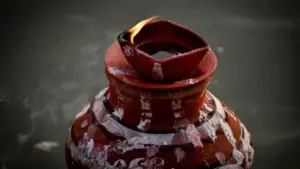
- Day 2: The home is cleansed with Ganga water or turmeric water. A small daily pinda of rice mixed with til and barley is offered near the door facing south, along with a small water lamp (diya).
- Day 3: Collection of asthi (ashes and bone fragments) from the cremation site. These are preserved in a copper or clay pot for asthi visarjan at a river or sea. Many Odia families bring the asthi to Prayagraj for immersion at Triveni Sangam; our Asthi Visarjan for Odisha Pilgrims service (Rs. 5,100) handles the full ceremony with boat and pandit.
- Days 4–9: Daily pinda daan by the karta. A fresh pinda is offered each day. The karta remains in a state of ritual impurity (asaucha), does not attend temples, and maintains vegetarian, onion-free eating.
- Day 10: Dashaha ceremony — the formal close of the acute mourning period. This day involves kshur karma: the male members of the immediate family, including the karta, shave their heads completely. This tonsure is a mark of mourning and humility before the departed. After kshur karma, the family bathes and changes into fresh clothes. A Shayyadan (bed donation) is performed — a cot, pillow, and blanket are donated to a Brahmin, symbolically providing the departed soul with rest on its journey. The home is thoroughly cleansed and Ganga water is sprinkled in every room.
The 12th and 13th Day: Ekodishta and Sapindikaran
On the 12th day, the ekodishta shraddha (ଏକୋଦ୍ଦିଷ୍ଟ ଶ୍ରାଦ୍ଧ) is performed. This is a shraddha offered exclusively and solely to the departed person — the rite is for that one individual, not combined with the general ancestral invocation used in later years. Exactly one pinda is offered, one Brahmin is fed, and the sankalpa names only the recently departed.
On the 13th day, the sapindikaran (ସପିଣ୍ଡିକରଣ) ceremony formally unites the departed soul with the ancestors (pitru gana). Until this rite is complete, the departed is classified as a preta (wandering spirit). During sapindikaran, the single ekodishta pinda is merged with three ancestral pindas — representing the father, paternal grandfather, and paternal great-grandfather. From this day forward, the departed is included in the collective ancestral invocations during shraddha barsika. Read our Sapindi Shradh guide for the full procedure, including the mantras recited at the moment of pinda merger.
ପ୍ରଥମ ବାର୍ଷିକ (Prathama Barsika) — The First-Year Death Anniversary
The prathama barsika (ପ୍ରଥମ ବାର୍ଷିକ) falls exactly one year after death, on the same tithi in the same lunar month. This anniversary is treated differently from subsequent years and deserves special attention, particularly for Odia families performing the rite for the first time.
In Year 1, the shraddha is still performed in ekodishta format — the rite is directed solely to the one person who has passed, not combined with the collective invocation of all ancestors. The reason for this is scriptural: the Dharma Sindhu specifies that a departed soul must complete its journey through the intermediate realm (pitru loka) and be fully integrated with the ancestral lineage before it can be invoked collectively. The first full year of offerings — including the twelve monthly shraddhas (masika) performed in between — completes this integration.
The prathama barsika involves a more elaborate ceremony than the monthly masika rites. Alongside the standard pinda daan and tarpan, the family typically performs a brahman bhojan at a larger scale — inviting three to five Brahmins rather than one — and makes daan of the deceased’s personal items (dhoti, angavastra, footwear) to a Brahmin of equal or greater age.
From Year 2 onwards, the annual shraddha shifts to parvana format: the departed is invoked together with the father, paternal grandfather, maternal grandfather, and their respective wives. This combined invocation is the standard shraddha barsika that most Odia families practice through their adult lives. For a complete pan-Hindu guide to this ceremony across all regional traditions, see the detailed Barsi ceremony guide covering Garuda Purana prescriptions, date calculation by tithi, and the Sapindikarana rite.
For diaspora Odia families who cannot be physically present in Odisha for the prathama barsika, a remote participation option is available. Our pandit performs the full ekodishta ceremony at Prayagraj while the karta joins by video call, recites the sankalpa from wherever they are located, and witnesses the pinda daan and tarpan in real time. Contact us to arrange this ahead of the tithi date.
ତର୍ପଣ ମନ୍ତ୍ର ଓ ବିଧି (Odia Tarpan Mantra and Vidhi)
Tarpan is the act of offering water — mixed with black sesame seeds, barley, and sometimes flowers — to the ancestors while reciting their names and gotra. It is simpler than the full pinda daan and can be performed at home by the karta on Amavasya days, on the ancestor’s tithi, and on each day of Pitru Paksha.
The Core Tarpan Procedure
Before beginning, the karta must shift the yagnopavita (sacred thread) to the apasavya position: the thread is moved from the left shoulder to the right shoulder, passing under the right arm. This reversal signals entry into pitru karma — all rites for the ancestors use this position. Normal devata worship resumes with the thread back on the left shoulder (savya position). The Dharma Sindhu states explicitly that no pitru rite is valid if the thread remains in savya position.
A copper vessel (tamra patra) is preferred. The Dharma Sindhu states that copper is the metal of the sun and carries purifying properties that enhance the tarpan offering’s reach to the pitru realm. Silver is also acceptable; iron and steel vessels are prohibited in pitru karma.
Black sesame seeds (budha til / kala til) are added to the water. The Garuda Purana explains that the aroma of sesame is deeply pleasing to the pitru devas — it is one of the few offerings that transcends the physical realm and reaches the subtle body directly. White sesame can be used in a pinch, but black sesame is the prescribed form for ancestral rites.
The Tarpan Mantra (Standard Form)
The mantra recited while pouring is:
ॐ [Gotra name] गोत्राय [Name of deceased] शर्मणे / वर्मणे / गुप्ताय वसु-रूपाय पितृ-तृप्त्यर्थं जलं तर्पयामि।
Om [Gotra name] gotraya [Name] sharmane / varmane / guptaya vasu-rupaya pitri-triptayartham jalam tarpayami.
The phrase tarpayami (“I satisfy, I offer”) is recited three times for each ancestor while pouring water from the vessel. The three repetitions correspond to three separate acknowledgements: as pitru (father), as matamaha (maternal grandfather), and as one of the broader ancestral group. For the father’s line, the water is poured through the fingers with the thumb as the final channel — this is the pitru tirtha position. For the maternal grandfather’s line, it flows between the index finger and thumb.
For families wanting the extended mantra list including the mantras for mother, maternal grandparents, and childless ancestors (anapatya pitru), our Pitru Tarpan complete guide covers every variation with transliteration. Our dedicated Tarpan Vidhi guide also explains the full ritual sequence for different occasions.
If you would like the tarpan performed at Triveni Sangam in Prayagraj by an Odia-familiar pandit, our Prayagraj Pitru Tarpan for Odia Families service (Rs. 10,999) includes three days of tarpan at Sangam with full pinda and brahman bhojan.
ପାୟ ଶ୍ରାଦ୍ଧ (Paya Shraddha) — The Milk-Rice Ceremony
Less commonly known but equally prescribed, paya shraddha (ପାୟ ଶ୍ରାଦ୍ଧ) is a specific form of shraddha in which the offering to the ancestors is payasa — the sweet rice cooked in milk — rather than the plain rice pindas used in standard shraddha. “Paya” in Odia and Sanskrit means milk; the ceremony takes its name from this central offering.
When Paya Shraddha is Performed
The Dharma Sindhu prescribes paya shraddha in three primary situations:
- On the 3rd, 6th, or 9th month after a death, at the family’s discretion, as an intermediate offering between the regular masika (monthly) shraddhas
- At the birth of a child in the family — paya shraddha is performed to seek ancestral blessings for the newborn, invoking the pitru to protect the child’s early life
- At major family milestones — a son’s upanayana (sacred thread ceremony) or a daughter’s marriage — when ancestral blessings are sought for the rite of passage
What Makes It Different
The payasa (kheer) is prepared with rice, full-fat cow’s milk, and jaggery or sugar — no salt. A separate pinda is not required; the payasa itself constitutes the ancestral offering. The karta places three small portions of payasa on banana leaf or peepal leaf, sprinkles til over them, and offers tarpan water. One Brahmin is fed the remaining payasa along with rice, dal, and vegetables.
Paya shraddha can be performed at home by a karta who knows the basic sankalpa and tarpan mantras. A local Brahmin pandit recites the full vidhi. For families at Prayagraj during Pitru Paksha, our pandits incorporate paya shraddha into the full Pind Daan ceremony for those who request it during the booking.
ଶ୍ରାଦ୍ଧ ନିୟମ (Shraddha Niyam) — Rules for the Karta
The person performing the odia shraddha (karta) must follow specific rules before, during, and after the ceremony:
Before the Ceremony
- Fast from the previous evening (or eat only sattvic food)
- Bathe early morning with til (sesame) mixed in the water
- Wear clean white clothes (new dhoti preferred)
- Apply chandan (sandalwood) tilak
- Tie the pavitra ring of kusha grass on the right hand ring finger
During the Ceremony
- Face south — the direction of Yama, lord of the ancestors
- Shift the yagnopavita to apasavya position (over right shoulder, under left arm) for all pitru karma. This is the reverse of the savya position used for devata worship. The Dharma Sindhu is unambiguous: a pitru rite performed in savya position is incomplete.
- Recite the ancestor’s name, gotra, and the specific tithi during sankalpa
- Do not speak to others during the tarpan — maintain silence and focus
- Feed the Brahmin before eating yourself
Who Can Be the Karta
While the eldest son is the traditional karta, the Dharma Sindhu permits several alternatives when the son is unavailable: a younger son, a son-in-law, a paternal nephew, or even the daughter of the deceased can perform the odia shraddha. A widow can perform shraddha for her deceased husband if no male heir is present, though she uses a modified sankalpa without the yagnopavita requirement. The essential requirement is that the karta has a direct relationship with the deceased and performs the rite with sincere intent (shraddha, from which the ceremony takes its very name).
For karta who are ill or unable to maintain the physical fasting requirement, the Dharma Sindhu provides a medical exception: a gravely ill or elderly karta may eat a light meal of rice and milk before the ceremony if fasting poses a health risk, provided the deviation is declared in the sankalpa itself.
After the Ceremony
- The karta may resume normal activities after feeding the Brahmin and receiving ashirvad (blessing)
- Distribute prasad to family members
- In Odia tradition, some families also feed cows and crows — crows are considered messengers of Yama and are believed to carry the offerings symbolically to the ancestors in pitru loka
These rules are based on the Dharma Sindhu and the Nirnaya Sindhu, the two authoritative texts on Hindu ritual procedure. Our pandits guide the karta through each step so that even first-time performers complete the ceremony correctly.
ଶ୍ରାଦ୍ଧ ସାମଗ୍ରୀ (Shraddha Samagri) — Items Needed for the Ceremony
A complete list of items needed for an Odia shraddha ceremony:
| Item (Odia) | English | Purpose |
|---|---|---|
| ଚାଉଳ | Uncooked rice | For pinda preparation |
| ତିଳ (ବୁଦାତିଳ) | Black sesame seeds | Mixed with rice for pinda; used in tarpan water |
| ଯବ | Barley grains | Mixed into pinda |
| କୁଶ ଘାସ | Kusha grass (darbha) | Worn on ring finger; placed under pinda |
| ପାଣି (ଗଙ୍ଗା ଜଳ) | Water (preferably Ganga water) | For tarpan and purification |
| ନୂଆ ଧୋତି | New dhoti (white) | Worn by the karta during the ceremony |
| ଧୂପ, ଦୀପ, ଫୁଲ | Incense, lamp, flowers | Standard puja offerings |
| କଦଳୀ ପତ୍ର | Banana leaf | Plate for pinda placement |
| ଗୋ-ଘୃତ | Cow ghee | For havan/homam if included |
| ତାମ୍ର ପାତ୍ର | Copper vessel | For tarpan water — copper is prescribed in Dharma Sindhu |
Where to Source Samagri in Odisha
Families preparing for a home-based barsika in Odisha will find the complete samagri set at:
- Puri: The lane immediately behind the Shri Jagannath Mandir (called the Suar Sahi or the market lane) stocks black sesame, kusha grass, and ritual copper vessels specifically for pitru rites. Shops here are open year-round and understand Odia ritual requirements.
- Cuttack, Choudwar area: The main market near Choudwar ferry ghat has vendors selling complete samagri sets during Pitru Paksha. During other months, the Barabazar area in central Cuttack has reliable shops.
- Bhubaneswar: The puja supply market near the Lingaraj Temple complex carries all items. The Ekamra Haat market also has seasonal samagri sets before Pitru Paksha.
For families performing shraddha at a tirtha, masoor dal is absent from all Odia shraddha samagri — and with reason. The Garuda Purana explicitly prohibits masoor dal (red lentils) in pitru offerings, stating that its rajasic properties are displeasing to the ancestors. The preferred dals in Odia shraddha cooking are moong dal and chana dal, both considered sattvic and ancestrally auspicious.
For barsika at home versus barsika at a tirtha: home ceremonies require the family to source and prepare all samagri. At Gaya or Prayagraj, when you book with us, all samagri is provided. You need only bring a white dhoti and the details of the ancestor (name, gotra, approximate year and tithi of death).

ଗଙ୍ଗା ଶ୍ରାଦ୍ଧ ନିମନ୍ତ୍ରଣ ପତ୍ର (Ganga Shraddha Invitation Card Format)
When an Odia family performs odia shraddha at Gaya, Prayagraj, or another tirtha — particularly after the first death anniversary or during a major family occasion — it is customary to send a nimantrana patra (ନିମନ୍ତ୍ରଣ ପତ୍ର), an invitation card, to relatives and community members. This card announces the ceremony and invites them to attend or, if distant, to offer their own prayers on that day.
The standard Odia Ganga shraddha card follows a recognized format that families and pandits across Odisha use. The key elements are:
- Header: “ଶ୍ରୀ ଜଗନ୍ନାଥ ସ୍ମୃତି” (Sri Jagannath Smriti) or a similar invocation to Lord Jagannath or Vishnu, printed at the top
- Deceased’s name in Odia script with their full name, gotra, and relationship to the karta (e.g., “ସ୍ୱ. [Name], [Karta]ଙ୍କ ପ୍ରିୟ ପିତୃ” — “Late [Name], beloved father of [Karta]”)
- Tithi and English date of the ceremony, with the location (e.g., Triveni Sangam, Prayagraj or Falgu Ghat, Gaya)
- Type of ceremony — whether barsika, mahalaya, prathama barsika, or pind daan at tirtha
- Karta’s name and address, followed by the names of immediate family members who are co-performers
- Brahman bhojan invitation — the time and venue for the meal following the ceremony, if held
- Closing line: typically “ସମସ୍ତ ଆସ୍ଥାବନ୍ଧୁ ଓ ସ୍ୱଜନଙ୍କ ଉପସ୍ଥିତ ପ୍ରାର୍ଥନୀୟ” — “Presence of all well-wishers and relatives respectfully requested”
The card is printed in Odia script, typically on cream or white paper with a saffron or maroon border. For families in the diaspora preparing cards for Odia relatives in India, the format above can be adapted for printing at any Odia printing press or digital card service.
When you book with Prayag Pandits, we can guide you on the exact wording for the sankalpa that matches the card format — so the ceremony announcement and the ritual declaration are consistent. Contact us with your ancestor’s details to get started.
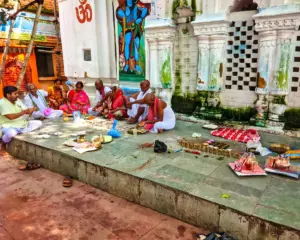
Odia Shraddha at Sacred Tirthas — Why Gaya and Prayagraj
While odia shraddha can be performed at home with a local Odia Brahmin pandit, performing it at a sacred tirtha carries significantly greater spiritual merit. The Garuda Purana states that Pind Daan at Gaya liberates seven generations of ancestors — a promise not made for home ceremonies.
Many Odia families from Bhubaneswar, Cuttack, and Puri travel to Gaya specifically for odia shraddha. Read our detailed Gaya Pind Daan from Odisha guide for travel routes, accommodation, and booking information.
For families who cannot travel, our online odia shraddha service via live video call allows you to participate from Odisha while the pandit performs the ceremony at the tirtha. Book online shraddha — Rs 11,000.
Book Shraddha with Odia-Speaking Pandits
Whether you need to perform shraddha barsika, prathama barsika, mahalaya shraddha during Pitru Paksha, or the complete dashaha vidhi for a recently departed family member, Prayag Pandits is here to help. Our pandits speak Odia, Hindi, and English, and perform all ceremonies respecting Odia traditions.
- Pind Daan at Gaya for Odia Pilgrims — Rs 7,100
- Online Pind Daan at Gaya (Video Call) — Rs 11,000
- Prayagraj Pind Daan for Odia Families
- Prayagraj Pitru Tarpan for Odia Families — Rs 10,999
- Asthi Visarjan for Odisha Pilgrims — Prayagraj (Rs 5,100)
Contact: +91-7754097777 (WhatsApp) | Online enquiry
ଜୟ ଜଗନ୍ନାଥ। ଜୟ ବିଷ୍ଣୁ।
Book Your Sacred Ritual
Authentic ceremonies performed by Veda-trained pandits with video proof at sacred sites across India.