

Veda-Trained Pandits
Experienced pandits guide the ceremony with care for your family’s tradition.
Pooja booking
Original price was: ₹31,000.00.₹25,000.00Current price is: ₹25,000.00.
Per pooja
Applicable taxes are shown in your booking. Optional additions are separate.
Exclusions
Thoughtfully arranged, personally guided
Experienced pandits guide the ceremony with care for your family’s tradition.
Stay in touch with our team for your booking details and ceremony arrangements.
See what your selected package includes. Optional additions are shown separately.
Share the date and timing that suit you. Our team confirms the final arrangements.
Experiences shared by our families
8 family reviews0 for this pooja · 8 from across our services
Watching the pandit perform the rituals in real-time by the Falgu River, mentioning my father's name... it felt like we were truly there. Immense gratitude to the entire team.
Being in the USA, travelling to India just for Tarpan during Pitru Paksha was becoming very difficult. Prayag Pandits offered a well-coordinated solution.
I was skeptical about performing such a sacred ritual online from Canada. But honouring my parents in Kashi was important. They were very patient and answered all my questions.
Living in Singapore, we felt disconnected from these essential rituals. The live stream option for Tarpan at Prayagraj gave us a profound sense of connection and peace.
It was deeply important for us in Australia that the rituals were performed correctly. The ceremony reflected the authenticity we sought and was performed by a knowledgeable priest.
The Pind Daan at Kashi was handled carefully, with the pandit following every step diligently. Very reassuring.
Arranging Asthi Visarjan from Bhubaneswar seemed complex, but Prayag Pandits made it seamless. The pandit called us before the ceremony to explain every step. Very professional.
During Pitru Paksha, we booked Shradh at Prayagraj. The coordination was flawless - from date selection to the pandit assignment. Our family felt at peace after the ceremony.
YOUR EXPERIENCE MATTERS
Tell us about your ceremony and the support you received. Your email address will stay private.
From your first choice to your booking
Review your package and any available additions, then add it to your booking.
Enter your contact details, preferred date and time. Add ancestral details if you wish.
Our team confirms the arrangements and shares your coordinator’s details 24 hours before the pooja.
Follow the participation and joining arrangements described in your package and shared by your coordinator.
Families usually approach Narayan Bali after an untimely or unnatural death, when final rites could not be completed properly, or when a knowledgeable family priest has advised this specific ceremony. Choosing Varanasi for the pooja gives the family a setting long associated with remembrance, final rites and liberation. Kashi is traditionally called Avimukta Kshetra—the sacred field never abandoned by Lord Shiva—and the presence of the Ganga has made the city a living centre of ancestral worship for generations.
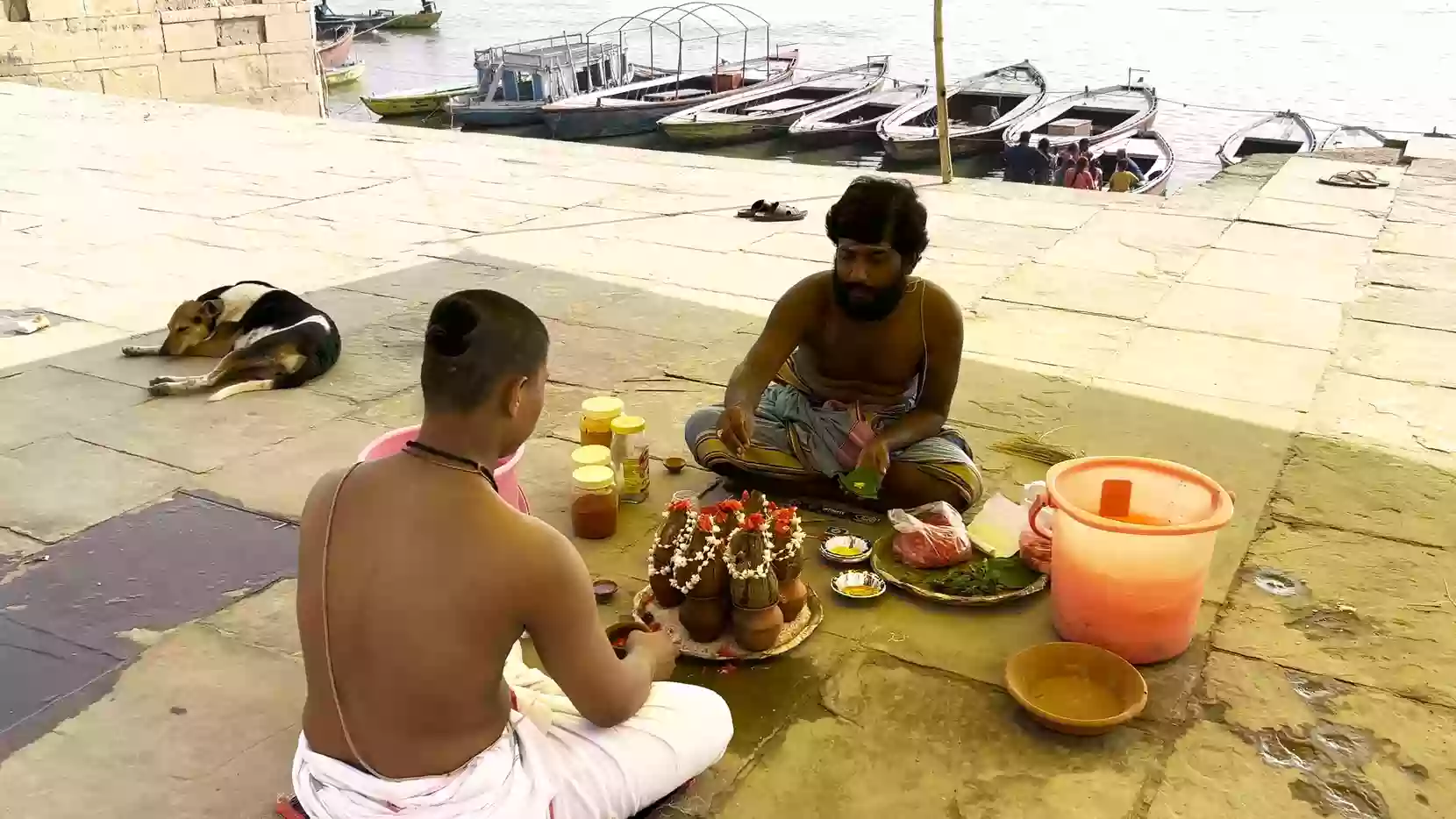
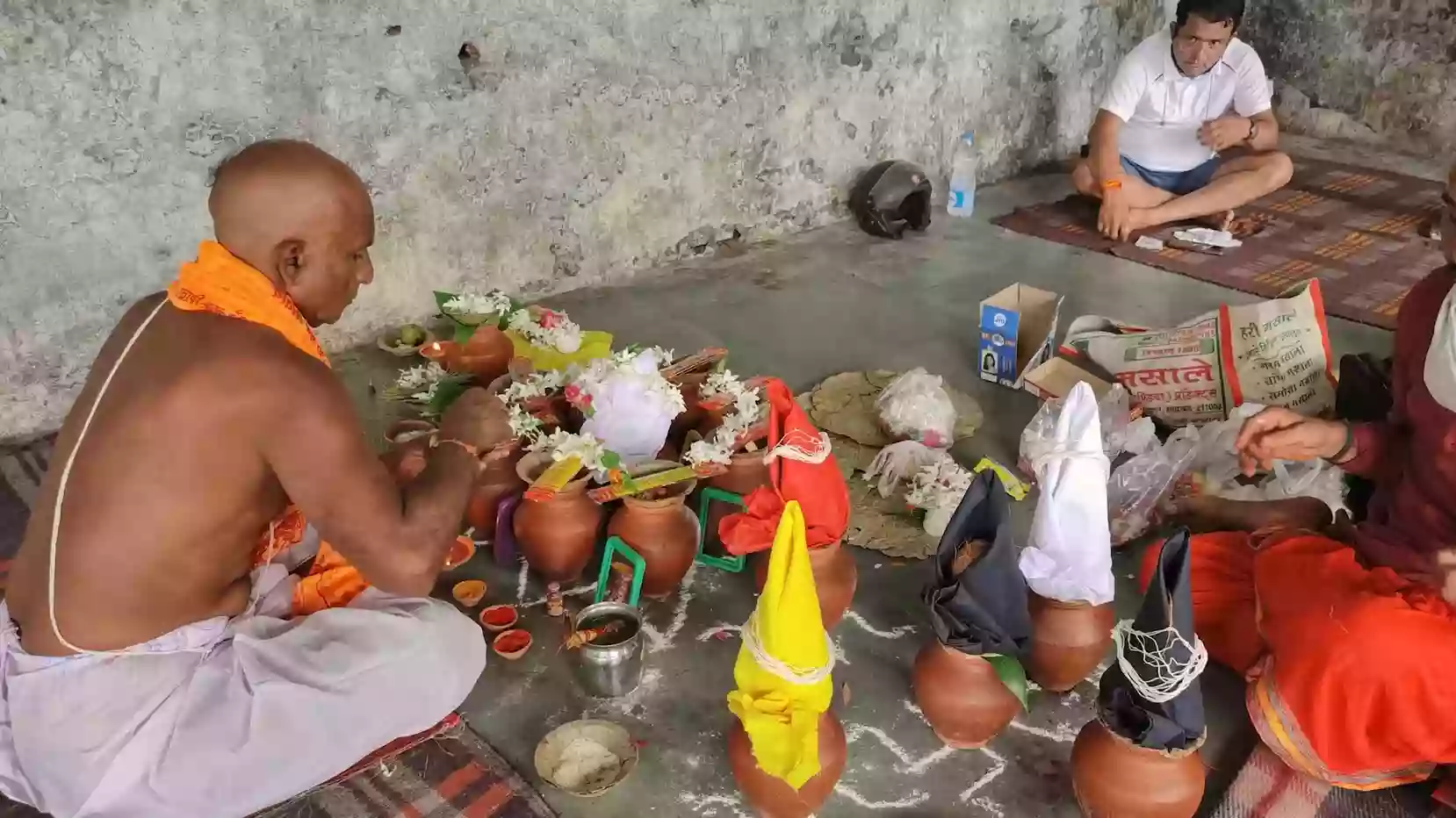
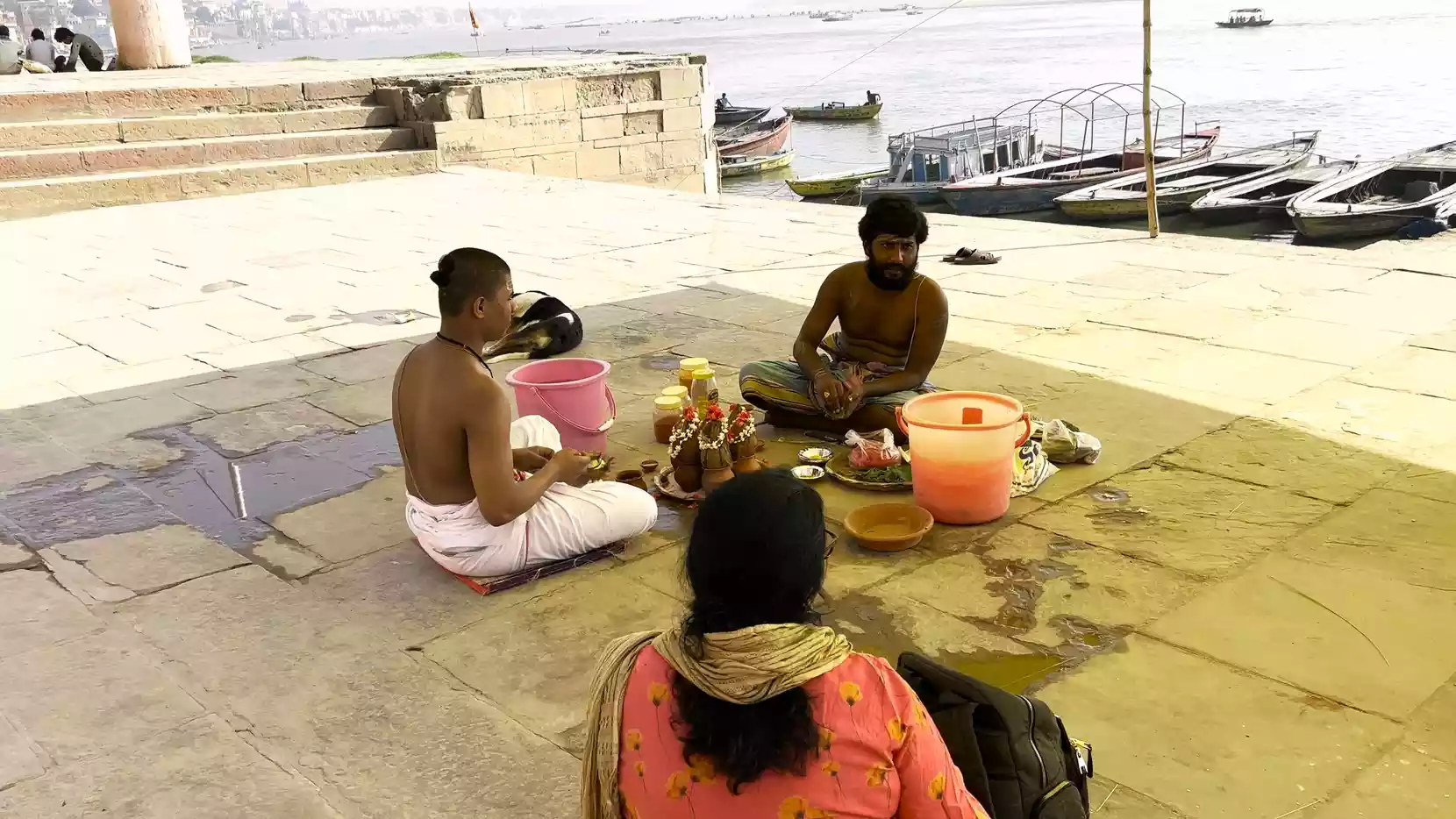
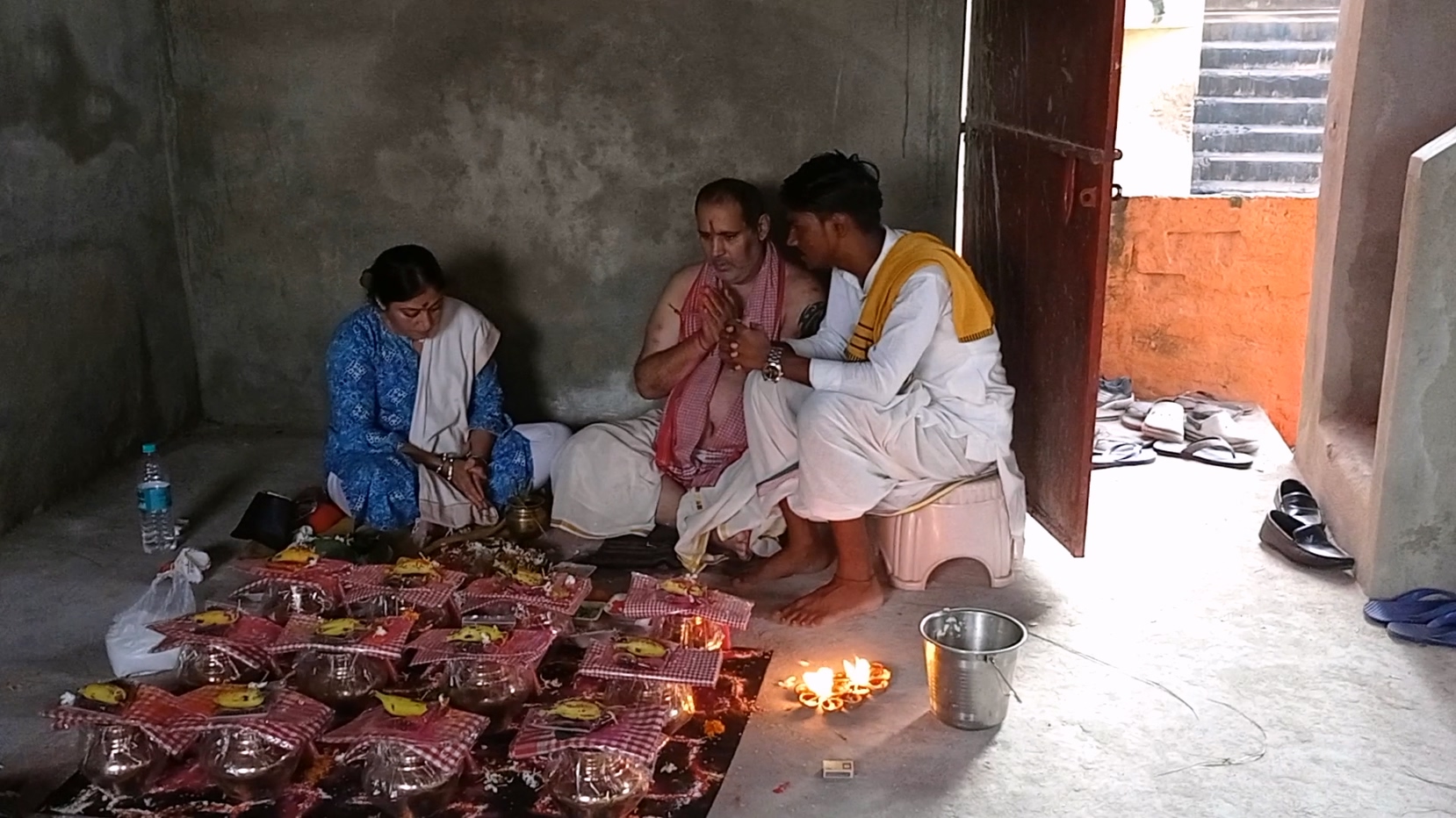
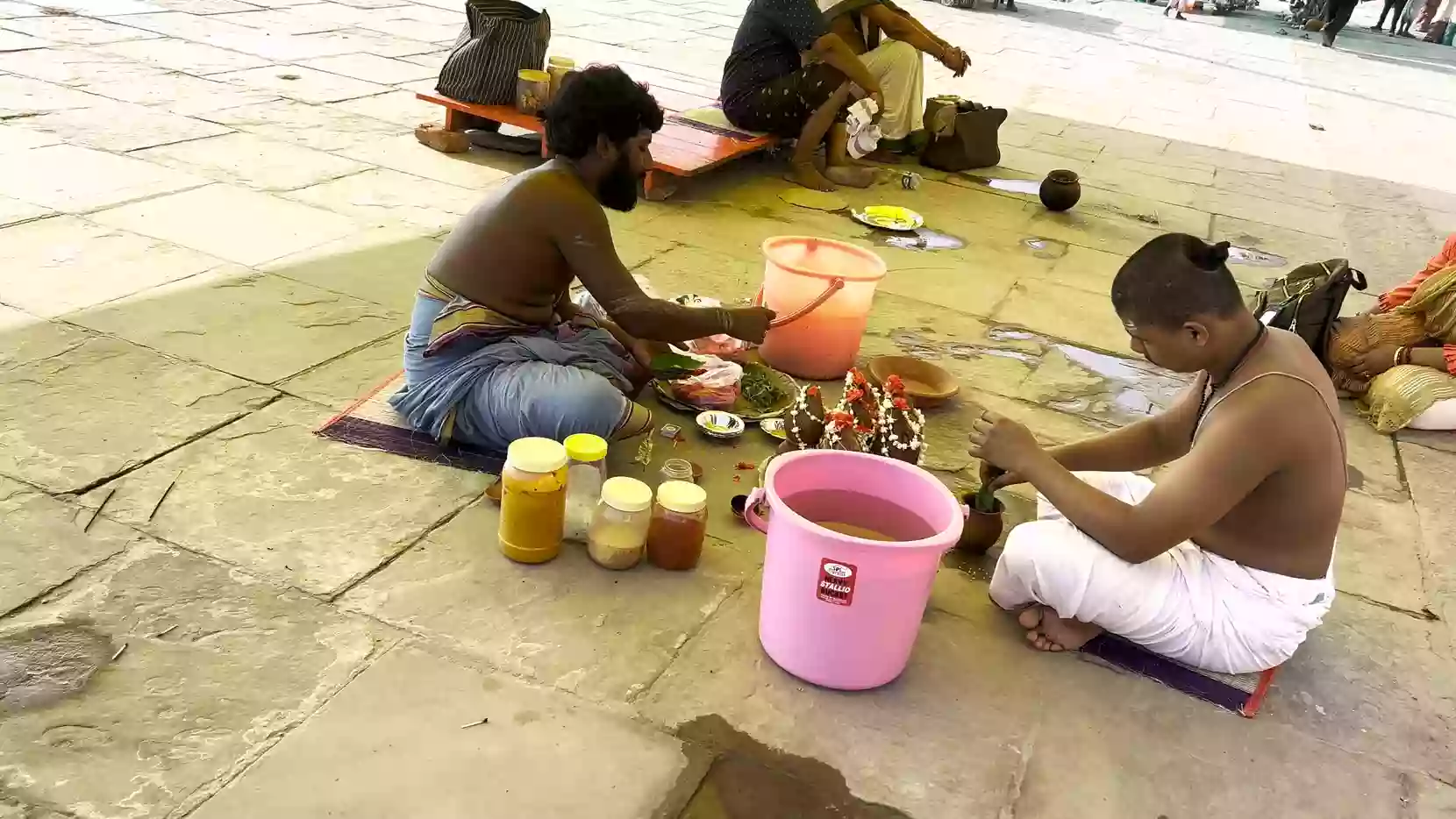
This in-person Narayan Bali Poojan is arranged with an experienced Varanasi pandit in the Pishach Mochan Kund area. The package preserves the complete ritual scope of our Gaya Narayan Bali service: the prescribed samagri, construction and consecration of the symbolic effigy, the family Sankalpa, the relevant Vedic recitations and guidance throughout the ceremony.
Pishach Mochan Kund occupies a distinct place in Kashi’s ritual geography. Local tradition associates the tirtha with prayers for release from unsettled ancestral conditions and with ceremonies performed when a death was sudden, violent or otherwise difficult. For that reason, Varanasi pandits commonly guide Narayan Bali and related ancestral rites in this area.
The significance is not simply that the pooja happens inside Varanasi. The family comes to a place whose ritual identity is closely connected with the purpose of Narayan Bali itself. The Sankalpa is made with the ancestor’s known details, the effigy is prepared according to the ceremony, and the concluding acts are completed under the pandit’s direction. The exact spot and sequence are confirmed during the pre-ceremony briefing because access, tithi and local conditions can affect the practical arrangement.
Narayan Bali is a specialised ancestral ceremony and should not be confused with ordinary annual Shradh or a general Pind Daan booking. In the traditional procedure, a symbolic body is prepared from prescribed materials for the departed soul. The pandit consecrates this effigy and performs the relevant rites and mantras so the family can offer the formal ritual completion that may have been absent or interrupted at the time of death.
The ceremony may be considered when death occurred through an accident, drowning, fire, violence, suicide or another sudden circumstance; when the body was not recovered; or when the original Antim Sanskar was incomplete. A family should not book solely because of fear or a generic online checklist. If there is uncertainty, speak with the appointed pandit first and explain the actual circumstances respectfully.
The family meets the assigned pandit at the confirmed Varanasi location. Narayan Bali normally requires several hours, and families should keep the day unhurried. The precise order may vary according to sampradaya and the pandit’s guidance, but the arrangement includes the following essential stages.
The ritual space and participants are prepared before the principal ceremony begins. Ganesh worship and the customary opening invocations are performed so the Sankalpa and subsequent rites can proceed in an orderly manner.
The Sankalpa identifies the Karta, gotra when known, family lineage and the ancestor or ancestors for whom the ceremony is being performed. Families should bring the names and relationships they know. If the gotra or exact tithi is unknown, do not guess; tell the pandit during the briefing so the accepted traditional method can be followed.
The Narayan Bali effigy is prepared using the prescribed cotton, sacred thread, rice, sesame and related samagri. It is then consecrated with the relevant mantras as the symbolic focus of the ceremony. This is a central part of Narayan Bali and is included in the package.
The pandit performs the prescribed offerings and recitations over the consecrated effigy, guiding the Karta wherever direct participation is required. The concluding acts are completed according to the local Varanasi procedure and the instructions given on the day.
Varanasi brings together three elements that matter deeply to many families: Kashi’s traditional identity as a moksha kshetra, the continuing presence of experienced karmakand pandits, and Pishach Mochan Kund’s specific association with rites for difficult or unsettled departures. The city is therefore not being presented as interchangeable scenery. It is chosen because its living ritual tradition corresponds closely with the purpose of Narayan Bali.
Some families choose Gaya, Haridwar or Prayagraj according to lineage, advice or accessibility. Others are specifically directed to Kashi. If an elder or family priest has named Varanasi, share that guidance when booking so the team can prepare the correct local arrangement.
The selling price is ₹25,000 (regular price ₹31,000). It covers the complete Narayan Bali Poojan described on this page, an experienced qualified pandit, the listed samagri, preparation and consecration of the effigy, the family Sankalpa and the pre-ceremony briefing. Travel, accommodation, Brahmin Bhoj, a separate full Pind Daan and voluntary extra Dakshina or gifts are not included.
No. Pind Daan is a broader ancestral offering, while Narayan Bali is a specialised rite generally considered for an untimely death or incomplete final rites. A full Pind Daan at the Kashi ghats is a separate service unless it is expressly added to the arrangement.
No. The two ceremonies have different ritual purposes. Tripindi Shradh is generally connected with neglected ancestral offerings across generations, while Narayan Bali addresses the circumstances for which its specific symbolic effigy and rites are prescribed. The pandit can clarify which ceremony applies to the family’s situation.
Share every relevant name and relationship during the consultation. The pandit will confirm whether they can be included within one Sankalpa or whether separate ritual arrangements are appropriate.
Women may attend. The form of direct participation can differ by family tradition and the pandit’s procedure, so confirm who will act as Karta during the pre-ceremony briefing.
The date should be selected with the pandit after considering the family’s circumstances and the local panchang. Pitrupaksha is an important period for ancestral rites, but the ceremony is not limited to one generic date for every family.
The arrangement is centred on the Pishach Mochan Kund area in Varanasi. The final meeting point and ritual location are shared after the date and local conditions are confirmed.