





No rituals selected yet.
Browse Pooja Packages →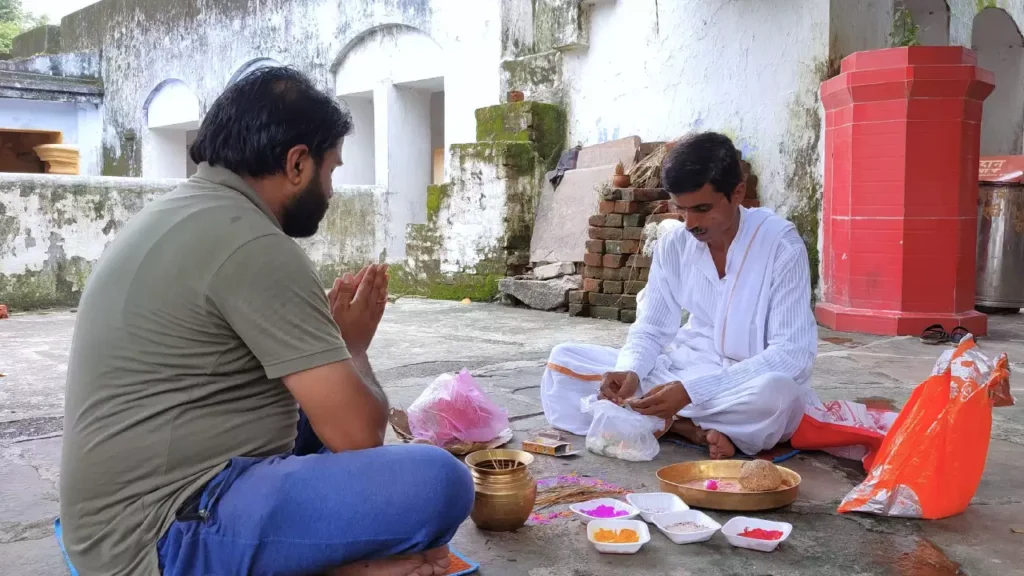
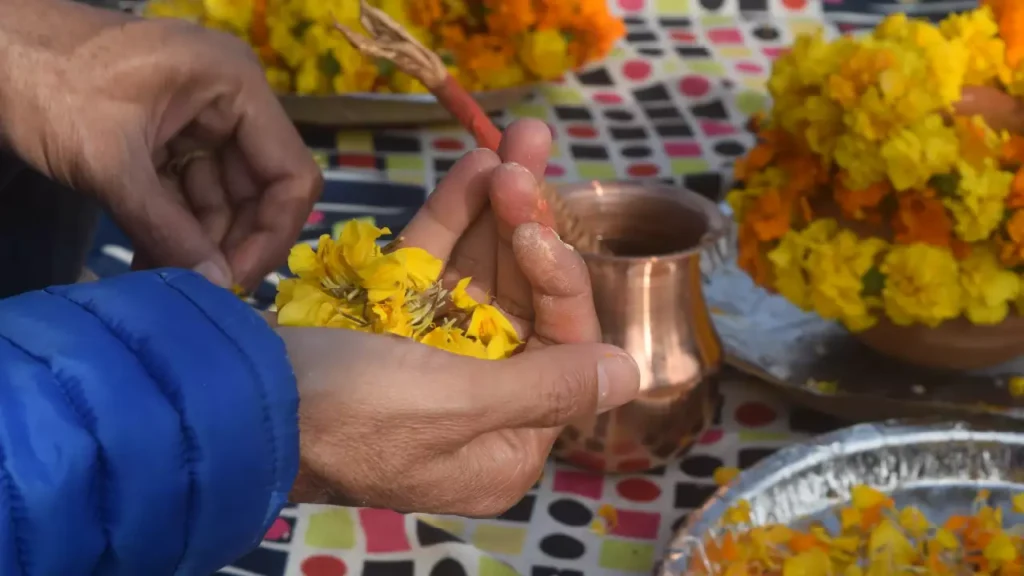
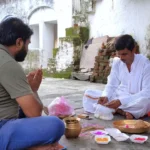
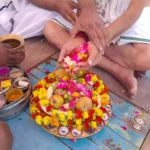
Shardh at Gaya this Pitrupaksha 2026
₹7,100
₹10,999
35% off
per family · all-inclusive
Verified Pandits
Since 2019
All Samagri Included
Free Cancellation
Why Families Choose Us
How It Works
1
Book & Confirm Your Date
Select your preferred date and complete the booking. Our team calls you within 2 hours to confirm details.
2
Share Family Details
Provide gotra, departed soul's name, and any requirements. Don't know your gotra? Our pandits will help.
3
Ritual Performed at Sacred Site
A Veda-trained pandit performs the complete ceremony as per shastra at the designated holy teerth.
4
Confirmation & Documentation
Booking confirmation on WhatsApp. Digital documentation available on select poojas within 48 hours.
What's Included
- Priest services by authorised Gayawal pandas for Shradh/Pind Daan
- Complete Vedic ritual sequence as per Gaya tradition
- Full Ritual Samagri
- Assistance with darshan at Vishnupad Temple (standard queue)
- Designated ritual locations: Vishnupad Mandir premises/Peepal tree area, Phalgu riverbank, and Akshay Vat (as per package)
- Puja setup and cleanliness support at the ghat/mandir area
- On-ground coordinator for schedule and flow
- Hindi/English assistance for procedure and meanings
- Basic seating mats (asan) and water for participants
- Temple special darshan/VIP queue (available as an add-on if permitted)
- Personal meals, hotel stays, and city transport
- Photography/videography
- Any government/temple-specific fee or donation beyond the standard ritual expense
- Special samagri requests beyond the standard list
- Anything not explicitly mentioned in the inclusions
- Authorised Gayawal priests with lineage expertise
- End-to-end coordination for a seamless spiritual experience
- Transparent inclusions and respectful adherence to tradition
- Multilingual assistance and clear guidance for first-timers
About This Ritual
Among all the places in the Hindu world where one may perform ancestral rites, Gaya holds a singular distinction. This is not merely a matter of tradition or popular belief — it is a claim endorsed by the Ramayana, the Mahabharata, the Vishnu Purana, the Vayu Purana, and the Agni Purana, each of which describes Gaya as the supreme Kshetra for the liberation of departed ancestors. To perform Shradh at Gaya, especially during Pitrupaksha — the sixteen sacred days that Hindu tradition sets aside specifically for ancestral honour — is to give your family members who have passed the greatest possible gift: the assurance of moksha, of liberation from the cycle of birth and death. Our Shradh at Gaya package has been designed for families who want to make this journey during Pitrupaksha 2026 and need complete, trustworthy support from the moment they arrive to the moment they leave — with the knowledge that the ceremony was performed exactly as the shastras prescribe.
The Sacred Geography of Gaya — Why This Place Is Unlike Any Other
The story of Gaya's spiritual power begins with the demon Gayasur. According to the Vayu Purana, Gayasur was a great asura who performed such intense tapasya (austerity) that the gods became alarmed. As a boon, he was granted that whoever dies in his shadow would immediately attain moksha — which threatened to empty the cycle of karma entirely. The gods intervened: Lord Vishnu pressed his divine foot (Vishnu Pada) upon Gayasur's chest, pinning him to the earth forever. Gayasur agreed, on the condition that the merit of liberation would continue to emanate from his body. That body — the sacred geography of Gaya — is what pilgrims visit today.
The Vishnupad Temple, built directly over the footprint of Lord Vishnu embedded in stone, stands as the axis of this sacred city. Around it are 48 vedis (altars), each associated with a specific type of ancestral rite. The Falgu River — where Lord Rama himself is said to have offered the first Pind Daan for King Dasharatha — flows nearby, though the river's sacredness is understood to be subtle and ever-present regardless of its visible water level. When a family performs Shradh at these vedis, the liberation offered is considered complete and final — the ancestor need not wait for further rites.
The Gayawal pandit tradition is inseparable from this sacred geography. Gayawal priests are hereditary officiants whose families have served at the 48 vedis of Gaya for over a thousand years. They maintain meticulously detailed records of pilgrims — called bahis — that can trace a family's visits across multiple generations. When a Gayawal pandit performs your Shradh, he does so as the custodian of an unbroken lineage of ritual knowledge. For a comprehensive understanding of the Gaya pilgrimage, read our detailed resource: The Ultimate Guide to Pind Daan in Gaya.
Pitrupaksha 2026 — The Most Auspicious Time
While Shradh and Pind Daan at Gaya can be performed on any of the 48 prescribed dates throughout the year, Pitrupaksha holds a status above all others. Pitrupaksha 2026 runs from 26 September (Purnima) through 10 October (Sarva Pitru Amavasya). During these sixteen days, the gateway between the world of the living and Pitru Lok is considered wide open. The ancestors themselves are believed to descend close to the earthly plane in anticipation of their family's offerings. The merit of Shradh performed during Pitrupaksha is described in the Garuda Purana as being multiplied manifold compared to rites performed at other times.
Gaya during Pitrupaksha becomes one of the most concentrated spiritual events in the Hindu calendar. Hundreds of thousands of families converge here. The atmosphere — of devotion, of family love, of solemn joy — is unlike anything one experiences elsewhere. Yet this concentration also means logistics must be planned carefully. Ghats become crowded, pandit availability narrows, and accommodation must be arranged well in advance. This is precisely why booking through an organised service like Prayag Pandits makes such a significant difference.
What Is Included in This Package
Our Pitrupaksha Shradh at Gaya package is designed to be genuinely end-to-end for your family:
- Qualified Gayawal Pandit: A hereditary Gayawal priest who holds the required ritual knowledge and lineage to perform Shradh and Pind Daan at the principal vedis of Gaya — including Vishnupad, Pretshila, and Akshayavat.
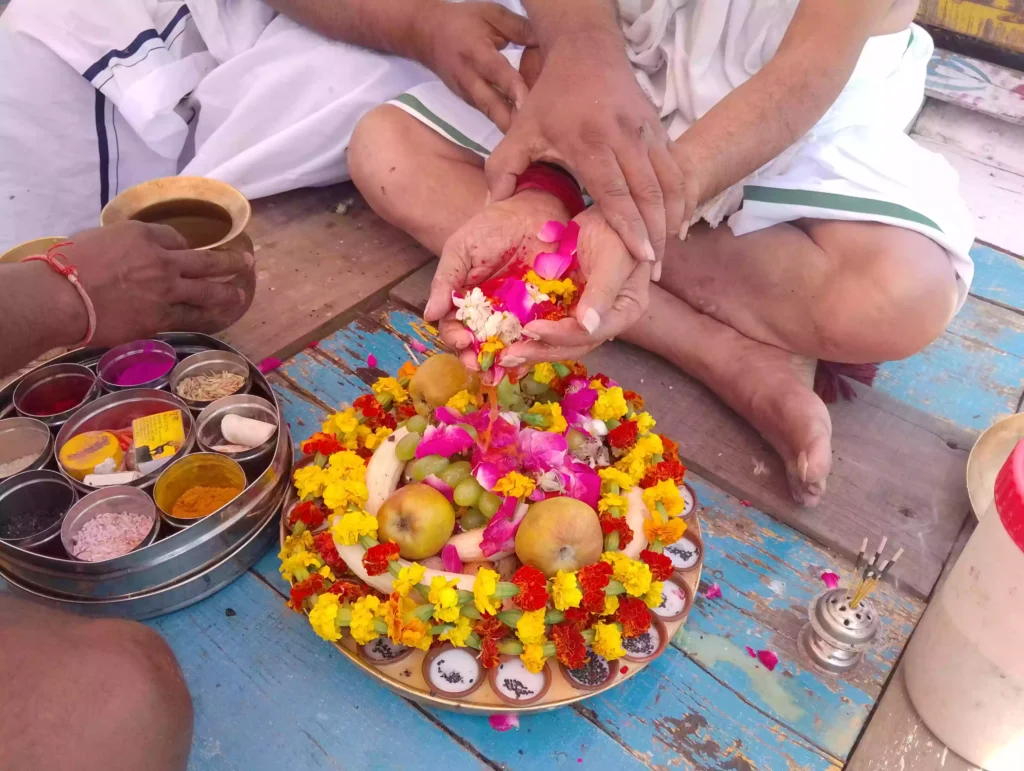
- Complete Puja Samagri: All materials required for the ceremony — black sesame (kala til), barley (jau), kusha grass, gangajal, rice flour for pindas, honey, ghee, flowers, dharbha grass, incense, diyas, and white cloth — are arranged by us. You do not need to purchase anything locally.
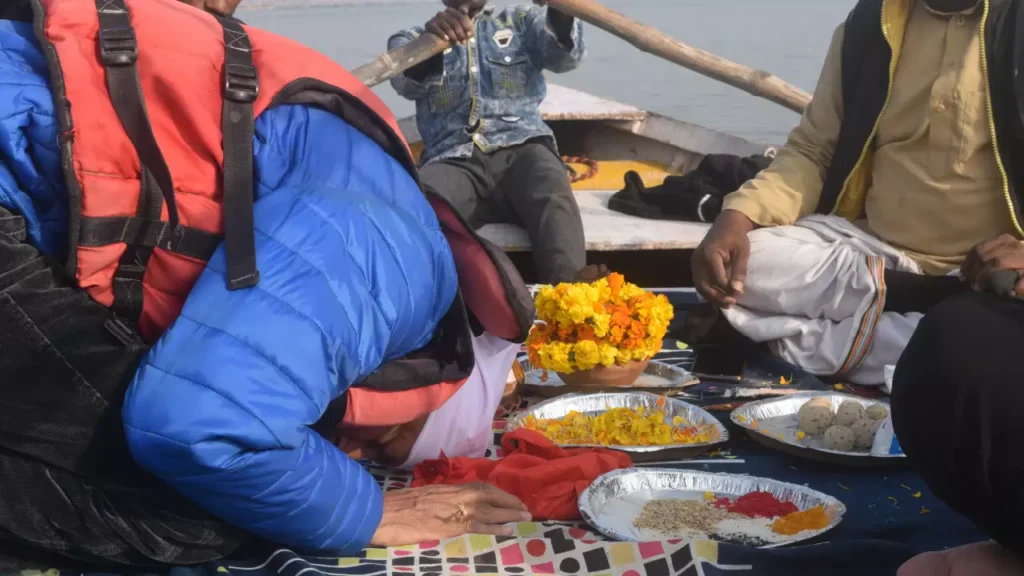
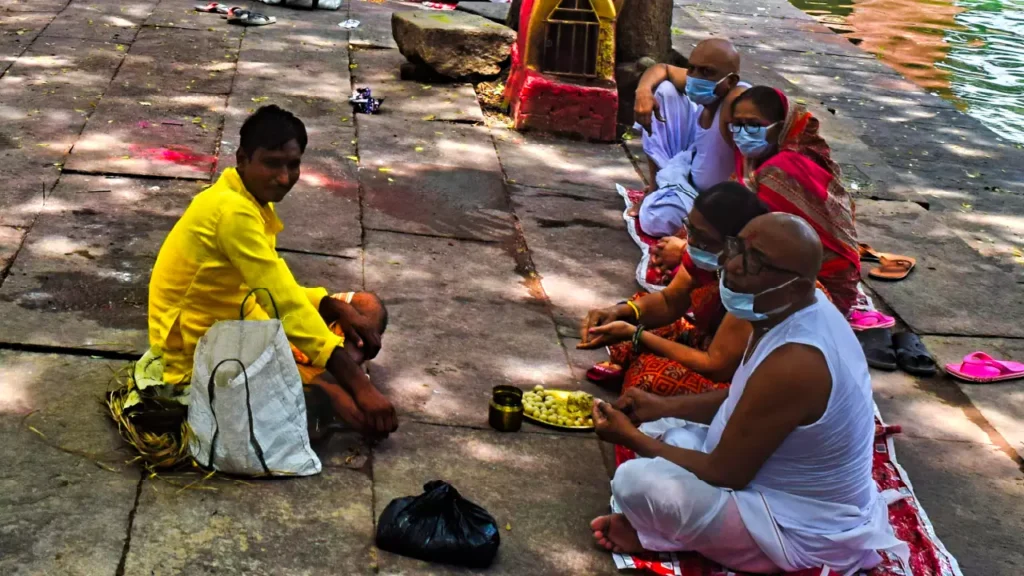
- Tarpan at Falgu River: The water offering for ancestors made with the prescribed mantras at the sacred Falgu, following the tradition of Lord Rama's own offering here.
- Pind Daan at Vedis: Ritual offering of rice-flour pindas at the key vedis within the Gaya complex, performed with Sanskrit mantras calling each ancestor by name and gotra.
- Vishnupad Temple Visit: Coordination for darshan at the Vishnupad Temple, where pilgrims offer pinda and touch the sacred Vishnu Pada footprint with their own.
- Brahmin Bhoj or Dakshina: Completion of the ceremony through the offering of food or dakshina to a brahmin in the ancestor's name.
- Local Guide and Coordinator: A Hindi-speaking coordinator who accompanies your family throughout, manages timing at each vedi, handles any local arrangements, and ensures the ceremony runs smoothly.
The Step-by-Step Ritual Process at Gaya
Step 1 — Arrival and Pitru Snan
Your family arrives at Gaya and is met by our coordinator. The ceremony traditionally begins with a ritual bath — either at Falgu River or at the Brahma Kund — which purifies the yajman (the person performing the rite) before approaching the vedis.
Step 2 — Sankalp at Vishnupad
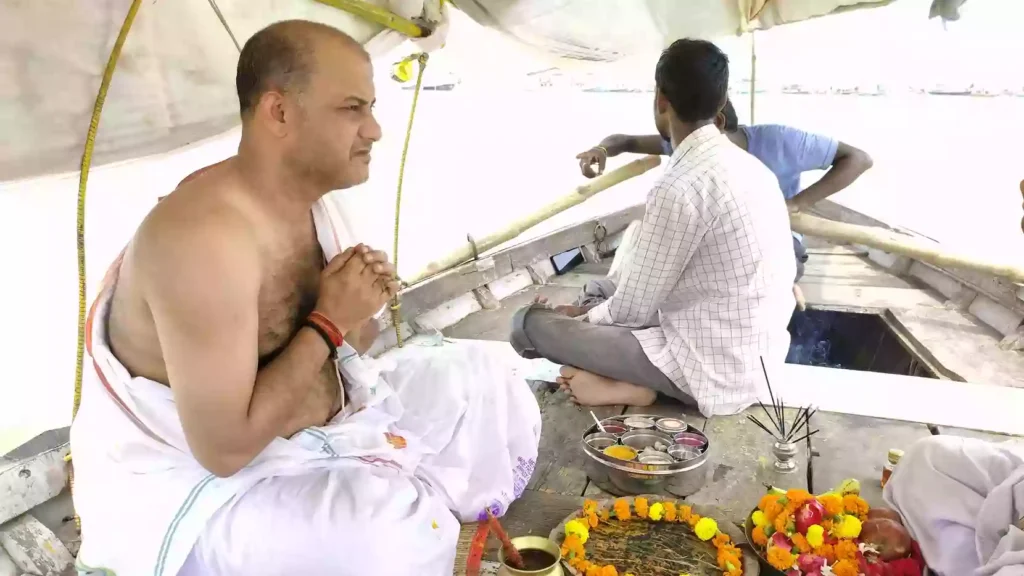
The Gayawal pandit conducts the Sankalp — the formal declaration of intent — at or near the Vishnupad Temple. The yajman states their name, gotra, the ancestor's name, and the specific rites being undertaken. This Sankalp is the legal and spiritual registration of the ceremony.
Step 3 — Tarpan at Falgu
Standing at the Falgu, the yajman performs Pitru Tarpan — the offering of water mixed with sesame and kusha grass. The pandit leads the mantras for each generation of ancestors on the paternal and maternal sides. This is the act of nourishment that directly reaches the ancestors in Pitru Lok.
Step 4 — Pind Daan at the Vedis
The pandit leads the family to the relevant vedis within the Gaya complex. At each vedi, pindas prepared from rice flour and sesame are offered with the specific mantras associated with that vedi. The number of vedis visited depends on the package scope — our standard package includes the principal vedis of Gaya. For a thorough understanding of the Pind Daan ceremony itself, see our guide: All You Need to Know About Pind Daan.
Step 5 — Akshayavat Offering
The Akshayavat — the immortal banyan tree within the Vishnupad complex — is one of Gaya's most sacred spots. An offering made here is called akshaya — inexhaustible — because the merit does not diminish over time. The pandit will conduct a brief offering at Akshayavat as part of the complete ceremony.
Step 6 — Brahmin Dakshina and Completion
The Shradh concludes with the offering of dakshina and food (or its monetary equivalent) to the Gayawal pandit and a brahmin in the name of the departed. This seals the merit of the entire ceremony and assigns it formally to the ancestor's liberation.
Who Should Book This Service
- Families who have lost a parent, grandparent, or other close ancestor and wish to perform Shradh at the most spiritually powerful location in the Hindu world
- Those performing Shradh for the first time and needing guidance at every step
- Families travelling from outside Bihar who need local coordination, language support, and a trustworthy pandit without the uncertainty of finding one on arrival
- Those who have not been able to perform regular Shradh in previous years and wish to complete all pending ancestral rites in one visit to Gaya during Pitrupaksha
- Families who have already performed Pind Daan at Prayagraj and wish to complete the tri-tirtha Pind Daan circuit by also visiting Gaya (the traditional circuit includes Gaya, Prayagraj, and Kashi)
- Anyone who wants the guarantee of a properly performed Shradh with a verified Gayawal pandit rather than an unknown priest at the ghat
We also offer an extended version of this service for families wishing to complete the full three-day Pind Daan at all 48 vedis: Pitrupaksha Special Pind Daan at Gaya — 3 Days.
Why Choose Prayag Pandits for Your Gaya Shradh
Gaya during Pitrupaksha is a place of tremendous spiritual energy — and also, unfortunately, of considerable chaos for families unfamiliar with the city. Local touts approach pilgrims at the railway station, at the ghats, and in the lanes around Vishnupad Temple. Some of these individuals are genuine pandits; many are not. The risk of a hurried, incomplete, or commercially motivated ceremony is very real.
Prayag Pandits works exclusively with verified Gayawal pandits who belong to the hereditary priest families of Gaya. These are not contract staff — they are priests whose knowledge of Gaya's 48 vedis, the specific mantras for each, and the complete Shradh vidhi has been inherited across generations. We verify credentials, maintain ongoing relationships with these pandit families, and have personally overseen thousands of Shradh ceremonies at Gaya over the years.
We also handle the logistics that families find most stressful: timing the visits to the vedis to avoid the peak-hour crowds, coordinating darshan at Vishnupad, and ensuring that every element of the ceremony is completed in the correct sequence without rushing. Your family's only responsibility is to be present, to offer your prayers, and to carry the intention of love and duty that makes this ceremony meaningful.
Frequently Asked Questions
What is the difference between Shradh and Pind Daan at Gaya?
Shradh is the broader ceremony of ancestral honour, which includes Tarpan (water offering), Pind Daan (rice ball offerings), and Brahmin Bhoj or Dakshina. Pind Daan specifically refers to the offering of pindas (rice-flour balls) and is a component within Shradh. At Gaya, the term Pind Daan is commonly used to refer to the entire ceremony because the pinda offering at Gaya's vedis is what gives this location its unique power. Both terms are used interchangeably in this context. Our package covers the complete ceremony — Tarpan, Pind Daan, and Brahmin Dakshina.
Can we perform Shradh at Gaya for multiple ancestors in one ceremony?
Yes. It is common and indeed recommended to honour all departed ancestors — across multiple generations — in a single ceremony at Gaya. The Sankalp at the start covers all the ancestors you wish to include, and the pinda and Tarpan offerings are made separately for each. Our pandits are experienced in conducting ceremonies for families with complex ancestral trees. Please have the names, approximate years of passing, and gotras of your ancestors ready if possible, though the ceremony can proceed even without this information using the prescribed alternative mantras.
Is it compulsory to visit Gaya during Pitrupaksha, or can Shradh be done at other times?
Gaya is one of the few pilgrimages where Shradh can be performed on any of the 365 days of the year with full scriptural validity — not just during Pitrupaksha. The sacred power of the 48 vedis does not diminish outside Pitrupaksha. However, Pitrupaksha is considered the most auspicious window because the ancestors are believed to be especially receptive to offerings during these sixteen days. If Pitrupaksha travel is not possible for your family, please contact us — we can arrange the ceremony at any time of year.
How many days does the Gaya Shradh ceremony take?
The ceremony covered by this package is designed to be completed in a single day — typically 4 to 6 hours, covering the principal vedis, Tarpan at Falgu, and Vishnupad Temple. For families who wish to cover all 48 vedis in the traditional complete circuit, this requires three days. We offer a separate three-day Pind Daan package for that purpose. Most families today opt for the principal-vedi ceremony and find it deeply satisfying and complete.
What should we wear and what should we bring?
Men performing the rites should wear a dhoti (no stitched clothing during puja is the traditional norm, though a simple cotton kurta is also acceptable). Women should wear a saree or salwar suit in white, cream, or light-coloured fabric — bright or festive colours are traditionally avoided at Shradh ceremonies. All puja materials are included in the package. Bring the ancestor's photograph if you have one — it is not ritually required but many families find it meaningful to have it present. Also bring a copy of your booking confirmation for coordination with our guide on arrival.
What Families Say 4.6
First time booking online for a religious ceremony. Was skeptical but the service exceeded expectations.
Good service by Prayag Pandits. The booking was easy and the team was responsive. The pandit was well versed and performed the poojan with sincerity. Would definitely use their services…
सेवा उत्तम है। कोई छिपा हुआ खर्च नहीं। जो बताया गया वही किया गया। पंडित जी बहुत विनम्र और ज्ञानी हैं। दोबारा जरूर बुक करेंगे।
Thoroughly impressed with the professionalism. The pandit ji was punctual and well prepared with all the samagri.
पहली बार ऑनलाइन बुकिंग की थी, लेकिन अनुभव बहुत अच्छा रहा। पूजा पूरी विधि-विधान से हुई।
The online poojan option is great for people living abroad. We could participate from our home in the UK. The video was clear and the pandit made us feel included…
Performed Shardh at Gaya this Pitrupaksha 2026 through Prayag Pandits. The pandit ji was very knowledgeable and explained every step of the ritual. Very satisfied with the experience.
Very satisfied with the service. The pandit arrived on time and had all the materials ready. The ceremony was conducted as per proper Vedic traditions. The team followed up after…
Very authentic Vedic ceremony. All materials were included as promised. Will definitely use their services again.
Had a wonderful experience. The booking process was easy and the ceremony was conducted with full devotion.