No rituals selected yet.
Browse Pooja Packages → Most Booked
Gaya Pind Daan Package
Book Pind daan Gaya Platinum Package
For the devotee who seeks to perform their ancestral duty with the...
from
₹11,000
₹15,999
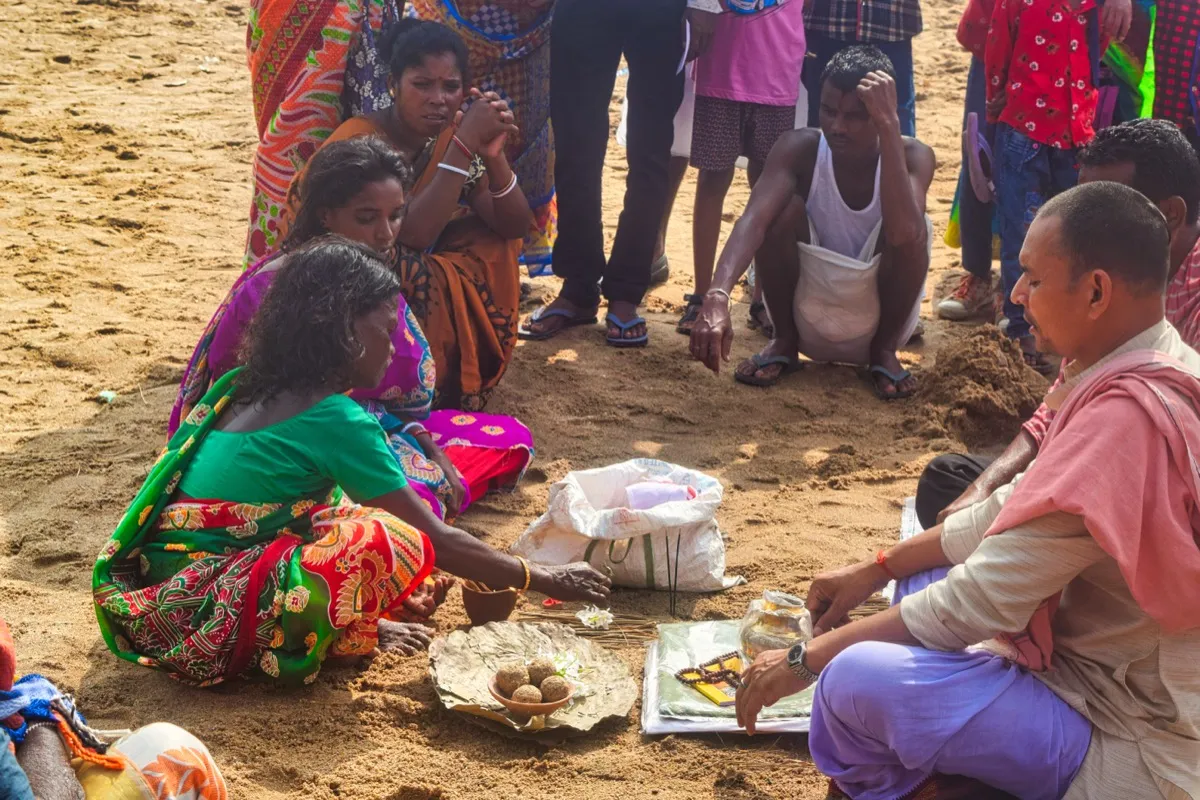
In 2025, Pitrupaksha will commence on 7th September, and conclude with Mahalaya Amavasya on 21st September. Each day of this period is dedicated to performing Tarpan for different family members.
Here are the dates:
| Date | Name | Occasion |
|---|---|---|
| September 7 | Purnima Shraddha | Bhadrapada, Shukla Purnima |
| September 8 | Pratipada Shraddha | Ashwina, Krishna Pratipada |
| September 9 | Dwitiya Shraddha | Ashwina, Krishna Dwitiya |
| September 10 | Tritiya Shraddha | Ashwina, Krishna Tritiya |
| September 10 | Chaturthi Shraddha | Ashwina, Krishna Chaturthi |
| September 11 | Maha Bharani | Ashwina, Bharani Nakshatra |
| September 11 | Panchami Shraddha | Ashwina, Krishna Panchami |
| September 12 | Shashthi Shraddha | Ashwina, Krishna Shashthi |
| September 13 | Saptami Shraddha | Ashwina, Krishna Saptami |
| September 14 | Ashtami Shraddha | Ashwina, Krishna Ashtami |
| September 15 | Navami Shraddha | Ashwina, Krishna Navami |
| September 16 | Dashami Shraddha | Ashwina, Krishna Dashami |
| September 17 | Ekadashi Shraddha | Ashwina, Krishna Ekadashi |
| September 18 | Dwadashi Shraddha | Ashwina, Krishna Dwadashi |
| September 19 | Trayodashi Shraddha | Ashwina, Krishna Trayodashi |
| September 19 | Magha Shraddha | Ashwina, Magha Nakshatra |
| September 20 | Chaturdashi Shraddha | Ashwina, Krishna Chaturdashi |
| September 21 | Sarva Pitru Amavasya | Ashwina, Krishna Amavasya |
According to Hindu mythology, the soul must wander through numerous planets after death. Pitra Paksha is a time when people conduct Shraddha to appease their deceased ancestors. It is a rite in which obligations to the ancestors are repaid. The significance of “Shraddha” is explained in great depth in Hindu texts such as the Agni Puran, Garuda Puran, and Vayu Puran. At Gaya Lord Ram and Mata Sita did Pind Daan for Raja Dashrath, on the banks of Falgu River. Since then this place is renowned for doing Shradh, Pind Daan & Asthi Visarjan.
The eldest son gets the first privilege to conduct Shradh karma with Tarpan or Pinddaan to the ancestors, according to Hindu scriptures.
Son can conduct Shradh with his wife after their marriage.
If the elder son is deceased, the younger son can execute Pinddaan, Tarpan, and Shradh karma as well.
In the absence of a son, Shradh karma might be performed by the grandchild of the son.
If a person does not have a son, his siblings might carry out Shradh karma on his behalf.
The daughter’s son has the right to conduct Shradh karma if the individual has exclusively daughters.
Shradh can be done on the banks of Falgu River in Gaya. It is the pilgrim’s first holy place, and it is here that he must make his first gift for the spirits of his ancestors. The Phalgu is the incarnation of Vishnu himself, according to the Gaya Mahatmya, which is part of the Vayu Purana. According to one legend, it formerly flowed with milk.
According to Hindu mythology, the soul must wander through numerous planets after death. Pitra Paksha is a time when people conduct Shraddha to appease their deceased ancestors. It is a rite in which obligations to the ancestors are repaid. The significance of "Shraddha" is explained in great depth in Hindu texts such as the Agni Puran, Garuda Puran, and Vayu Puran. At Gaya Lord Ram and Mata Sita did Pind Daan for Raja Dashrath, on the banks of Falgu River. Since then this place is renowned for doing Shradh, Pind Daan & Asthi Visarjan.
The eldest son gets the first privilege to conduct Shradh karma with Tarpan or Pinddaan to the ancestors, according to Hindu scriptures.
Son can conduct Shradh with his wife after their marriage.
If the elder son is deceased, the younger son can execute Pinddaan, Tarpan, and Shradh karma as well.
In the absence of a son, Shradh karma might be performed by the grandchild of the son.
If a person does not have a son, his siblings might carry out Shradh karma on his behalf.
The daughter’s son has the right to conduct Shradh karma if the individual has exclusively daughters.
Shradh can be done on the banks of Falgu River in Gaya. It is the pilgrim's first holy place, and it is here that he must make his first gift for the spirits of his ancestors. The Phalgu is the incarnation of Vishnu himself, according to the Gaya Mahatmya, which is part of the Vayu Purana. According to one legend, it formerly flowed with milk.
Related: Tripindi Shradh in Gaya — Rs 34,999 | Pind Daan in Gaya — Rs 7,100 | Our Gaya Pandits
Select your package and complete booking. Our team calls within 2 hours to confirm details.
Provide your gotra, departed soul's name, and any special requirements.
Experienced pandit performs the complete ceremony at the sacred site.
Full ceremony video on WhatsApp within 24 hours. Digital certificate shared via email.
Most Booked
For the devotee who seeks to perform their ancestral duty with the...

Gaya, Bihar, is the top preferred place by Hindus to perform the...
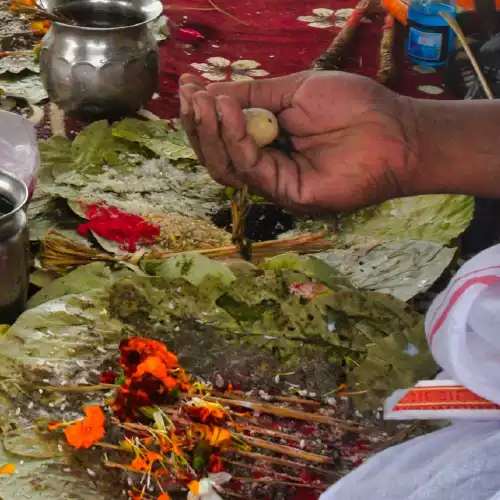
Gaya, Bihar is considered to be one of the top preffered place...
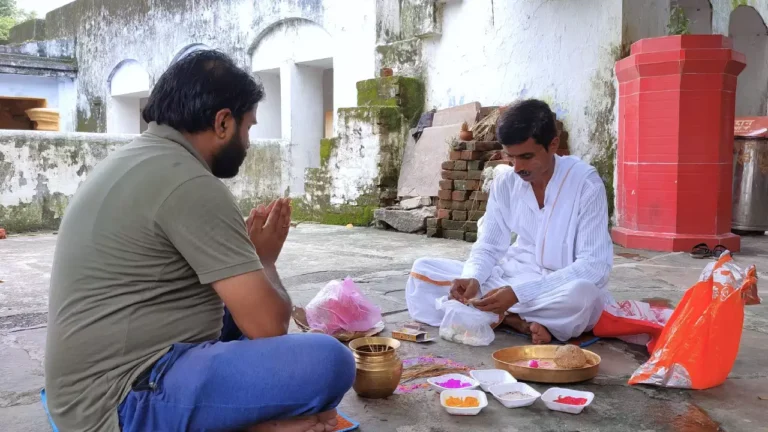 Save 35%
What’s Included Priest services by authorised Gayawal pandas for Shradh/Pind Daan Complete...
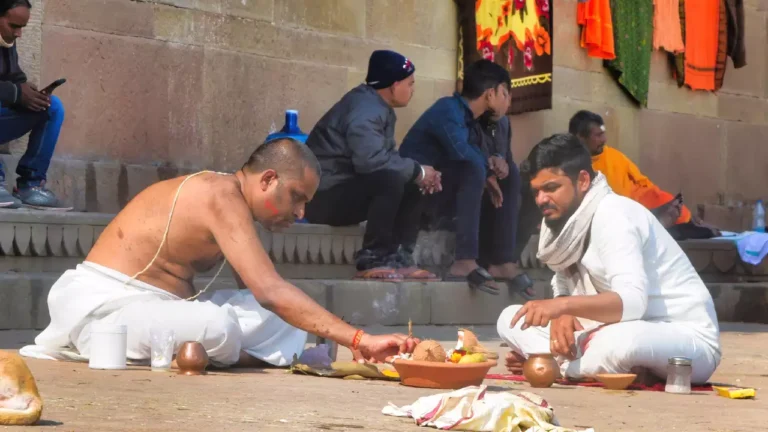 Save 31%
Inclusions Live Shradh performed in Gaya by an authorised Gayawal priest Complete...
Gaya-ji is unparalleled! Lord Rama himself performed Shraddh for his father, Dasharatha, here. The Gaya Mahatmya and Puranas declare Gaya as the Moksha Bhumi specifically for Pitrs. The key reason is the presence of Lord Vishnu's footprint (Vishnupad) enshrined in the main temple here in Gaya. It is believed that offering Pindas at Vishnupad ensures the ancestors attain liberation directly.
Furthermore, the Phalgu River in Gaya, though often appearing dry on the surface, flows underground and is considered sacred. Offerings made on its banks or at the designated vedis (altars) throughout Gaya reach the ancestors without fail, granting them complete satisfaction (tripti), which is the unique power of Shraddh in Gaya.
Yes, Shraddh in Gaya is not confined to just one spot. It traditionally involves making offerings at several sacred sites called vedis. While practices vary slightly, key locations for performing parts of the Shraddh ritual in Gaya include:
While the gates of Gaya-ji are always open for Pitra Karma any day of the year, certain times are especially auspicious for performing Shraddh in Gaya:
Performing Shraddh in Gaya is the most profound act of remembrance and offering you can do for your ancestors (Pitrs). It is a set of rituals performed with deep faith (shraddha). The main part involves Pind Daan – offering pinds (rice balls) – but the Shraddh ceremony in Gaya encompasses more. It includes invoking the ancestors, honoring Lord Vishnu (especially at Vishnupad Temple), making offerings at various sacred spots (vedis) around Gaya, feeding Brahmins (Pandas like myself), and giving daan (charity). Essentially, performing Shraddh in Gaya is a complete package to ensure nourishment, peace, and ultimate liberation (Moksha) for your departed forefathers.
As always, Dharma isn't sold, but facilitating the ritual involves costs. Expenses for Shraddh in Gaya typically include:
As in other places, the Karta (performer) for Shraddh in Gaya is traditionally the eldest son. If unavailable, younger sons, grandsons, or other male relatives from the paternal side can perform it. Daughters or wives can also perform Shraddh in Gaya if no suitable male member is available, guided by a Panda. The key role here in Gaya, however, is played by us, the Gayawal Pandas. We are the traditional priests of Gaya, authorized by lineage and custom to guide pilgrims through the specific rituals at the various vedis and to accept the offerings on behalf of the ancestors. You perform the actions, but the Gayawal Panda guides the entire Shraddh process in Gaya.
Yes, while Pind Daan is common to all, the scope of Shraddh performed in Gaya can vary based on needs and circumstances:
Your Gayawal Panda can advise which type of Shraddh in Gaya is most appropriate for your situation.
Do not worry unduly. While knowing the Gotra is traditional and helpful for the sankalpa (vow), its absence does not prevent you from performing Shraddh in Gaya. Our rituals are compassionate. If the Gotra is unknown, the Pandit performing your Shraddh in Gaya can use specific mantras or substitute phrases indicating an unknown Gotra, focusing instead on the names and relationship. Lord Vishnu and the Pitrs understand the intention. The sincerity (shraddha) with which you perform the rites in Gaya matters most. Just provide as much information as you know (names, relation, approximate time of death if possible).