No rituals selected yet.
Browse Pooja Packages → Save 54%
Asthi Visarjan
Asthi Visarjan in Varanasi (Kashi)
Asthi Visarjan at Ganga Ghat / Manikarnika Ghat, Varanasi Experienced Kashi-trained pandit...
from
₹5,100
₹11,000
The Eternal City of Lord Shiva
Choose from our range of ancestral and spiritual services
Pind Daan, a Hindu rite for the dearly departed ancestors is one of the most important religious events held along…
Varanasi, also known as Kashi, is one of the world's oldest towns and is known as the Land of Pilgrimage.…
Tarpan in Varanasi is performed for bringing happiness and relieve the performer and his family from any problems or pains…
For the departed father, grandpa, and great-grandfather, as well as the mother, grandmother, and great-grandmother, the rite is done. Its…
If a family is suffering from untimely or uncertain deaths of their loved ones, or if ancestral rituals like Pind…
Trusted by thousands of families across India
Save 54%
Asthi Visarjan at Ganga Ghat / Manikarnika Ghat, Varanasi Experienced Kashi-trained pandit...
 Save 22%
Pind Daan at Ganga Ghat/Manikarnika Ghat/Pishachmochan Ghat, Varanasi (Pitrupaksha 2026) Experienced Varanasi-trained...
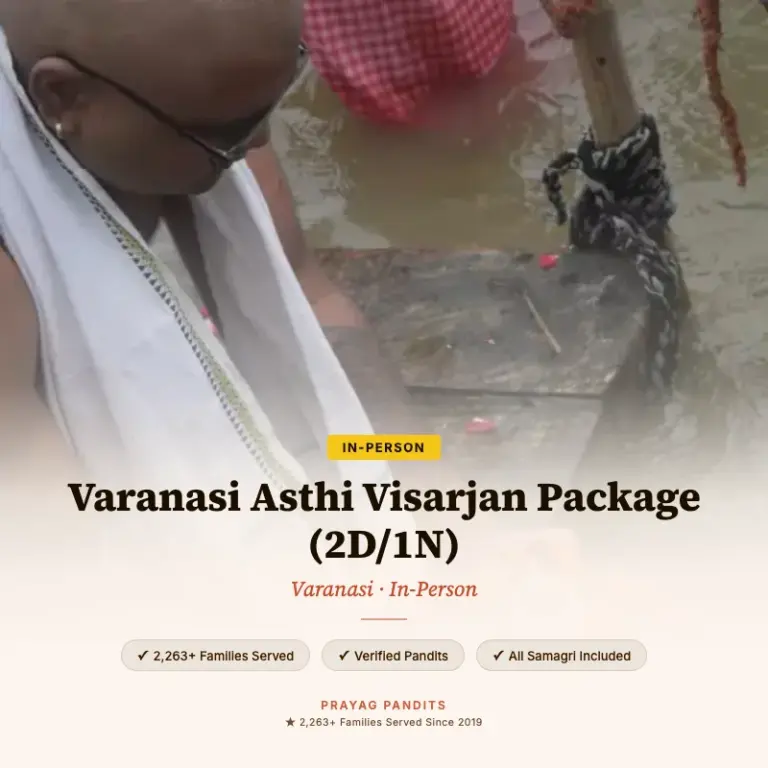
Hotel accommodation (1 night, centrally located near ghats) Asthi Visarjan at Ganga...
 Save 45%
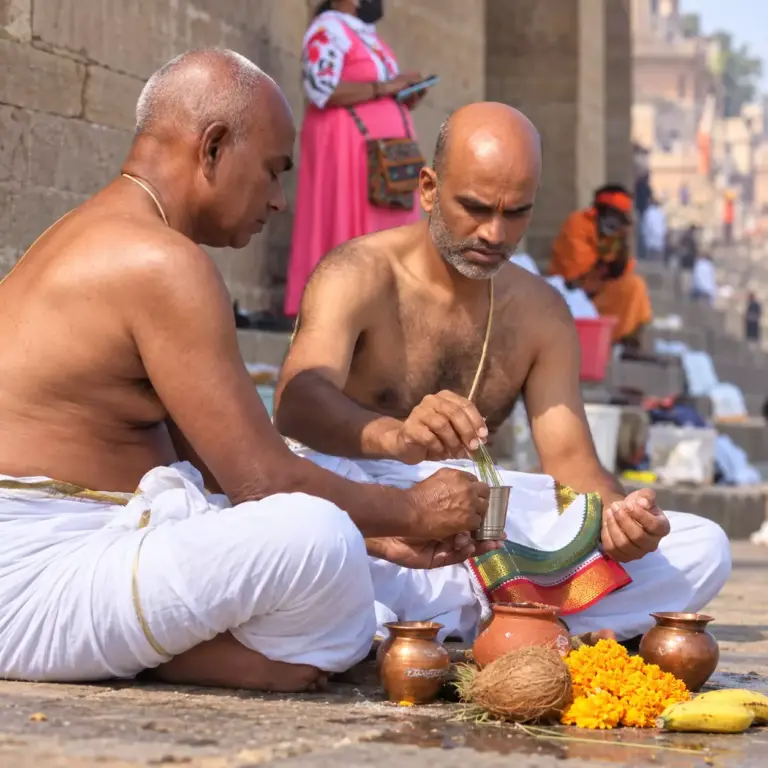
Asthi Visarjan at Ganga Ghat in Varanasi Tarpanam Included Experienced Vedic pandit...
 Save 40%
Online Pind Daan at Triveni Sangam, Prayagraj (live video) Online Pind Daan...
 Save 27%
Special Pind Daan at Ganga Ghat, Varanasi Experienced Varanasi-trained pandit Complete samagri...
 Save 45%
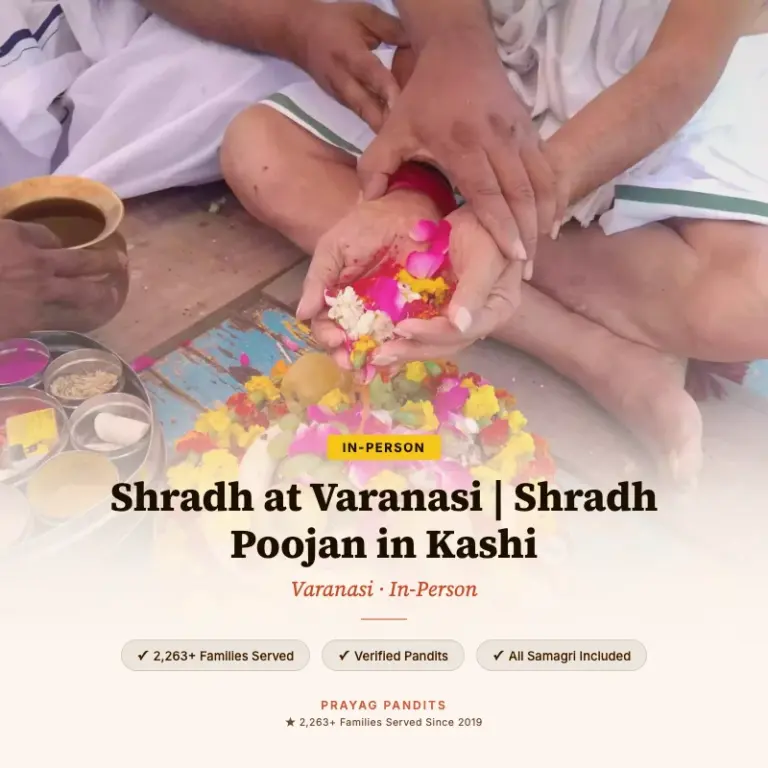
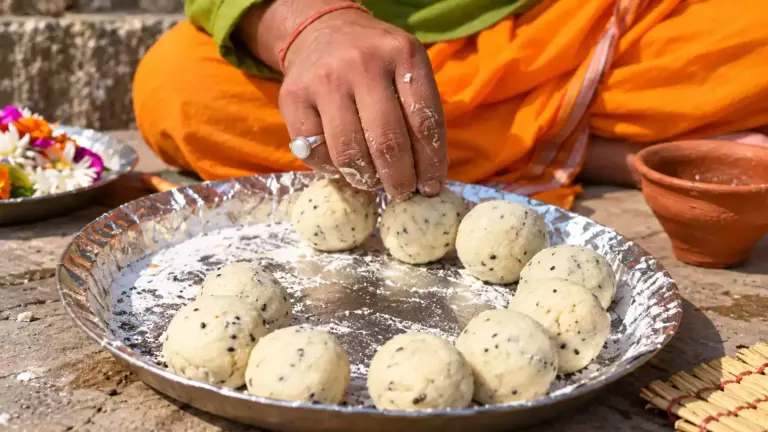
Shradh Poojan at Ganga Ghat, Varanasi Experienced Kashi-trained pandit All samagri (sesame,...
 Save 21%
Online Pind Daan at Ganga Ghat / Manikarnika Ghat, Varanasi (live video)...
 Save 32%
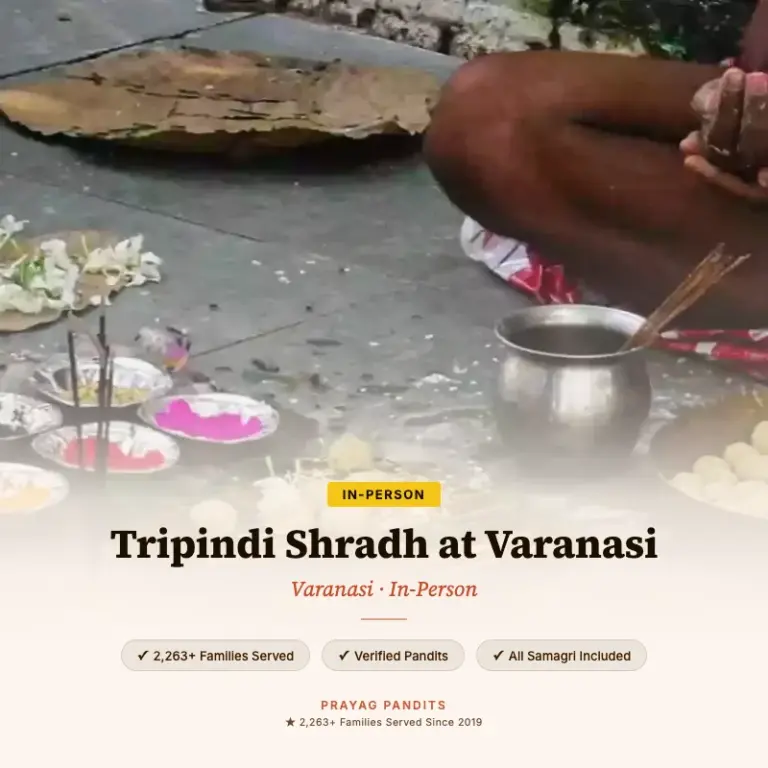
Tripindi Shradh at Ganga Ghat, Varanasi Experienced Kashi-trained pandit All samagri (sesame,...
 Save 36%
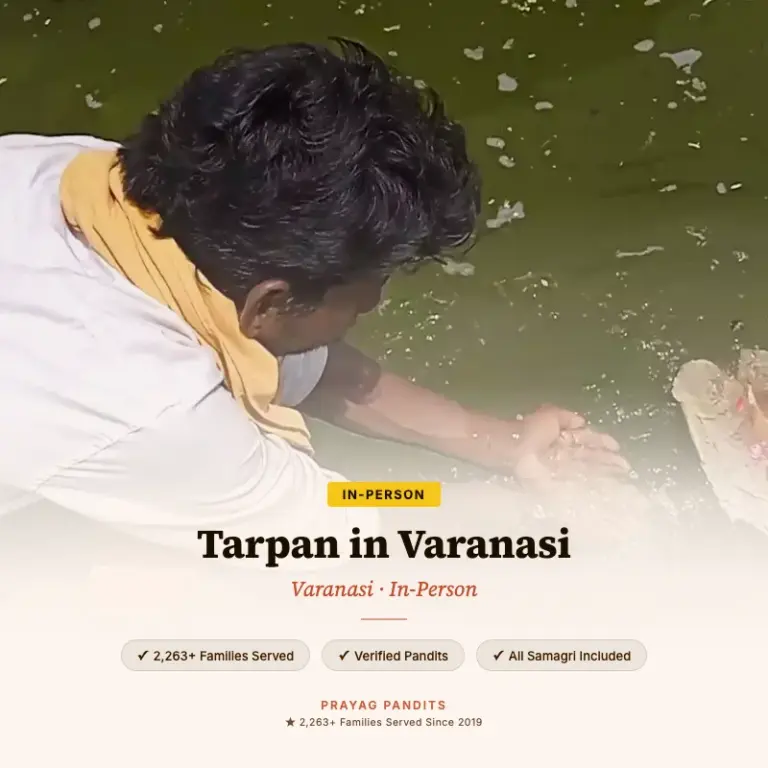
Tarpan at Ganga Ghat, Varanasi Experienced Varanasi-based pandit All samagri (sesame, kusha,...
Varanasi, also known as Kashi, is one of the world’s oldest continuously inhabited cities, with a history spanning over 3,000 years. It has been a significant center for knowledge, philosophy, culture, and devotion. The city is renowned for its contributions to Indian arts and crafts, serving as a pilgrimage site for Jains and being the birthplace of Parsvanath, the twenty-third Tirthankar. Vaishnavism and Shaivism have co-existed harmoniously in Varanasi, further enriching its cultural tapestry.
In Hindu belief, Varanasi holds a unique place as the city where liberation (moksha) from the cycle of birth and rebirth can be attained. It is said that dying in Varanasi grants the soul immediate liberation. The city’s association with Lord Shiva, who is believed to have founded it, adds to its spiritual significance. The Ganges River, which flows through Varanasi, is considered to purify the soul and aid in achieving moksha.
The Kashi Vishwanath Temple, dedicated to Lord Shiva, is one of the twelve Jyotirlingas and the city’s principal pilgrimage site. Dashashwamedh Ghat is the oldest and most significant of the ghats, known for its evening Ganga Aarti. Sarnath, a short distance away, is where Lord Buddha delivered his first sermon after enlightenment, and the Tulsi Manas Mandir marks the place where the poet-saint Tulsidas composed the Ramcharitmanas.
Performing Pind Daan and Shradh Karma in Varanasi is deeply significant due to its ancient religious traditions. According to Hindu scriptures, these rituals have been practiced here since time immemorial, guided by Vedic rites. Conducting these ceremonies in Kashi—considered Lord Shiva’s own city—ensures liberation (moksha) for departed souls, freeing them from the cycle of rebirth. Additionally, rituals at the holy Ganga Ghats amplify spiritual benefits, purifying ancestors’ souls and bringing peace and prosperity to their descendants. It’s believed that ancestors receive salvation through these rituals, bestowing blessings, family harmony, and lasting spiritual merit upon performers.
Ancient texts mention Varanasi as an ideal destination for ancestral rites and spiritual liberation
Our pandits have conducted thousands of ceremonies with complete Vedic adherence and care
Our team explains the selected ritual, package inclusions, and next steps before booking
From travel guidance to accommodation and local transport — we handle every detail
The pandits were very knowledgeable and guided us through every step of the ritual. We felt at peace knowing our ancestors' souls were blessed. The entire experience was deeply spiritual and well-organized.
We traveled from Odisha specifically for the ceremony. Everything was arranged perfectly — temple coordination, accommodation guidance, and the pandit was patient and thorough with all the rituals.
The Varanasi Death Hostel is the popular name for Kashi Mukti Bhawan, a charitable institution in Varanasi (Kashi) where terminally ill Hindu pilgrims come to spend their final days. It exists because Hindu scripture — particularly the Kashi Khanda of the Skanda Purana — teaches that dying within the city limits of Varanasi guarantees moksha (liberation from rebirth), because Lord Shiva whispers the Taraka Mantra in the ear of every soul that departs in Kashi. The institution was built in 1956 by the Dalmia charitable trust to make this theological privilege accessible to pilgrims from all over India.
A minimum of two full days is recommended to experience Varanasi's essential elements: the morning ghats, the Ganga Aarti, the Kashi Vishwanath Temple, and Sarnath. If you are visiting for sacred rituals (Pind Daan, Asthi Visarjan), allow three days — one day for arrival and ghat orientation, one day for the ritual, and one day for temple darshan and Sarnath. Those seeking a deeper experience of the city's culture, philosophy, and food scene will benefit from four to five days.
Varanasi is generally considered safer than many North Indian cities for solo women travellers, particularly in the ghat area where there is constant activity and visibility. Standard precautions apply: avoid isolated areas after dark, use reputable transportation, stay in accommodations with good reviews near the main ghats (the Assi Ghat neighbourhood is particularly popular and well-reviewed for solo travellers), and dress modestly near temples and ghats. The cultural respect for pilgrims extends to women performing religious rites.
For photography, Dashashwamedh Ghat during the evening Aarti and Assi Ghat at sunrise are the most frequently cited. However, the most atmospheric morning photography — the mist-over-water shots that define Varanasi's visual identity — is best captured from a boat on the river rather than from the ghat itself. Hire a small wooden rowboat from Assi Ghat before sunrise and drift northward as the light changes: the ghats seen from the water between 5:30–7:00 AM are extraordinary. Seek permission before photographing any individual during prayers or rituals.
According to the Kashi Khand of the Skanda Purana, Lord Shiva himself whispers the Taraka Mantra — the mantra of liberation — into the ear of anyone who dies within the sacred precincts of Kashi. This grants instant moksha (liberation from the cycle of rebirth), regardless of the person's spiritual state at the time of death. This belief explains the existence of Mukti Bhawan and similar establishments in Varanasi where the elderly and terminally ill come to spend their final days. It also explains the presence of the eternal flame at Manikarnika and the twenty-four-hour cremations — death here is not feared but welcomed as graduation into liberation.
Our experienced pandits guide you through every step of your spiritual journey — from booking to ceremony completion.