
Key Takeaways
- Why the confluence matters
- Where the name comes from
- Tulsidas
- Subah-e-Banaras
In This Article
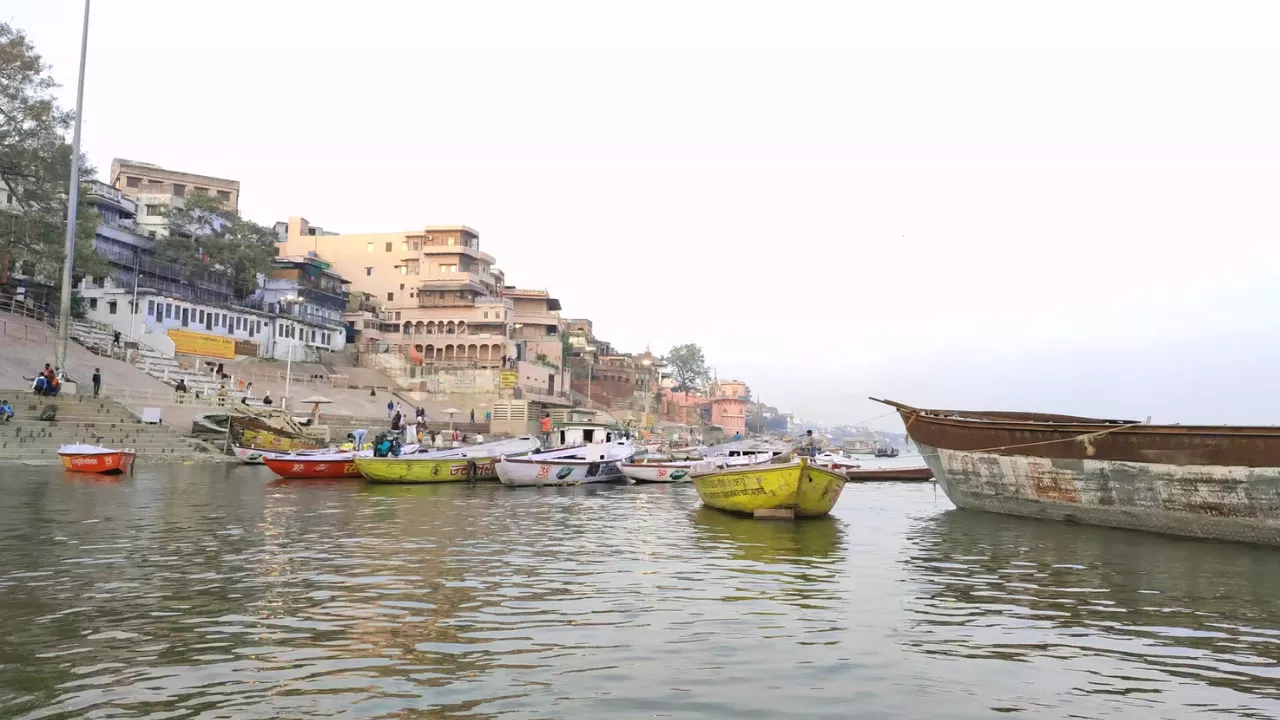
Assi Ghat marks the southern edge of Varanasi, where the Assi meets the Ganga. It is quieter than Dashashwamedh, close to Banaras Hindu University, and it is where Subah-e-Banaras runs each morning before sunrise — Vedic chanting, a morning aarti, classical music and free yoga on the steps. Tulsidas lived here, and the Ramcharitmanas was substantially written on this spot.
Why the confluence matters
The Assi is a small stream now, and parts of its course are hard to follow, but the sangam is the point. Confluences are held to be especially charged, and a dip at one carries more merit than a dip at an ordinary stretch of bank. Devotees come to Assi Ghat for that specifically.
The two rivers also gave the city its name, on one account: Varuna to the north and Assi to the south, the two streams that marked its ancient bounds.
Where the name comes from
Two accounts, and they do not agree.
The first has Durga, after defeating Shumbha and Nishumbha, throwing down her sword — asi — with such force that a river sprang from where it struck. That river became the Assi.
The second is a Puranic account in which Rudra, in fury, killed eighty — assi in Hindi — asuras at this spot, and afterwards repented and declared Kashi a place of non-violence. Both readings turn on the same word.
Tulsidas
The sixteenth-century poet-saint spent a long period of his life at Assi Ghat, and the tradition holds that substantial parts of the Ramcharitmanas were composed here — the Awadhi retelling of the Rama story that put the Ramayana within reach of people who did not read Sanskrit, and which has shaped devotional life ever since.
He is also held to have died here. A house near the ghat is revered as his residence, and Tulsi Ghat, next door, is named for him. The southern end of the riverfront was quieter then as it is now, which is why saints and scholars settled at this end.
Subah-e-Banaras
The morning programme, launched in 2014, which has become the thing Assi Ghat is known for. It starts before sunrise.
- Vedic chanting to open, recited by the priests
- A morning Ganga Aarti, lamps offered as the first light comes up. Quieter and more contemplative than the evening ceremony at Dashashwamedh
- Classical music, vocal and instrumental, and sometimes dance
- Yoga and meditation on the ghat steps, free, and open to anyone who turns up
Around 5:00 am in summer and 5:30 in winter. Our note on ritual timings at Varanasi has the seasonal detail.
Through the day
- Ganga snan. The holy dip, heaviest in the early morning, and held to carry more at the confluence.
- Surya Namaskar and arghya. Sun salutations facing the sunrise, and water offered to Surya.
- Personal offerings — flowers, milk, fruit, incense and diyas — to the river and to the shrines along the ghat, including a Shiva lingam under a peepal tree.
- An evening aarti, smaller than Dashashwamedh’s but on the same pattern: multi-tiered brass lamps, mantras, conches and cymbals.
Pind Daan at Assi Ghat
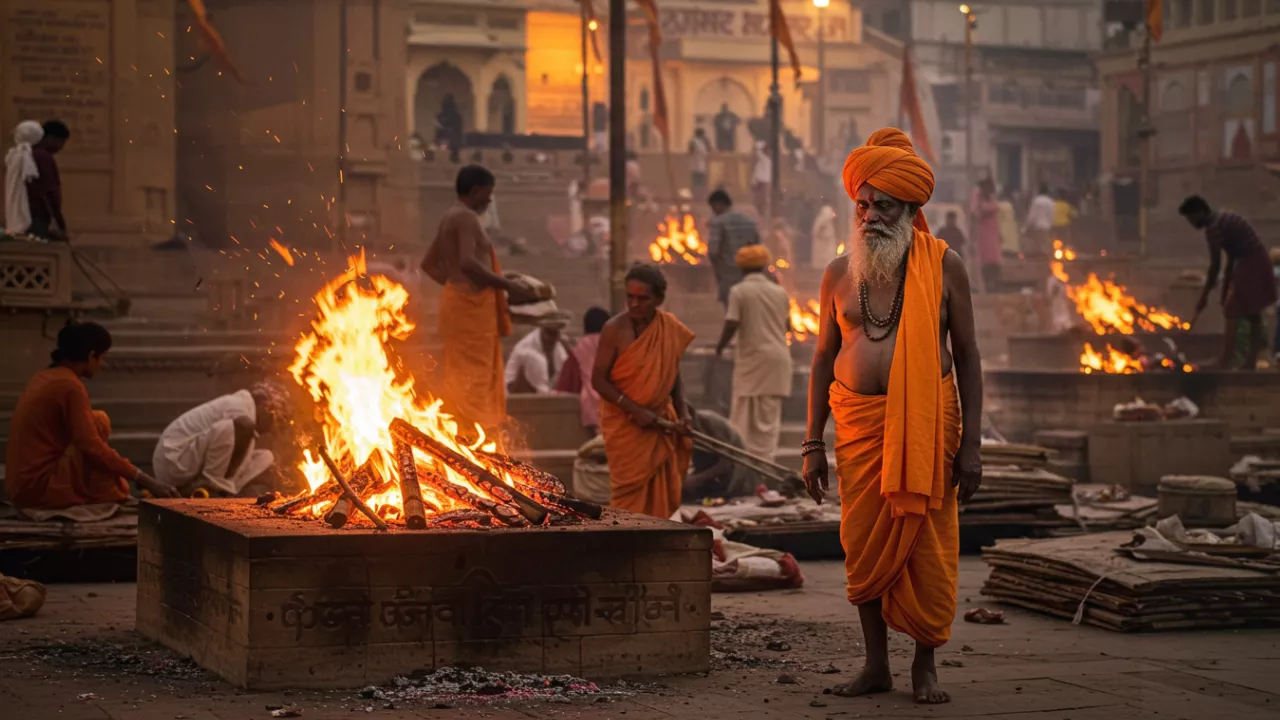
Manikarnika and Harishchandra are the cremation ghats; Assi, like the other Ganga ghats at Varanasi, is a site for Pind Daan and shradh. The pindas are formed from rice or barley flour with sesame and honey and offered to the ancestors, with a pandit who specialises in the rites taking the family through them.
The tradition holds that these rites performed on the Ganga at a site like this carry particular weight. Our note on muhurat explains how the day gets chosen, which matters more for these rites than for anything else.
| Rite | Price | What it covers |
|---|---|---|
| Pind Daan in Varanasi | ₹7,100 | Pinda offered in your gotra at the ghat |
| Asthi Visarjan in Varanasi | ₹5,355 | Immersion with sankalpa and tarpan. A second tier at ₹13,125 |
| Tarpan in Varanasi | ₹5,100 | The water offering on its own |
| Shradh at Varanasi (Kashi) | ₹10,999 | The shradh ceremony at the ghats |
🙏 Book Pind Daan at the Varanasi Ghats
- Performed at the Ganga ghats with a pandit
- Muhurat set from your ancestor's tithi
- Sankalp in your family gotra
- All samagri arranged at the ghat
Festivals here
- Dev Deepawali. The ghat is lit with thousands of earthen lamps, as every ghat is, with special aartis and performances.
- Makar Sankranti. A very large number of bathers; the day is held to be particularly auspicious for the dip here.
- Ganga Dussehra and Ganga Mahotsav. The descent of the Ganga, with special pujas and cultural programmes.
- Mahashivratri. In Shiva’s own city. Bathers arrive early before going on to the temples.
Visiting
- Dress modestly, whether you are taking part or watching.
- Photography is generally fine here, unlike at the cremation ghats — but not during someone’s personal puja, and not at people meditating.
- Footwear off on the ritual platforms.
- Boat rides at sunrise or sunset give the panoramic view of the ghats.
- Settle the dakshina first if you engage a pandit at the ghat.
Common questions
Why is it called Assi Ghat?
For the Assi river that meets the Ganga here. The name is traced either to Durga’s sword — asi — striking the ground, or to Rudra killing eighty, assi, asuras at the spot.
What time is Subah-e-Banaras?
Around 5:00 am in summer, 5:30 in winter, starting before sunrise. Confirm on the day — it follows the sun.
Did Tulsidas write the Ramcharitmanas here?
Substantial parts of it, by tradition, during the years he lived at this ghat. He is also held to have died here, and the adjacent Tulsi Ghat is named for him.
Can ancestral rites be performed at Assi Ghat?
Yes. Pind Daan and shradh are performed at Assi as at the other Ganga ghats; the cremation ghats are separate from this.
Arranging a rite
Tell us the rite, your gotra, the ancestors it is for and when you can travel, and we will set the muhurat with the pandit and confirm the ghat and the total before anything is paid. Our note on Kashi covers the wider city.
Book Your Sacred Ritual
Authentic ceremonies performed by Veda-trained pandits at sacred sites across India.



