No rituals selected yet.
Browse Pooja Packages →Key Takeaways
In This Article
For devout families in Malaysia, particularly those of Tamil and South Indian heritage, the final sacred duty of Asthi Visarjan (the immersion of mortal remains) is a profound spiritual undertaking. This guide provides a comprehensive overview of performing this rite in the holy city of Varanasi (Kashi). It details the sacred significance of the rituals, specific practices for South Indian communities, a step-by-step procedural guide, and a complete breakdown of travel options and planning for your Asthi Visarjan from Malaysia.
The Sacred Significance of Kashi for Final Rites
The city of Banaras, or Kashi, is the supreme destination for obsequies. Devotees from all corners of the land journey here to cremate their dead or immerse their ashes, knowing that the rites performed in this holy ground assist the soul on its journey to the ancestral realm (pitr-loka). The core belief is that the immersion of ashes in the holy Ganga at Kashi grants the soul moksha, or liberation from the cycle of rebirth.
Traditional belief gives great importance to completing the final rites with care. When the body or an effigy (putla vidhan) is not offered to the fire and the related rites remain incomplete, the departed soul is believed to remain in an unsettled pret state until the duties are completed. Therefore, a properly conducted Asthi Visarjan from Malaysia is treated as a serious spiritual duty.
A Guide for South Indian and Tamil Devotees
While the goal of liberation is universal, the path is often paved with specific traditions that have been preserved for millennia. South Indian communities, especially Brahmins, are known for their unwavering dedication to these ancient practices.
Unwavering Adherence to Vedic Injunctions
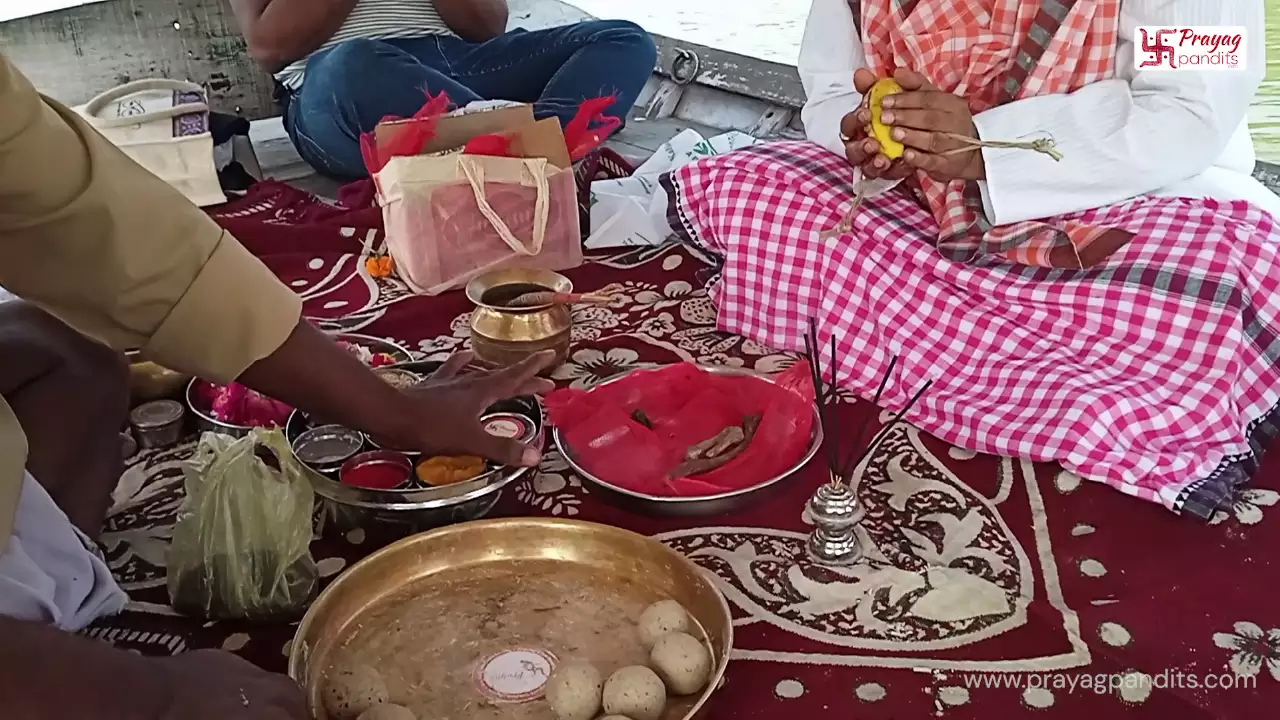
South Indian Brahmins perform these solemn Vedic rites with exceptional rigor. They adhere strictly to the ancient scriptural mandates, employing Sanskrit mantras in their original form. This deep commitment helps preserve ritual purity and authenticity, which is a key consideration for families planning their Asthi Visarjan from Malaysia.
Pilgrimage Timings and Priestly Services
Pilgrims from the South often plan their journey around specific auspicious times.
- Andhra Pradesh Devotees: Often visit in the months following the March and July harvests.
- Tamil Devotees: Commonly arrive to perform rites like Pinda Daan and Shraddha during the great festival of Shivaratri.
Although there are distinct priestly communities in Varanasi known as the Panch Dravids who traditionally serve South Indian pilgrims, it is very common for these devotees to utilize the services of North Indian pandas (pilgrimage priests), who are well-versed in guiding them through the necessary rituals.
Unique Ritual Nuances and Customs
Several distinctive practices are observed by South Indian families, particularly in the rites ancillary to the Asthi Visarjan from Malaysia.
- Ritual Circumambulation: During the shraddh ceremony that often follows the immersion, South Indian communities typically circumambulate the offerings in the anti-clockwise direction (apsavya), which is the direction prescribed for rites concerning the ancestors, as opposed to the clockwise direction used for the gods.
- Division of Offerings (Dan): At the cremation ground, the distribution of fees and gifts to the Dom (the traditional funeral attendants) is modified for South Indian Brahmans. Certain offerings are divided equally among specific right-holders, reflecting a unique social and ritual arrangement.
- Customs for Widows: Among Maharashtrian and some South Indian communities, a specific custom is observed after the cremation. When the widow takes her purificatory bath, she is presented with the “saris of widowhood” (rand sarion) by her close affinal relatives, which she must don immediately.
A Step-by-Step Guide to the Asthi Visarjan Ceremony
The ritual of immersion is a focused and sacred process. This stepwise guide will help you understand the procedure for your Asthi Visarjan from Malaysia.
Step 1: Preparing and Transporting the Sacred Remains
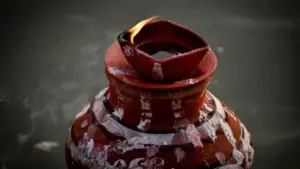
The ashes (asthi), referred to reverentially as ‘flowers’ (phul), are collected after cremation. They should be transported with utmost respect, typically carried by the chief mourner in a small, new earthenware pot or secured in a clean cotton bag, sometimes worn around the neck. The aim is usually to perform the immersion before the completion of the main mortuary rites on the twelfth day after death.
Step 2: Arrival in Varanasi and Connecting with a Priest
Upon arriving in Varanasi, the first step is to connect with a pilgrimage priest (panda or purohit) who will guide you. They will arrange the time for the ceremony and explain the necessary preparations. Having a priest arranged in advance is highly recommended for those undertaking an Asthi Visarjan from Malaysia. We assist in end to end arrangements which includes everything.
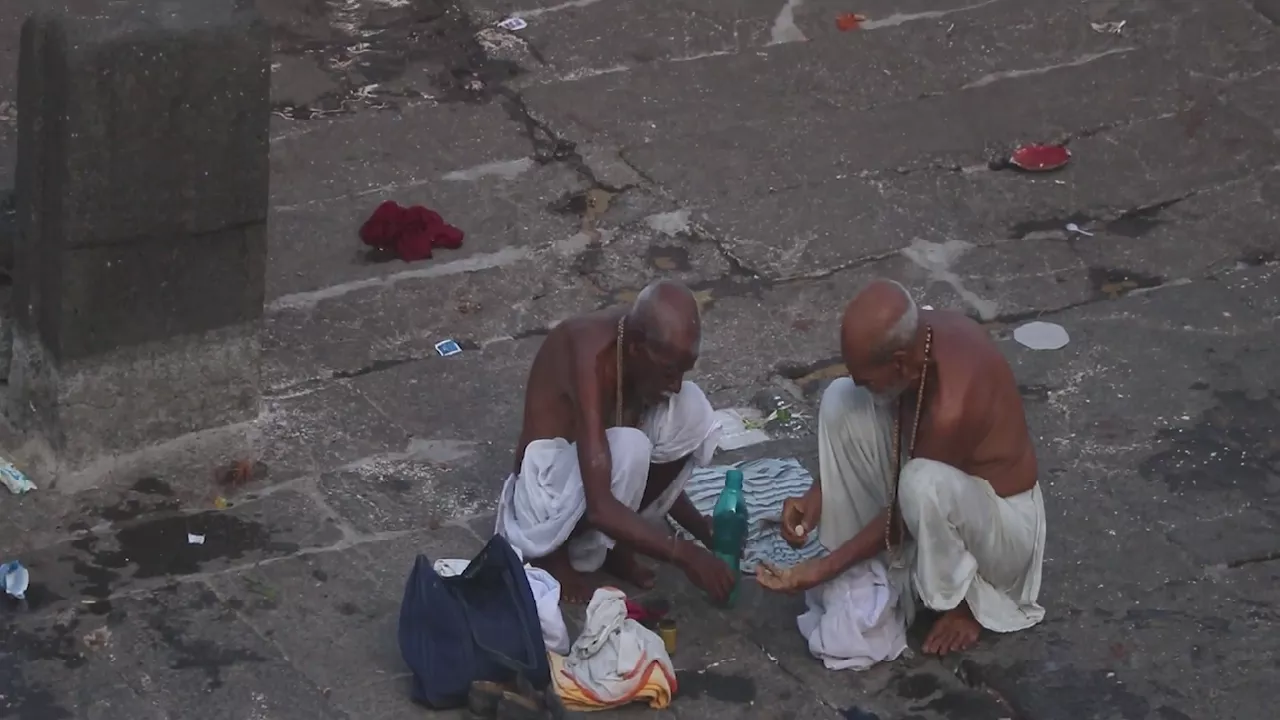
Step 3: Purification Rites at the Ghat
Before the main ritual, the chief mourner must undergo purification.
- Purificatory Bath: A holy bath is taken in the sacred waters of the Ganga to cleanse the body and mind.
- Tonsure: Following the bath, the chief mourner undergoes a tonsure (ritual shaving of the head). This is performed by a barber at the ghat and symbolizes a letting go of ego and worldly attachments in this moment of solemn duty.
Step 4: The Immersion Ritual (Asthi Visarjan)
Guided by the priest, the main ceremony begins.
- Invocation & Pooja: The deceased soul is formally invited to take up residence in the holy city of Kashi as a divine entity, from where they can watch over the welfare of the living family. Asthi Pooja is done for about 30 minutes.
- Announcement of Gifts (Dan): The gifts that are being made in the name of the departed are announced. This can include food, clothing, or money, and these acts of charity are crucial for aiding the soul’s onward journey.
- The Immersion: This is the final and most critical step. The mourner may either hire a boat to proceed to the middle of the river or simply enter the water up to their waist. The ashes are then gently released and scattered into the holy Ganga, accompanied by prayers for the soul’s peace and liberation.
Step 5: Post-Immersion Rites
The Asthi Visarjan from Malaysia is often followed immediately by shraddh rites on the riverbank to ensure the soul is nourished and begins its journey to the ancestral realm. This completes the pilgrimage’s main purpose.
Planning Your Journey: Flight Options from Malaysia to Varanasi
Arranging travel is a critical part of planning your Asthi Visarjan from Malaysia. There are no direct flights from Kuala Lumpur (KUL) to Varanasi (VNS); all journeys require at least one stopover.
Flight Comparison: Kuala Lumpur (KUL) to Varanasi (VNS)
| Airline/Portal | Route | Stops | Stopover Cities | Flight Duration | Baggage Allowance | Sample Fare (One-way) MYR | Sample Fare (Return) MYR | Best Booking Window | Booking Link |
|---|---|---|---|---|---|---|---|---|---|
| IndiGo | KUL → VNS | 1 | Bengaluru (75% of flights) | 12-16 hrs | Hand: 7 kg, Check-in: 15-30 kg | MYR 654.48 – 1234.86 (₹13,875–26,179) | MYR 1234.86 (₹26,179+) | 35-49 days advance | Book Now |
| Air India | KUL → VNS | 1 | Delhi | 15-18 hrs | Hand: 8 kg, Check-in: 23-32 kg max | MYR 716.75 – 858.73 (₹15,195–18,205) | MYR 1273.58 (₹27,000+) | 35-49 days advance | Book Now |
| Air India Express | KUL → VNS | 1 | Chennai, Kolkata | 13-16 hrs | Hand: 7 kg, Check-in: 15 kg | MYR 663.11 – 816.04 (₹14,058–17,300) | MYR 1179.25 (₹25,000+) | 35 days advance | Book Now |
| AirAsia Berhad | KUL → VNS | 1 | Bengaluru, Chennai, Kolkata | 16-27 hrs | Hand: 7 kg (2 bags), Value Pack: 20 kg | MYR 839.62 – 1122.64 (₹17,800–23,800) | MYR 1164.72 (RM1,169+) | 5-7 weeks advance | Book Now |
| Malaysia Airlines | KUL → VNS | 1 | Kolkata | 18-22 hrs | Hand: 7 kg, Check-in: 30 kg | MYR 3,500 (₹74,200) | MYR 3,500 (RM3,875+) | 5 weeks advance | Book Now |
| Batik Air Malaysia | KUL → VNS | 1 | Bengaluru | 15-18 hrs | Hand: 7 kg, Check-in: 20 kg | MYR 839.62 – 863.21 (₹17,800–18,300) | MYR 839.62 (Variable) | 5 weeks advance | Book Now |
| Akasa Air | KUL → VNS | 1-2 | Bengaluru + Mumbai | 19-22 hrs | Hand: 7 kg, Check-in: 15 kg | MYR 754.72 – 943.40 (₹16,000–20,000) | Variable | 30-40 days advance | Book Now |
| Singapore Airlines | KUL → VNS | 2 | Singapore + Indian city | 18-24 hrs | Hand: 7 kg, Check-in: 30 kg | Higher fares | Variable | 40-50 days advance | Book Now |
| Trip.com | KUL → VNS | 1 | Various | 12-27 hrs | Airline-dependent | MYR 400.94 – 665.09 (₹8,500–14,100) | MYR 287.97 (US$288+) | 4-6 weeks advance | Book Now |
| Skyscanner | KUL → VNS | 1 | Bengaluru, Chennai, Delhi | 12-18 hrs | Airline-dependent | MYR 632.08 – 844.34 (₹13,400–17,900) | MYR 231.84 ($232+) | 5-7 weeks advance | Book Now |
| Kayak | KUL → VNS | 1 | Bengaluru (preferred) | 12-18 hrs | Airline-dependent | MYR 1212.26 – 1264.15 (₹25,700–26,800) | MYR 1212.26 (RM1,340+) | 5 weeks advance (27% savings) | Book Now |
| Expedia | KUL → VNS | 1+ | Various | 12-18 hrs | Airline-dependent | MYR 844.34 ($215+/₹17,900+) | MYR 844.34 (Dynamic) | 4-6 weeks advance | Book Now |
Note: Fares are estimates and subject to change. Please use the direct links to check current pricing.
A Final Blessing on Your Sacred Duty
The journey for an Asthi Visarjan from Malaysia is a testament to your unwavering faith and deep love for your ancestors. It is an act that honours the sacred thread of life (vansh) and prays for the peaceful onward journey of the departed soul. While the path requires careful planning—from understanding the subtle nuances of the rituals to booking the long-haul flights—the spiritual merit gained is immeasurable.
By performing this duty in the holy city of Kashi, you offer sincere service to your ancestors, pray for their liberation, and seek divine blessings for your family lineage. May your pilgrimage be free of obstacles and filled with profound peace.
NRI Seva
🙏 Book Asthi Visarjan from Malaysia — Complete NRI Package
Starting from
₹7,100
per person
- Asthi Visarjan at Varanasi, Prayagraj, Haridwar or Garh Mukteshwar
- Complete ritual with boat ride to Sangam, Sankalp and prayers
- Live video call for NRIs in Malaysia — witness the ceremony in real time
- Full video recording delivered
Book Your Sacred Ritual
Authentic ceremonies performed by Veda-trained pandits at sacred sites across India.
2,263+ families served
Clear package details
Since 2019
