No rituals selected yet.
Browse Pooja Packages → Most Booked
Asthi Visarjan
Asthi Visarjan in Varanasi-Asthi Visarjan in Kashi
Asthi Visarjan at Ganga Ghat / Manikarnika Ghat or other scripturally important...
from
₹5,100
₹11,000
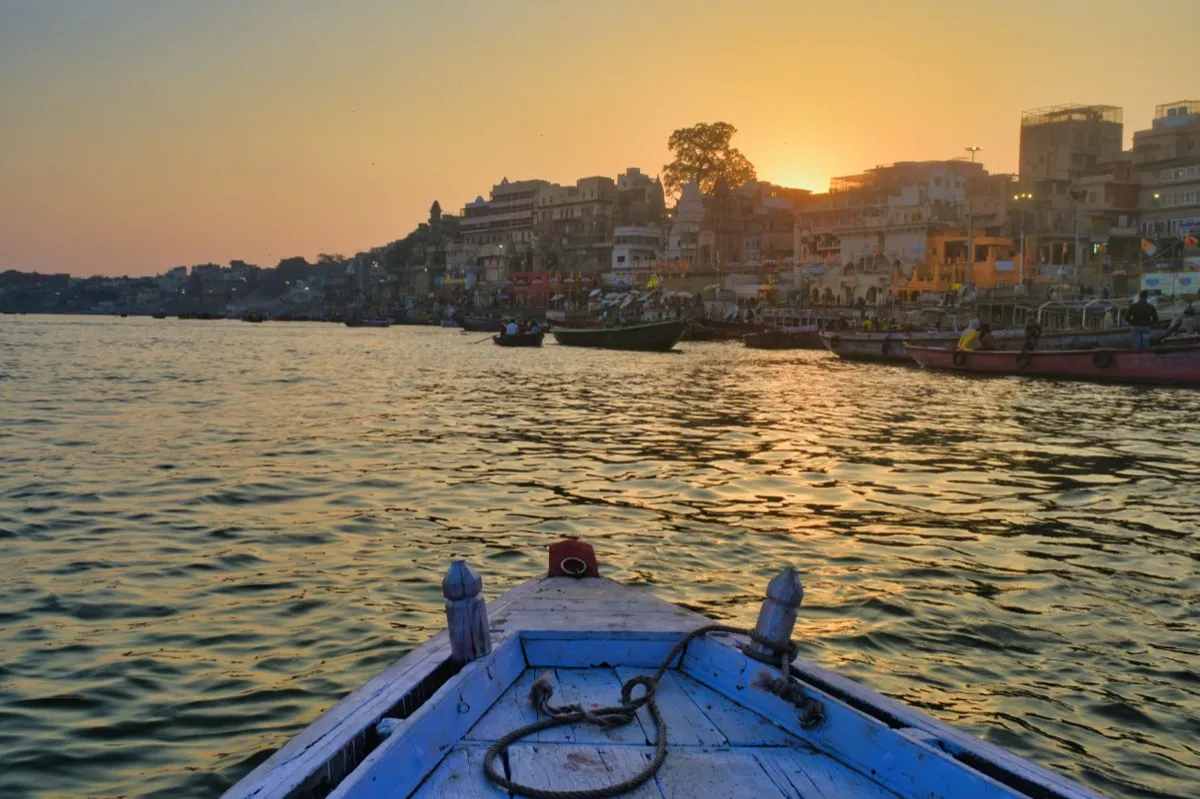
At Manikarnika ghat, the Skanda Purana records what every Kashi family knows — Shiva himself whispers the Taraka Brahman into the ear of the dying (Kashi Khanda). Bringing the asthi to this ghat is bringing them to the one tirtha where Yama has no jurisdiction.
The moksha journey
Where the journey begins — Triveni Sangam, Tirthraj and Pitrutirtha.
Learn more →Where the soul finds release — Manikarnika and the Tarak mantra (Skanda Purana, Kasi-Khanda).
You are hereThe final rite — at Vishnupad's footprint where the ancestors are conveyed to Brahmaloka.
Learn more →Tell us your situation — we will suggest the package that fits the family. No booking pressure; we will explain the choice on WhatsApp first if needed.
Every package includes an experienced Vedic pandit and the required puja samagri. The difference is in boat, location, stay, and tradition.
Most Booked
Asthi Visarjan at Ganga Ghat / Manikarnika Ghat or other scripturally important...
 Save 35%
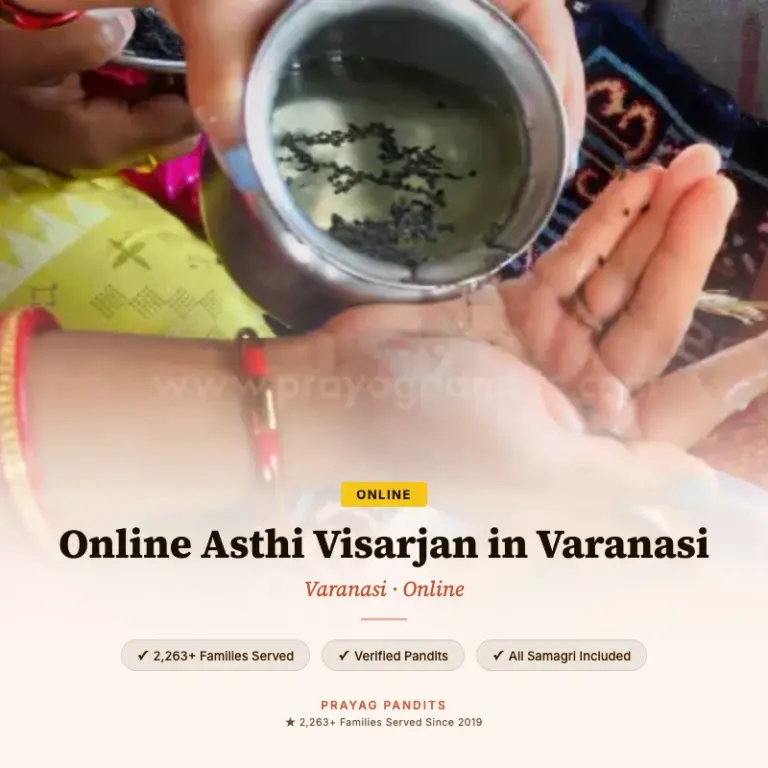
Online Asthi Visarjan at Ganga Ghat, Varanasi (live video) Experienced Kashi-trained pandit...
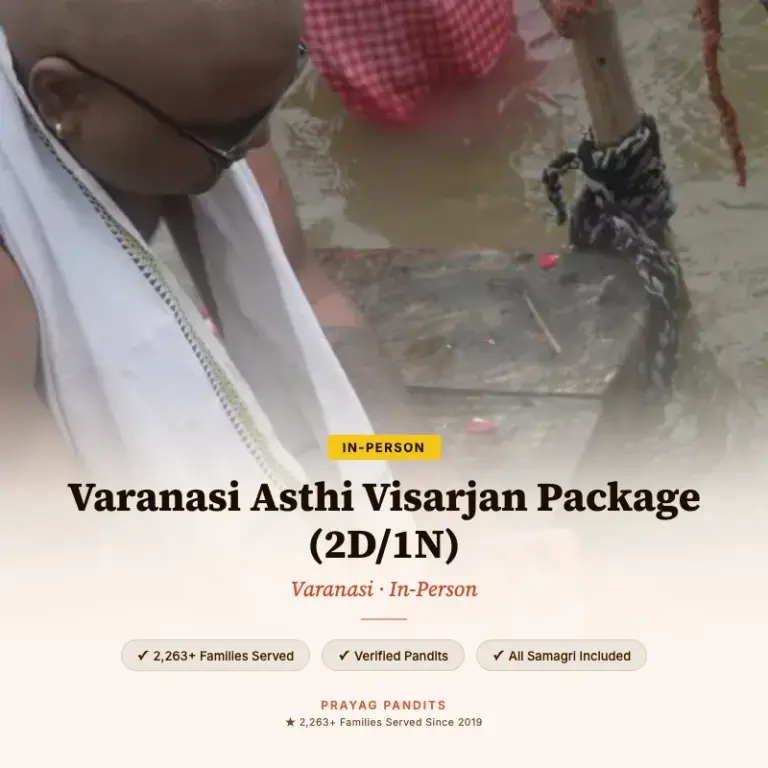
Hotel accommodation (1 night, centrally located near ghats) Asthi Visarjan at Ganga...
 Save 45%
Asthi Visarjan at Ganga Ghat in Varanasi Tarpanam Included Experienced Vedic pandit...
No packages match this filter. Talk to a family advisor →
What's included
We've seen too many families face hidden boat fees, samagri costs, and "dakshina" pressure on the day. Here's exactly what's covered, and what isn't.
Included
Vedic pandit qualified in Manikarnika and Harishchandra ghat vidhi, with gotra-pravara verified.
Included
Til, kusha, Gangajal, kalash, white cloth, dhoop, sindoor, sandalwood — prepared for asthi handover the same day.
Included
Optional package upgrades include the Special boat-included tier, the 2D/1N stay bundle, Tripindi Shradh combination, and online ceremony with video proof.
Included
One person on WhatsApp through your entire booking — fluent in Hindi, English, and major regional languages — before and after the ceremony.
Included
WhatsApp message from the pandit the same evening, with details of all offerings made on your behalf.
Included*
Direct ghat access at Manikarnika or Harishchandra. Boat or ghat-side immersion at the family's preference; included in all in-person packages.
Not included
Train, flight, or road travel. Varanasi Cantt + Babatpur airport well-connected; we can recommend trusted operators.
Not included*
Only included in the 2D/1N package.
Not included
Optional add-on — feeding pandits & needy families is meritorious but not required.
Step 03 · How it works
From your first call to same-day confirmation — we handle every coordination, so the family can focus on what matters.
Choose a package and complete payment online. Our team calls within 2 hours to confirm details.
~ 5 minutes
Provide gotra, the departed soul's name, preferred ghat (Manikarnika or Harishchandra), preferred date, and any special vidhi requirements.
~ 10 minutes
Pandit performs the complete asthi visarjan vidhi at the family-chosen ghat — Sankalp, mantra recitation per Skanda Purana Kasi-Khanda, samagri offering, immersion of asthi in the Ganga.
45–120 min
Pandit sends a same-evening WhatsApp confirmation with offerings detail. Photos and video available as opt-in add-ons.
Same day
When to perform
The Garuda Purana Preta Khanda prescribes bone collection on the 3rd, 7th, or 9th day after cremation, with immersion before the 10th. Kashi is Avimukta — the Mahabharata Vana Parva names it the one kshetra Shiva pledged never to leave — so for ashes preserved beyond this window through migration, war, or generations, a short Prayaschitta (expiation) rite restores the offering to scriptural propriety and the asthi visarjan carries full merit at any time.
Performed by Tirth Purohits at Triveni Sangam since 2019
Two ways to perform
Performed by your own hands at Manikarnika or Harishchandra ghat — family's choice. Pandit recites the mantra; the karta releases the asthi into the Ganga.
Starts at ₹5,100
For families abroad or unable to travel. Sankalp recited remotely; pandit performs at Manikarnika with live video proof.
Starts at ₹7,100
The sacred geography
Asthi visarjan today is performed at Manikarnika or Harishchandra; pilgrimage families also visit Dashashwamedh for the evening Ganga aarti before or after the ceremony.
Vishnu's chakra dug the kund; Shiva's jewelled earring fell as he trembled with delight at Vishnu's tapas (Skanda Purana, Kashi Khanda). The Mahasmashan — where Shiva himself whispers the Tarak mantra at the ear of the dying.
Primary asthi ghatWhere Brahma performed the ten horse-sacrifices to fix Kashi's sanctity in place (Skanda Purana, Kashi Khanda). Evening Ganga aarti — a moment many families add to their visit.
Darshan & aartiThe older living-tradition cremation ghat — sthala-parampara of King Harishchandra's truth-test (legend in the Markandeya Purana + the Mahabharata Sabha Parva).
Family choiceComplete guide
An editorial reference covering the ritual, the place, eligibility, timing, and what to keep ready — written for families weighing the decision.
In 2025, Pitrupaksha will commence on 7th September, and conclude with Mahalaya Amavasya on 21st September. Each day of this period is dedicated to performing Tarpan for different family members.
Here are the dates:
| Date | Name | Occasion |
|---|---|---|
| September 7 | Purnima Shraddha | Bhadrapada, Shukla Purnima |
| September 8 | Pratipada Shraddha | Ashwina, Krishna Pratipada |
| September 9 | Dwitiya Shraddha | Ashwina, Krishna Dwitiya |
| September 10 | Tritiya Shraddha | Ashwina, Krishna Tritiya |
| September 10 | Chaturthi Shraddha | Ashwina, Krishna Chaturthi |
| September 11 | Maha Bharani | Ashwina, Bharani Nakshatra |
| September 11 | Panchami Shraddha | Ashwina, Krishna Panchami |
| September 12 | Shashthi Shraddha | Ashwina, Krishna Shashthi |
| September 13 | Saptami Shraddha | Ashwina, Krishna Saptami |
| September 14 | Ashtami Shraddha | Ashwina, Krishna Ashtami |
| September 15 | Navami Shraddha | Ashwina, Krishna Navami |
| September 16 | Dashami Shraddha | Ashwina, Krishna Dashami |
| September 17 | Ekadashi Shraddha | Ashwina, Krishna Ekadashi |
| September 18 | Dwadashi Shraddha | Ashwina, Krishna Dwadashi |
| September 19 | Trayodashi Shraddha | Ashwina, Krishna Trayodashi |
| September 19 | Magha Shraddha | Ashwina, Magha Nakshatra |
| September 20 | Chaturdashi Shraddha | Ashwina, Krishna Chaturdashi |
| September 21 | Sarva Pitru Amavasya | Ashwina, Krishna Amavasya |
Select your package and complete booking. Our team calls within 2 hours to confirm details.
Provide your gotra, departed soul's name, and any special requirements.
Experienced pandit performs the complete ceremony at the sacred site.
The family receives ceremony updates on WhatsApp after completion.
After completing the preparation for the poojan, pandit begins the poojan by reciting all the mantras mentioned in the hindu holy texts and customs. The person performing the asthi visarjan is requested to recite some of the mantras as told by the pandit. During this procedure, poojan samagri is offered to the asthi kalash. Before the immersion of asthis in ganga river, pandit ji asks the almighty to accept the poojan and provide moksha to the departed.
Varanasi, also known as Kashi, is one of the world’s oldest towns and is known as the Land of Pilgrimage. For centuries, Hindus have travelled to this location because of its religious significance and historical landmarks. The Hindu religious ceremony of Asthi Visarjan, which is performed for the dearly departed, is the city’s most well-known feature. The immersion and dispersal of the deceased person’s ashes and bones in the flowing waters of a holy river in India is required for this Hindu religious respect to the deceased. The holy river Ganga, also known as the Ganges River, is situated in Varanasi and is considered the holiest of Indian rivers. Anyone who bathes in a holy river or has the ashes of the deceased immersed in the waters gets moksha, or salvation, according to Hindu sacred texts and religious epics. This is beneficial in the soul’s quest to become one with the Divine Power. Moksha also refers to the end of the reincarnation cycle. People travel to Varanasi or Kashi in search of redemption and forgiveness for all sins committed throughout their lifetime, which can be attained by bathing in the Ganges River for living mortals or having cremated remains immersed in the same river for deceased loved ones.
Asthi visarjan can be performed by the son, daughter, brother, sister, wife or husband of the departed soul. In case there is no one available in the family to carry out the poojan, then a friend or a pratinidhi can perform the rituals with the help of pandit. With the growth of digital age, one can perform the asthi visarjan poojan online, without even visiting at the poojan place physically. Prayag Pandits excels in providing online asthi visarjan poojan to anyone from any country.
Asthi visarjan in Varanasi is performed at the city’s sacred cremation ghats — primarily Manikarnika Ghat (the foremost asthi-visarjan ghat, where Vishnu’s chakra dug the kund and Shiva’s jewelled earring fell, per the Skanda Purana, Kashi Khanda) and Harishchandra Ghat (the older living-tradition cremation ghat, named for King Harishchandra’s truth-test). Families also visit Dashashwamedh Ghat for the evening Ganga aarti before or after the visarjan. Each ghat has its own scriptural and historical character; the in-person family chooses based on their tradition and the package booked.
There are different days in different castes and states. Generally, it is best to perform it as soon as possible. Asthi visarjan laws are different in Orissa, when compared to north india. But as per the holy texts, the asthis must be collected and put in a kalash on the 3rd day, 7th day, 9th day. Before the 10th day, asthi visarjan should be performed. This timing is prescribed in the Garuda Purana Preta Khanda. For ashes preserved long beyond this window — through migration, war, or generations — a short Prayaschitta (expiation) rite restores the offering to scriptural propriety; Kashi being Avimukta (Mahabharata Vana Parva), the kshetra Shiva pledged never to leave, the rite carries full merit at any time.
The poojan takes anywhere from 45 minutes to 120 minutes.
You should never keep the asthi inside your home. Rather, you should bury the asthi kalash in your garden, nearby empty land area or a patio.
Any nearby place where holy river ganga flows. For people living in or near Delhi, they can go Garh Mukteshwar or Haridwar. For People belonging to Northern India, they can visit Prayagraj, Varanasi or Mathura.
No, although river ganga is considered to be the most preferred when it comes to asthi visarjan, but any flowing water body is suitable for asthi visarjan.
Yes, if you are unable to visit physically, you can opt for online asthi visarjan. It is completely fine and is considered the preferred choice for many.
Drawn from puranic references and pandit consultations — for families who want to understand the ritual's meaning before booking.
Voices from families
The Asthi Visarjan service was conducted with dignity and proper Vedic rituals. The pandit explained the spiritual significance of each step. The team also helped with accommodation recommendations. Om Shanti.
Being abroad makes it difficult to perform these rituals in person. The online asthi visarjan option was perfect for our family. We could participate from three different countries via the video call. 🙏
Booked online Asthi Visarjan from Canada. The team arranged everything perfectly. We watched the entire ceremony via video call. It was emotional but the pandit's prayers brought comfort to the whole family.
We performed Asthi Visarjan at Varanasi through Prayag Pandits. The ceremony was very peaceful and the pandit was extremely respectful during the entire process. The boat ride to the sangam was well arranged.
The team was very sensitive to our emotions during this difficult time. The pandit performed every ritual with care and explained the significance in simple language. Truly grateful for this service. Jai Shri Ram.
We had been carrying the asthi for months not knowing what to do. Prayag Pandits guided us through the entire process from courier to the actual visarjan. Very professional and caring team.
Frequently asked
Compiled from 2,263+ family conversations on WhatsApp and over the phone.
Kashi is Moksha-Dayini, the city that grants liberation. It is the eternal abode of Lord Shiva. When the last physical remains (asthi) are immersed in the holy Ganga river within the sacred boundaries of Kashi, it is believed that Lord Shiva himself whispers the Taraka Mantra in the ear of the soul, freeing it from the cycle of rebirth. Maa Ganga, originating from the heavens, washes away sins and purifies the soul. Performing Asthi Visarjan here ensures the departed attains Sadgati (a peaceful state) and moves towards ultimate liberation.
While immersion anywhere in the Ganga at Kashi is meritorious, certain Ghats are traditionally favored:
The process is performed with reverence and simplicity:
Understanding the cost breakdown helps families plan better. The typical components are: Pandit Dakshina (₹1,500-₹5,000) depending on ritual complexity and seniority of the priest; Samagri and puja materials (₹500-₹1,000) including flowers, sacred threads, earthen pots, and offerings; Ganga boat charges (₹300-₹1,500) if mid-river immersion is preferred over ghat-side; Ghat access fees (₹0-₹200 at certain ghats); and optional additions like combined Pind Daan (₹2,100-₹5,100), Navagraha puja (₹1,100-₹3,100), or Kashi Vishwanath darshan arrangement. Prayag Pandits offers fixed-price packages to eliminate on-site negotiation — our transparent pricing starts at ₹5,100 for the Basic package and goes up to ₹12,500 for the comprehensive 2-day experience, with no hidden charges. Call +91 77540 97777 or WhatsApp for a custom quote matching your needs.
Yes. Vedic scriptures permit daughters, daughters-in-law, wives, and other female relatives to perform Asthi Visarjan when a son is unavailable or when the daughter chooses to honour her parents herself. We regularly guide daughters through the complete Asthi Visarjan ceremony at Manikarnika and Harishchandra Ghats in Varanasi. The ritual's spiritual efficacy is identical regardless of the performer's gender, provided the correct gotra, sankalpa, and mantras are invoked. Pandits at Kashi are experienced with families where daughters perform the rites, and there is no stigma or restriction at the major ghats.
Yes. Prayag Pandits offers a complete online Asthi Visarjan service for NRI families worldwide. The Asthi Kalash is shipped to Varanasi by courier. A qualified Pandit performs the full ceremony at Manikarnika Ghat, takes the complete sankalpa in your name, and video records the entire ritual for sharing with the family. Live-streaming is also available.
Yes. If cremation took place in your home city, the ashes can be collected in a clean urn and brought to Varanasi for immersion in the Ganga at Manikarnika, Harishchandra, or another accepted ghat. Per the Garuda Purana, if the urn is kept pure during transport (hung on a tree, not placed on the ground, protected from impurities), the immersion at Kashi carries the full spiritual merit. Our pandits assist families arriving by train or flight with: ghat selection, boat arrangements, the complete Asthi Visarjan vidhi, and the Sanskrit mantras "Namo Astu Dharmaya" (at entry) and "Sa me Prito Bhavatu" (during immersion). The ceremony typically takes 2-3 hours and can be scheduled on the same day as arrival.
Free consultation
We’ll listen, understand your family’s situation, and recommend the right package — never push. Reply within 10 minutes on WhatsApp, every day.