Why is Varanasi considered a significant place for performing Tarpan?

Varanasi (Kashi) is believed to be Lord Shiva’s abode and a powerful ‘Moksha-Kshetra’ (place of liberation). The Ganga River flowing through Varanasi is revered as a divine mother capable of washing away sins. Performing Tarpan here combines the sanctity of Kashi with the purifying power of the Ganga, making the offerings highly effective in satisfying […]

Are there any specific rules or precautions to follow while performing Tarpan in Gaya?

Yes, some key points include: Maintain purity (physical and mental). Take a bath before the ritual. Follow the instructions of the Gayawal Panda diligently. Perform rituals with faith (Shraddha) and devotion. Face the correct direction (South for Pitrus). Use the prescribed materials (like black sesame for Pitrus, Kusha grass). Offer water using the correct hand […]

What should one wear when performing the Tarpan in Gaya?

Men typically wear a clean, white dhoti (often without upper garments or just a simple shawl/angavastram). Stitched clothing is generally avoided during the core ritual. Women usually wear a simple saree, preferably light-colored or white, ensuring modesty and cleanliness. The emphasis is on purity and traditional simplicity

What is the difference between Tarpan and Pind Daan in Gaya Are they always done together?

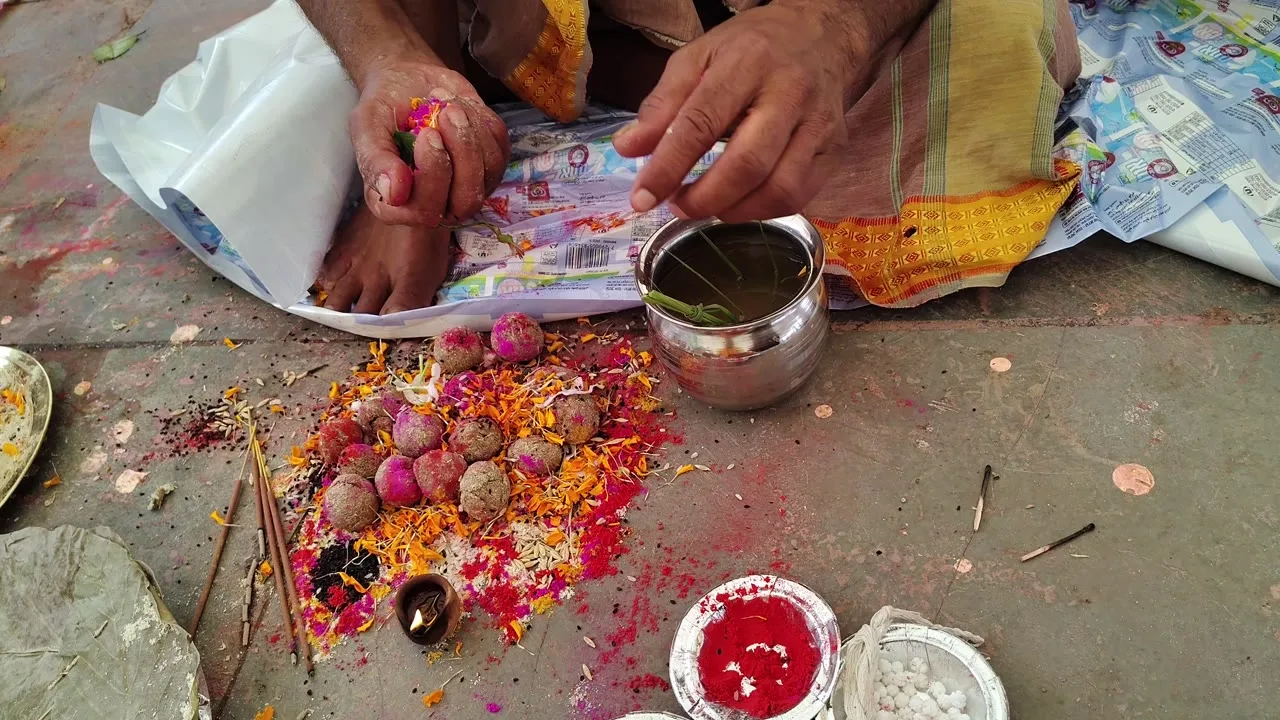
Tarpan: Offering of water (with sesame seeds, etc.) to satisfy the thirst of ancestors. It’s a libation. Pind Daan: Offering of Pindas (rounded balls of rice/barley flour mixed with ghee, honey, milk, sesame) representing the physical body, to nourish the ancestors. While distinct, Tarpan is an integral and mandatory part of the larger Shraddha and […]

What are the spiritual benefits believed to come from performing Tarpan in Gaya?

Performing Tarpan in Gaya is believed to: Provide immense satisfaction and peace to the souls of ancestors. Liberate ancestors (Pitru Mukti) from the cycle of birth and rebirth, helping them attain higher realms or Moksha. Remove Pitru Dosha (afflictions caused by unsatisfied ancestors) from the family’s lineage. Bestow blessings (Pitru Ashirwad) from ancestors for health, […]

Can women perform Tarpan in Gaya?

Traditional views often restricted women, particularly from performing the main rites alone. However, there’s growing acceptance and scriptural basis (like Garuda Purana referencing instances like Mata Sita performing rites) for women, especially daughters (if no sons exist) or daughters-in-law, to perform Tarpan and Pind Daan in Gaya. Some sources suggest women should use white sesame […]

For which ancestors is Tarpan offered in Gaya?

Tarpan is typically offered for three preceding generations (father, grandfather, great-grandfather; mother, paternal grandmother, paternal great-grandmother) and maternal ancestors (maternal grandfather, etc.). Specific Tarpan can also be done for other departed relatives, friends, or even souls one wishes to help. During Pitru Paksha, specific days are associated with particular relations (e.g., Navami for mothers).

Who is eligible to perform Tarpan in Gaya?

Traditionally, the eldest son is the primary person authorized (adhikari) to perform Tarpan and Shraddha for parents and ancestors. If the eldest son is unavailable or deceased, a younger son, grandson, great-grandson, brother, or other male relatives (sapindas, samanodakas) can perform it. A married son performs it along with his wife

How long does the Tarpan ceremony usually take in Gaya?

The specific act of Tarpan itself might take around 30-60 minutes. However, when performed as part of the standard one-day Pind Daan ritual in Gaya (covering Phalgu, Vishnupad, Akshayavat), the entire process usually takes about 3 to 4 hours, including preparation, Sankalpa, baths, and travel between sites.

What is the approximate cost Dakshina for performing Tarpan in Gaya?

The cost (Dakshina given to the priest) varies widely. If performed as a standalone ritual, it might be less, perhaps in the range of INR 1000-3000. However, Tarpan is usually part of the larger Pind Daan ceremony. Costs for Pind Daan packages in Gaya can range from a basic INR 1200-5100 to more elaborate ones […]

0

No products in the cart.