
अभी तक कोई अनुष्ठान नहीं चुना गया।
पूजा पैकेज देखें →मुख्य बिंदु
इस लेख में
What is Pithru Tharpanam?
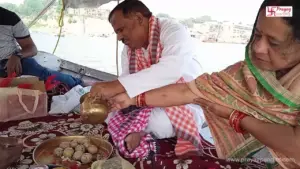
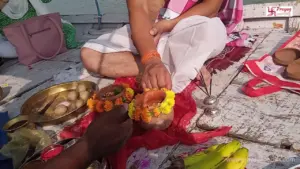
Pithru Tharpanam (பித்ரு தர்ப்பணம்) is the sacred act of offering water — along with sesame seeds (til/ellu), kusha grass, and mantras — to one’s deceased ancestors. The word Tharpanam comes from the Sanskrit root tarpaya, meaning “to satisfy” or “to nourish.” Through this offering, the soul of the departed is believed to receive nourishment in the realm of the Pitru Loka (the world of ancestors).
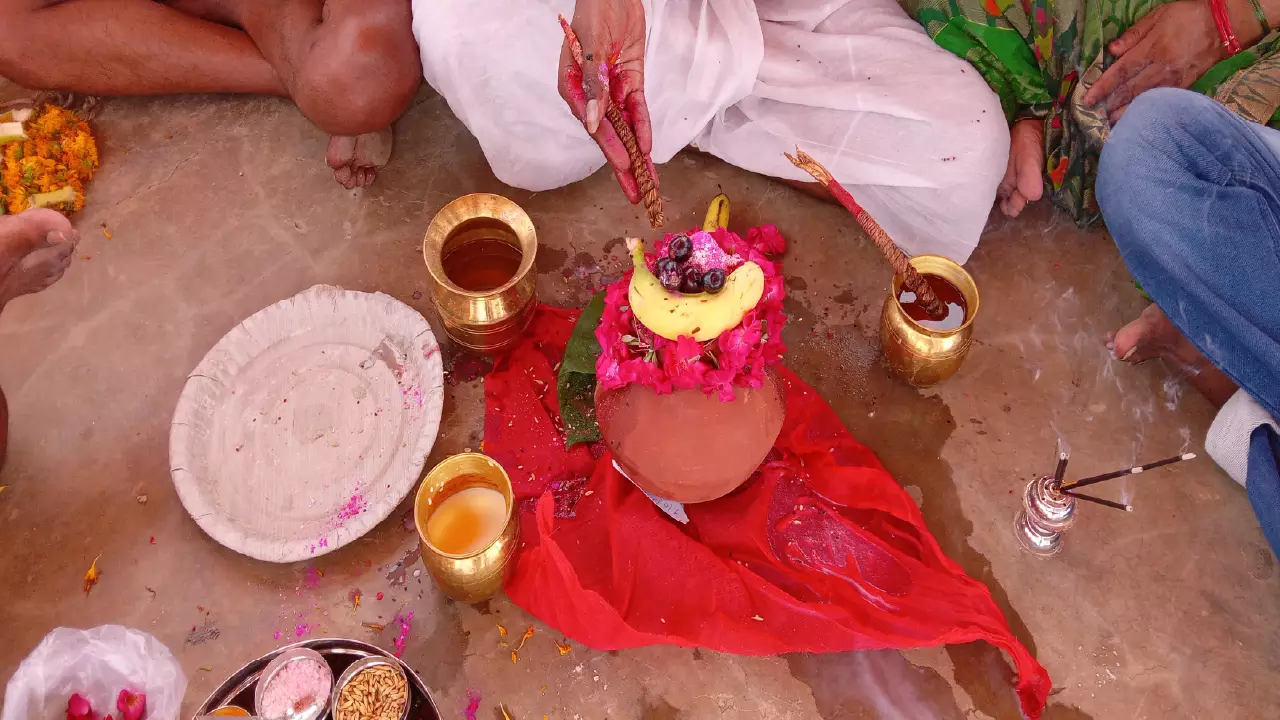
For Tamil Hindu families, Pithru Tharpanam is not merely a ritual — it is an act of gratitude, a thread connecting the living to those who came before. Elders in Tamil Nadu and among Tamil diaspora communities in Malaysia, Singapore, and elsewhere have upheld this practice for generations, understanding it as a sacred obligation that brings peace to both the ancestor and the family performing it.
Tharpanam vs. Tarpan: Same Practice, Regional Variations
Many Tamil families ask how Pithru Tharpanam differs from the North Indian Pitru Tarpan. They are, at their scriptural core, the same practice — both are derived from the Vedic rite of offering water (jala) and sesame (tila) to ancestors. The differences lie in procedure, language, and tradition:
| Aspect | Tamil Tharpanam | North Indian Tarpan |
|---|---|---|
| Language of mantras | Sanskrit with Tamil Brahmana Aapasthamba/Bodhayana Sutra pronunciation | Sanskrit with Madhyandina or Kanva Shakha pronunciation |
| Ritual officiant | Vadhyar (Tamil Brahmin priest) | Pandit or Purohit |
| Water vessel | Tamba (copper pot) or palm of the hand | Copper lota or palm of the hand |
| Primary occasions | Daily (Nitya), Amavasya, Mahalaya Paksha (16 days) | Daily, Amavasya, Pitrupaksha (16 days) |
| Sesame used | Ellu (black sesame preferred) | Til (black sesame preferred) |
| Kusha grass | Dharba grass (same plant, Tamil name) | Kusha grass |
The scriptural basis is the same — the Garuda Purana, Vishnu Smriti, and various Grihyasutras all prescribe Tarpan/Tharpanam as a core ancestral duty. What varies is the regional school (shakha) of the Veda followed. Most Tamil Brahmins follow the Krishna Yajurveda under the Aapasthamba or Bodhayana Sutras, which gives the ritual its South Indian character.
Types of Pithru Tharpanam
Tamil tradition recognises several forms of Tharpanam, each with its own occasion, scope, and spiritual purpose. Understanding which type applies to your situation helps you observe it correctly.
1. Nitya Tharpanam (Daily Water Offering)
Nitya Tharpanam is performed every morning after bathing as part of Sandhyavandanam — the daily ritual of saluting the three sandhyas (dawn, noon, dusk). During the Sandhyavandanam, a brief Tharpanam to Deva (gods), Rishi (sages), and Pitru (ancestors) is offered. The Pitru Tharpanam portion involves offering water cupped in the palms, directed southward (the direction of the ancestors), with the sacred thread draped in the Pitru fashion (Apasavyam — thread on right shoulder).
This daily observance is considered a Nitya Karma — a duty that should not be omitted. For Tamil NRI families who observe Sandhyavandanam, the Nitya Tharpanam is part of the same routine.
2. Amavasya Tharpanam (New Moon Day)
Amavasya (அமாவாசை) — the new moon day — is considered the most potent time for ancestral worship each month. On Amavasya, the Pitru are believed to be especially receptive to offerings. The Amavasya Tharpanam is a more elaborate ritual than the daily version: it involves a longer set of mantras, multiple water offerings for each ancestor (father, paternal grandfather, paternal great-grandfather, and their wives), and is ideally performed near a river, tank (kulam), or the sea.
For Tamil families in Malaysia and Singapore, performing Amavasya Tharpanam near the sea (facing south) is a common practice. When living abroad, many families arrange for the ritual to be performed on their behalf at a sacred tirtha in India — such as Triveni Sangam in Prayagraj or Ganga at Varanasi.
3. Mahalaya Paksha Tharpanam (Pitrupaksha)
The 16-day period of Mahalaya Paksha — called Pitrupaksha in North India — is the most important time of year for ancestral rituals. In Tamil tradition, it is called Mahalaya Paksha (மகாளய பக்ஷம்) or simply Mahalayam. It falls in the lunar month of Purattasi (Bhadrapada) each year — typically September-October.
In 2026, Pitrupaksha / Mahalaya Paksha runs from September 26 to October 10. The final day, Sarva Pitru Amavasya (also called Mahalaya Amavasya or Aadi Amavasai), is the most significant — on this day, Tharpanam can be performed for all ancestors regardless of their tithi (lunar date of death).
Tamil families traditionally perform Tharpanam on each of the 16 days, with special significance given to the Tithi on which the ancestor passed away. The rite at Triveni Sangam, Prayagraj — the confluence of Ganga, Yamuna, and the invisible Saraswati — is considered extraordinarily meritorious for Mahalaya Paksha Tharpanam.
4. Masika Tharpanam (Monthly Shradh during First Year)
During the first year after a family member’s passing, Masika Tharpanam (also called Masigam in Tamil colloquial usage) is performed each month on the same Tithi on which the person died. This monthly observance helps the departed soul transition smoothly during the first year. After the first annual ceremony (Abdika Shradh), the monthly rite concludes and is replaced by annual Shradh on the same Tithi each year.
Which Tharpanam applies to you?
If you recently lost a parent or grandparent, Masika Tharpanam applies for the first 12 months. If it has been more than a year, observe on Amavasya each month and during the full 16-day Mahalaya Paksha. If you are unsure of the correct Tithi, our Vadhyars will calculate it from the date of passing — just share the date with us.
Pithru Tharpanam Procedure: Step by Step
The following procedure follows the Aapasthamba Grihyasutra tradition, which is the most widely followed among Tamil Brahmins (Iyer community). Families following Bodhayana, Sankhayana, or other sutras will find minor variations in mantra text but the broad structure is the same.
Preparation (Sankalpa and Setup)
- Bathe and wear clean clothes (dhoti/veshti for men; silk saree or cotton for women if performing)
- Sit facing south (the direction of Yama, lord of the ancestors)
- Place a copper plate (tamba thalam) or clean banana leaf before you
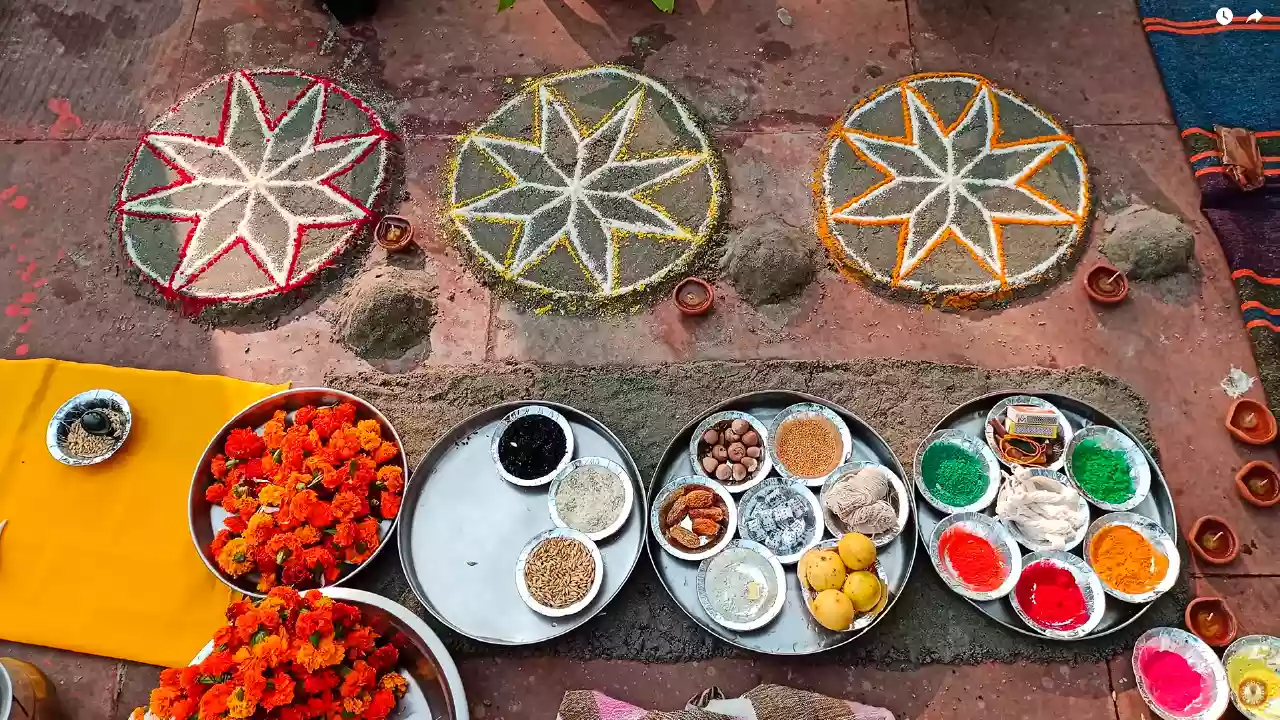
- Gather materials: dharba grass (kusha), black sesame seeds (ellu/til), fresh water in a copper vessel (tamba lota), sacred thread (janeu/poonool)
- Shift the sacred thread to the right shoulder (Apasavyam position) — this is the Pitru mode
- Take water and sesame in cupped palms and recite the Sankalpa: stating your gotra (lineage), today’s Tithi, the names of the ancestors you are offering to
The Core Offering
- Recite the Tharpanam mantra for each ancestor in turn. The general form is: “Om [Ancestor’s name] pitru / pitamaha / prapitamaha — etad te tila-udakam tarpayami” (I offer you this sesame-water)
- With each mantra, pour water mixed with sesame through the fingers (not the thumb) into a vessel or onto dharba grass placed on the ground
- Three offerings (three pours) for each ancestor is standard; some traditions do seven
- Offer separately for: father (Pitha), paternal grandfather (Pitamaha), paternal great-grandfather (Prapitamaha), and their respective wives (Matha, Pitamahi, Prapitamahi)
- Similarly offer for maternal grandfather’s line if observing the full form
Concluding the Tharpanam
- After all offerings, offer Tharpanam to the Rishis (sages) and Devas (gods) — a brief single pour each with the appropriate mantra
- Shift the sacred thread back to the left shoulder (Savyam position) to return to the Deva mode
- Offer a small quantity of the remaining sesame-water to the earth (Bhu-Tarpan)
- Donate to a Brahmin or offer food to crows (Kakabhali) — crows are considered messengers of Yama and hence of the ancestors in Tamil tradition
- Conclude with a prayer for the peace and liberation (Mukti) of your ancestors
Materials Required for Tharpanam
| Item | Tamil Name | Notes |
|---|---|---|
| Black sesame seeds | Karuppu ellu (கருப்பு எள்ளு) | Black preferred; white acceptable if unavailable |
| Dharba / Kusha grass | Dharba pullu (தர்ப்பை புல்லு) | Essential — place blades on the ground or in the vessel |
| Copper vessel | Tamba paathram (தாம்ப பாத்திரம்) | Copper or brass; clean water inside |
| Copper plate | Tamba thalam | For placing the sesame-water that drains from the hands |
| Clean water | Shuddha jalam | River water ideal; tap water accepted when at home |
| Sacred thread | Poonool (பூணூல்) | Worn by the male performer; shifted to Apasavyam |
| Akshatai (rice with turmeric) | Akshadhai | For some regional variants of the ritual |
Who Should Perform Pithru Tharpanam?
The primary performer (Karta) of Pithru Tharpanam is the eldest son. In Tamil Brahmin households, the son who has undergone Upanayanam (sacred thread ceremony) and is thus entitled to perform Vedic rites takes on this duty. If there is no son, the nearest male relative in the paternal line — a grandson, nephew, or younger brother — may perform it.
For daughters: while traditional texts assign this duty to sons, families where no male heir is available have long consulted their Vadhyar for guidance. In such cases, a trusted Vadhyar can perform the Tharpanam on behalf of the departed, with the daughter or daughter-in-law assisting or being present.
For NRI families where the eligible son or male relative lives abroad, the accepted alternative is to have an experienced Vadhyar perform the Tharpanam at a sacred tirtha — Prayagraj, Varanasi, Haridwar, or Rameswaram — on your behalf, while you watch via live video stream and offer the Sankalpa (stating your name, gotra, and intent) at the beginning.
The Significance of Tharpanam at Sacred Tirthas
While Tharpanam performed at home has undoubted merit, the Puranas and Dharmashastra texts unanimously state that Tharpanam performed at a tirtha (sacred confluence or holy site) carries vastly multiplied spiritual benefit. The soul of the ancestor receives the offering with greater completeness when the rite is conducted at a place already charged with tapas and sacred intention.
Triveni Sangam at Prayagraj — where the Ganga, Yamuna, and Saraswati rivers meet — is ranked the foremost tirtha for Pitru Karma. The Garuda Purana specifically names Prayag as the place where ancestral liberation is most accessible. Tamil pilgrims have travelled to Prayagraj for centuries to offer Tharpanam, and the tradition continues today.
Other significant tirthas for Tharpanam include Varanasi (Kashi), Haridwar on the Ganga, Rameswaram in Tamil Nadu (particularly for those following the South Indian tradition), and Gaya in Bihar — where the Vishnupada is believed to grant Moksha to the ancestors.
Tharpanam for NRI Tamil Families: Online Service
For Tamil Hindu families settled in Malaysia, Singapore, Australia, the United Kingdom, the United States, Canada, and elsewhere, physically travelling to India for every Amavasya Tharpanam or Mahalaya Paksha is not always possible. Prayag Pandits offers a trusted remote Tharpanam service conducted by experienced Vadhyars at Triveni Sangam, Varanasi, or Haridwar — as per your preference and the tradition of your family.
Here is how the online Tharpanam service works:
- You share the details of your ancestors: names, gotram, the Tithi (or date) of passing
- You recite the Sankalpa over WhatsApp video or live stream at the start of the ritual — the Vadhyar guides you through the few lines needed
- The Vadhyar performs the full Tharpanam at the sacred tirtha on your behalf
- You receive a video recording of the completed ritual
- Prasad and Tirtha jal (sacred water) can be sent to your address in India or to a family member
This arrangement is scripturally validated. The Dharmashastra tradition has always recognised proxy performance by an authorised Brahmin for those who are genuinely unable to be present. What is required is sincerity of intent and the proper Sankalpa — both of which are preserved in our service.
Our Online Tarpan service for NRIs is available year-round, with special scheduling during Amavasya days and all 16 days of Mahalaya Paksha / Pitrupaksha.
Booking Tharpanam at Prayagraj, Varanasi, or Haridwar
Prayag Pandits conducts Tharpanam at three primary sacred sites. The choice of location depends on your family tradition and the specific purpose of the rite:
- Tarpan / Tharpanam at Prayagraj (Triveni Sangam) — ₹5,100 onwards. The confluence of three sacred rivers; highest merit for ancestral offerings. Recommended for annual Mahalaya Paksha Tharpanam.
- Tarpan / Tharpanam at Varanasi — ₹5,100 onwards. On the banks of the Ganga at Manikarnika or Dashashwamedh Ghat; Kashi is the city of Moksha in Hindu tradition.
- Tarpan / Tharpanam at Haridwar — ₹5,100 onwards. At Har ki Pauri on the Ganga; a highly auspicious site, especially during Amavasya.
Tamil NRI Special
🙏 Book Pithru Tharpanam Online
Starting price
₹5,100
per person
Common Questions About Pithru Tharpanam
The practice of Pitrupaksha and ancestral rites raises many sincere questions, particularly for NRI families who grew up with these traditions but are navigating them away from home. Here are answers to the most frequently asked questions.
Pitru Dosha and the Consequence of Neglecting Tharpanam
The concept of Pitru Dosha (பித்ரு தோஷம்) — ancestral affliction — is well recognised in both Tamil and pan-Hindu tradition. It arises when the obligations to one’s ancestors are neglected over time: when Tharpanam is not performed, when Shradh and Masikam are omitted year after year, or when the Asthi of a departed family member is never immersed. The unsettled soul of an ancestor, left without the nourishment of Tharpanam, is believed to cause disruptions in the family’s wellbeing — obstacles in marriage, difficulties in having children, unexplained health problems, and financial reversals.
Tamil astrological tradition (Jyotisha) identifies Pitru Dosha in the birth chart from the placement of the Sun, Saturn, and Rahu/Ketu in certain houses. If your Vadhyar or astrologer has identified Pitru Dosha in your family’s chart, the most direct remedy is consistent Tharpanam — particularly during the 16 days of Mahalaya Paksha each year, and on every Amavasya. Performing Tharpanam at Gaya (where the Vishnupada is said to directly receive ancestral offerings) or at Triveni Sangam Prayagraj is especially effective for resolving longstanding Pitru Dosha.
For NRI families where the Pitru Dosha has been identified by an astrologer abroad, the remotely-performed Tharpanam through our service carries the same remedial value as in-person performance — provided the Sankalpa is made correctly with the appropriate intent and the Vadhyar performing is properly trained. The scriptural tradition has always prioritised sincerity of intent (bhav) alongside the technical correctness of the rite.
Tharpanam at Rameswaram: The South Indian Tradition
While Prayagraj, Varanasi, and Haridwar are the primary tirthas cited in Puranic texts for ancestral rites, Tamil tradition holds Rameswaram in Tamil Nadu in especially high regard. Many Tamil families perform their annual Mahalaya Paksha Tharpanam at Rameswaram’s Dhanushkodi beach — where the Bay of Bengal meets the Indian Ocean — before the primary pilgrimage to Rameshwaram Ramanathaswamy Temple.
The tradition holds that performing Tharpanam at Rameswaram and then at Prayagraj (the Dakshin-Uttar combination of sacred sites) provides the most complete ancestral liberation available. For Tamil families who have already performed Tharpanam at Rameswaram but wish to also fulfil the Prayagraj rite — or vice versa — our online service accommodates both, and we can coordinate the same rites at Prayagraj on the exact date you choose.
Frequently Asked Questions About Pithru Tharpanam
For more on the broader significance of ancestral rites during Pitrupaksha, read our detailed guide on Pitrupaksha Tarpan Mantras and Rituals. For those seeking to understand Pind Daan alongside Tharpanam, see our guide on everything you need to know about Pind Daan.
अक्सर पूछे जाने वाले प्रश्न
Can Tharpanam be performed by a daughter or daughter-in-law?
Traditional texts assign Pithru Tharpanam to the eldest son. However, when no male heir is available, many Vadhyars — guided by Dharmashastra exceptions — allow a daughter or trusted family member to perform the rite, or they perform it on the family's behalf. Please consult your family Vadhyar or contact us for guidance specific to your situation.
How many ancestors are included in one Tharpanam session?
A standard Tharpanam includes three generations on the paternal side (father, grandfather, great-grandfather) and their wives — six ancestors in total. The full Ashtakavarga Tharpanam extends to maternal grandfather's line as well, covering up to 14 ancestors. During Mahalaya Paksha, some families perform Tharpanam for all departed ancestors across all generations.
What if I do not know the Tithi (lunar death date) of my ancestor?
If the death date in the Gregorian calendar is known, our Vadhyar can calculate the corresponding Hindu Tithi. If neither is known with certainty, Mahalaya Amavasya (Sarva Pitru Amavasya / Aadi Amavasai) covers all ancestors regardless of Tithi — it is considered universally applicable. This is the safest choice for families unsure of the exact date.
Is online Tharpanam (performed by proxy) spiritually valid?
Yes. The Dharmashastra tradition has always permitted proxy performance by an authorised Brahmin when the Karta is genuinely unable to be present — this is called Pratinidhi (representative) performance. The essential conditions are: the Karta must state the Sankalpa (even via video call), the Brahmin performing must be qualified and sincere, and the correct materials and mantras must be used. All three conditions are met in our service.
How is Mahalaya Paksha Tharpanam different from monthly Amavasya Tharpanam?
Amavasya Tharpanam is performed monthly and carries the merit of a regular ancestral offering. Mahalaya Paksha Tharpanam, performed during the 16-day period of Pitrupaksha, is considered dramatically more meritorious — the Puranas describe it as the one period in the year when the Pitru are most accessible and the offerings reach them most directly. Performing Tharpanam at a sacred tirtha during Mahalaya Paksha is considered the equivalent of years of regular monthly Tharpanam.
अपना पवित्र अनुष्ठान बुक करें
भारत भर के पवित्र स्थलों पर वेद-प्रशिक्षित पंडितों द्वारा वीडियो प्रमाण सहित प्रामाणिक अनुष्ठान।
2,263+ परिवारों की सेवा
वीडियो प्रमाण शामिल
2019 से
