



What’s included
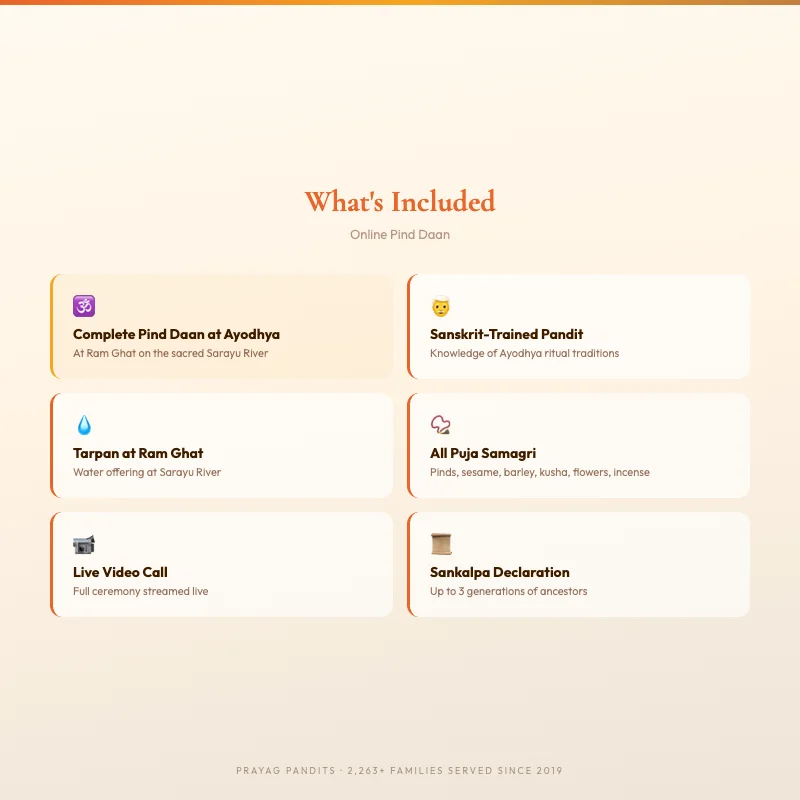
Included in your package
- Online Pind Daan at Ram Ghat, Sarayu River, Ayodhya live video
- Sanskrit-trained pandit with Ayodhya ritual tradition
- Complete samagri pinds, sesame, barley, kusha, flowers, incense, lamp
- Sankalp with family & ancestor names
- Pind offering for up to 3 generations of ancestors
- Live video call + recorded meeting via Google Meet / Zoom within 72 hours
- Pre-ceremony consultation call
Not included in your package
- Physical travel to Ayodhya (this is online)
- Tarpan (separate; not included)
- Ram Janmabhoomi darshan (in-person Pind Daan product available separately)
- Accommodation / local transport in Ayodhya
- Extra Dakshina/Gifts/Donations made to the Priest/Pandit
This is not a Daswa Pind Daan package.
How it works
Choose your pooja
Review your package and any available additions, then add it to your booking.
Share your preferences
Enter your contact details, preferred date and time. Add ancestral details if you wish.
We coordinate with you
Our team confirms the arrangements and shares your coordinator’s details 24 hours before the pooja.
Participate in your pooja
Follow the participation and joining arrangements described in your package and shared by your coordinator.
What families say after the rite
From families who booked Online Pind Daan in Ayodhya.
Rated 4.8 out of 5
500+ reviews · Prayag Pandits
This poojarated 4.8 out of 518 reviews
Our pandits








- 2,263+ families served
- Serving since 2019
- GST registered
Families on video
The player loads only when you press play.


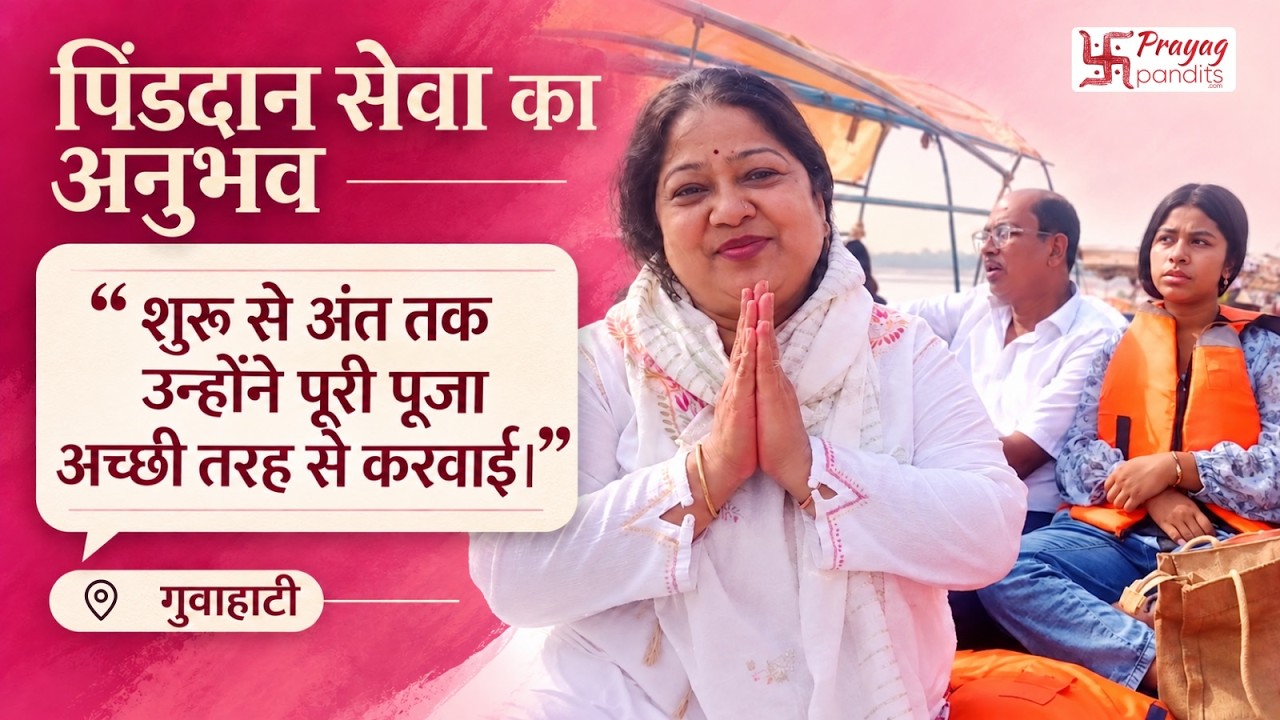
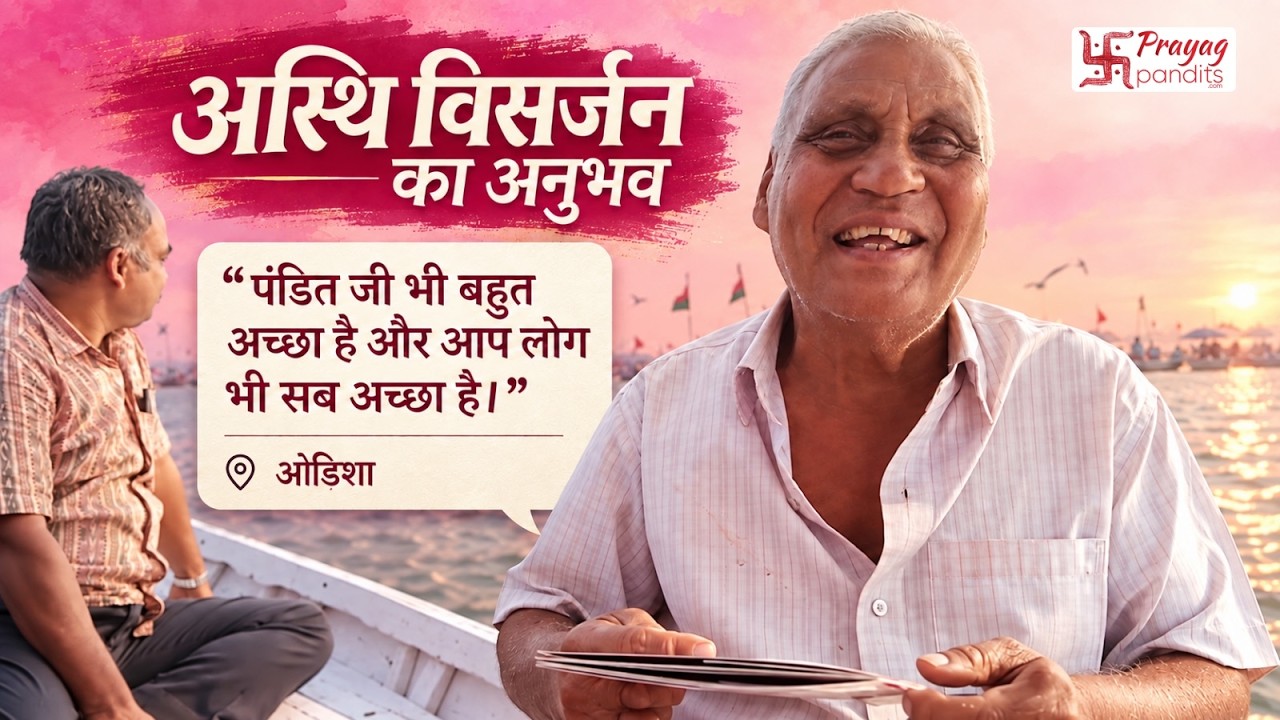
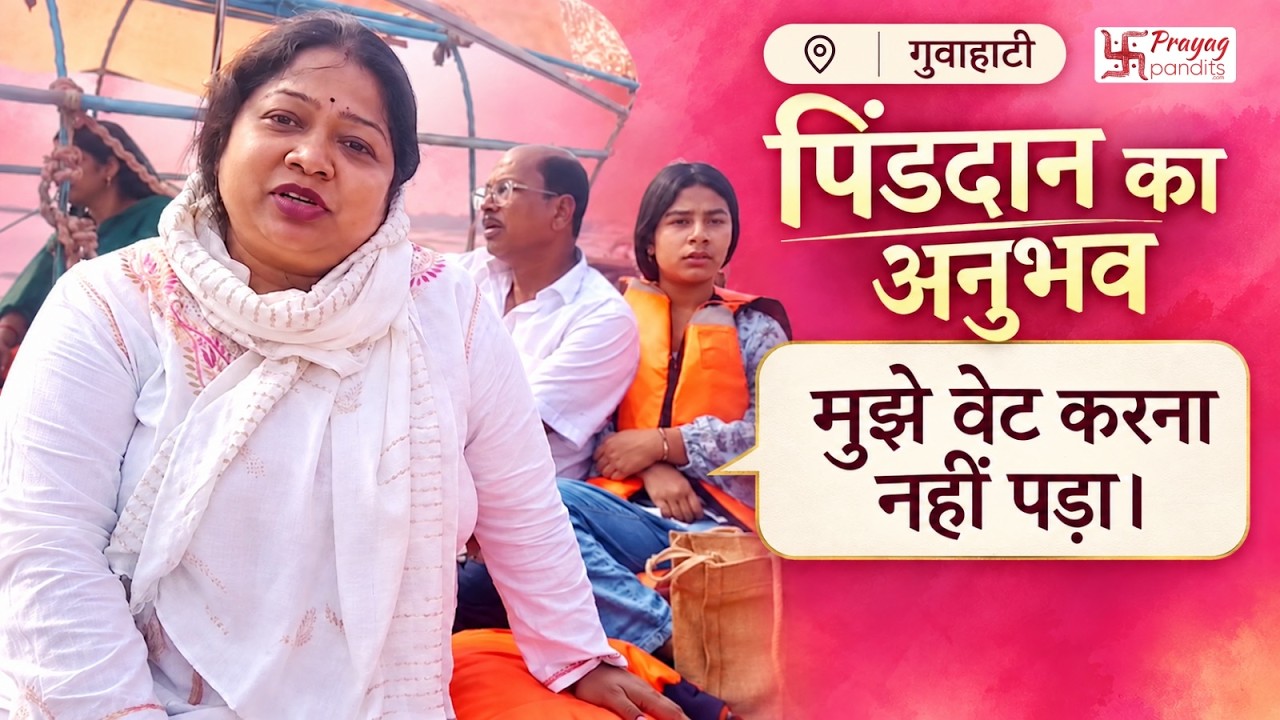

In their words
We booked this for our grandfather's annual shradh. The ceremony was performed with great reverence. Pandit ji even shared stories from the Garuda Purana which were very enlightening for the younger generation. Om Shanti.
The coordination was excellent. We received all details well in advance. The puja was performed exactly as described.
We booked Pind Daan for our late father's shradh ceremony. The pandits were very knowledgeable and performed all rituals with proper Vedic mantras. The whole family felt at peace after the poojan. Highly recommended for anyone looking for authentic rituals. 🙏
तीसरी बार प्रयाग पंडित्स से सेवा ली। हर बार सेवा उत्कृष्ट रही। पंडित जी का व्यवहार बहुत अच्छा है और वे पूजा को पूरी श्रद्धा से करवाते हैं। Om Shanti.
After losing my father suddenly we needed guidance on the proper rituals. Prayag Pandits team was very compassionate and helped us through every step. The Pind Daan brought us immense peace. Om Shanti.
Good service overall. The pandit was on time and well prepared. He guided us through each step of the ceremony. The booking process was simple and the team was responsive on WhatsApp. Would recommend to others. Dhanyavaad.
Review your ceremony
Online Pind Daan in Ayodhya
Please check 1 thing
Questions families ask
The Sankalp — the sacred declaration of intent — is the most important element of any Hindu ceremony. When the Sankalp is taken with your name, your gotra, and the names of your ancestors at a sacred tirtha, the ceremony carries its full spiritual merit regardless of whether you are physically present. This principle has deep roots in Hindu tradition: proxy performance of rites is well-established in the Dharmashastra literature when the individual cannot travel. Our online Pind Daan follows this tradition exactly — the pandit performs as your representative at Ram Ghat, Ayodhya.
After booking, our team sends you a simple form to fill in the names, gotras, and relationship details of the ancestors for whom Pind Daan is to be performed. If you do not know the gotra, that is not a problem — the pandit uses an alternative Sankalp phrase for cases where gotra is unknown. If you do not know the exact names, the Sankalp can be performed for all ancestors in your lineage collectively.
Yes. The ceremony as described covers up to three generations — parents, grandparents, and great-grandparents. If you wish to include more ancestors, please mention this at the time of booking. Our pandit can extend the Tarpan list to cover your entire known lineage and all unremembered ancestors.
Pind Daan is traditionally performed during the forenoon hours — between sunrise and noon. This period is associated with the Pitru Loka and is considered the most efficacious time for ancestral rites according to the Dharmashastra tradition. We schedule all ceremonies in the morning hours at the ghat to follow this guideline.
Yes. In fact, Pind Daan is especially important for those who have recently departed, as it aids in the smooth passage of the soul and helps the deceased find their place in the ancestral realm. For someone who has just passed away, the ceremony is ideally performed after the initial period of mourning (typically 10 to 13 days after death, following the Dasahkarma rites). Our pandit can advise on the appropriate timing based on your family’s customs and the date of passing.
Still have a question?
Ask our team on WhatsApp and we will help you plan the ceremony.
We reply on WhatsApp within 1–2 hours.
Ask a pandit (opens WhatsApp)Know your ceremony
Ayodhya is not merely an ancient city. It is the birthplace of Lord Rama, one of the seven sacred cities of Hindu tradition, and a place where the boundary between the earthly and the divine has always been thin. For those who wish to perform Pind Daan for their departed ancestors but cannot travel to Ayodhya in person, we offer Online Pind Daan in Ayodhya — a complete, authenticated ceremony performed at the sacred ghats of the Sarayu River on your behalf, conducted live via video call so you can witness every ritual in real time.
This service is priced at ₹15,000 and is open to devotees anywhere in India or abroad.
Among the tirthas where Pind Daan is performed, Ayodhya occupies a position of rare spiritual authority. The reason comes directly from the Ramayana itself. After returning from Lanka and ascending to the throne, Lord Rama performed the Shradh ceremony for his father, King Dasharatha, on the banks of the Sarayu River. The king who is considered the ideal of dharmic conduct personally observed this rite — and he chose Ayodhya as the place to do so.
This act of Rama transforms Ayodhya into a tirtha of the highest order for ancestral rites. When you perform Pind Daan at Sarayu Ghat in Ayodhya, you are performing it at the very location where the greatest son in Hindu tradition honored his father. The scriptural and devotional weight of that precedent is carried forward into every ceremony conducted here.
The Sarayu River itself is described in Valmiki Ramayana as a divine river that flows from the celestial realm. It is not a river in the ordinary sense — it is a passage. Ancestors whose Pind Daan is performed on its banks are believed to receive liberation more swiftly because they are surrendered into waters that have a direct connection to the abode of Vishnu through Rama’s own divine presence.
Our pandits perform the ceremony at Ram Ghat, the primary site on the Sarayu River associated with ancestral rites in Ayodhya. Ram Ghat is where pilgrims have gathered for centuries to offer tarpan, to bathe before entering the city, and to perform all forms of pitru karma. The ghat carries an atmosphere of deep stillness and reverence that is unlike any busy urban riverfront — it is a place set apart for the sacred work of connecting the living with their departed.
Ram Ghat has a direct scriptural connection: it is the ghat at which the Raghu dynasty performed its ritual observances. For your ancestors to receive tarpan and pind from this ghat is to have them received in the presence of Rama himself.
Our online Pind Daan service is not a symbolic or abbreviated version of the rite. It is the complete ceremony, conducted in full, with you participating remotely via video call. Here is how the process unfolds:
Before the Ceremony
- You provide the names, gotras, and relationship details of the ancestors for whom Pind Daan is to be performed
- Our coordinator confirms the date and time, typically aligned with auspicious tithis in the Hindu calendar
- A WhatsApp or video call link is shared with you in advance
On the Day of the Ceremony
- Our pandit arrives at Ram Ghat, Ayodhya, at the appointed time
- The live video call begins — you can see the ghat, the Sarayu River, and the pandit clearly
- The pandit performs Sankalp, invoking your name, your father’s name, your gotra, and the names of your ancestors
- Tarpan is offered to the ancestors using water from the Sarayu River combined with sesame seeds and kusha grass
- Pinds are prepared from barley flour, mixed with sesame, honey, and other prescribed ingredients
- Each pind is offered with the prescribed mantras from the Pitru Suktam and the relevant portions of the Garuda Purana
- The ceremony concludes with brahmin bhojan or dakshina in the name of the ancestors
- You can participate verbally in the Sankalp portion, as the pandit repeats the Sankalp on your behalf
After the Ceremony
- A short video recording of the ceremony is sent to you
- Our coordinator calls to confirm successful completion
Pind Daan at Ayodhya is particularly recommended in the following situations:
- When you are a devotee of Lord Rama and wish to use Ayodhya’s spiritual energy for your ancestral rites
- When family members have passed away and you have not yet been able to perform Pind Daan at a major tirtha
- When you have heard family elders speak of Ayodhya as a sacred place for pitru karma and wish to honor that tradition
- During Pitrupaksha — the 15-day period of ancestral rites — when Pind Daan at any major tirtha carries magnified spiritual merit
- When you live abroad or in a distant part of India and cannot travel for the ceremony
- When you wish to perform the rite on an auspicious occasion such as the ancestor’s death anniversary or on Amavasya
For a detailed understanding of the Pind Daan ceremony, its process, and its spiritual importance, read our comprehensive guide: All You Need to Know About Pind Daan.
While Pind Daan can be performed throughout the year, certain periods carry heightened significance:
- Pitrupaksha (Shradh Paksha) — the 15-day lunar fortnight in the month of Bhadrapada dedicated entirely to ancestral rites. This is the most important period for Pind Daan at any tirtha.
- Amavasya (new moon days) — each new moon is considered auspicious for tarpan and pitru karma throughout the year
- Death anniversaries (Punyatithi) — performing Pind Daan on the tithi of an ancestor’s passing has particular significance
- Mahalaya Amavasya — the final day of Pitrupaksha, considered the most powerful single day for ancestral rites
- Ram Navami and Diwali — in Ayodhya specifically, these festivals amplify the spiritual merit of any devotional act