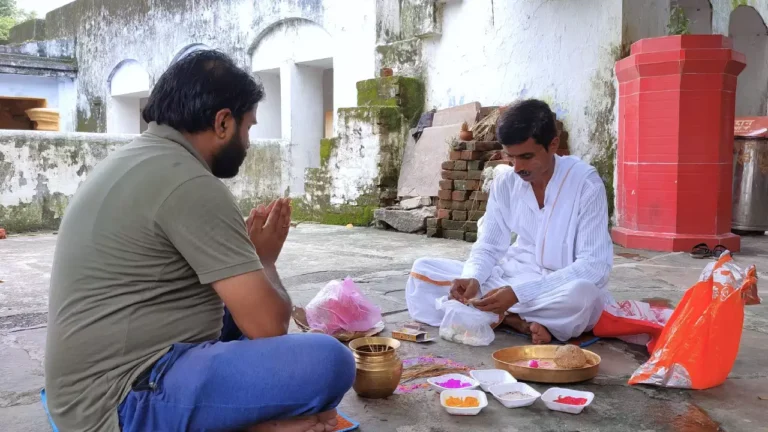
Shradh in Prayagraj

Shradh in Prayagraj

4.8 (2,263+ families) · Prayagraj ·Since 2019
✓ Verified Pandits 📹 Video Proof 🕉 Vedic Vidhi 📦 All Samagri Included

About Shradh

Shradh in Prayagraj

Book Online and Offline Shradh in Prayagraj Packages
  • 50000+ Poojas Performed
  • Pooja Samagri Included
  • Experienced Pandits
  • Average 4.5 Star Reviews
  • Online Pooja Available

Book Shradh in Prayagraj

Pitrupaksha 2026 Dates

In 2025, Pitrupaksha will commence on 7th September, and conclude with Mahalaya Amavasya on 21st September. Each day of this period is dedicated to performing Tarpan for different family members.

Here are the dates:

DateNameOccasion
September 7Purnima ShraddhaBhadrapada, Shukla Purnima
September 8Pratipada ShraddhaAshwina, Krishna Pratipada
September 9Dwitiya ShraddhaAshwina, Krishna Dwitiya
September 10Tritiya ShraddhaAshwina, Krishna Tritiya
September 10Chaturthi ShraddhaAshwina, Krishna Chaturthi
September 11Maha BharaniAshwina, Bharani Nakshatra
September 11Panchami ShraddhaAshwina, Krishna Panchami
September 12Shashthi ShraddhaAshwina, Krishna Shashthi
September 13Saptami ShraddhaAshwina, Krishna Saptami
September 14Ashtami ShraddhaAshwina, Krishna Ashtami
September 15Navami ShraddhaAshwina, Krishna Navami
September 16Dashami ShraddhaAshwina, Krishna Dashami
September 17Ekadashi ShraddhaAshwina, Krishna Ekadashi
September 18Dwadashi ShraddhaAshwina, Krishna Dwadashi
September 19Trayodashi ShraddhaAshwina, Krishna Trayodashi
September 19Magha ShraddhaAshwina, Magha Nakshatra
September 20Chaturdashi ShraddhaAshwina, Krishna Chaturdashi
September 21Sarva Pitru AmavasyaAshwina, Krishna Amavasya

If you have recently lost a family member and are planning for the first death anniversary, our complete Barsi ceremony guide explains the full Abdika Shradh procedure, Pancha Bali, and why Prayagraj is one of the most auspicious places to perform it.

Shradh is a devotional rite performed in Prayagraj to show homage to and serve the interests of deceased parents and ancestors. A person who does Shradh in Kashi with pure devotion and a calm mind is believed to be rid of all material world troubles.

As a result, everyone should be aware of the many sorts of Shradh and how to do it with the aid of a Pandit for Shradh in Prayagraj in order to please one’s parents and ancestors as well as for their personal well-being.

There is no other ritual in Prayagraj or elsewhere in the world that is more sacred and pure than Shradh, thus an enlightened being should endeavour to do Shradh in Prayagraj to assist his ancestors in moving on effortlessly to other planes of existence after death, thereby enhancing their spiritual journey.

Long life, health, money, success, intelligent children, positive energy, and a son who may continue the family lineage and bring prosperity are granted to those who conduct various sorts of Shradh.

The eldest son gets the first privilege to conduct Shradh karma with Tarpan or Pinddaan to the ancestors, according to Hindu scriptures.

Son can conduct Shradh with his wife after their marriage.

If the elder son is deceased, the younger son can execute Pinddaan, Tarpan, and Shradh karma as well.

In the absence of a son, Shradh karma might be performed by the grandchild of the son.

If a person does not have a son, his siblings might carry out Shradh karma on his behalf.

The daughter’s son has the right to conduct Shradh karma if the individual has exclusively daughters.

Pilgrims come to Prayagraj, which is also known as teerthraj, in pursuit of forgiveness and atonement for all of their sins committed during their lives, which may be found on the banks of the Ganga river. On the banks of the Ganga river near to triveni sangam, Shradh karma is also performed.

Shradh is a devotional rite performed in Prayagraj to show homage to and serve the interests of deceased parents and ancestors. A person who does Shradh in Kashi with pure devotion and a calm mind is believed to be rid of all material world troubles.

As a result, everyone should be aware of the many sorts of Shradh and how to do it with the aid of a Pandit for Shradh in Prayagraj in order to please one's parents and ancestors as well as for their personal well-being.

There is no other ritual in Prayagraj or elsewhere in the world that is more sacred and pure than Shradh, thus an enlightened being should endeavour to do Shradh in Prayagraj to assist his ancestors in moving on effortlessly to other planes of existence after death, thereby enhancing their spiritual journey.

Long life, health, money, success, intelligent children, positive energy, and a son who may continue the family lineage and bring prosperity are granted to those who conduct various sorts of Shradh.

The eldest son gets the first privilege to conduct Shradh karma with Tarpan or Pinddaan to the ancestors, according to Hindu scriptures.

Son can conduct Shradh with his wife after their marriage.

If the elder son is deceased, the younger son can execute Pinddaan, Tarpan, and Shradh karma as well.

In the absence of a son, Shradh karma might be performed by the grandchild of the son.

If a person does not have a son, his siblings might carry out Shradh karma on his behalf.

The daughter’s son has the right to conduct Shradh karma if the individual has exclusively daughters.

Pilgrims come to Prayagraj, which is also known as teerthraj, in pursuit of forgiveness and atonement for all of their sins committed during their lives, which may be found on the banks of the Ganga river. On the banks of the Ganga river near to triveni sangam, Shradh karma is also performed.
What's Included

Experienced Vedic Pandit
All Puja Samagri & Materials
Complete Ceremony Video
Digital Puja Certificate
Travel to Prayagraj
Hotel / Accommodation

How It Works

1

Book & Confirm

Select your package and complete booking. Our team calls within 2 hours to confirm details.

2

Share Family Details

Provide your gotra, departed soul's name, and any special requirements.

3

Ceremony Performed

Experienced pandit performs the complete ceremony at the sacred site.

4

Video & Certificate

Full ceremony video on WhatsApp within 24 hours. Digital certificate shared via email.

Choose Your Package

Frequently Asked Questions

Why is Prayagraj considered a significant place for Shradh?

Prayagraj is revered as the Tirtharaj, the king among all pilgrimage sites. The confluence of the three sacred rivers – Ganga, Yamuna, and the subterranean Saraswati – creates an unparalleled spiritual energy here at the Triveni Sangam. Performing Shradh, especially Pind Daan and Tarpan, at this Sangam is believed to multiply the merit manifold. The Puranas state that offerings made here reach the ancestors directly and grant them immense satisfaction, helping them attain higher realms or liberation (Moksha). Lord Brahma himself performed the first Yagna here, consecrating this land

Where exactly are Shradh rituals performed in Prayagraj?
  • The most sacred and primary location is the Triveni Sangam, the exact point where the rivers merge. Pilgrims typically take a boat to the Sangam area, where temporary platforms are often set up, or rituals are performed directly on the boat itself under the guidance of a Pandit.
  • Shradh can also be performed on the banks of the Ganga or Yamuna near the Sangam area. There are specific Ghats designated for these purposes. Your Pandit will guide you to the most appropriate spot based on tradition and convenience.
When is the most auspicious time to perform Shradh in Prayagraj?
  • Similar to other holy places, the Pitru Paksha (usually September-October) is considered the most potent time for Shradh at the Triveni Sangam. Performing the rites on the specific Tithi (lunar day) of the ancestor's passing during this period is ideal.
  • Other auspicious times include:
  1. Magh Mela: During the Hindu month of Magh (January-February), when many pilgrims and saints congregate here, performing Shradh holds special significance.
  2. Amavasya: The new moon day of every month.
  3. Death Anniversary: The annual Tithi of the ancestor's passing (Varshik Shradh).
  4. However, the sanctity of Prayagraj is such that Shradh can be performed beneficially on almost any day with sincere devotion.
What are the main rituals involved in Shradh at the Triveni Sangam?

The core rituals are similar to those performed elsewhere, but gain special potency here:

  • Sankalpa: Taking the vow near or at the Sangam, mentioning the ancestors' names and Gotra.
  • Triveni Snan: Taking a purifying dip at the confluence is an essential prelude.
  • Pind Daan: Offering Pindas (rice/barley balls with sesame, honey, etc.) representing the ancestors. Offering these at the Sangam is the central act.
  • Tarpan: Offering water mixed with black sesame seeds to satisfy the Pitrus.
  • Brahman Bhojan/Dakshina: Feeding or making offerings to learned Brahmins associated with the Sangam area.
  • Daan: Giving charity near the Sangam is also highly meritorious.
What is the estimated cost for performing Shradh in Prayagraj including Pandit Dakshina?
  • Costs can vary widely based on:
  1. The specific Pandit and their lineage/reputation.
  2. The elaborateness of the ritual performed.
  3. Cost of Samagri.
  4. Boat charges to the Sangam.
  5. Dakshina for the Pandit.
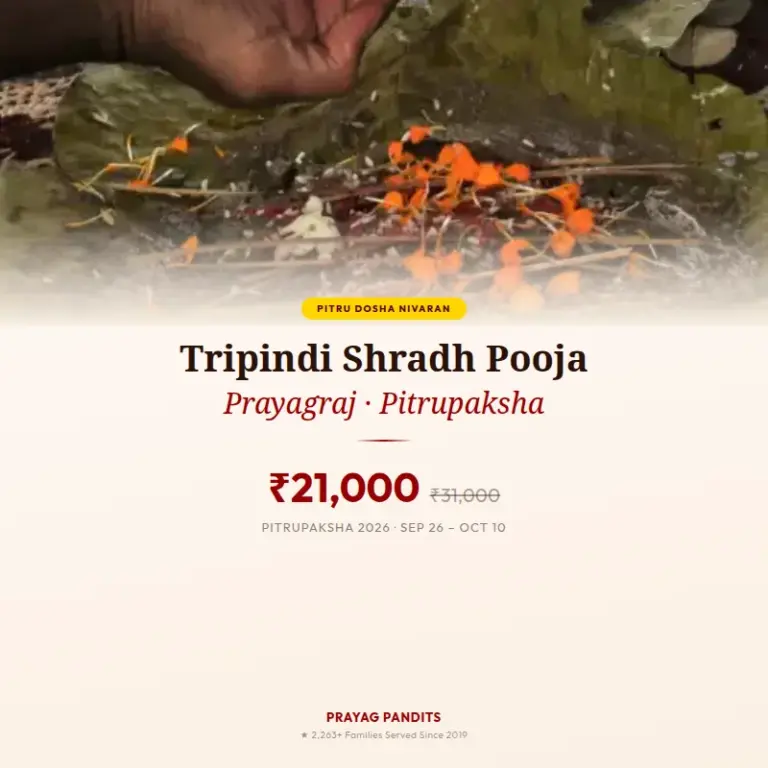
  • As a general guideline, a basic Pind Daan ritual at the Sangam might range from approximately ₹3000 to ₹7000, including basic Samagri and Pandit Dakshina. More elaborate rituals like Tripindi Shradh or those involving multiple Brahmins would cost significantly more, potentially ₹10,000 and upwards.
  • Crucially, discuss and agree upon all costs (Pandit fees, Samagri, boat charges, any extra Daan) before commencing the ritual to ensure clarity and avoid misunderstandings.
Who are the Prayagwals or Pandas and why are their records or Vahi important?
  • The Prayagwals (also commonly called Pandas) are the traditional priests of Prayagraj who hold hereditary rights to guide pilgrims and perform rituals at the Triveni Sangam and associated sites. They are custodians of the sacred traditions here.
  • Many Prayagwal families maintain detailed genealogical records, known as 'Vahi' or 'Pothi. These registers, often centuries old, contain entries of families (Yajmans) who have visited Prayagraj over generations, listing their names, gotra, lineage, hometown, and the dates/details of rituals performed. Finding your family's entry in a Prayagwal's Vahi can be a deeply moving experience, connecting you to your ancestral history and ensuring continuity with the traditional family priest. This system also helps verify the authenticity of the Panda.
How does performing Shradh in Prayagraj differ in significance or procedure from Gaya or Varanasi?

While all three (Gaya, Varanasi/Kashi, Prayagraj) are supreme Tirthas for Shradh, they have nuances:

  • Gaya: Considered the primary and most powerful place specifically for Pind Daan (known as Gaya Shradh). It's believed Lord Vishnu himself is present here as Gadadhar, directly accepting the Pindas. Liberation (Moksha) for ancestors is strongly associated with rites at Gaya, especially at Vishnupad Temple and Falgu River.
  • Varanasi (Kashi): The city of Lord Shiva, focuses on overall Moksha (liberation from the cycle of birth and death) for souls who die here or whose final rites/Shradh are performed here, particularly Pind Daan/Tarpan on the Ganga Ghats like Manikarnika. The emphasis is on liberation through Shiva's grace.
  • Prayagraj: The Tirtharaj, emphasizes the immense merit gained by performing Shradh at the Triveni Sangam. The confluence of the three holy rivers provides unique power for satisfying ancestors (Pitru Tripti) and washing away sins of both ancestors and descendants. It's highly effective for general Shradh, Pitru Dosh remedies, and gaining blessings for family well-being.
Do I need a local Prayagraj Pandit for Shradh and how do I find one?

Yes, engaging a local Pandit who is familiar with the specific traditions and significance of performing Shradh at the Triveni Sangam is crucial. They know the correct mantras, procedures, and the designated areas for the rituals. These Pandits are often referred to as 'Prayagwals' or 'Pandas'.

Finding a Pandit:

  • At the Sangam, You will find many Pandits offering their services near the Ghats and at the Sangam area.
  • Recommendations: Ask your family priest, friends, or relatives who may have performed rituals here before.
  • Established Offices/Trusts: Some older Panda families have established offices near the Ghats.
  • Online Services: Reputable online platforms now connect pilgrims with verified Pandits in Prayagraj.
  • It is always wise to speak with the Pandit beforehand, understand the process, and agree upon the Dakshina and other costs. Many Pandas here maintain genealogical records (Vahi) of families who have traditionally visited Prayagraj
From₹7,100
Book Now

Need Help Planning?

Share your details and our team will guide you within 10 minutes on WhatsApp.

We reply within 10 minutes on WhatsApp • 2,263+ families served • No spam

आपकी बुकिंग

🙏 Add ₹0 more for priority scheduling

अभी तक कोई अनुष्ठान नहीं चुना गया।

पूजा पैकेज देखें →
Need help booking? Chat with us on WhatsApp