अभी तक कोई अनुष्ठान नहीं चुना गया।
पूजा पैकेज देखें →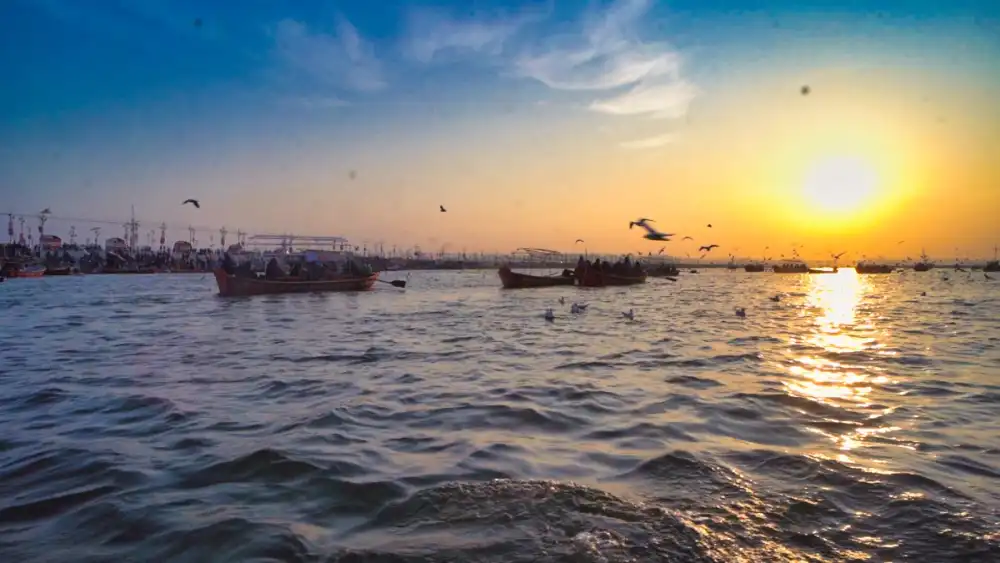
Select your package and complete booking. Our team calls within 2 hours to confirm details.
Provide your gotra, departed soul's name, and any special requirements.
Experienced pandit performs the complete ceremony at the sacred site.
Full ceremony video on WhatsApp within 24 hours. Digital certificate shared via email.
Tarpan is the sacred Hindu ritual of offering water, typically mixed with black sesame seeds (til) and barley (jau), to gratify deities, sages, and primarily, departed ancestors (Pitrus). Performing Tarpan in Prayagraj holds exceptional significance because it is done at the Triveni Sangam, the holy confluence of the Ganga, Yamuna, and the mystical Saraswati rivers. This location is revered as 'Tirtharaj' (King of Pilgrimage Sites), making the offerings immensely potent for ancestral peace and liberation (Moksha).
The primary and most auspicious location is the Triveni Sangam itself – the actual point of confluence of the Ganga, Yamuna, and Saraswati. Devotees usually hire boats from nearby ghats (like Kila Ghat, Saraswati Ghat, Ram Ghat) to reach the Sangam point in the middle of the river, where priests (Prayagwals) conduct the Tarpan ritual from the boat. Rites can also be performed at the ghats along the banks.
Costs vary. Tarpan alone might cost INR 1000-3000. However, it's usually part of Pind Daan. Basic Pind Daan packages at Prayagraj (including Tarpan) often range from INR 4000-7000. More elaborate ceremonies can cost INR 11,000 - 21,000 or more. Crucially, boat charges to reach the Sangam (around INR 300-1500 depending on duration/boat type) might be separate or included in the package, so clarification is essential. Online platforms offer packages in similar ranges (e.g., INR 5100+ for Tarpan, INR 7100+ for Pind Daan). Agree on the Dakshina and inclusions beforehand
Usually, the performer (Karta) and their family hire a boat with a Prayagwal Panda (priest). After reaching the Sangam point and often taking a purificatory dip, the Karta, facing south, follows the Panda's guidance. Using Kusha grass, they offer water from the Sangam (mixed with black sesame, barley) from their palms while chanting mantras and invoking the names and gotra of ancestors. The offering is poured directly into the confluence
While traditionally a male duty, societal views are evolving. Women (daughters, wives, daughters-in-law) increasingly participate actively alongside male relatives. Some Prayagwal Pandas facilitate women performing the main rites, especially if no male heir is available, sometimes with minor variations (like using white sesame). The inclusivity often seen during Kumbh Melas further supports participation
Performing Tarpan at the Triveni Sangam is believed to grant unique and amplified benefits:
Tarpan is an indispensable part of the Pind Daan and Shraddha ceremonies performed at Prayagraj. If Pind Daan is done, Tarpan will be included. However, Tarpan (the water offering) can also be performed as a standalone ritual, particularly during daily practices or specific events like Pitru Paksha or Magh Mela, without the full Pind Daan (food offering) ceremony