

No rituals selected yet.
Browse Pooja Packages →Key Takeaways
In This Article
Kashi, Varanasi, the city older than time itself, the city Mahadev calls home. Let us talk heart-to-heart about the rituals, the profound peace they offer, and how one navigates this sacred duty in this most sacred of cities. This is more than just a procedure; it’s a final, loving farewell steeped in the wisdom of our ancestors and the blessings of Ganga herself. Let us dive into this Varanasi Asthi Visarjan guide together.
Why Here? Unveiling the Unmatched Spiritual Magnetism of Kashi and Ganga for Asthi Visarjan
 You might ask, why Varanasi? Why is this city, this river, so vital for this final rite?” The answer lies woven into the very fabric of Sanatana Dharma, in the stories whispered by the wind rustling through the peepal trees and etched into the stones of these ancient ghats.
Kashi (Varanasi): Mahadev’s Own City, The Gateway to Moksha
Imagine a place pulsating with divine energy, a city chosen by Lord Shiva himself as his earthly abode. That is Kashi. Our sacred texts, like the voluminous Skanda Purana (especially in its Kashi Khanda section), sing endless praises of its glory. The Linga Purana too, affirms Kashi as Shiva’s personal domain, a place He never truly leaves. This is why we call it Avimukta Kshetra – the place never forsaken by Shiva.Think of what this means! It is said, Kashyam Maranam Muktiḥ – death in Kashi grants liberation (moksha). It’s believed Lord Vishwanath (Shiva) Himself whispers the Taraka Mantra, the sacred syllable of liberation, into the ear of the dying soul here.So, when you perform Asthi Visarjan in Varanasi, you are not just performing a ritual in any city. You are bringing the last remnants of your loved one into the very presence of the Lord of Liberation, in a place inherently designed for the soul’s ultimate freedom. The spiritual vibrations here amplify every prayer, every offering, making the act profoundly potent. It’s like offering a flower directly at the feet of Mahadev.Maa Ganga: The Celestial River Flowing with Grace and Purity
And then there is Ganga. A loving Mother, a Goddess who descended from the heavens, as our epics like the Ramayana and Mahabharata, and Puranas like the Padma Purana and Narada Purana narrate so beautifully. She came down through the locks of Shiva’s hair, answering the prayers of King Bhagiratha who sought salvation for his ancestors. Her very essence is compassion and purification.The Garuda Purana, which we often reflect upon during the times following a departure, speaks volumes about Ganga’s power to cleanse karma and ease the soul’s passage. Even a single, heartfelt dip in her waters, or remembering her name with reverence, is said to wash away lifetimes of missteps.Now, think about the asthi, the last physical traces of a person. Immersing them in Ganga is like placing them in the lap of this divine Mother. Her purifying touch dissolves the residual attachments, the subtle karmic threads that might still bind the soul to its earthly experience. It’s a release, a final cleansing that paves the way for peace.And here in Kashi, Ganga offers a special blessing. Performing Asthi Visarjan in this northward-flowing Ganga is considered exceptionally auspicious. The Asthi Visarjan significance Ganga connection is undeniable, but in Kashi, it reaches its absolute pinnacle.The Divine Confluence: Kashi and Ganga Together
It is the coming together of Kashi’s liberating energy and Ganga’s purifying grace that makes Asthi Visarjan in Varanasi unparalleled. It’s a sacred synergy, a divine embrace. You are performing the rite in Shiva’s city, immersing the remains in the Goddess river flowing towards liberation. Can there be a more powerful or comforting offering for a departed soul? The Puranas, like the Skanda Purana, often mention that punya (merit) gained from rituals performed here is multiplied manifold. This isn’t just belief, it’s a spiritual reality felt deep within the heart when you stand by the Ganga in Kashi.Beyond the Ashes: Understanding the Heart of the Asthi Visarjan Ritual
 Before we walk through the steps, let’s understand the why. What are we truly doing when we perform Asthi Visarjan? Our ancestors understood the universe profoundly. They taught us that our physical body is a temporary vessel made of the five great elements – Pancha Mahabhutas: Earth (Prithvi), Water (Jal), Fire (Agni), Air (Vayu), and Ether/Space (Akash).When cremation takes place, fire (Agni) returns much of the body to the elements – air, space. What remains are the asthi – the bones and ashes, the most enduring part, representing the Earth element.
- Returning Home: Asthi Visarjan is the final, gentle act of returning this last physical remnant to the embrace of the Water element, Jal. And not just any water, but the sacred, life-giving, purifying water of Maa Ganga. It symbolizes the complete dissolution of the physical form, freeing the soul from its last anchor to the material world.
- Letting Go: The soul, the Atman, is eternal, pure consciousness. It was never born and will never die. But during life, attachments form – to the body, to people, to experiences. These subtle attachments can linger even after death, like threads pulling the soul back. The holy waters help gently dissolve these threads, allowing the soul to move forward unburdened. Think of it like helping someone take off an old, worn-out coat they no longer need.
- Nourishing the Journey: After leaving the body, the soul (Jivatma) enters a transitional phase. Sometimes this state is referred to as Preta. Rituals like Asthi Visarjan, along with Pinda Daan (which we will discuss), provide shraddha (faith-filled offerings) and positive energy, like providing a map and sustenance for the soul’s onward journey towards the ancestors (Pitru Loka) or, if its karma and grace allow, towards ultimate liberation (moksha).
- An Act of Love and Dharma: For the family, especially the children, performing Asthi Visarjan is a fundamental dharma – a righteous duty. But it’s more than just duty; it’s an act of profound love, respect, and gratitude for the departed. There is immense peace and solace in knowing you have performed this final seva (service) in the best possible way, in the most sacred place. It brings closure and helps heal the grieving heart.
The Sacred Steps: Walking Through the Varanasi Asthi Visarjan Rituals
 Now, let’s talk about the actual Kashi Asthi Visarjan process. While the heart of the ritual is the immersion, it is enveloped in several other meaningful steps, usually guided by a local Pandit who understands the specific traditions and mantras. Remember, reverence (shraddha) is the most important ingredient.
The Beginning: Collection and the Journey (Asthi Sanchayan)
It usually begins a few days after the cremation, often on the 3rd, 7th, or 9th day. The family members carefully gather the bone fragments and ashes (asthi). These aren’t just remains; they are treated as sacred relics. They are gently washed, sometimes with milk or Ganga jal if available, dried, and placed respectfully into an earthen pot, the kalash. This pot is then covered with a clean cloth, often white or red, and secured. From this moment, the kalash is handled with utmost care and reverence. The journey to Kashi with the kalash is itself part of the pilgrimage, undertaken with prayerful thoughts.Finding Your Guide and Sacred Spot: The Pandit and the Ghat
Once you arrive in Varanasi, the first step is often finding a knowledgeable Pandit (priest). You’ll find many near the main ghats, particularly Manikarnika and Harishchandra. Look for someone experienced in antyeshti kriya (last rites) and Varanasi Asthi Visarjan rituals. It helps if they understand your family’s specific traditions or language. These Pandits are not just officiants; they are guides, holding your hand through an emotional and spiritually significant process. Choose someone you feel comfortable with, someone who radiates sincerity. (If you need help in finding a good and knowledgeable pandit for you, then let us know. Our team will connect you with the best.)Together with the Pandit, you’ll decide on the Ghat for the ritual. While immersion anywhere in Kashi’s Ganga is holy, some Ghats hold special significance for these rites:- Manikarnika Ghat: Known as the Mahashamshan, the great cremation ground, this is perhaps the most potent Ghat. Rituals here are believed to lead directly towards liberation. The energy is intense, focused on the cycle of life and death.
- Harishchandra Ghat: The other main cremation ghat, named after the truthful King Harishchandra, also holds immense significance for funeral rites.
- Dashashwamedh Ghat: Famous for its spectacular evening Ganga Aarti, it’s also a place where immersions are performed, especially given its central location and accessibility.
- Assi Ghat: Located where the river Assi meets the Ganga, it’s a vibrant Ghat often preferred for its slightly calmer atmosphere compared to the cremation ghats.
- Other Ghats: Many other ghats like Raj Ghat, Kedar Ghat, Panchganga Ghat are also used. Your Pandit will advise based on tradition, river conditions, and accessibility.
Preparing Mind and Body: Rites Before Immersion
Before the main event, certain preparations set the stage:- Snana (Purifying Bath): The person performing the main ritual (the karta), usually the eldest son, and sometimes other family members, take a dip in the Ganga. This isn’t just physical cleansing; it’s a spiritual purification, washing away impurities and preparing the mind and body for the sacred task ahead.
- Sankalpa (The Sacred Resolve): This is crucial. Guided by the Pandit, the karta takes water, flowers, rice grains, and perhaps kusha grass (a sacred grass used in rituals) in their hand. They then state their name, their lineage (gotra), the name and gotra of the departed soul, the place (Kashi), the river (Ganga), the date (tithi as per the Hindu calendar), and clearly declare the intention: “I am performing this Asthi Visarjan for the peace (shanti) and liberation (sadgati or moksha) of my departed [relation].” This Sankalpa focuses the mind and energy, dedicating the entire act to the intended purpose.
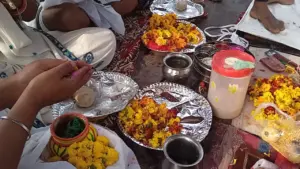
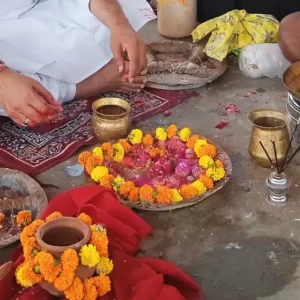
- Puja of the Asthi Kalash: The earthen pot containing the ashes is worshipped. The Pandit chants mantras, and the karta might offer flowers, sprinkle Ganga jal and milk (abhishek), apply sandalwood paste (chandan), offer incense (dhoop), and light a lamp (diya). This honours the last physical connection to the loved one and invokes divine blessings from Lord Ganesha (for removing obstacles), Lord Shiva, and Maa Ganga.
- Pinda Daan (Offering Sustenance – Often Integral): This is a very important ritual, often performed right before or alongside the Asthi Visarjan, though sometimes done more elaborately on a separate occasion. Pinda Daan involves offering pindas – balls made of cooked rice, barley flour, black sesame seeds (til), honey, ghee, and milk.
- Why Pinda Daan? These offerings are believed to provide spiritual nourishment to the departed soul in its journey beyond the physical realm. They also appease the ancestors (Pitris), ensuring their blessings. Our scriptures like the Garuda Purana and the Skanda Purana emphasize the importance of Pinda Daan in helping the soul transition from the preta (spirit) state to the realm of the pitrus. While Gaya is the most famous place for Pinda Daan, performing it in Kashi by the Ganga is also exceptionally meritorious.
- How it’s done: The Pandit guides the offering of several pindas, usually dedicated to the recently departed and the three preceding generations (father, grandfather, great-grandfather, if applicable). Specific mantras are chanted for each offering, inviting the souls to accept the sustenance.
The Heart of the Matter: Immersion (Visarjan) in Maa Ganga’s Embrace
This is the central moment, performed with utmost reverence:- Journey onto the River: Usually, you’ll board a small boat that takes you a little away from the ghat, towards the middle of the river. This allows the ashes to disperse freely in the flowing current. The gentle rocking of the boat, the vast expanse of the Ganga, the ancient city skyline – it’s a moment of profound peace and transition.
- Prayers Afloat: As the boat moves, or once it stops mid-stream, the Pandit continues chanting. These mantras are specific prayers for the soul’s peaceful journey, seeking blessings from the divine forces and guidance for the path ahead. You might hear verses from the Ganga Stotram or prayers directed to the Pitris.
- The Act of Letting Go: Facing south (the direction associated with the ancestors and Lord Yama), the karta takes the asthi kalash. With prayers on their lips and love in their heart, they gently tilt the pot, allowing the ashes and bone fragments to merge with the flowing waters of the Ganga. It’s a poignant moment – a final physical release, an entrustment of the loved one to the care of the Divine Mother River.
- Tarpan (Libations of Respect): Following the immersion, Tarpan is performed. This involves offering handfuls of water, often mixed with black sesame seeds (til – very important for satisfying ancestors), barley (jau), and sometimes milk. Cupping the hands, water is offered multiple times while chanting mantras, dedicating these libations to the departed soul, the ancestors, the gods (Devas), and the ancient sages (Rishis). It’s an act of respect and remembrance, ensuring everyone in the cosmic family is honoured.
After the Immersion: Concluding Rites and Seeking Blessings
- Final Offerings: Simple offerings like flower petals or a little milk might be poured into the Ganga as a final gesture.
- Returning and Cleansing: The boat returns to the ghat. Often, another quick dip or at least a sprinkling of Ganga jal is done for final purification.
- Dakshina (Honouring the Guide): It is customary and important to offer dakshina (a monetary offering, along with perhaps some grain or cloth) to the Pandit who guided you through the sacred rites. This is given respectfully, according to your capacity (yatha shakti), as an expression of gratitude for their service.
- Temple Visits (Optional but Recommended): Many families feel drawn to visit the major temples after completing the Asthi Visarjan. Seeking darshan (sacred sight) at the Kashi Vishwanath Temple (Lord Shiva) and the Annapurna Temple (Goddess of Nourishment) feels like completing the pilgrimage, offering prayers for the soul’s journey and seeking blessings for the family left behind. Some may also arrange for Brahman Bhojan (feeding learned Brahmins) if their resources permit.
Navigating the Path: A Practical Varanasi Asthi Visarjan Guide
 Understanding the rituals is key, but knowing how to perform Asthi Visarjan Varanasi practically can ease the process during an emotional time. Here is some humble advice from this old Pandit:
- Plan Ahead: Varanasi is well-connected by air (Lal Bahadur Shastri Airport – VNS), rail (Varanasi Junction – BSB, Manduadih – MUV), and road. Book your travel and accommodation in advance, especially if travelling during festival times or peak seasons (winters are pleasant but busy). Allow at least two full days in Varanasi – one for arrival and settling, one for the rituals, and perhaps another for temple visits or departure.
- Pack Simply: Bring the asthi kalash carefully wrapped and secured. Pack light, comfortable clothing suitable for a temple town – modest attire is respectful. White or light colours are traditional for rituals. Carry identification, necessary funds (cash is useful for local transport, offerings, Pandit dakshina), and any personal medications.
- Connect with Your Pandit: As mentioned, finding a trustworthy Pandit is vital. You can ask for referrals at your hotel/guesthouse, inquire at temple offices, or seek recommendations from community contacts. Don’t hesitate to speak with a couple of Pandits to find one you connect with. Clearly discuss your needs, family background (gotra, region), and understand the process they follow and the expected dakshina range. Transparency avoids misunderstandings. (We can help you in connecting with our knowledgeable pandits)
- Ritual Materials (Puja Samagri): Your chosen Pandit will usually arrange all the necessary items for the puja, Pinda Daan, and immersion (flowers, rice, til, kusha, incense, lamps, ghee, milk, boat hire, etc.). Confirm this beforehand. They will guide you on what offerings you might personally wish to make.
- On the Day:
- Be prepared for an early start. The ghats are vibrant but can be crowded.
- Follow your Pandit’s instructions closely during the snana, sankalpa, puja, boat ride, immersion, and tarpan. Don’t rush; allow yourself to be present in the moment.
- Wear footwear that is easy to remove and suitable for potentially slippery steps.
- Maintain a quiet, prayerful demeanour throughout. This is a sacred occasion, not a tourist activity.
- Costs and Dakshina: The overall cost can vary significantly. It depends on the Pandit’s experience, the extent of the rituals performed (e.g., simple immersion vs. elaborate Pinda Daan), the cost of samagri, boat charges, and the dakshina. Have a respectful discussion about expectations beforehand. Offer dakshina generously but within your means, remembering it honours the priest’s knowledge and time dedicated to your family’s spiritual need.
- Be Mindful: Varanasi is intense – ancient, crowded, vibrant, and deeply spiritual. Approach it with an open heart and patience. Be respectful of local customs and the sanctity of the river and temples.
Points to Ponder: Important Considerations for Your Journey
- When to Perform?: While scriptures sometimes suggest immersion within ten days or before the first anniversary, life often brings delays. Do not worry unduly if you cannot come immediately. Performing the Asthi Visarjan in Varanasi with true faith (shraddha) and devotion is what truly matters, whenever you are able to make the journey. Some families consult a panchang (Hindu almanac) for an auspicious muhurta (timing), which your Pandit can help with.
- Who Performs the Ritual?: Traditionally, the eldest son is the karta. But our traditions are compassionate. If there is no son, or he cannot be present, a younger son, grandson, brother, nephew, daughter, wife, or another close relative can perform the rites. The key is the connection of love and the willingness to fulfill this sacred duty.
- Respect Mother Ganga: She gives us so much. Please ensure only the ashes and natural, biodegradable offerings (flowers, milk, leaves) enter the river. Avoid immersing plastic containers, photos in frames, or anything that pollutes her sacred waters. Protecting Ganga is also part of our dharma.
- Prepare Your Heart: More than anything, approach this ritual with a heart full of love for the departed and faith in the process. It is an emotional journey. Allow yourself to feel, to pray, to let go. Your inner state of reverence is the most powerful offering you can make.
Finding Closure in the Eternal Flow: The Peace of Kashi
The Asthi Visarjan ceremony in Varanasi is a profound culmination. It’s where love meets duty, where ancient tradition offers solace, and where the finite journey of the physical body merges with the infinite flow of the sacred Ganga in the eternal city of Shiva. This Asthi Visarjan Varanasi guide is offered with the hope that it illuminates your path. May you find comfort and strength as you undertake this sacred journey. May the soul of your departed loved one attain shanti (peace) and sadgati (the highest path). For families who need assistance from a trusted service, Prayag Pandits offers Asthi Visarjan in Varanasi performed with full Vedic rites at the sacred Ganga ghats.Om Shanti, Shanti, Shanti. Har Har Mahadev!
Trusted Service
🙏 Book Asthi Visarjan Package
Starting from
₹5,100
per person
Book Asthi Visarjan in Varanasi
- Standard Asthi Visarjan — ₹5,100 (ghat ceremony + boat immersion)
- 2-Day Package with Stay — ₹12,500 (includes accommodation + transfers)
- Online/Courier Service — For families who cannot travel
Also available: Asthi Visarjan in Prayagraj (₹5,100) and Haridwar (₹7,100).
Frequently Asked Questions
What is Asthi Visarjan and why is it important in Hinduism?
Asthi Visarjan is the Hindu ritual of immersing the 'Asthi' (ashes and leftover bone fragments) of a deceased person after cremation into a holy body of water. Visarjan' means immersion. This ritual is crucial because Hindus believe it helps the departed soul break free from earthly attachments, purify their sins, and attain 'Moksha' (liberation or salvation), facilitating their peaceful journey to the afterlife.
Why is Varanasi considered such an important place for Asthi Visarjan?
Kashi is Moksha-Dayini, the city that grants liberation. It is the eternal abode of Lord Shiva. When the last physical remains (asthi) are immersed in the holy Ganga river within the sacred boundaries of Kashi, it is believed that Lord Shiva himself whispers the Taraka Mantra in the ear of the soul, freeing it from the cycle of rebirth. Maa Ganga, originating from the heavens, washes away sins and purifies the soul. Performing Asthi Visarjan here ensures the departed attains Sadgati (a peaceful state) and moves towards ultimate liberation.
At which specific Ghats in Varanasi is Asthi Visarjan typically performed?
While immersion anywhere in the Ganga at Kashi is meritorious, certain Ghats are traditionally favored:
- Manikarnika Ghat: As a Mahashamshan (great cremation ground), immersion here holds profound significance, directly linked to liberation.
- Harishchandra Ghat: Another major cremation ghat where rites are commonly performed.
- Assi Ghat: Located at the confluence of Ganga and Assi rivers, it's a popular and accessible spot.
- Dashashwamedh Ghat: While very busy with other rituals, simple immersions are also done here.
- Other Ghats: Many other ghats like Kedar Ghat, Raj Ghat etc., are also used. Often, the Pandit guides you to a suitable location based on tradition, accessibility, and the current river conditions.
What is the typical procedure followed for Asthi Visarjan at the Ghats of Varanasi?
The process is performed with reverence and simplicity:
- Sankalpa: With the guidance of a Pandit, the Karta (performer) takes a vow mentioning the deceased's name and lineage.
- Purification: The ashes in the urn are purified with Ganga Jal, milk, and sometimes other sacred offerings like Tulsi leaves.
- Brief Puja: Prayers are offered to Ganga Maiya, Lord Shiva, and the Pitrus for the peace of the departed soul. Flowers and sesame seeds may be offered.
- Immersion (Visarjan): Facing south (usually), the Karta gently immerses the ashes into the holy Ganga while the Pandit chants appropriate mantras.
- Tarpan: Offering Ganga water with sesame seeds (Tarpan) is often done immediately after for the satisfaction of the soul.
- Ganga Snan & Daan: The Karta takes a purifying dip in the Ganga, and offers Dakshina to the Pandit and sometimes Daan (charity) to the needy.
Is there a specific best time or auspicious day for Asthi Visarjan in Varanasi?
- Unlike annual Shradh, Asthi Visarjan in the holy Ganga at Kashi can be performed on any day and at almost any time during daylight hours. The act itself is supremely purifying.
- It is generally advised to perform the immersion without unnecessary delay after the ashes are collected.
- While any day is good, performing it during religiously significant periods like Pitru Paksha, Ekadashi, Purnima, or Amavasya might be considered to add further merit, but waiting is not required. Avoid performing the immersion after sunset.
What is the estimated cost involved for Asthi Visarjan in Varanasi?
- The cost is not fixed and depends mainly on:
- Pandit's Dakshina: This is the main component and varies based on the Pandit.
- Samagri Cost: Usually quite minimal.
- Boat Charges: Applicable only if you hire a boat for immersion in the mid-stream (can range from ₹500 to ₹1500 or more depending on duration and boat type).
- A very approximate range for a simple Asthi Visarjan at the Ghat including Pandit Dakshina and basic Samagri could be ₹1500 to ₹4000. For rituals involving a boat ride, the cost would be higher.
- It is essential to have a clear conversation about all expected costs (Pandit fee, Samagri, boat if applicable)
Should Pind Daan be performed together with Asthi Visarjan at Varanasi?
While not mandatory, combining Pind Daan with Asthi Visarjan is strongly recommended by scriptures for complete ancestral liberation. Asthi Visarjan releases the physical remains into the sacred Ganga, while Pind Daan provides spiritual sustenance (in the form of rice balls or pindas) to the departed soul's onward journey. In Varanasi, combined ceremonies typically include Asthi Visarjan at Manikarnika and Pind Daan at Pishach Mochan Kund — where souls trapped in Pishacha Yoni are believed to be liberated. Our combined Kashi Asthi Visarjan + Pind Daan package covers both rituals with full scriptural authenticity. Many families also add Tarpan to complete the ancestral trilogy.
Can Asthi Visarjan be performed in Varanasi if the cremation was done elsewhere?
Yes. If cremation took place in your home city, the ashes can be collected in a clean urn and brought to Varanasi for immersion in the Ganga at Manikarnika, Harishchandra, or another accepted ghat. Per the Garuda Purana, if the urn is kept pure during transport (hung on a tree, not placed on the ground, protected from impurities), the immersion at Kashi carries the full spiritual merit. Our pandits assist families arriving by train or flight with: ghat selection, boat arrangements, the complete Asthi Visarjan vidhi, and the Sanskrit mantras "Namo Astu Dharmaya" (at entry) and "Sa me Prito Bhavatu" (during immersion). The ceremony typically takes 2-3 hours and can be scheduled on the same day as arrival.
Is Asthi Visarjan in Varanasi (Kashi) better than Prayagraj or Haridwar?
All three sites — Varanasi (Kashi), Prayagraj (Triveni Sangam), and Haridwar (Har Ki Pauri) — are supreme tirthas for Asthi Visarjan, each with distinct scriptural emphasis. Varanasi is uniquely associated with moksha because of Shiva's Taraka mantra belief, and the city is called Mahashmashan (the great cremation ground) in scripture. Prayagraj offers the confluence of three sacred rivers (Ganga, Yamuna, Saraswati) and is especially auspicious during Kumbh and Pitrupaksha. Haridwar's Har Ki Pauri is the first entry of Ganga into the plains and is most associated with the famous Brahma Kund. The "best" choice depends on your family tradition — our pandits can guide you based on your gotra and ancestral preferences.
What rituals or actions are recommended after completing the Asthi Visarjan in Varanasi?
After the immersion is complete:
- Ganga Snan: Take a purifying dip in the holy Ganga.
- Change Clothes: Wear fresh clothes after bathing.
- Tarpan: Ensure Tarpan (water offering) has been done.
- Seek Blessings: Visiting the sacred Kashi Vishwanath Temple is highly recommended to pray for the departed soul and seek Lord Shiva's blessings. Visiting Maa Annapurna Temple is also customary.
- Daan (Charity): Offering food or charity to the poor or Brahmins near the ghats is a meritorious act.
- Reflect peacefully on the significance of the ritual and the soul's journey.
Book Your Sacred Ritual
Authentic ceremonies performed by Veda-trained pandits with video proof at sacred sites across India.
2,263+ families served
Video proof included
Since 2019
