Key Takeaways
- The Sacred Rites of Ancestral Remembrance in Kashi
- Specialized Guidance for Tamil and South Indian Families
- Planning Your Itinerary for a Varanasi Pilgrimage from Malaysia
- Local Arrangements in Varanasi: Stay, Food, and Budget
In This Article
For devout Hindu families in Malaysia, the journey to Varanasi (Kashi) to perform ancestral rites represents the fulfillment of a profound spiritual duty. Recognized as the pre-eminent pilgrimage center for all matters concerning the departed, Kashi is where every offering is believed to secure the highest spiritual reward and grant moksha (liberation). This comprehensive guide provides a complete roadmap for your Varanasi pilgrimage from Malaysia, covering the scriptural significance of the rituals, specialized guidance for South Indian families, practical itineraries, and detailed logistics for your travel, stay, and budget.
The Sacred Rites of Ancestral Remembrance in Kashi
The collective rituals known as Shraddha are offered to the departed spirits (pretas) and ancestors (pitrs) out of profound shraddha or “faith”. Performing these rites in Varanasi is essential to discharge one’s debt to the ancestors (pitr rin) and ensure their peaceful transition from a suffering spirit to a venerated ancestor capable of blessing the family.
Pinda Daan (Offering of Rice Balls): Purpose and Significance

Pinda Daan (literally, “the gift of pinda“) involves offering balls of rice, barley flour, or khoa (a thick paste made by boiling milk). This central act serves two vital purposes:
Nourishment and Body Building: The pindas provide spiritual sustenance and symbolically construct a transitional body for the spirit of the deceased, assisting their arduous year-long journey to the “abode of the ancestors” (pitr-lok).
Attainment of a Good State: By offering pindas, the descendant helps liberate the deceased from the temporary ghostly state (pretahood) and ensures they attain a “good state” as a venerated ancestor. Pleased ancestors are said to confer longevity, progeny, riches, and happiness upon the performer.
Tirath Shraddh: The Comprehensive Ritual in Varanasi
Most pilgrims undertaking a Varanasi pilgrimage from Malaysia will perform the Tirath Shraddh. This is a comprehensive ritual that conventionally consists of seventeen pinda offerings to ensure all ancestral lines are honored. The seventeen pindas are meticulously dedicated to:
Six Paternal Ancestors: Father, mother, grandfather, grandmother, great-grandfather, and great-grandmother.
Six Maternal Ancestors: Mother’s father, his father, his paternal grandfather, and their respective wives.
Four Other Relatives: This can include a paternal uncle and his wife, one’s own spouse, a guru, or other close departed family members for whom no rites are being performed.
The Dharam Pind: This final “pind of religious duty” is a crucial offering for those who suffered an unnatural or ‘bad death’ (e.g., by accident, suicide), those whose lineage is forgotten, or for whom no one else performs rites.
Tarpan (Water Libation): Quenching the Ancestors’ Thirst
Tarpan refers to the offering of water libations, a practice that brings immense contentment to the ancestors.
Procedure: During tarpan, the sacred thread (Yajnopavita) must be worn in the pracinavita (or apsavya) position—hanging from the right shoulder and under the left arm. All rites for the ancestors must be performed while facing South, the direction of Yama’s kingdom.
Materials: The libation water is mixed with gingelly seeds (sesame) and kusha grass, as sesame is required for offerings to the departed.
Offering: The water should be poured over the Pitr Tirtha, the sacred area between the index finger and the thumb of the right hand.
Asthi Visarjan (Immersion of Ashes): The Final Journey to Liberation
Varanasi is the prime location for the disposition of physical remains. Immersing the ashes (asthi-visarjan) in the holy Ganges is believed to ensure the soul’s journey to heaven.
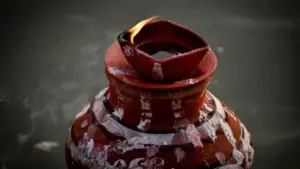
The Ritual: The chief mourner, after a purificatory bath and a tonsure (ritual head-shaving, often on the tenth day after death), invites the deceased to reside in Kashi as a deity, informs them of the gifts (dan) being made in their name, and then immerses the ashes in the river, often carried in a small earthenware pot or cotton bag.

Specialized Guidance for Tamil and South Indian Families
Varanasi has a long and established history of serving pilgrims from South India, ensuring that their specific and often rigorous traditions are honored during a Varanasi pilgrimage from Malaysia.
The Panch Dravids: Your Priestly Connection in Kashi
A distinct group of Brahmans known as Panch Dravids (or Kashikars), who are of Deccani or South Indian origin, traditionally serve pilgrims from the South.
Role and Rights: These priests, known locally as Pandas or Ghatias, maintain hereditary relationships with their clients (jajmans), often keeping meticulous records spanning centuries. They are recognized as Kshetra-purohits (“area-priests”) with the authority to accommodate and preside over the rituals of their southern patrons.
Ritual Adherence: It is noted that South Indian Brahmins rigorously adhere to scriptural injunctions, utilizing only pure Sanskrit mantras. Seeking a Panch Dravid priest ensures your family’s sampradayas (traditions) are faithfully observed. Many Tamil families plan their Varanasi pilgrimage
from Malaysia to coincide with festivals like Shivaratri.
Specific South Indian Ritual Variations and Customs
Purification Rites: Some communities insist on an extensive purification rite for the deceased before cremation, which involves notionally bathing the body 108 times by pouring water through a sieve.
Circumambulation (Pradakshina): While other traditions circle the pyre in the auspicious, clockwise direction (savya), South Indians usually circumambulate the pyre in the anti-clockwise (inauspicious, or apsavya) direction for ancestral rites.
Mourning Period Customs: Specific traditions, such as the widow immediately wearing “saris of widowhood” after the cremation, are also observed and understood by the specialized priests.
Planning Your Itinerary for a Varanasi Pilgrimage from Malaysia

A well-planned itinerary allows for the peaceful completion of all rituals without feeling rushed. Here are options for both a focused and an extended pilgrimage.
A Focused 2-Night / 3-Day Varanasi Itinerary
This plan is ideal for those whose primary purpose is to perform the core ancestral rites.
Day 1: Arrival in Varanasi. Arrive at Varanasi Airport (VNS), transfer to your pre-booked hotel. In the evening, witness the magnificent Ganga Aarti ceremony at Dashashwamedh Ghat. This is a powerful start to your Varanasi pilgrimage from Malaysia.
Day 2: The Day of Sacred Rites. In the morning, proceed to your designated ghat with your priest to perform Pinda Daan, Shradh, and/or Asthi Visarjan. After the rituals are complete, seek blessings at the revered Kashi Vishwanath Temple and Annapurna Devi Temple.
Day 3: Sarnath and Departure. After breakfast, you can take an optional excursion to Sarnath, the historic site where Lord Buddha delivered his first sermon. Later, you will be transferred to the airport for your departure.
An Extended Pilgrimage Option (Including Prayagraj & Gaya)
For those who wish to perform rites at all three major ancestral sites, a longer itinerary of 4-5 days is recommended. This would involve traveling from Varanasi to Gaya, then to Prayagraj, or vice versa, with dedicated rituals in each holy city.
Local Arrangements in Varanasi: Stay, Food, and Budget
To ensure your Varanasi pilgrimage from Malaysia is comfortable, it is essential to plan your local arrangements.
Accommodation Options for Every Budget
Varanasi offers a wide range of stays, from simple pilgrim lodgings to comfortable hotels.
Budget (Dharamshalas and Guesthouses): Located in the narrow lanes near the ghats, these offer basic rooms suitable for pilgrims focused on their spiritual duties.
Cost: ₹1,000 – ₹2,500 per night (Approx. RM 55 – RM 140).
Mid-Range (2-3 Star Hotels): These provide more comfort with amenities like air-conditioning, attached bathrooms, and room service.
Cost: ₹3,000 – ₹6,000 per night (Approx. RM 170 – RM 340).
Comfort to Luxury (4-5 Star Hotels): Located slightly away from the crowded ghats, these offer premium services, excellent food, and a peaceful environment.
Cost: ₹7,000 – ₹15,000+ per night (Approx. RM 400 – RM 850+).
Food (Bhojan): Experiencing Sattvic Cuisine
Varanasi is famous for its pure vegetarian (sattvic) food, which is ideal for pilgrims.
Local Eateries: The city is dotted with small restaurants serving delicious local dishes like kachori-sabzi, jalebi, and wholesome thalis.
Cost: ₹200 – ₹400 per person per meal (Approx. RM 12 – RM 23).
Temple Food and Prasad: Many temples offer prasad, which is considered a divine blessing. Don’t miss the langar (community meal) at the Kashi Vishwanath Temple.
Hotel Dining: Most hotels have restaurants that serve a variety of Indian vegetarian cuisines in a clean and formal setting.
Cost: ₹600 – ₹1,500 per person per meal (Approx. RM 35 – RM 85).
Travel Logistics: Your Complete Flight Guide from Malaysia to Varanasi
The primary mode of travel for your Varanasi pilgrimage from Malaysia is by air. There are no direct flights, but numerous connecting options make the journey efficient.
Detailed Flight Options: Kuala Lumpur (KUL) to Varanasi (VNS)
| Airline / Portal | Route Example | Stops | Stopover City/Cities | Duration | Baggage Allowance | Fare One-way (Approx. INR) | Fare Round Trip (Approx. INR) | Best Booking Window | Direct Booking URL |
|---|---|---|---|---|---|---|---|---|---|
| IndiGo | KUL → BLR → VNS | 1 | Bengaluru | 12–16 hrs | Hand: 7kg, Check-in: 15–30kg | ₹13,875 – ₹26,179 | ₹26,179+ | 5–7 weeks | Book Now |
| Air India | KUL → DEL → VNS | 1 | Delhi | 15–18 hrs | Hand: 8kg, Check-in: 23–32kg | ₹15,195 – ₹18,205 | ₹27,000+ | 5–7 weeks | Book Now |
| AirAsia Berhad | KUL → BLR/MAA/CCU → VNS | 1 | Bengaluru, Chennai, Kolkata | 16–27 hrs | Hand: 7kg (2 bags), Checked: 20kg | ₹17,800 – ₹23,800 | Variable | 5–7 weeks | Book Now |
| Air India Express | KUL → MAA/CCU → VNS | 1 | Chennai, Kolkata | 13–16 hrs | Hand: 7kg, Check-in: 15kg | ₹14,058 – ₹17,300 | ₹25,000+ | 5–7 weeks | Book Now |
| Batik Air Malaysia | KUL → BLR → VNS | 1 | Bengaluru | 15–18 hrs | Hand: 7kg, Check-in: 20kg | ₹17,800 – ₹18,300 | Variable | 5–7 weeks | Book Now |
| Malaysia Airlines | KUL → CCU → VNS | 1 | Kolkata | 18–22 hrs | Hand: 7kg, Check-in: 30kg | ₹74,200+ | ₹74,200+ | 5 weeks | Book Now |
| MakeMyTrip | Multiple airline options | 1–2 | BLR/DEL/MAA/CCU | 12–27 hrs | Airline-dependent | ₹8,500 – ₹14,100 | ₹20,000+ | 4–6 weeks | Visit Site |
| Skyscanner | Multiple airline options | 1–2 | BLR/DEL/MAA/CCU | 12–18 hrs | Airline-dependent | ₹13,400 – ₹17,900 | ₹23,000+ | 5–7 weeks | Visit Site |
| Cleartrip | Multiple airline options | 1–2 | BLR/DEL/MAA/CCU | 12–18 hrs | Airline-dependent | Variable | Variable | 5–7 weeks | Visit Site |
| Trip.com | Multiple airline options | 1–2 | BLR/DEL/MAA/CCU | 13–27 hrs | Airline-dependent | ₹8,500 – ₹14,100 | Variable | 4–6 weeks | Visit Site |
| Kayak | Multiple airline options | 1–2 | BLR/DEL/MAA/CCU | 12–18 hrs | Airline-dependent | ₹25,700 – ₹26,800 | Variable | 5 weeks (27% savings) | Visit Site |
Crucial Travel and Booking Information
Best Time to Book: For the best prices for your Varanasi pilgrimage from Malaysia, book your tickets at least 4 to 7 weeks in advance. October is often a cost-effective month for travel.
Visa for Malaysians: Malaysian citizens are eligible for a FREE 30-day e-Tourist Visa for pilgrimage travel to India. You must apply for this online before your trip at the official portal: https://indianvisaonline.gov.in.
Baggage Allowance: This varies significantly. AirAsia allows 7kg hand luggage (2 bags), while Air India may allow 23-32kg of checked baggage. Always confirm the specific allowance for your ticket class when booking.
Alternative Travel Strategy: You can also book a direct flight from Kuala Lumpur to a major hub like New Delhi (DEL) or Kolkata (CCU) and then take a separate, frequent domestic flight to Varanasi. This can sometimes offer more flexibility.
A Blessed Culmination of Your Filial Duty- Varanasi pilgrimage from Malaysia
Undertaking a Varanasi pilgrimage from Malaysia to perform ancestral rites is one of the most profound acts of love and devotion. By understanding the deep scriptural significance of the rituals, respecting your unique family traditions, and carefully planning the practical aspects of your travel and stay, you ensure a journey that is both peaceful and spiritually potent. May the blessings of Lord Vishwanath and the holy Ganga grant eternal peace to your ancestors and bring solace and prosperity to you and your entire lineage for generations to come.
🙏 Book Online Puja from Abroad

Book Your Sacred Ritual
Authentic ceremonies performed by Veda-trained pandits at sacred sites across India.