Key Takeaways
- Why these three cities, and in what order
- Gaya: freeing the ancestors
- Prayagraj: making the merit inexhaustible
- Kashi: the final release
In This Article
Gaya, Prayagraj and Kashi are not three versions of the same pilgrimage. The tradition assigns each a different job: Gaya frees the ancestors, Prayagraj makes that freedom permanent, and Kashi offers final release. Done in that order they form one circuit, and families who can manage only one usually begin with Pind Daan at Gaya.
Why these three cities, and in what order
Each tirtha kshetra has a particular power the texts credit it with, and the three do not overlap. Read together they describe a sequence rather than a menu.
| City | Its work | What it does for the ancestor |
|---|---|---|
| Gaya | Redemption | Frees a soul from the preta state and settles the karmic debts |
| Prayagraj | Perpetuity | Makes the merit already earned undecaying |
| Kashi | Release | Carries the intention beyond a good afterlife, to moksha |
You do not have to do all three, and most families do not. One rite at one tirtha, performed properly, is complete in itself. The circuit is what the tradition offers to those who want the fullest form of it.
Gaya: freeing the ancestors
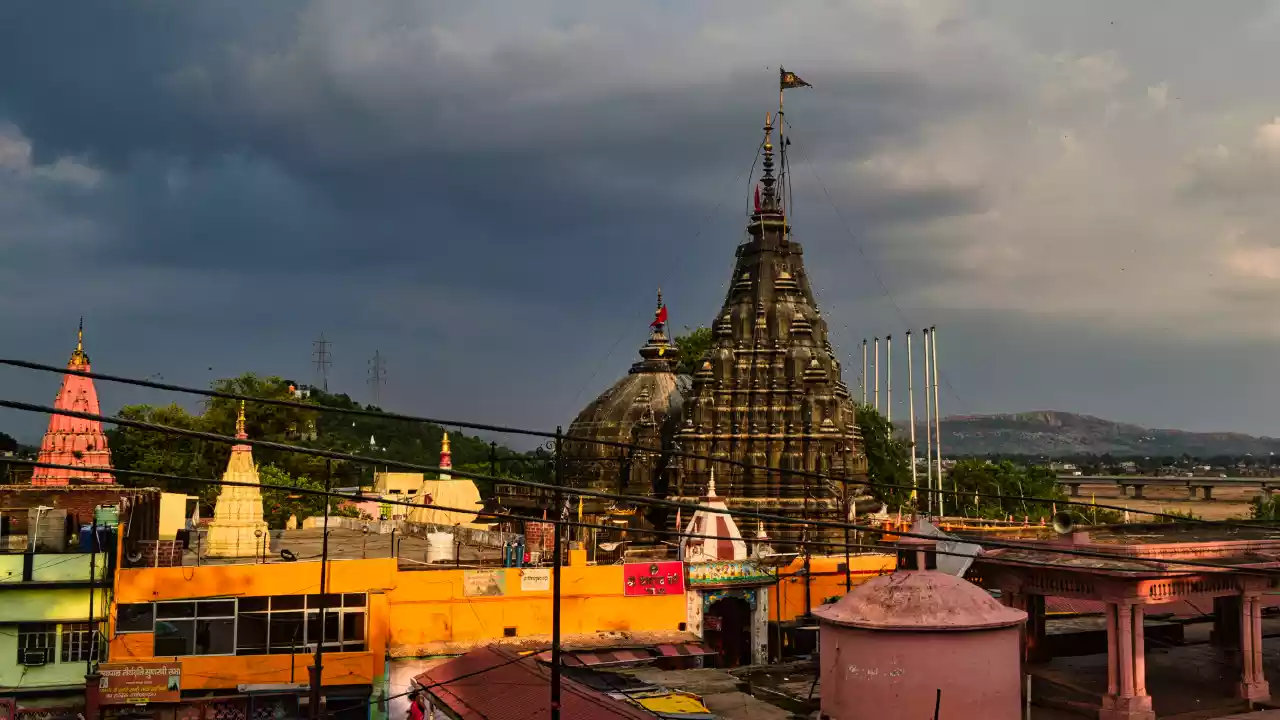
Gaya is the foundation of pitru karma, and its particular power is direct release from suffering. A soul that has not received its rites, or that died suddenly, or that left with unfinished attachment, can remain a preta: a state the texts describe as hunger and thirst that cannot be satisfied. Pind Daan at Gaya is the act that severs that condition.
Two further claims are made for it. The Garuda Purana holds that a pilgrim who performs the rites at the Gadadhara shrine is released from the three debts every person carries, to the gods, to the sages and to the ancestors. And the same text promises that shradh at Gaya lifts ancestors as far back as the twenty-first generation to Brahmaloka. The Agni Purana puts the ancestors’ own wish plainly: that a son be born to the line who will go to Gaya.
Families often come to Gaya because an astrologer has named pitru dosh in a horoscope. We answer that separately, in how Pind Daan at Gaya relates to pitru dosh.
The forty-five vedis, and the short circuit
A complete Pind Daan at Gaya means offerings at forty-five separate vedis, sacred spots spread across the city and beyond it. The full circuit takes three to five days with a Gaya Panda, the hereditary priests who hold the sequence. The principal vedis:
- Vishnupad. The central vedi, at the footprint of Vishnu.
- The banks of the Falgu. Where the Ramayana places Sita’s offering for Dasharatha.
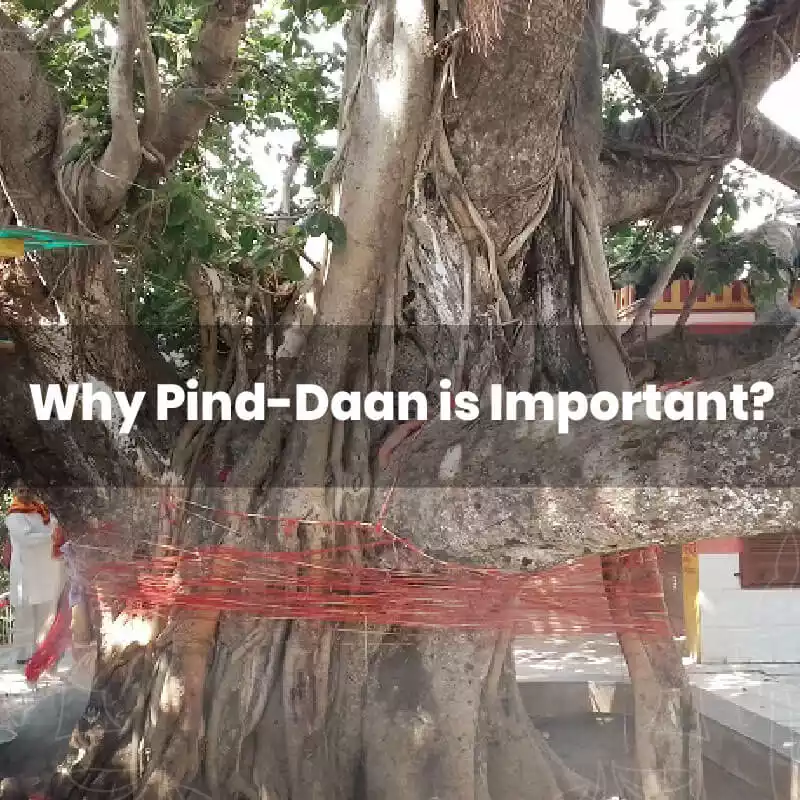
- Akshayavat. The undying banyan, where the circuit is traditionally completed.
- Ramshila. The hill where Rama is said to have performed the rite for his father.
- Pretshila. The hill of departed souls, with its temple of Yama.
- Brahma Kund. The tank where offerings are made to Brahma.
Most families do not have five days. The condensed one-day rite at Vishnupad, the Falgu and the Akshayavat is the normal choice and is a complete Pind Daan, not a shortened one. Say which you want at the time of booking, because the two are planned differently.
Why the Falgu runs beneath the sand
Anyone who reaches Gaya outside the monsoon sees a dry riverbed, and there is a story attached to it. Rama had gone to gather materials for his father’s rite. Dasharatha appeared to Sita in his absence and asked her to make the offering herself, which she did, with sand from the bank, calling four witnesses: the Falgu, a cow, the ketaki flower and a brahmin.
When Rama returned and doubted the account, three of the four denied it and were cursed for it, which is why the tradition holds that the Falgu flows beneath the sand rather than over it. The Akshayavat told the truth and was blessed with the imperishability its name carries. The story is told at the riverbank by every panda in Gaya, and it is the reason the tree closes the circuit.
Prayagraj: making the merit inexhaustible
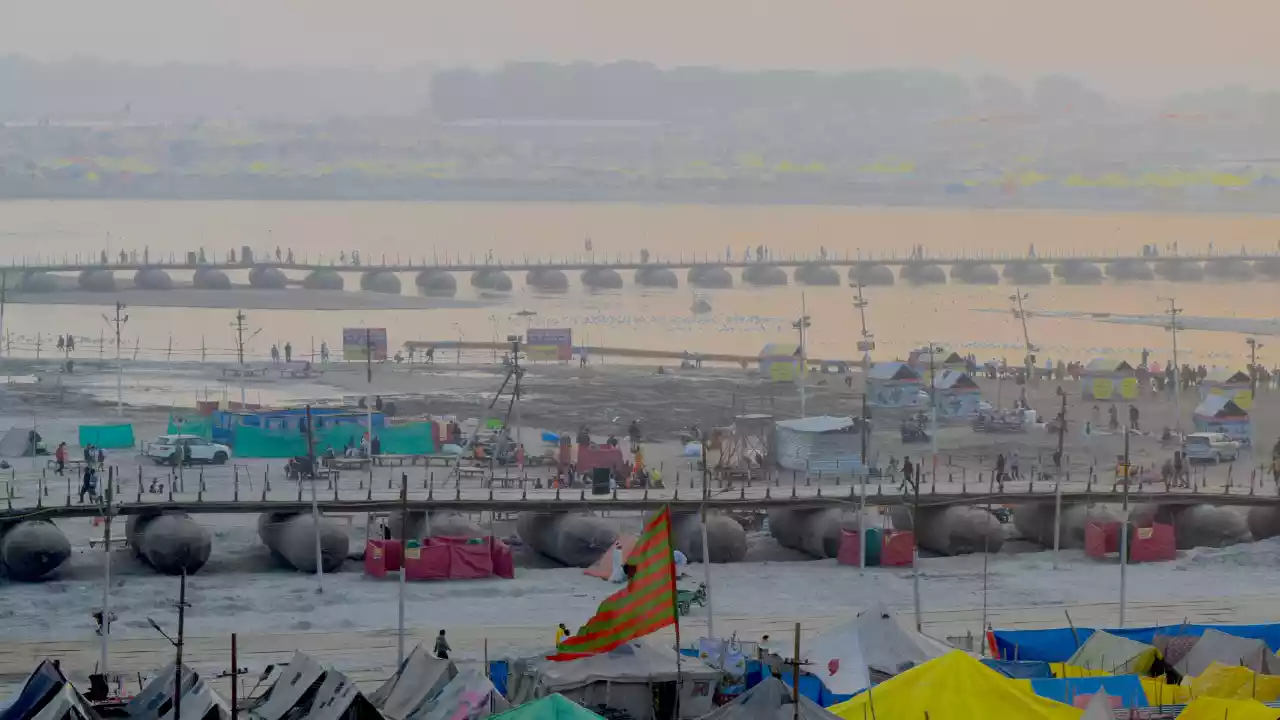
If Gaya is the rescue, Prayagraj is what stops the rescue fading. Its gift in the texts is akshaya punya, merit that does not decay. The Agni Purana states that daan, shradh and japa performed at Prayag yield undecaying merit, and the Skanda Purana ranks Prayag above every other holy place, Kurukshetra included.
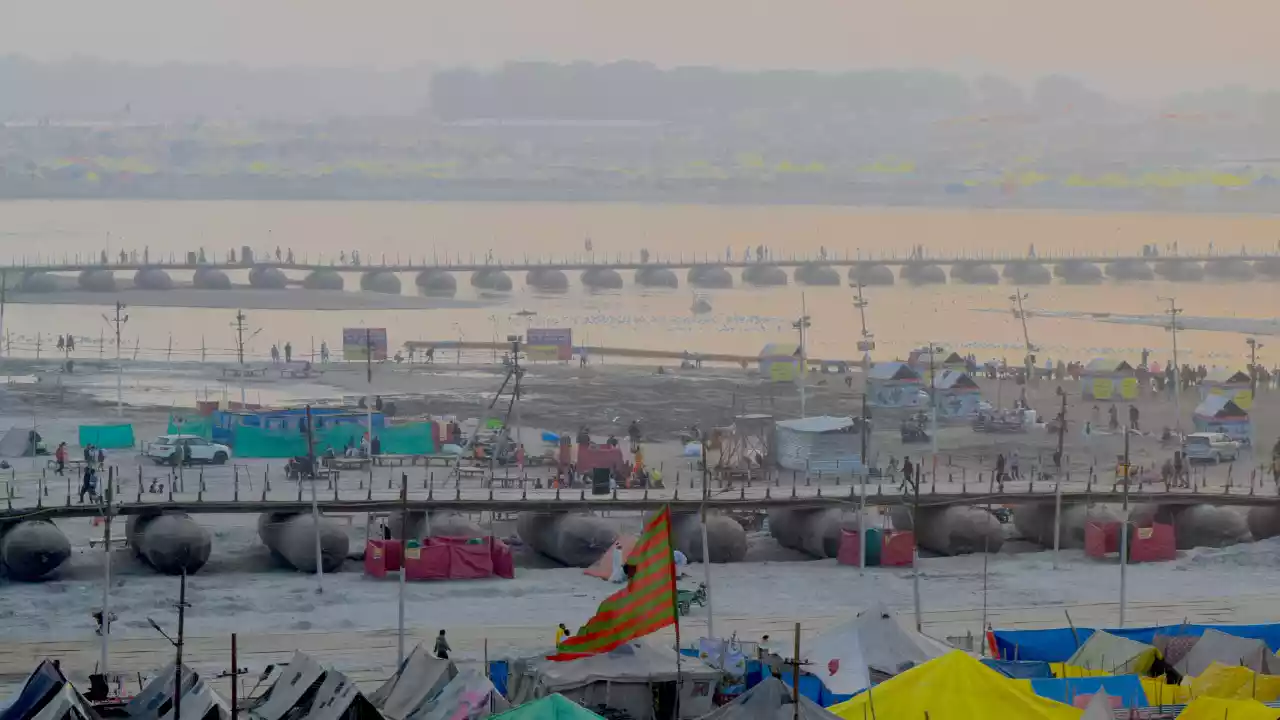
The power is located at the confluence itself, where the Ganga, the Yamuna and the unseen Saraswati meet. Tarpan is the rite most associated with it, performed from the steps or from a boat at the meeting point. There is more on the place itself in our guide to the Triveni Sangam.
During Pitru Paksha the Sangam ghats fill from before dawn. Triveni Ghat is where ancestral rites are usually performed and where our pandits work; Saraswati Ghat is quieter. The Kutapa Kala, roughly 11:30 AM to 12:30 PM, is the window the Dharmashastra tradition prescribes for these rites.
Kashi: the final release
Kashi’s claim is different in kind. Gaya and Prayagraj act on the ancestor’s condition; Kashi acts on the cycle itself. The city is held to grant moksha, release from rebirth, and rites performed there are performed with that intention rather than for a comfortable afterlife.
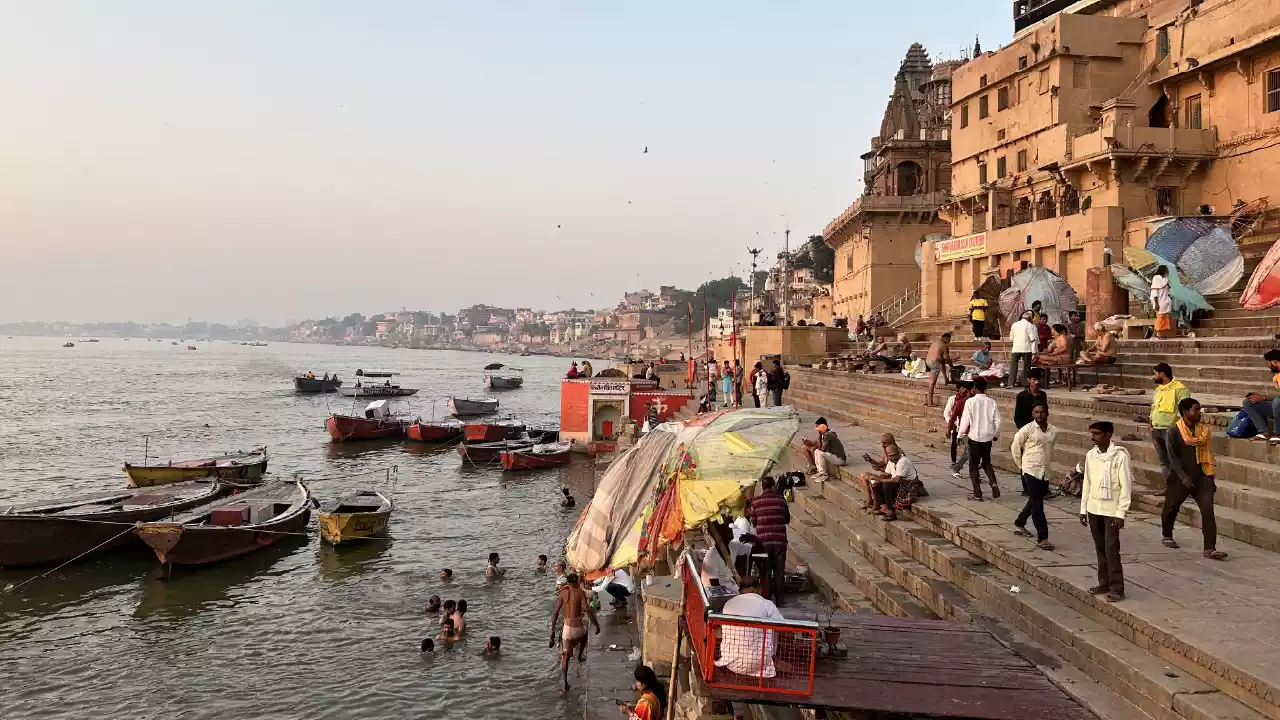
The Skanda Purana singles out three things as decisive for salvation in the present age: Vishveshvara, the Ganga, and the city of Varanasi itself. It also holds that even a single day’s residence there carries benefit. That is the reasoning behind placing Kashi last in the circuit: the earlier rites secure the ancestor’s position, and this one asks for something beyond position.
When to go
Pitru Paksha, the sixteen-day dark fortnight of Ashwin, is the season for all of this. In 2026 it runs from 26 September to 10 October. Gaya in particular becomes a different city during it, with the Pitrupaksha Mela and lakhs of pilgrims moving between the vedis.
- Pitru Paksha. The most meritorious window, and by a distance the most crowded. Book weeks ahead, not days.
- Amavasya, any month. The new moon carries the rite through the rest of the year. Somavati Amavasya, falling on a Monday, is held to be stronger still.
- The death tithi. The annual shradh is performed on the lunar date of the death, whenever in the year that falls.
- Any ordinary day. A rite is not invalid outside these windows. If the crowd is the obstacle, an ordinary day is a real option.
Planning the circuit
The geography is kinder than it looks. Gaya to Varanasi is about 250 km, Varanasi to Prayagraj about 125 km on NH19, and Prayagraj closes the loop. Doing all three properly needs six to seven days; doing them badly needs four and is not worth the airfare.
| Days | Where | What happens |
|---|---|---|
| 1 to 3 | Gaya | Arrive, then the vedi circuit with the panda. Three days for the condensed form with room to spare |
| 4 | Travel | Gaya to Varanasi by road, about 5 hours |
| 5 | Kashi | Rites at the ghats, Vishwanath darshan, evening aarti |
| 6 | Prayagraj | Varanasi to Prayagraj, about 2.5 hours. Tarpan at the Sangam |
| 7 | Departure | From Prayagraj (IXD) or back to Varanasi (VNS) for wider connections |
Take the cities in that order if you can. It follows the doctrine, and it also happens to be the easiest route to book.
What to carry, and what we arrange
Very little, in fact. All ritual samagri is arranged locally as part of the booking, in all three cities. What you bring is yourself and the information.
- The names and the gotra. The ancestors being named, and the family gotra if you know it. This is the only thing we cannot arrange for you.
- The death tithi, if you have it. Useful for fixing the day. Not essential.
- Cotton clothes you can get wet in. A dhoti or kurta, a saree or salwar, and a change afterwards. Leather is best left at the hotel.
- Slippers you can walk in. Wet stone steps, and a good deal of walking at Gaya.
Booking the rites
Each city is booked separately, because each is a separate rite with its own pandit and its own samagri. In person and remote cost the same at Prayagraj; at Gaya and Varanasi the remote version costs more because the full circuit is conducted on your behalf.
| City | In person, from | Remote, from |
|---|---|---|
| Gaya | ₹7,100 | ₹11,000 |
| Prayagraj | ₹7,100 | ₹7,100 |
| Varanasi | ₹7,100 | ₹11,000 |
| All three, remote | By arrangement | ₹21,000 |
A booking includes a Shastri-qualified pandit, all samagri, the boat where the rite needs one, and the Sankalp naming your gotra and your ancestors. It does not include travel between cities, accommodation, or a second ceremony such as Narayan Bali or Tripindi Shradh. A pandit calls you within two hours to fix the tithi.
🙏 Pind Daan at Gaya
- The vedi circuit with a hereditary Gaya panda
- All samagri and the Sankalp with your gotra
- Pandit calls you within 2 hours of booking
If you are arranging this from outside India, the mechanics are set out separately in our guide to ancestral rites for families living abroad, including how a remote rite is bound to you by the Sankalp.
Common questions
Do I have to do all three cities?
No. One rite at one tirtha is complete. The three form a sequence for those who want the fullest expression of it, not a requirement. If you can do only one, the tradition points to Gaya.
Does the order matter?
The doctrine suggests Gaya, then Prayagraj, then Kashi: redemption, then perpetuity, then release. In practice families travel in whatever order the route allows, and no pandit will tell you the rite failed because of it.
How long does Pind Daan at Gaya take?
The condensed rite at the three principal vedis takes most of a day. The full forty-five-vedi circuit takes three to five days with a Gaya panda. Both are complete; they are different scopes, not different qualities.
Can a daughter perform these rites?
Yes, and at Gaya the tradition’s own founding story is Sita performing Pind Daan for her father-in-law. Daughters, wives and granddaughters perform these rites at all three tirthas and our pandits conduct the full ceremony with the same vidhi.
One rite, one city, done properly, is worth more than a rushed circuit. Tell us which city and the names, and we will fix the tithi and the pandit: book Pind Daan at Gaya.
Book Your Sacred Ritual
Authentic ceremonies performed by Veda-trained pandits at sacred sites across India.