Asthi Visarjan

"Immerse ashes in sacred rivers, letting spirits merge with the divine flow of liberation. A final act of love, gifting eternal freedom to departed souls."

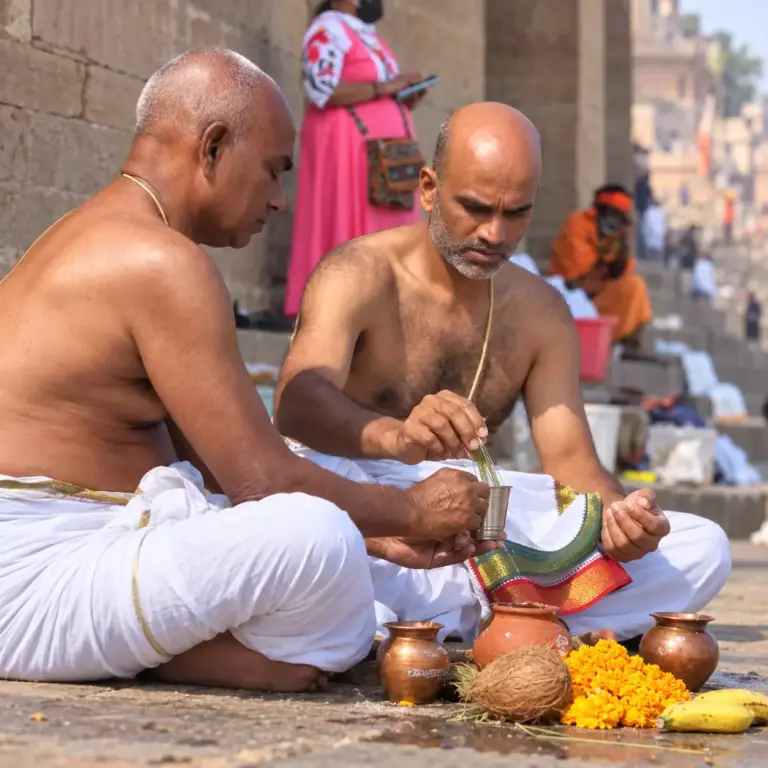
Asthi Visarjan is the sacred Hindu ritual of immersing cremated remains — bones and ashes — into a holy river. It is the final act of the Antyesti Sanskar, the sixteenth and last of the Hindu sanskaras (life sacraments). The Garuda Purana states that the soul remains in a transitional preta state until the full sequence of last rites is complete. Asthi Visarjan, combined with Tarpan and Pind Daan, releases the soul from earthly attachment and enables its journey to Pitru Loka.

Prayag Pandits has performed 33+ Asthi Visarjan ceremonies at Triveni Sangam, Prayagraj — designated Tirthraj (King of all Pilgrimages) in the Matsya Purana, Padma Purana, and Skanda Purana. We also offer services in Varanasi, Haridwar, Garh Mukteshwar, and other sacred cities. Book Asthi Visarjan — from Rs 5,100 →

What Is Asthi Visarjan?

In Sanskrit, Asthi means bones and Visarjan means immersion or release. The ritual completes the Pancha Mahabhuta (five elements) cycle: fire is returned at cremation, water at Visarjan. Together with earth, air, and space, the cycle is complete — freeing the subtle body to begin its onward journey.

Key Terms Explained

  • Asthi Sanchayan: Collection of bones and ash from the cremation pyre, typically on the 3rd day after death
  • Asthi Kalash Sthapana: Placing the remains in an earthen pot (kalash) for safekeeping — this is the temporary storage phase
  • Asthi Visarjan: The actual immersion in a sacred river — the final release

The Garuda Purana (Pretakalpa section) is the primary scriptural authority. It states that without completing Asthi Visarjan, the soul may linger in preta form — unable to transition to Pitru status. This is considered a source of Pitru Dosha in the family, potentially affecting prosperity and wellbeing across generations.

Even if the remains were stored for months or years, the ritual is still valid. A special Prayaschitta (expiation) is performed at the start, after which the full Visarjan proceeds with complete efficacy.

When to Perform Asthi Visarjan

DayRitual
Day 1Cremation (Antyeshti)
Day 3Asthi Sanchayan — collection of remains
Day 3–10Ideal window for Asthi Visarjan
Day 10Dashaah Shradha — mourning restrictions ease
Day 12Sapindi Shraddha — soul transitions from preta to pitru
Day 13Terahvin — formal mourning period ends

Can it be done later? Yes. Many families — particularly NRIs — perform Asthi Visarjan months or even years after death. The spiritual merit is not diminished by delay. If more than 10 days have passed, a Tirth Shraddha ceremony precedes the immersion.

Most auspicious times:

  • Pitru Paksha 2026: September 27 – October 10 (the most powerful window)
  • Sarva Pitru Amavasya: October 10, 2026
  • Every Amavasya (new moon) — monthly
  • The death anniversary tithi
  • Solar and lunar eclipses

Best Places for Asthi Visarjan in India

LocationSignificanceBest ForUnique Aspect
PrayagrajTirthraj — King of all pilgrimagesNorth India families; highest meritTriveni Sangam — triple river confluence
VaranasiMukti Kshetra — Lord Shiva’s cityGuaranteed moksha; Shiva devoteesLord Shiva whispers Taraka Mantra
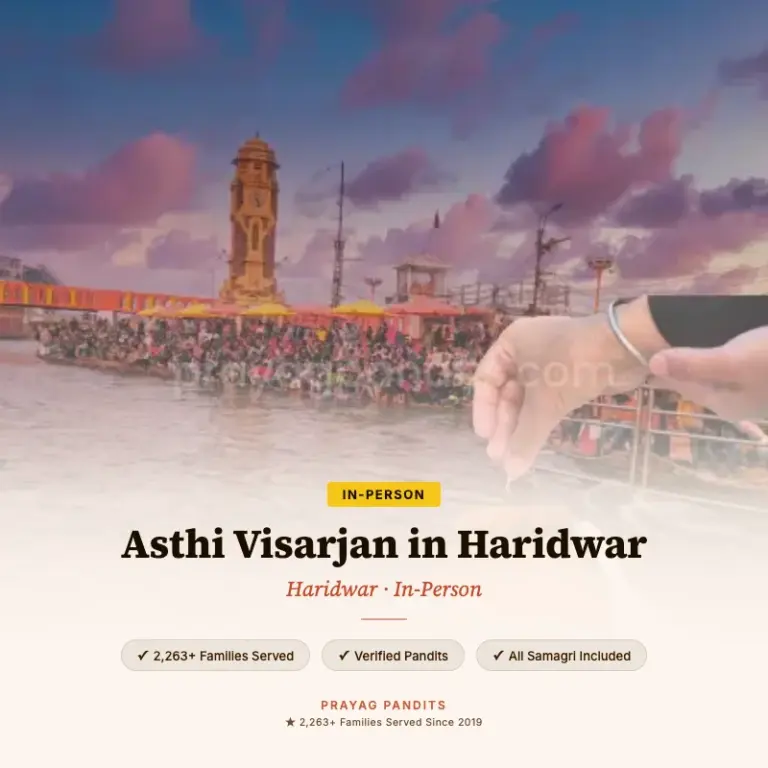
HaridwarGanga descends from HimalayasNorth India; Char Dham yatraHimalayan-pure Ganga at Har Ki Pauri
GayaLord Vishnu’s footprintPitru Dosha; East India familiesFrees 7 generations at Vishnupad
RameshwaramChar Dham + JyotirlingaSouth India; Rama devoteesOcean confluence at Agniteertham
NasikDakshin Ganga (Godavari)Maharashtra; South IndiaAsthivilay Kund dissolves remains

Why Prayagraj Stands Apart

The scriptural declaration “Prayage Sangame Snaanam Mukti Daayakam” — a bath at the Prayag Sangam bestows liberation — establishes the highest authority. Three rivers carry three cosmic qualities: Ganga (purity), Yamuna (devotion), Saraswati (wisdom). The combined energy at the confluence dissolves accumulated karma across multiple births.

Prayag Pandits performs the ceremony from a boat positioned directly over the actual confluence point — the most auspicious spot at the Sangam.

The Asthi Visarjan Ritual — Step by Step

  1. Asthi Sanchayan: Bones and ash are collected from the cremation site (typically Day 3), washed with raw milk and Ganga Jal, and placed in an earthen kalash sealed with red cloth. Never use plastic containers.
  2. Journey to the Sacred Site: The kalash is transported respectfully — never placed directly on the ground.
  3. Purification: The family bathes and wears clean white or off-white traditional clothing. Leather items are removed.
  4. Sankalp: The Pandit performs a sacred vow — declaring the deceased’s name, father’s name, gotra, and the current tithi. This anchors the ritual to the specific departed soul.
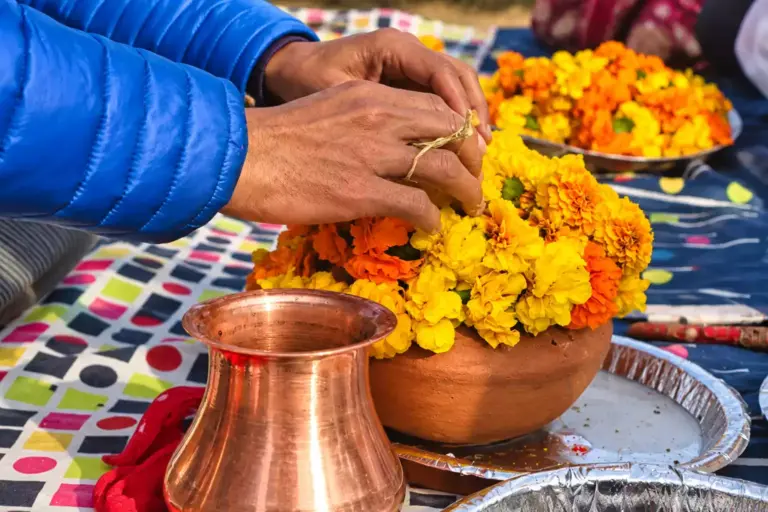
  5. Puja at the Ghat: Flowers, incense, sandalwood paste, and a ghee lamp are offered. Mantras from the Garuda Purana are chanted.
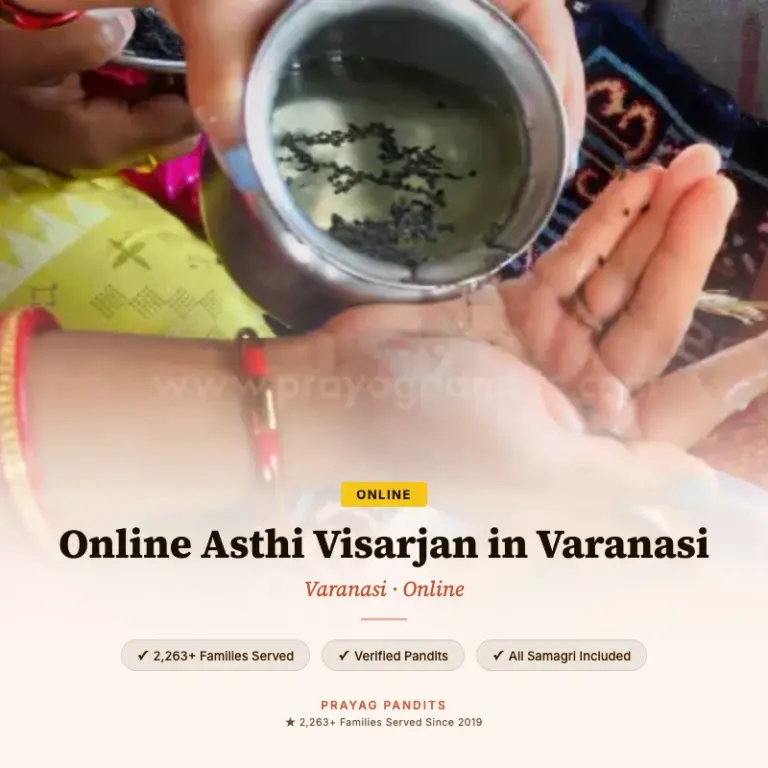
  6. Visarjan (Immersion): The primary mourner wades into the flowing river. Facing the direction of flow, they slowly pour the asthi into the water with prayers, flowers, and black sesame seeds.
  7. Tarpan: Water mixed with sesame seeds and barley is offered through cupped palms, facing the sun. The Pandit chants Tarpan mantras naming ancestors across three generations.
  8. Pind Daan (commonly combined): Rice ball offerings are made alongside Tarpan for complete ancestral rites. Learn about Pind Daan →
  9. Daan: Charitable gifts and dakshina complete the ceremony.

Duration: 30–60 minutes for Visarjan and Tarpan; up to 2 hours if Pind Daan is combined.

For NRI and Overseas Families

Transporting Cremated Remains to India

Required documents:

  • Original death certificate + copy
  • Cremation certificate + copy
  • Passport of the deceased (original + copy)
  • No Objection Certificate (NOC) from the Indian Consulate/Embassy
  • Non-communicable disease letter from the attending physician
  • Certificate of Packing

Airline Rules

Carry-on is strongly preferred — keeps the remains with you and avoids risk of loss. The urn must be X-ray-scannable: wood, plastic, or clay (not metal, which blocks X-ray). Inform the airline at booking and again at check-in. Advance intimation of 48 hours to the Health Officer at the Indian airport of arrival is required.

Courier Options

For families who cannot travel: cremated remains can be shipped via USPS (USA), Canada Post, or Royal Mail (UK). Mark as “cremated human remains — not for commercial purposes.” Prayag Pandits coordinates receipt at the India end.

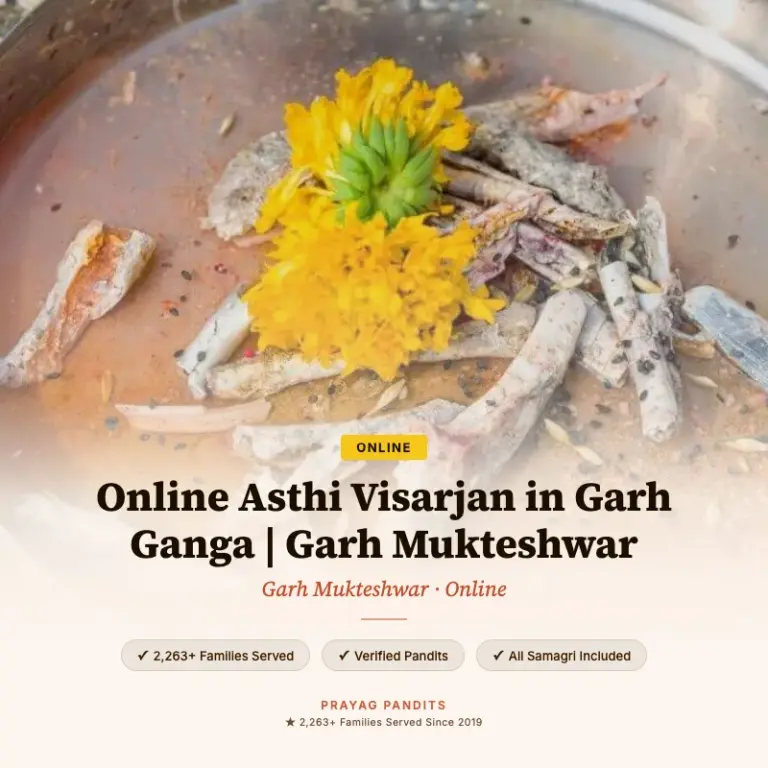
Online/Remote Asthi Visarjan

How it works:

  1. Family books and provides details (name, gotra, date of death)
  2. Sankalp call via video — family participates in real time
  3. Family ships the asthi with required documentation
  4. On the appointed date, the Pandit performs the full ritual at Triveni Sangam
  5. Live streaming via WhatsApp/Zoom so the family can witness the ceremony
  6. Photos and video documentation sent as a permanent record

Book NRI Asthi Visarjan Service →

Frequently Asked Questions

Can a daughter perform Asthi Visarjan?

Yes. While classical texts traditionally designate the eldest son, daughters, wives, and other close female relatives can perform the ritual with complete spiritual validity. Devotion and intent carry equal weight to lineage.

What if the asthi were stored for years?

The ritual is fully valid regardless of when it is performed. The Pandit performs a brief Prayaschitta (expiation) at the start, after which the full Visarjan proceeds with complete efficacy.

Is a specific pilgrimage place necessary?

Any flowing sacred river has merit, but major tirthas — particularly Prayagraj, Varanasi, Haridwar, and Gaya — carry exponentially greater spiritual potency.

Can it be done without a Pandit?

The immersion itself can be performed without a Pandit, but the Sankalp, Vedic mantras, Tarpan, and Pind Daan require qualified guidance. Without the Sankalp, the ritual’s efficacy is considered incomplete.

What documents are needed?

Domestically within India: a copy of the death certificate is sufficient. Internationally: death certificate, cremation certificate, passport of deceased, NOC from Indian embassy, and certificate of packing.

How long does the ceremony take?

30–60 minutes for Visarjan with Tarpan. Up to 2 hours if Pind Daan is combined (recommended).

What is the cost?

At Prayagraj through Prayag Pandits: Rs 5,100 for the standard in-person service, including ritual, Pandit, boat to the Sangam, and all samagri. Book now →

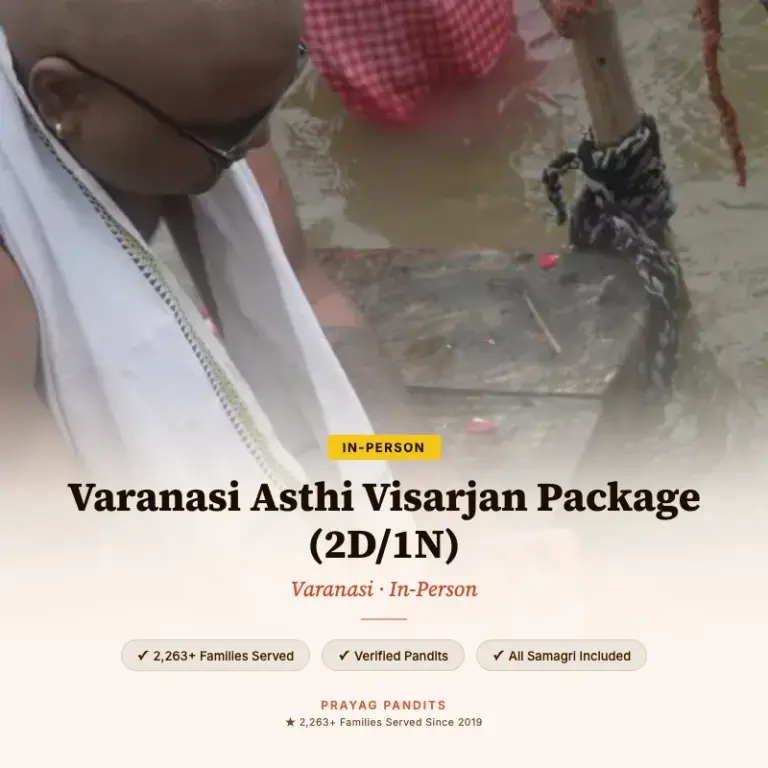
Asthi Visarjan Poojan Packages in Varanasi:

Release Ancestors into Eternity at Kashi—the City of Salvation

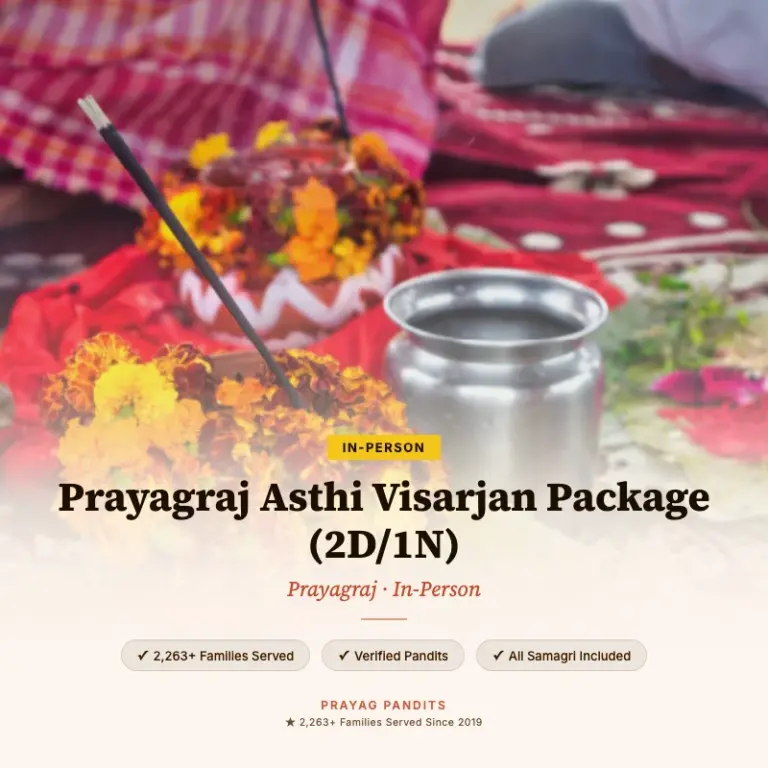
Asthi Visarjan Poojan Packages in Prayagraj:

Liberate Souls at Triveni Sangam, the Gateway to Moksha

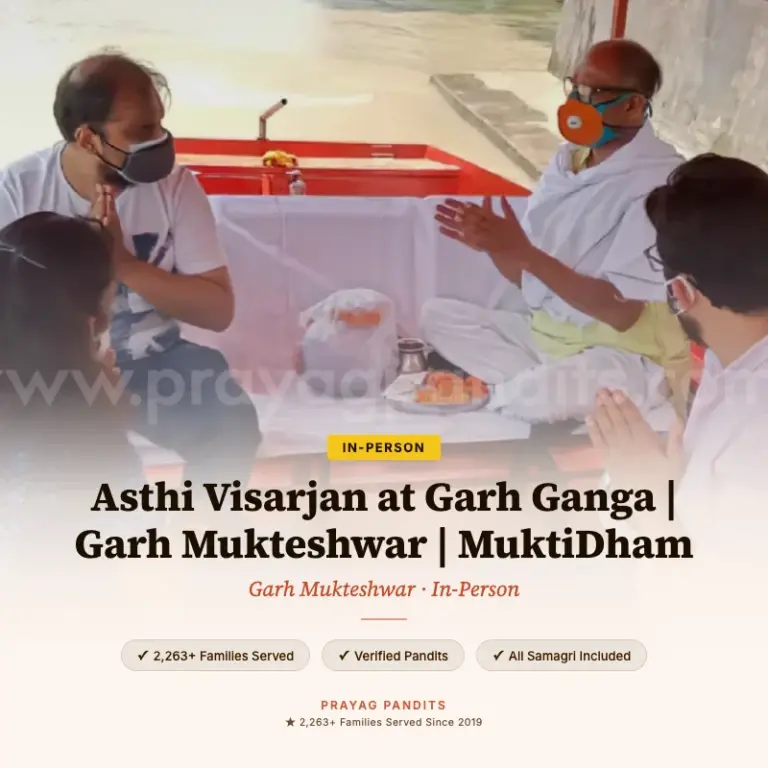
Asthi Visarjan Poojan Packages in Garh Mukteshwar:

Immortalize Memories at Garh Ganga—the Pathway to Liberation

Asthi Visarjan Poojan Packages in Haridwar:

Offer Final Journey at Har Ki Pauri—Doorstep to Heaven

Videos

Videos from our Pooja Archives

0

No products in the cart.