Most Booked
Premium Asthi Visarjan in Prayagraj | Asthi visarjan in Allahabad
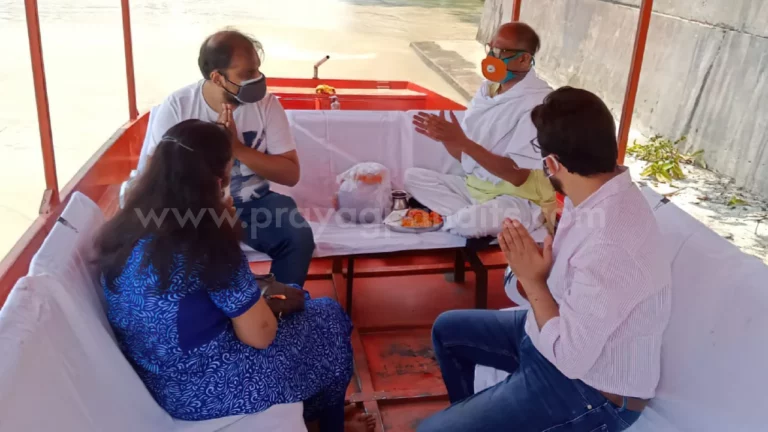
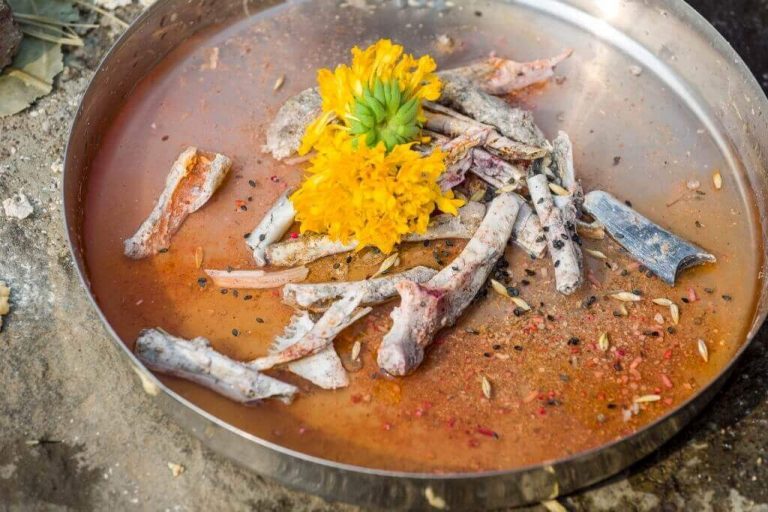
Asthi Visarjan in Prayagraj. The last rites/ ritual is being performed in...

When a loved one leaves this world, the soul begins a new journey — and the family's final act of devotion is to ensure that journey begins well. Asthi Visarjan, the sacred immersion of cremated remains in holy waters, is the concluding step of the Antyesti Sanskar — the sixteenth and last of the sixteen samskaras that mark a Hindu's life from conception to death. Performed at a sacred river by a qualified pandit with Vedic mantras, it releases the subtle body from its earthly ties and allows the departed soul to move forward toward liberation.
Among all the places of asthi visarjan in India, Triveni Sangam at Prayagraj stands above the rest. The Matsya Purana, Padma Purana, and Skanda Purana all declare it Tirthraj — the king of all pilgrimages. The Ganga, Yamuna, and the unseen Saraswati converge here, and immersion at this confluence is described as conferring moksha directly. Prayag Pandits has completed 33+ Asthi Visarjan ceremonies at Triveni Sangam and across 11 sacred cities in India. Book from Rs 5,100.
The ideal window is between Day 3 and Day 10 after death. Here is the full post-death timeline:
| Day | Ritual |
|---|---|
| Day 1 | Cremation (Antyeshti) |
| Day 3 | Asthi Sanchayan — collection of remains |
| Day 3–10 | Ideal window for Asthi Visarjan |
| Day 10 | Dashaah — mourning observances, followed by Tirth Shradh if visarjan is delayed |
| Day 12 | Sapindi Shraddha — the departed becomes a Pitru (ancestor) |
| Day 13 | Terahvin — mourning period ends, Brahmin feeding and dana |
Can it be done later? Yes. The texts permit asthi visarjan even years after death, provided a short Prayaschitta (expiation) rite is performed before the immersion. Many NRI families and those living far from sacred rivers perform it months or years later. There is no spiritual penalty for delay — what matters is that it is performed correctly.
The most auspicious occasions for asthi visarjan are:
If the immersion is being performed after Day 10, our pandit begins with a Tirth Shradh — a brief Shradh ceremony that formally acknowledges the delay and purifies the rite before proceeding.
While any flowing river is technically valid for asthi visarjan, the Puranas assign different degrees of merit to different locations. Here is a comparison of the most significant tirthas:
| Location | Sacred Water | Best For | Unique Significance |
|---|---|---|---|
| Prayagraj | Triveni Sangam | Complete moksha, all families | Tirthraj — king of all tirthas; triple confluence |
| Varanasi | Ganga at Manikarnika | Guaranteed moksha | Lord Shiva whispers the Taraka Mantra at death |
| Haridwar | Ganga at Har Ki Pauri | Northern families, Himalayan pilgrims | Brahmakund with Vishnu's footprint; Ganga descends from the hills |
| Gaya | Falgu River / Vishnupad | Pitru mukti, seven generations | Lord Rama performed rites here for Dasharatha |
| Rameshwaram | Agniteertham (ocean) | Southern families, Char Dham pilgrims | Char Dham + Jyotirlinga; ocean confluence |
| Nasik | Godavari at Ramkund | Western and Deccan families | Dakshin Ganga; Asthivilay Kund dissolves remains naturally |
The Skanda Purana says: "Prayage Sangame Snaanam Mukti Daayakam" — bathing at the Prayag confluence grants liberation. For asthi visarjan, this is amplified: the remains are received by three sacred rivers simultaneously, and the combined sanctity of the Ganga, Yamuna, and Saraswati is considered unmatched by any single river in India.
Prayag Pandits has performed 33+ asthi visarjan ceremonies at Triveni Sangam. Our pandits know every ghat, every nuance of the ritual, and are available year-round — including during Pitru Paksha when demand is highest. Book Asthi Visarjan at Prayagraj from Rs 5,100.
Kashi is said to be held on Lord Shiva's trident. The Kashi Khanda of the Skanda Purana states that anyone who dies in Varanasi — or whose ashes are immersed there — receives the Taraka Mantra from Shiva himself, which grants direct moksha regardless of past karma. Asthi Visarjan in Varanasi — Starting Rs 5,100.
Har Ki Pauri in Haridwar is where the Ganga descends from the Himalayan foothills onto the plains. The Brahmakund here carries the imprint of Vishnu's footstep and is considered one of the most auspicious spots for pitru karma in northern India. Asthi Visarjan in Haridwar — Starting Rs 7,100.
The Vayu Purana states that Pind Daan performed at Gaya frees seven generations of ancestors from the cycle of rebirth. Gaya is therefore the preferred destination when a family wants to combine asthi visarjan with complete Pind Daan for maximum ancestral benefit. Lord Rama himself came here to perform rites for King Dasharatha. Asthi Visarjan in Gaya — Starting Rs 7,100.
Understanding the complete procedure helps the family participate meaningfully and ensures no step is missed. Our pandit guides you through each stage, but knowing what to expect brings peace during a difficult time.
Duration: 30 to 60 minutes for Asthi Visarjan alone. Two to two and a half hours when combined with Pind Daan and Tarpan.
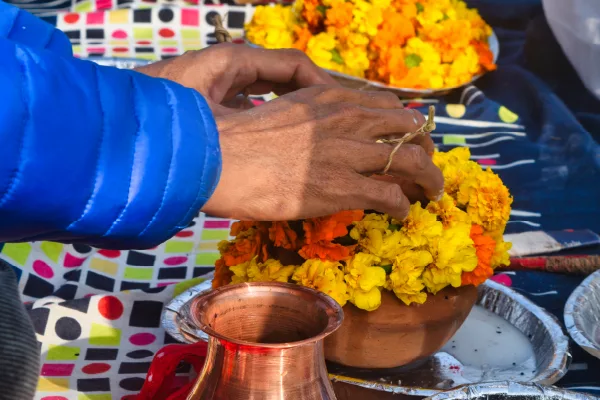
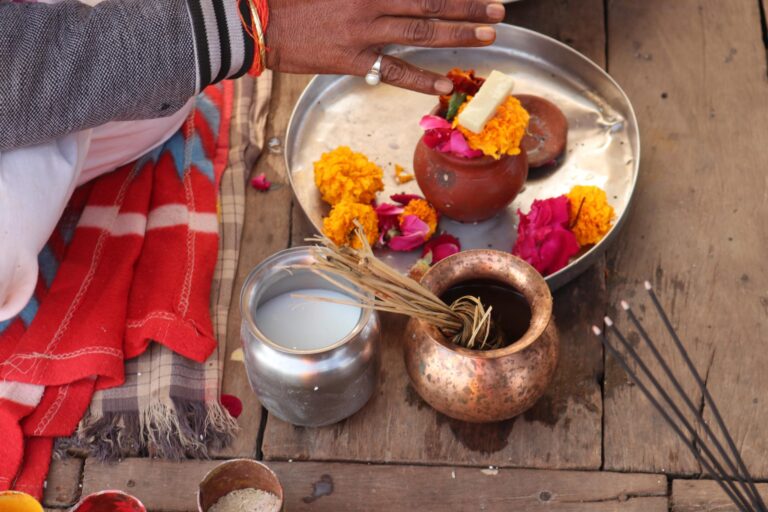
Materials required (brought by our pandit): Earthen kalash, red cloth, raw milk, Ganga Jal, white and red flowers, til (sesame), kusha grass, barley, incense sticks, diya with ghee, chandan, akshat (unbroken rice), and puja thali.
Preparation on the family's side is straightforward. Our pandit brings all ritual materials — you only need to bring the asthi kalash and the right mindset.
Storage of the asthi until visarjan:
On the day of the ritual:
For families living outside India, the question of how to perform asthi visarjan is often one of the most difficult parts of the mourning process. Long travel distances, visa requirements, work commitments, and the challenge of transporting cremated remains across borders make it hard to act within the traditional window.
Prayag Pandits has developed a complete NRI service that handles every aspect — from transport guidance to live-streamed ceremonies. Read the full guide to online Asthi Visarjan for NRIs.
Documents required for international transport of cremated remains to India:
Airline and courier rules:
How our remote service works:
The in-person service starts at Rs 5,100. The NRI remote package with live streaming, documentation, and courier coordination is priced separately — contact us for details. Book here or call +91 7754097777.
We have experienced pandits stationed at all major sacred locations across India. You do not need to arrange anything locally — our pandit handles the complete ritual, from flowers and puja samagri to tarpan and final prayers.
Asthi Visarjan is the culminating act, but the full cycle of grief and ancestral honour continues beyond it. Knowing the sequence helps families observe the complete tradition with clarity.
Same day: After the immersion, the family takes a full bath, attends the Ganga Aarti at the ghat (especially beautiful at Triveni Sangam and Har Ki Pauri), and visits the presiding temple. A small puja at the temple seals the ceremony.
Day 12 — Sapindi Shraddha: This is one of the most significant post-death rites. The preta (recently departed soul in transitional state) formally joins the ranks of the Pitrus — the lineage of honoured ancestors. A qualified pandit performs this at your home. Read the full guide to post-Asthi Visarjan rites.
Day 13 — Terahvin: The mourning period officially ends. Brahmin pandits are fed, and dana (gifts of cloth, grains, and dakshina) is given. The family returns to normal life.
Monthly Masik Shradh: In the first year after death, a monthly Shradh is performed on the same tithi as the death each month. This sustains the departed soul's journey during the first year.
Annual Varshik Shradh: Every year on the death anniversary, a Shradh is performed. This continues for life and is considered the ongoing duty of the karta toward the Pitrus.
Pitru Paksha Shradh: The annual 16-day Pitru Paksha period (September–October) is when all ancestral rites carry maximum merit. Performing Shradh, Tarpan, or Pind Daan at Prayagraj during this period is especially beneficial. Learn about Pitru Paksha dates and how to observe them correctly.
Q: Can a daughter perform Asthi Visarjan?
Yes. Traditionally, the eldest son acts as karta, but where there is no son, or where the daughter chooses to lead, this is fully valid. The Garuda Purana and later smriti texts both affirm that devotion and intent matter equally to gender. Prayag Pandits has guided daughters through the full Antyesti sequence on many occasions.
Q: The ashes have been stored for two years. Can we still perform Asthi Visarjan?
Yes, absolutely. There is no time limit in the texts. If more than ten days have passed since death, the pandit begins with a Prayaschitta (expiation) rite before the immersion. This clears any gap in the ritual sequence and restores the full sanctity of the ceremony.
Q: Is a specific tirtha necessary, or will any river do?
Any flowing river is valid. However, the Puranas assign progressively greater merit to sacred tirthas — with Prayagraj's Triveni Sangam at the highest. If travelling to a major tirtha is possible, it is always the recommended choice.
Q: Can Asthi Visarjan be performed without a pandit?
The Sankalp declaration and the specific mantras for asthi visarjan require a qualified pandit. Without the correct Vedic recitation, the ceremony remains incomplete. The immersion itself without mantras does not fulfil the ritual requirement under Antyesti tradition.
Q: What documents are needed?
For domestic travel within India: a death certificate is advisable but not legally required for transport of ashes by road or rail. For international transport into India: the full document set listed in the NRI section above is required before the ashes can be shipped.
Q: How long does the ceremony take?
Asthi Visarjan alone: 30 to 60 minutes. With Pind Daan and full Tarpan: 2 to 2.5 hours. We recommend arriving at the ghat at least 30 minutes before the ceremony for preparation.
Q: What does it cost?
Asthi Visarjan at Prayagraj through Prayag Pandits starts at Rs 5,100 for the Premium package. Other cities vary — see the city list above for starting prices. NRI remote service pricing is available on request. View the full package here.

Prayag Pandits has guided families from across India and over 15 countries through this final act of devotion. Since 2019, we have served 2,263+ families across 11 sacred cities. Our pandits are trained in Vedic traditions and approach each ceremony with the care and dignity that this moment deserves.
We understand that families reaching out for asthi visarjan are often grieving. We make the process simple: one phone call is enough to get started. You share the details of your loved one, we advise on the best date and location, and we handle everything from there — including the puja samagri, the ritual, the documentation, and the post-ceremony guidance.
To arrange the ritual, call or WhatsApp us at +91 7754097777. You can also book online and a pandit will contact you within a few hours.
Select your package and complete booking. Our team calls within 2 hours to confirm details.
Provide your gotra, departed soul's name, and any special requirements.
Experienced pandit performs the complete ceremony at the sacred site.
Full ceremony video on WhatsApp within 24 hours. Digital certificate shared via email.
Most Booked
Asthi Visarjan in Prayagraj. The last rites/ ritual is being performed in...
Save 35%
Haridwar, a place of divine touch where the last rite is also...
Most Booked
Perform Asthi Visarjan poojan in Varanasi or Kashi with our expert purohits...
Save 33%
Asthi-Visarjan, a religious rituals being performed over Sangam in Prayagraj, in between...
Save 35%
In the Holy River Ganga, perform the online Asthi Visarjan in Varanasi...
Save 35%
Asthi-Visarjan, a religious rituals being performed over Haridwar at Har-ki-pauri. Many pilgrims...
Most Booked
Garh Ganga is a religious spot situated in Garh-Mukteshwar at district Hapur,...
Save 28%
Asthi-Visarjan, a religious rituals being performed beside Brij Ghat at Garh Ganga,...
Asthi Visarjan is the sacred Hindu ritual of immersing the bone fragments (asthi) and ashes of a cremated relative into a holy river — ideally the Ganga. It is the final step of the funeral rites (Antyeshti) and is considered essential for the departed soul's liberation (moksha). According to the Garuda Purana (Preta Khanda 15.30-31), immersing remains in the Ganga within 10 days of death grants the deceased the exact same merit as dying directly on the banks of the Ganga. The ritual symbolises the return of the five elements — the body's earth, water, fire, air, and ether — back to the cosmic Self, and frees the soul from its final attachment to the material form.
Prayagraj (Triveni Sangam), Varanasi (Manikarnika and Harishchandra ghats), and Haridwar (Har Ki Pauri) are traditionally considered the three most sacred tirthas for Asthi Visarjan in India. Prayagraj holds special significance as the confluence of the Ganga, Yamuna, and the mystical Saraswati rivers. Gaya is the preferred choice when Asthi Visarjan is combined with Pind Daan. For Maharashtrian families, Trimbakeshwar and Rameshwaram hold similar reverence. The "best" place often depends on your family tradition, the departed soul's last wishes, and the nearest accessible tirtha. Our pandits guide families to the site that best matches their lineage and customs.
Hindu scriptures lay down clear rules for Asthi Visarjan. The Garuda Purana (Preta Khanda 15.30-31) prescribes that the sixth pinda must be offered at the time of bone collection, and that the bones should be immersed in the sacred Ganga within 10 days of cremation — this grants the deceased the same merit as dying on the banks of the Ganga itself. Key rules include: (1) collecting bones on the 2nd or 3rd day after cremation per the Antyakarmadipaka, (2) avoiding Sundays, Tuesdays, and Saturdays for bone collection per Yama as cited in the Nirnayasindhu, (3) avoiding even-numbered tithis and the performer's own birth nakshatra, and (4) maintaining strict purity of the urn during travel to a distant tirtha. Our pandits ensure every ceremony follows these scriptural rules precisely.
Hindu scriptures prescribe specific mantras for each stage of Asthi Visarjan. Upon arriving at the water body, the performer must face the South and recite **"Namo Astu Dharmaya"** (Salutations to Dharma). Then, while entering the water and releasing the urn, the performer recites **"Sa me Prito Bhavatu"** (May he be pleased with me). After exiting the water, the performer looks at the Sun and offers Dakshina to Brahmins. The specific Sanskrit mantras for sankalpa, invocation, and immersion vary slightly between Shakha traditions (Shukla Yajurveda, Krishna Yajurveda, Rig Veda, etc.), and our pandits use the correct mantras for your family's tradition. If your gotra or shakha is unknown, the universally accepted Kashyap gotra and Yajurveda mantras are used.
The ideal window for Asthi Visarjan is within 10 days of cremation, before the Dasha Karma ceremony, as prescribed in the Antyakarmadipaka and related smriti texts. Bone collection itself should happen on the 2nd day, the 3rd day, or as soon as the pyre has completely cooled. If immersion within 10 days is impossible due to travel, weather, or other constraints, the ritual remains valid if performed later — within 3 months, within a year, or even after several years. When significantly delayed, the ceremony is often combined with Shraddha and Pind Daan to restore spiritual balance for the departed soul.
Yes, Asthi Visarjan can be performed after 1 year, 5 years, or even decades after cremation. While the 10-day window is ideal, scriptures recognise that circumstances often prevent immediate immersion. For significantly delayed cases, the ceremony is typically combined with Shraddha (annual ancestral offering) and Pind Daan to fully resolve the delayed observance. The ashes, if preserved correctly in a clean urn or container, remain spiritually valid for the immersion. Many of our clients arrive with ashes preserved for years — we conduct the full combined ceremony with proper scriptural procedure, ensuring the delayed Asthi Visarjan carries full merit.
Yes. While Vedic tradition traditionally designates the eldest son as the primary performer (Karta) of the ritual, the Dharmashastra texts also permit daughters, sons-in-law, and other close relatives to perform Asthi Visarjan when a direct male heir is not available. Prayag Pandits has extensive experience conducting ceremonies performed by daughters and daughters-in-law. The most important factor is the sincerity and faith of the performer — not their gender.
Tonsure (mundan) is traditionally mandatory for male mourners performing the ceremony. Female family members are not required to undergo tonsure. If you have concerns or specific family customs around this, discuss with our pandit before the ceremony — accommodations can be made based on your tradition.